Rising labor costs keep squeezing warehouse budgets, and the pressure shows no sign of letting up. Between wage increases, turnover headaches, and the sheer physical demands of moving pallets all day, the numbers add up fast. I’ve watched operations struggle with this for years—throwing more bodies at the problem rarely fixes it, and often makes things worse. What actually moves the needle is rethinking how work gets done in the first place. This piece walks through practical approaches to warehouse labor cost reduction, from automation that handles the heavy lifting to software that stops your team from wasting hours on tasks that shouldn’t take hours.
What Keeps Pushing Warehouse Labor Expenses Higher
Several forces work together to inflate what you spend on warehouse staffing. Wage pressure is the obvious one—minimum wage hikes and competition for workers in tight labor markets mean you’re paying more per hour than you were three years ago. But the less visible costs often hurt more. When someone quits after six months, you’ve lost the training investment and now need to start over with someone new. Multiply that across a facility with 30% annual turnover, and the recruiting and onboarding expenses become substantial.
Process inefficiency compounds the problem. Manual handling that requires workers to walk miles per shift, hunt for misplaced inventory, or correct picking errors all translate directly into labor hours. Poor training creates its own cycle—undertrained workers make more mistakes, which require additional labor to fix.
| Factor | Impact on Labor Costs |
|---|---|
| Wage Inflation | Directly increases payroll expenses. |
| High Turnover Rates | Boosts hiring, onboarding, and training expenditures. |
| Inefficient Processes | Extends task completion times, requiring more staff. |
| Training Costs | Adds to initial and ongoing employee investment. |
| Labor Shortages | Drives up wages and overtime pay. |
| Manual Handling Errors | Requires additional labor for rework and quality control. |
Automation Changes the Math on Warehouse Labor Cost Reduction
When you automate repetitive or physically demanding tasks, you’re not just cutting headcount—you’re restructuring what labor actually does. Payroll drops, overtime decreases, and injury-related costs fall because fewer people are doing the work that causes injuries in the first place. The workers who remain can focus on tasks that require judgment and problem-solving rather than walking and lifting.
Omnidirectional Robots and Pallet-to-Person Operations
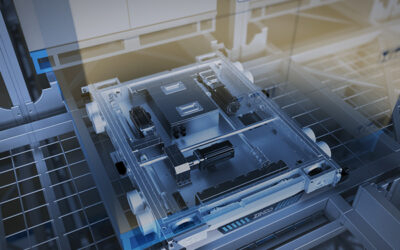
Omnidirectional robots fundamentally change how pallets move through a facility. Zikoo’s U-bot illustrates what this looks like in practice. Its U-shaped body and tight turning radius—1370 mm—let it operate in aisles as narrow as 2100 mm, which is considerably tighter than what traditional forklifts need. The robot handles loads up to 1000 kg and reaches lifting heights from floor level to 8 meters.
What this means for labor: workers stop spending their shifts driving forklifts or walking to retrieve pallets. The robot brings the work to them. Travel time drops, manual handling decreases, and the physical toll on your team goes down. In dense storage environments, these efficiency gains compound quickly.
Four-Way Shuttles Combined with Vertical Movement
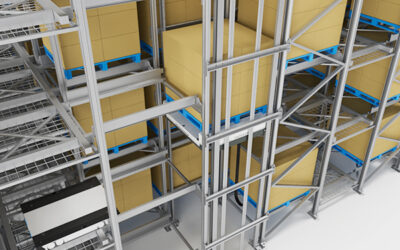
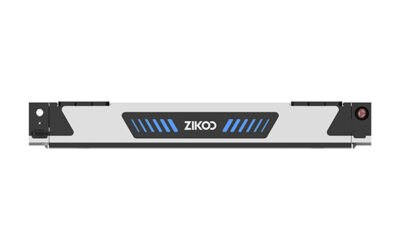
Throughput improvements come from moving goods both horizontally and vertically without constant human intervention. Zikoo’s R-bot Four-way Shuttle has a slim 125 mm profile and handles loads up to 1.5 tons, allowing flexible movement through dense racking systems. Pair it with the H-bot Vertical Bidirectional Shuttle and you create what amounts to a six-way shuttle system—a three-dimensional network for material flow.
The H-bot takes up just one storage location while serving as a vertical hub. The H1800B model supports loads up to 1800 kg. This combination accelerates both storage and retrieval while dramatically reducing the labor required to move materials between levels and across the facility.
Smart Warehouse Software Makes Human Effort Count
Automation hardware handles physical movement, but software determines whether that movement makes sense. Zikoo’s PTP Smart Warehouse Software integrates WMS, WES, WCS, and RCS functions into a single system. This matters because disconnected systems create gaps—workers end up making decisions that software should handle, or waiting while different systems fail to communicate.
The integrated approach reduces errors, assigns tasks more intelligently, and shows you what’s happening across the facility in real time. Both human workers and robots receive coordinated instructions, which minimizes idle time and prevents the bottlenecks that occur when one part of the operation outpaces another.
Breaking Down the Software Components
Each layer of PTP Smart Warehouse Software handles a specific piece of the puzzle. The Warehouse Management System tracks inventory, processes orders, and optimizes how you use available space. The Warehouse Execution System sequences tasks and allocates resources as conditions change throughout the day. The Warehouse Control System directly manages automated equipment—robots, conveyors, sorters. The Robot Control System coordinates individual robots with precision.
When these modules work together, they eliminate much of the manual decision-making that slows operations down. Workers don’t need to figure out optimal picking routes or decide which tasks to prioritize. The system handles that, which means labor hours go toward actual work rather than planning and coordination.
Better Inventory Management Means Less Wasted Labor
Poor inventory practices create hidden labor costs. When items end up in the wrong locations, workers spend time searching. When stock levels don’t match demand, you either have people processing excess inventory or scrambling to handle stockouts. Manual cycle counts pull workers away from productive tasks for hours at a time.
Accurate demand forecasting prevents the overstocking and stockout situations that require labor-intensive responses. Storage layouts that position high-velocity items for easy access reduce travel time on every pick. Automated cycle counting—whether through automated storage systems or other technologies—eliminates the labor-intensive manual counts that many facilities still perform quarterly.
Calculating Whether Automation Pays Off
Any automation investment needs to justify itself with numbers. The ROI calculation includes both obvious savings and benefits that take longer to measure. Direct savings show up immediately: lower payroll, reduced energy consumption, less product damage from handling errors. Indirect benefits—improved accuracy, faster fulfillment, fewer safety incidents—take time to quantify but often prove equally significant.
Most automation projects achieve payback within 1-3 years, though this varies based on scale, existing processes, and implementation quality. A thorough cost-benefit analysis should account for both the immediate impact and the competitive advantages that accumulate over time.
| Metric | Manual Operations (Baseline) | Automated Operations (Projected) | Savings/Improvement |
|---|---|---|---|
| Labor Costs (Annual) | \$1,000,000 | \$400,000 | \$600,000 |
| Throughput (Units/Hr) | 100 | 300 | 200% Increase |
| Error Rate | 2% | 0.1% | 95% Reduction |
| Space Utilization | 60% | 90% | 50% Increase |
| Employee Turnover | 30% | 10% | 66% Reduction |
| Safety Incidents | High | Low | Significant |
Labor Optimization Protects Profitability Over Time
The case for warehouse labor cost reduction extends beyond this quarter’s budget. Optimized operations provide resilience when labor markets tighten or demand spikes unexpectedly. You can scale up without proportionally increasing headcount, which matters when finding qualified workers takes months rather than weeks.
There’s also the safety dimension. Automated handling reduces the lifting, walking, and repetitive motions that cause injuries. Fewer injuries mean lower workers’ compensation costs, less turnover, and better morale among the workers who remain. People generally prefer jobs where they’re not exhausted and hurting at the end of every shift.
Conclusion
Warehouse labor cost reduction requires understanding where the money actually goes and addressing those specific problems. Rising wages and turnover create pressure, but inefficient processes and manual handling often waste more labor hours than necessary. Automation—whether through Zikoo’s U-bot, R-bot, and H-bot systems or similar technologies—handles the physical work that consumes so much human effort. Intelligent software like the PTP Smart Warehouse platform ensures that both human and robotic resources work in coordination rather than at cross-purposes. The facilities that figure this out gain advantages that compound over time, while those that keep throwing labor at the problem find themselves falling further behind.
Frequently Asked Questions About Warehouse Labor Cost Reduction
What is the average ROI for warehouse automation projects?
ROI varies considerably depending on what you automate and how well you implement it. That said, payback periods of 1-3 years are common, with ongoing savings continuing well beyond that initial period. The return comes from multiple sources: direct warehouse labor cost reduction, fewer errors requiring rework, faster throughput, and lower turnover among workers who no longer face the most physically demanding tasks.
How do omnidirectional robots improve warehouse labor efficiency?
These robots automate pallet movement that would otherwise require forklift operators or workers walking long distances. Zikoo’s U-bot, for example, navigates narrow aisles and brings pallets directly to workers rather than requiring workers to travel to inventory locations. This cuts travel time substantially and reduces the physical strain that leads to fatigue, injuries, and turnover. The warehouse labor cost reduction comes from needing fewer people to move the same volume of goods.
What are the long-term benefits of implementing a PTP Smart Warehouse Software?
Beyond immediate labor savings, integrated warehouse software provides visibility into operations that manual tracking can’t match. You see where bottlenecks form, which resources sit idle, and how inventory actually moves through the facility. This information supports better decisions about staffing, layout, and equipment. The system also scales—as volume grows, the software coordinates additional resources without requiring proportional increases in management overhead. Over time, this adaptability proves as valuable as the initial warehouse labor cost reduction.
Transform Your Warehouse Operations
Ready to transform your warehouse operations and achieve significant labor cost reduction? Zikoo Smart Technology Co., Ltd. offers cutting-edge pallet-to-person robotics and intelligent software solutions designed for maximum efficiency and ROI. Contact us today for a personalized consultation and discover how our U-bots, R-bots, H-bots, and PTP Smart Warehouse Software can revolutionize your logistics. Email: [email protected] | Phone: (+86)-19941778955