Lean practices in warehouse management are not a software module or a single layout change. They are a system of habits that expose delays, unnecessary movement, and mismatches between material flow and customer demand. In a distribution or manufacturing warehouse, lean thinking often begins by questioning why a pallet travels the way it does before any automation is purchased [1].
What Lean Warehouse Management Actually Means
At its core, lean warehouse management means delivering the right pallet, to the right dock, at the right time, with as little handling as possible. It borrows two ideas from lean production: value is defined from the customer’s perspective, and waste is any activity that consumes time, space, or labor without adding value [2].
| Waste | Warehouse symptom | Lean countermeasure | Automation support |
|---|---|---|---|
| Motion | Pickers walking long distances | Slot fast movers near dispatch | Pallet-to-person shuttle delivery |
| Waiting | Idle operators at dock doors | Synchronize inbound and outbound waves | WMS/WCS task sequencing |
| Overproduction | Staging orders too early | Pull-based replenishment | On-demand automated retrieval |
| Inventory | Safety stock hiding data errors | Cycle count discipline | Real-time inventory visibility |
| Defects | Mispicks and damaged pallets | Standard work and error-proofing | Shuttle positioning and pallet checks |
| Overprocessing | Redundant scanning and checking | One data capture point | WMS-integrated confirmation |
| Transport | Double handling and cross-dock loops | Direct flow paths | Dense rack and vertical shuttle routes |
The seven wastes are useful because they turn vague inefficiency into observable conditions. A value stream walk in a manual warehouse will usually reveal several of them inside the first thirty minutes. In an automated warehouse, the same wastes can hide in wait states, replenishment rules, and integration gaps between WMS and WCS [2].
Core Lean Practices for Warehouse Operations
Map the value stream before changing technology
Value stream mapping shows where pallets wait, where they move backward, and where data is re-entered. Use this map before selecting an AS/RS. The goal is not to automate the current process; it is to redesign the flow and then automate the simplified flow [1].
Create visual control with 5S in the warehouse
Sort, set in order, shine, standardize, and sustain. In a pallet storage environment, 5S applies to staging lanes, charging stations, pick-face replenishment, and maintenance access. Visual control shortens the time a supervisor spends looking for exceptions.
Use pull-based replenishment
Instead of pushing pallets into forward pick zones based on a forecast alone, trigger replenishment when a bin reaches a defined signal. Pull helps reduce staging congestion and improves inventory turns without adding labor [2].
Standardize work and measure the constraint
Write down the current best method, train to it, and only then improve it. Standard work in a warehouse might define pallet inspection steps, shuttle handoff rules, and maximum travel path for a pick. Measure the constraint—often the dock or the pick workstation—not every activity at once.
Applying Lean Thinking to Automated Storage and Retrieval
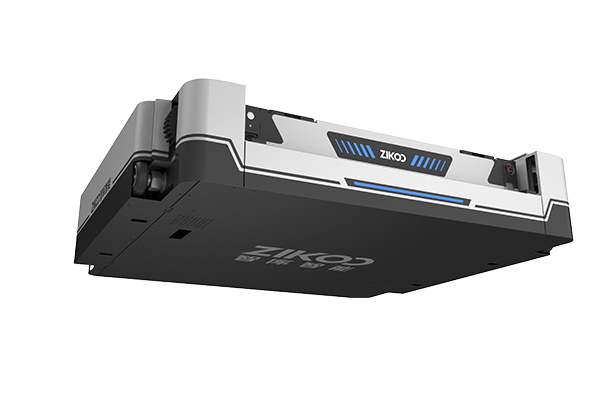
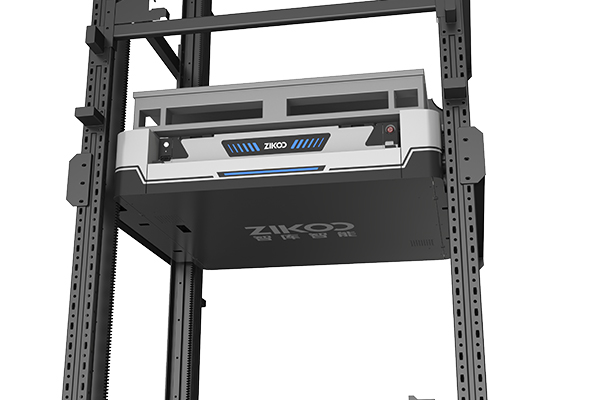
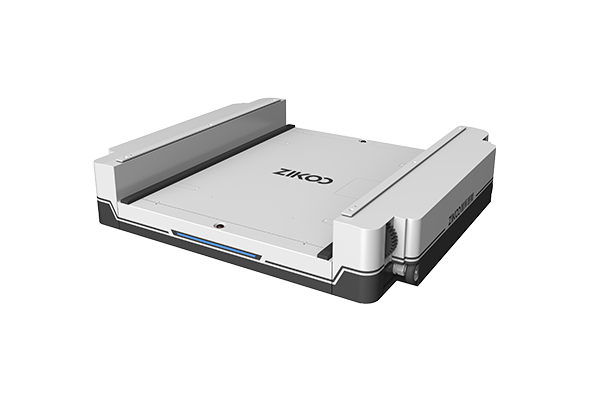
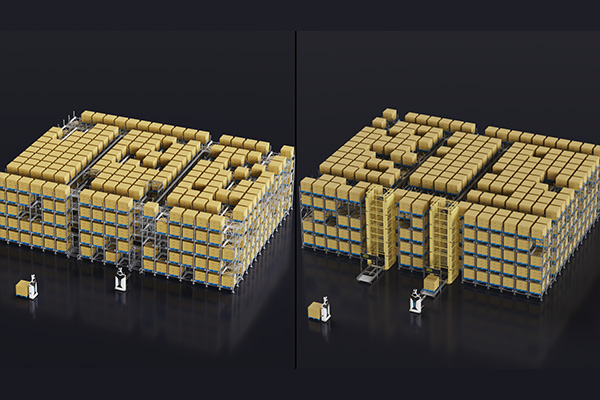
Automation supports lean when it removes non-value-added motion and waiting. A pallet-to-person system using a four-way shuttle changes the flow from “operator travels to pallet” to “pallet travels to operator.” This compresses travel time and lets the pick workstation operate closer to takt [3].
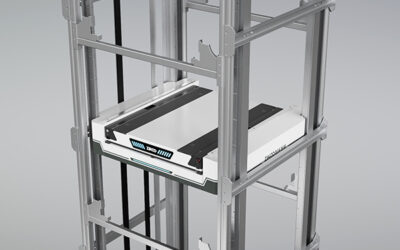
In one design pattern, an R-bot Four-way Shuttle moves pallets in four horizontal directions inside dense rack, while an H-bot Vertical Bidirectional Shuttle handles vertical transfer. The R-bot body height of 125 mm supports high-density pallet storage, and the H-bot positioning accuracy is ±1 mm according to its product specification. These are engineering parameters, not a guarantee of overall system throughput. The lean benefit depends on rack depth, SKU velocity, and how the WMS groups work [3].
Dense storage decisions often determine how much travel waste a lean warehouse eliminates. Smart Warehousing Starts Here: Cost-Effective Four-Way Shuttle Systems covers how four-way shuttle architecture reduces travel waste while keeping handling flexible.
Integrate WMS, WCS, and equipment as one flow
Lean automation is not only mechanical. The software layer must release work only when downstream capacity can absorb it. A WCS that allows the shuttle to dump pallets at a full workstation merely relocates waste. Effective lean automation paces retrieval, vertical transfer, and picking against one system-level rhythm [3].
Use dense storage to shorten material travel
High-density rack reduces floor travel by condensing storage. It is not lean if it creates congestion at the only aisle entrance. Balance density with access: high-velocity SKUs should be positioned close to the transfer point, while slow movers can occupy deep storage lanes.
Plan Your Lean Warehouse Upgrade
Lean warehouse projects succeed when the flow map comes first and the automation decision second. A short review of current pallet travel, SKU velocity, and dock constraints usually reveals the highest-priority change. If you need engineering support to turn those observations into a system design, contact Zikoo Smart Technology Co., Ltd at [email protected] or call (+86)-19941778955. Describe your cold storage, manufacturing, e-commerce, or 3PL operation, and the team can respond with the relevant modular storage and shuttle options.
Lean Metrics and Implementation Pitfalls
Lean improvement should be visible through a small set of operational metrics. Warehousing benchmarks commonly track on-time shipping, inventory accuracy, order cycle time, and labor productivity [4]. The choice of metric matters; measuring only utilization can drive overproduction because managers try to keep every asset busy.
| Metric | Lean signal | Automation linkage |
|---|---|---|
| On-time shipping | Flow reliability to customer | WMS release and shuttle availability |
| Inventory accuracy | Data trust and cycle counting | Real-time location confirmation |
| Order cycle time | Compression of wait states | Pallet-to-person workstations |
| Labor productivity | Value-added time per operator | Reduced travel and manual transport |
Common pitfalls include automating before removing waste, chasing technology without changing slotting, ignoring maintenance and after-sales capability, and treating lean as a one-time project. Quality management systems such as ISO 9001:2015 reinforce process discipline by requiring defined criteria for operations, monitoring, and corrective action [5]. Lean and quality systems work together when standard work includes defect prevention, not just speed.
Start With a Warehouse Flow Review
When you are ready to move from analysis to design, prepare a structured inquiry: facility size, SKU count, pallet dimensions, temperature range, inbound and outbound volumes, and current pain points. This will help you evaluate whether lean replenishment, dense storage, or pallet-to-person picking fits your operation. Zikoo Smart Technology Co., Ltd provides modular R-bot Four-way Shuttle, H-bot Vertical Bidirectional Shuttle, U-bot Omnidirectional Stacker Robot, and PTP Smart Warehouse Software. Send your inquiry to [email protected] or call (+86)-19941778955 for project delivery and customization details.
FAQ
What is the fastest lean practice to reduce warehouse waste?
Start with a value stream walk and 5S at the dock and staging areas. These changes usually require no new equipment and make the next automation decision more reliable.
Does lean apply to automated warehouses or only manual operations?
Lean applies to both. Automation removes motion and waiting, but it can also automate bad flow if slotting, replenishment, and WMS rules are not simplified first.
How do lean practices connect with AS/RS investment decisions?
Lean practice sets the flow targets—takt, travel distance, handling steps, and data accuracy—that the AS/RS must meet. A four-way shuttle or AS/RS should eliminate specific, measured waste, not be purchased as a general upgrade.
What is a realistic order to implement lean warehouse changes?
Map the current value stream, run 5S and visual control, standardize work, pull replenishment, then evaluate automation for the remaining constraints. Review the process quarterly rather than treating lean as a one-time event.
References
[1] J. P. Womack and D. T. Jones, Lean Thinking: Banish Waste and Create Wealth in Your Corporation, 2nd ed. New York, NY, USA: Simon & Schuster, 2003.
[2] G. Baudin, Lean Logistics: The Nuts and Bolts of Delivering Materials and Goods, New York, NY, USA: Productivity Press, 2004.
[3] MHI, “2024 MHI Annual Industry Report,” MHI, Charlotte, NC, USA, 2024. [Online]. Available: https://www.mhi.org/publications/report
[4] WERC, “Warehousing and Fulfillment Benchmark Report,” Warehousing Education and Research Council, Oak Brook, IL, USA, 2023.
[5] ISO 9001:2015, Quality management systems — Requirements, International Organization for Standardization, Geneva, Switzerland, 2015.
If you’re interested, check out these related articles:
Six-Way Shuttle Powers Dense Storage: Breaking Space Limitations
Six-Way Shuttle: Empowering Industries to Embrace Smart Warehousing
Multi-Scenario Smart Adaptation: Zikoo’s Six-Way Shuttle Powers the Digital Transformation of Warehousing