A cold storage ASRS is not an ambient system with a heater kit bolted on. At -25°C the design problem shifts from movement to material behaviour: grease stiffens, seals harden, battery charge acceptance falls, ordinary structural steel loses impact toughness, and any moisture that enters the room eventually freezes on the coldest surface it can find. The failures that stop a freezer warehouse are therefore decided in specification rather than in operation. What follows sets out what actually changes at -25°C, which parameters have to be re-established per subsystem, and what to put in the RFQ so the equipment you buy is rated for the room you really have.
Why -25°C Is a Different Design Problem, Not a Colder One
Designing for -25°C starts with a number that is rarely a single number. Three temperatures matter and they are not the same: the design air temperature of the room, the core temperature of the product you store, and the temperature of the coldest surface the equipment touches. A room held at -25°C air will have evaporator surfaces running colder, and a pallet pulled from a -30°C blast freezer can chill a rail, a fork or a scanner window below the room setpoint for a while after it is put away. State the envelope, meaning minimum air temperature, minimum product temperature, expected surface temperature and dwell time at each, because a supplier cannot rate equipment against a condition you have not described.
What changes is not one property but five families of them. Lubricants stiffen and change film thickness; seals and cable jackets harden and crack; battery capacity and charge acceptance fall; structural steel loses impact toughness and the rack contracts; and moisture that enters the room condenses and then freezes. Each family has a different owner in the project: the vehicle supplier, the rack manufacturer, the electrical contractor, the refrigeration contractor and the building envelope. The failures that stop a freezer warehouse usually sit at the seams between those parties rather than inside any one of them.
The storage and retrieval architecture also has to be reconsidered rather than copied. A crane-based ASRS puts one machine in each aisle, powered from a conductor rail, with few electronics and no battery in the cold zone, but a single fault takes that aisle out of service and every repair becomes a cold-zone intervention. A shuttle-based system spreads work across vehicles and gives redundancy, at the price of batteries, onboard electronics and more components that must be rated for the temperature. In a freezer the redundancy argument usually carries more weight, because maintenance inside the room is expensive in time and not only in parts.
Architecture decisions set the maintenance burden long before the first fault appears. <Stacker Crane vs Four-Way Shuttle: Which Fits Your ASRS Warehouse Best> covers how crane-based and four-way shuttle layouts differ in redundancy and service access.
Throughput is where derating becomes visible on a balance sheet. Every moving subsystem carries a rating at a stated temperature, and those ratings stack rather than average out. The table below lists the parameters most often carried over from an ambient project without being re-established for a freezer.
| Parameter | Ambient assumption | What changes at -25°C | Do not infer |
|---|---|---|---|
| Vehicle or crane speed and acceleration | Catalogue values measured at room temperature | Grease viscosity, bearing drag and wheel hardness cut acceleration and can cut top speed | That the catalogue figure is achievable in the room |
| Battery runtime and charging | Runtime and charge acceptance quoted at roughly 20 to 25°C | Usable capacity and charge acceptance fall, and charging below 0°C carries a plating risk | That runtime scales from the room-temperature figure, or that charging works at any temperature |
| Rack steel and welds | Toughness assumed adequate at ambient | Impact toughness falls, with the highest risk at welds and cold-formed zones | That a grade name qualifies the structure or that a weld inherits base metal toughness [1] |
| Sensors and electronics | Sealed enclosure assumed condensation-free | Moisture condenses on cold surfaces and refreezes, fogging windows and bridging insulation | That a high IP rating alone prevents condensation |
| Pallet interface | Dry, dimensionally stable pallets | Moisture freezes the pallet to the rail, and wood and plastic change dimension and grip | That a pallet tolerance measured in a dry warehouse still applies |
| Repair and intervention time | Aisle access under ambient conditions | Entry procedures, cold PPE and thermal recovery of the room lengthen every intervention | That ambient repair times and spares policy will hold |
Materials and Mechanics That Survive Continuous Freezing
Impact toughness falls as temperature drops, which is why structural steel standards carry designations for the temperature at which the Charpy test was performed [1]. A grade tested at 0°C says little about behaviour at -25°C. For a freezer rack, specify a grade whose impact test temperature is at or below the minimum service temperature, then extend the same requirement to the welding procedure. Welds, heat affected zones and cold-formed corners are where brittle fracture concentrates, and a certified base metal does not certify the joint made from it.
Steel also moves. The coefficient of linear expansion for structural steel is about 12 × 10⁻⁶ per kelvin, so a 50 m rack run commissioned at +20°C and operated at -25°C passes through a 45 K swing, and 50 × 12 × 10⁻⁶ × 45 gives 0.027 m, or roughly 27 mm. That movement has to be absorbed somewhere. Slotted connections, sliding base plates and clearance at the run ends absorb it; a fully welded frame with no allowance converts it into strain, and strain at low temperature is exactly where brittle fracture starts. Ask the rack supplier where the movement is taken and how it is verified after pull-down.
Grease is the first component to misbehave. A general-purpose lithium grease thickens as it cools, and the drive has to push through that resistance before the vehicle moves at all. Specify a low-temperature grease with a base oil that stays fluid below the coldest surface temperature in the room, state the relubrication interval at that temperature, and treat sealed-for-life bearings as a claim to be tested rather than a fact. Frost and condensate also carry away or contaminate lubricant faster than a dry ambient aisle does, so the cold room shortens the maintenance interval regardless of what the data sheet says.
Elastomers follow the same logic, and so does everything that flexes. Nitrile seals stiffen and lose sealing force, while silicone, fluorocarbon and PTFE components hold up better at -25°C. Standard PVC cable jackets become brittle and crack at flex points, so specify PUR or TPE jacket material and increase the minimum bend radius in cable chain. Polyurethane drive wheels harden and lose grip, which appears as slip, positioning error and current spikes rather than as an obvious mechanical failure.
| Component | Ambient default | Requirement at -25°C | What to check |
|---|---|---|---|
| Rack steel and welds | General structural grade | Impact test temperature at or below service temperature, matched welding procedure | Test certificates, weld procedure record, movement allowance at run ends |
| Grease and bearings | General-purpose lithium grease | Base oil fluid below the coldest surface temperature, stated relubrication interval | Product data sheet, relubrication schedule, bearing temperature during a cold run |
| Seals | Nitrile elastomer | Silicone, fluorocarbon or PTFE where the seal sees continuous cold | Material certificate, spare seal kit held on site |
| Cable and cable chain | PVC jacket, standard bend radius | PUR or TPE jacket, increased minimum bend radius, cold-rated chain | Cable schedule, bend radius drawing, flex test at temperature |
| Wheels and rollers | Polyurethane at ambient hardness | Tread hardness and grip verified cold, drive current checked for spikes | Cold run current log, repeatability after a full shift |
| Fasteners and dissimilar metals | Standard zinc plated | Corrosion protection for wet and frost cycling, isolation between dissimilar metals | Fastener specification, isolation washers, inspection interval |
Batteries and Charging Strategy in a -25°C Room
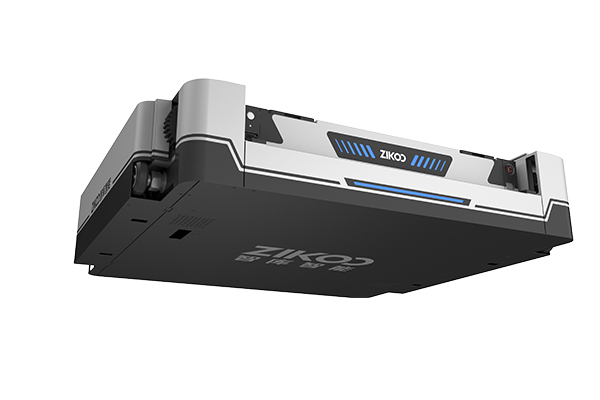
Catalogue runtime is measured at room temperature, and that number does not transfer. Lithium-ion cells lose usable capacity as they cool because internal resistance rises, so the same pack delivers fewer ampere-hours at -25°C than at +25°C. Charging is the harder constraint. Below 0°C the charge acceptance of a conventional lithium-ion cell falls sharply, and forcing current into a cold cell can plate lithium on the anode, which permanently reduces capacity and creates a safety risk. A freezer fleet therefore needs a charging concept, not simply a charger.
The options each carry a layout consequence: charge outside the envelope and accept the travel, build a heated charging bay or heated charge contacts, specify cells with a low-temperature electrolyte, enlarge the pack, use opportunity charging between missions, or exchange batteries. Whichever route the project takes, the specification should contain four statements: a discharge curve at the minimum operating temperature, the permitted charge temperature window, the time to full charge at the coldest permitted charge temperature, and the runtime the supplier guarantees in the cold zone. Without those four, fleet sizing is guesswork.
Energy deserves the same treatment, because every kilowatt-hour spent inside the room becomes heat that the refrigeration plant has to remove, and removing heat from a -25°C room costs more compressor energy than the heat itself. Door management is part of the energy case, not only the frost case. Warm humid air entering the room carries sensible heat and moisture, and the moisture ends up as frost on the evaporator, which the next defrost cycle has to melt and remove. A system that consolidates pallet moves and serves the room through a controlled airlock reduces the number of openings and the time each one stays open, so the plant sees a smaller and more predictable load.
Frost, Condensation and the Temperature-Zone Interface
Moisture is the primary enemy in a freezer, and it arrives through doors, on product, on pallets, on people and on any equipment that crosses the boundary. The interface is therefore a design element in its own right. A vestibule or airlock with fast doors, air curtains and strip curtains gives the room a buffer, but pressure balance matters as much as hardware: an imbalance either pulls moist ambient air in or spills cold air out, and both outcomes cost energy and frost. Instrument the differential pressure and treat it as an operating parameter rather than a one-off commissioning item.
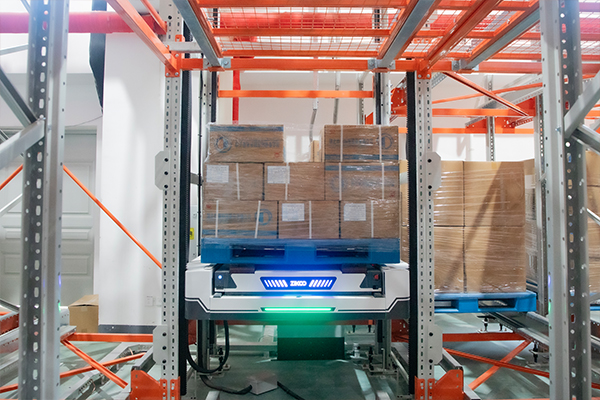
Equipment that crosses temperature zones creates its own problem. A vehicle that leaves a -25°C room, runs through a warmer zone and returns carries condensed moisture on its surfaces, which then refreezes on rails, sensors and contacts. The robust answer is to keep vehicles zone-dedicated wherever the layout allows. Where crossing is unavoidable, the transfer needs a conditioned vestibule, local heating on critical surfaces and a defined dwell period so that frost has somewhere to form other than the running gear.
Enclosures need the same care. A sealed cabinet breathing cold air through a damaged gasket will collect condensation on the boards, and thermal cycling between warm and cold will pump moisture in over time. Cabinet heaters with thermostats, desiccant breathers, stainless or galvanised enclosures and conformal coating on the boards protect the electronics; the protection rating of the enclosure should be stated with the temperature range, not separately from it. Control cabinets located outside the freezer envelope remove the problem entirely, which is why drive and control locations belong in the layout discussion.
The floor is part of the frost strategy. An insulated floor slab with a glycol heating loop or a ventilated air space prevents frost heave, which otherwise lifts the slab and distorts the rack base over the life of the building. Drainage for defrost water, ice at door thresholds and floor flatness through the frost cycle all affect vehicle positioning and pedestrian safety, and none of them are visible on an equipment drawing.
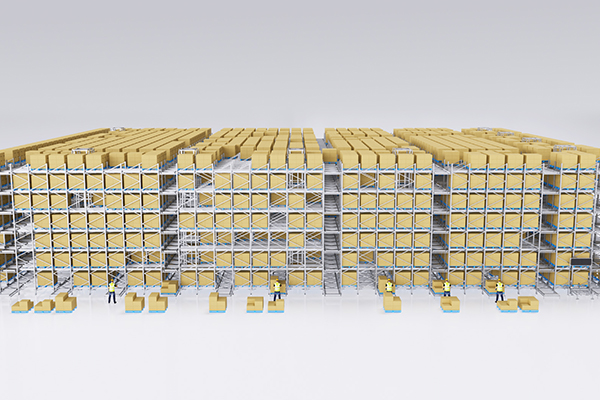
Freezer rooms concentrate both the density problem and the moisture problem into the same few square metres at the door. <Revolutionizing Cold Chain Logistics: Zikoo Robotics Six-Way Shuttle Powers High-Density, High-Efficiency Warehousing> covers how a dense shuttle layout is applied to cold-chain storage.
Sensors, Positioning and Controls at Low Temperature
Scanner windows fog and ice, and a scanner that reports a clear aisle when it cannot see one is a safety problem before it is an availability problem. Heated windows, redundant scanners and a defined cleaning interval at the room temperature are the usual mitigations. The enclosure protection rating matters here as well: an enclosure rated to IEC 60529 for water and dust still needs a stated operating temperature and an internal heating strategy if it is going to survive thermal cycling [2].
Reference positions move with the structure. Because the rack contracts after pull-down, teaching vehicle positions in a warm building and then cooling the room produces offset errors that look like software faults. The commissioning sequence should be controlled pull-down with equipment installed, a soak period at design temperature, then position teaching and repeatability verification. Re-verification after the first full cool-down, and after any prolonged defrost, is a cheap check that prevents weeks of intermittent faults.
Identification is a quieter failure point. Paper and synthetic labels lose adhesion at -25°C, condensation under a label destroys contrast, and a barcode read rate that was acceptable in a dry warehouse can collapse on a frosted pallet face. Cold-rated label stock, larger quiet zones, RFID as a secondary channel, and a sample test at temperature before the roll is ordered are practical checks. The same logic applies to any sensor with a polymer lens or a liquid crystal display.
Software has to know the room is cold. The warehouse control layer should carry cold-zone speed and acceleration tables, permitted charging windows, defrost windows and door interlocks, and it should sequence work to minimise openings rather than optimising each move in isolation. Safety functions such as door interlocks, reduced speed in maintenance mode and person detection are control functions, and their performance level is determined under ISO 13849-1, which is what turns an interlock into a validated function rather than a switch [4].
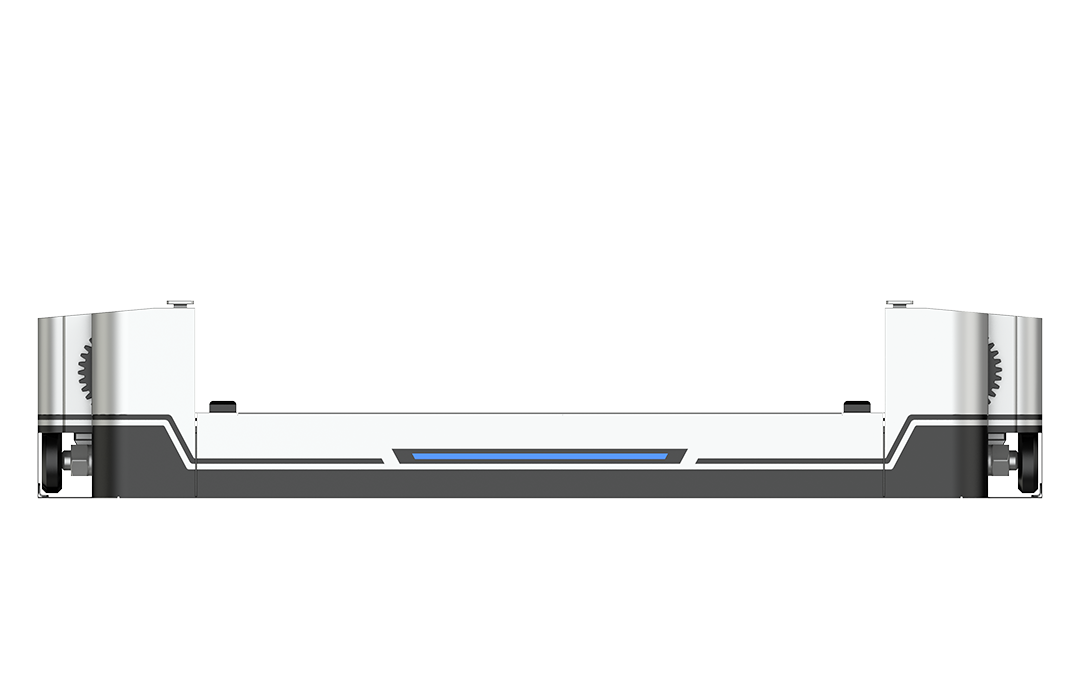
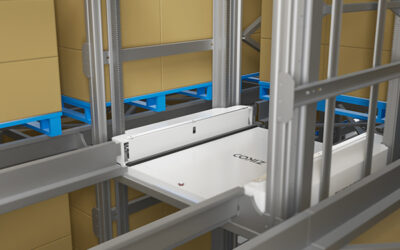
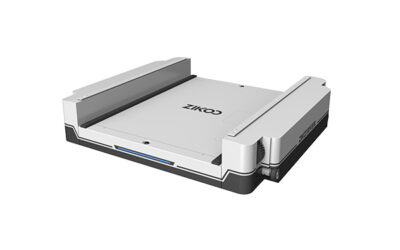
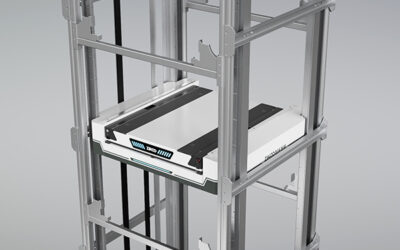
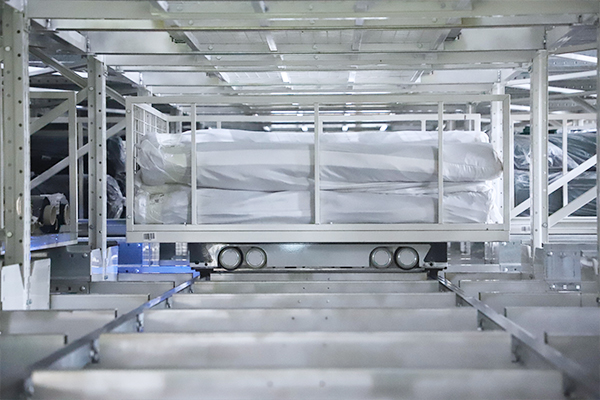
Cold-zone hardware is usually a variant of an ambient product rather than a separate machine, so the variant has to be documented. In the Zikoo range, for example, the R-bot four-way shuttle has a cold-chain configuration with a dedicated -25°C lithium battery pack rated for 6 to 8 hours of continuous operation, a low-temperature charging port for automatic charging, and coated circuit boards for high-humidity protection, while the H-bot vertical shuttle is rated from -25°C to +45°C with ±1 mm positioning accuracy. That is the shape a specification should take: a stated temperature, a stated runtime at that temperature and a stated protection measure, each traceable to a document.
People, Fire Protection and Safety in the Freezer
Cold stress is a design input, not an HR footnote. EN ISO 11079 provides a method for determining the clothing insulation required for a given cold exposure and for interpreting the resulting cold stress [3]. A picker working a full shift at -25°C needs insulated clothing, limited exposure duration and warmed recovery breaks, and each of those requirements costs productivity. The strongest operational argument for automating storage and retrieval in a freezer is not labour cost: it is that the work moves from people in insulated suits to machines that do not need recovery time. Keep people in the design for exception handling, maintenance and quality checks, and give them a warmed place to work from.
Entry and rescue provisions come next. Man-down detection, a communication path that works through the insulated envelope, door release hardware operable from inside, and a two-person or monitored lone-worker rule for anyone entering the room. Ice on the floor at the threshold, in the aisles and under dripping defrost water is a slip hazard, so drainage, floor finish and inspection frequency belong in the safety file.
Fire protection in a freezer is its own design case. NFPA 13 addresses freezer protection separately from ambient storage because water in the pipes cannot be allowed to freeze, which points toward dry, pre-action or other arrangements [5]. In-rack sprinklers are often part of the answer at height, and they interact directly with the automation: drops and pipework occupy the rack envelope, change rack geometry, may remove storage positions, and must clear shuttle travel and the vertical transfer path. Detection is a separate problem because cold air and stratification affect how smoke reaches a detector, and aspirating detection is often specified where spot detectors would be slow or outside their listed range. Settle the fire strategy before the rack layout is frozen, not after.
Throughput and Maintenance Economics in the Cold Zone
Effective cold-zone throughput is a product, not a single figure. It is nominal moves per hour multiplied by the cold-zone speed and acceleration derate, multiplied by availability, multiplied by a door and defrost allowance. Ask for each factor separately. A supplier who quotes one number for a freezer has usually applied a house derating factor that you cannot audit and cannot challenge at commissioning.
Availability is the factor most often overestimated. In an ambient warehouse a technician reaches a fault in minutes; in a -25°C room the same fault needs an entry procedure, cold PPE, a second person for safety, and a decision about whether to raise the room temperature, which costs energy and affects product condition. Mean time to repair is therefore a design parameter. Specify it, design for it by moving charging, drives and control cabinets outside the envelope where the layout allows, use quick-swap modules, hold cold-rated spares on site, and rehearse one repair with the maintenance team before go-live. The rehearsed time is the number that belongs in the availability model.
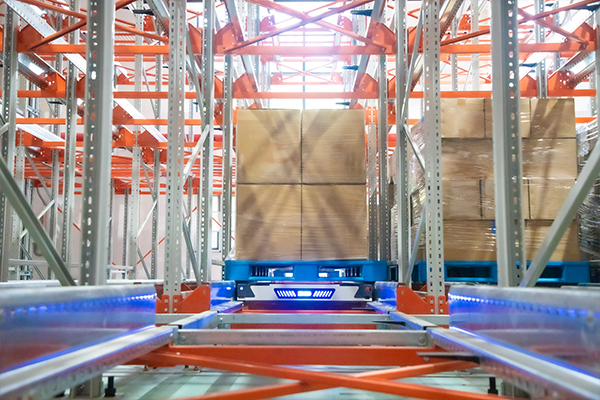
Brownfield projects concentrate these constraints. An existing freezer usually fixes the room height, the column grid, the door positions and the refrigeration capacity, so the automation has to fit a box that was designed for forklifts. In that situation the useful sequence is to measure the real envelope first, model the derated throughput second, and only then choose the vehicle concept. Retrofits also tend to be phased, which means the new system must operate alongside manual handling in the same cold space, with a clear separation of traffic and a rule for who owns the aisle.
What to Put in a -25°C ASRS Specification
The specification is where a freezer project is won or lost, because almost every failure mode described above is cheaper to prevent than to correct. The fields below are the ones that most often stay vague and then surface as a commissioning dispute.
| Specification field | What to state | Failure mode if it stays vague |
|---|---|---|
| Temperature envelope | Minimum air, product and surface temperature, plus dwell time at each | Equipment rated to a warmer class is accepted for the room, and the gap appears at the first warranty claim |
| Structural qualification | Steel grade, impact test temperature, welding procedure and movement allowance | Brittle fracture risk at welds and rack distortion after the first pull-down |
| Lubrication and seals | Low-temperature grease specification, seal materials, relubrication interval | Stiff drives, seized bearings and leaks within the first months |
| Battery and charging | Discharge curve at the minimum temperature, permitted charge window, charging location | Runtime shortfall on the second shift and capacity loss from cold charging |
| Condensation control | Zone dedication, enclosure heating, protection rating, coating, breathers | Icing on scanners and rails, corroded boards, intermittent faults that clear when the room warms |
| Availability commitment | Cold-zone mean time to repair, spare module list, remote diagnostics scope | Long outages at every fault and a spares stock that does not match the real failure modes |
Two lines are worth rewriting before you send anything out.
Reject this line: “Cold storage compatible, -25°C.”
Replace it with: “Rated for continuous operation at -25°C air with a stated discharge curve at that temperature, charging permitted between the stated minimum and +25°C, structural grade impact tested at or below -25°C with a qualified welding procedure, low-temperature grease and seal schedule, enclosure protection suited to washdown and condensation, and a cold-zone mean time to repair of the agreed figure.”
Acceptance is where the envelope gets tested rather than described. A cold-zone commissioning sequence normally includes a controlled pull-down with the equipment installed, a soak period at design temperature, position teaching and repeatability verification after the soak, a runtime test at the minimum temperature, a charging test at the lowest permitted charge temperature, and an inspection of rails, scanner windows and cabinet interiors for frost after the first operating cycles. Run the repair drill as well, and put the measured time into the availability model instead of a footnote.
What to Send for a Cold-Zone Feasibility Review
The inputs that decide the concept are few, and they are all available before a layout is drawn. Send the design air temperature and the coldest surface you expect, the room dimensions and usable rack height, pallet types with loads and typical pallet condition, SKU count and how many temperature zones the room serves, inbound and outbound pallets per hour at peak, whether the building is new or an existing freezer, the fire strategy and refrigerant in use, and where charging can physically be located. Those answers determine the vehicle rating, the battery and charging concept, the airlock arrangement and the fire coordination.
Zikoo Smart Technology Co., Ltd designs and builds pallet-to-person systems, including cold-chain configurations, and the engineering team can review your envelope against them. Email info@zikoo-int.com or call (+86)-19941778955 to start that review.
FAQ
Can standard ambient ASRS equipment be installed in a -25°C freezer?
Sometimes, but only where the supplier states the modified rating in writing for every subsystem that changes: battery and charging window, grease and seal schedule, cable jacket material, enclosure heating and coating, and structural test temperature. Components that look identical often carry a different rating, and the warranty usually follows the rating rather than the part number. Ask for the cold-zone variant of the data sheet, not the ambient one with a verbal assurance attached.
What causes most freezer ASRS downtime?
Moisture and batteries account for more incidents than mechanical wear. Condensation on scanner windows, refreezing on rails and ice around door thresholds produce faults that clear when the room warms, which makes them hard to diagnose. Battery capacity loss and cold charging damage appear as short runtime rather than as a hard failure. Structural problems are rarer but more serious, which is why steel qualification deserves attention even though it rarely causes a stoppage.
How much throughput is lost at -25°C?
There is no defensible single percentage. The loss is a product of speed derating, availability and door or defrost constraints, and the mix differs by layout. In many freezer projects the largest losses come from charging windows and door management rather than from travel speed. Ask each supplier for the individual factors and the conditions under which they were measured, then compare bids on the same basis instead of comparing one headline figure with another.
Do you need in-rack sprinklers in a cold storage ASRS?
It depends on storage height, commodity, ceiling protection scheme, the applicable code edition and the authority having jurisdiction. NFPA 13 treats freezer protection as a separate design case, and in-rack sprinklers are often part of the solution at height [5]. The practical point is timing: in-rack pipework changes rack geometry, can remove storage positions and must clear shuttle travel, so resolve the fire strategy before the rack layout is fixed rather than adapting it afterwards.
How do you maintain a freezer ASRS without warming the room?
Design for maintenance first, then rehearse it. Move charging, drives and control cabinets outside the envelope where the layout permits, use quick-swap modules that can be replaced in cold PPE, keep cold-rated spares on site, and batch planned interventions with defrost cycles so the room is opened once rather than repeatedly. Remote diagnostics reduce the number of entries needed to identify a fault. The remaining work happens in the cold, so measure how long it actually takes and feed that figure back into availability.
References
[1] EN 10025-2:2019, “Hot rolled products of structural steels — Part 2: Technical delivery conditions for non-alloy structural steels,” CEN, 2019.
[2] IEC 60529:1989 (with Amendments 1:1999 and 2:2013), “Degrees of protection provided by enclosures (IP Code),” IEC, 2013.
[3] EN ISO 11079:2007, “Ergonomics of the thermal environment — Determination and interpretation of cold stress when using required clothing insulation (IREQ) and local cooling effects,” ISO, 2007.
[4] ISO 13849-1:2015, “Safety of machinery — Safety-related parts of control systems — Part 1: General principles for design,” ISO, 2015.
[5] NFPA 13, “Standard for the Installation of Sprinkler Systems,” National Fire Protection Association, 2022.
If you’re interested, check out these related articles:
Six-Way Shuttle Empowers 3PL Providers to Build Next-Generation Smart Logistics Hubs
Software-Driven Hardware: Six-Way Shuttle Maximizes Warehouse Efficiency
Revolutionizing Cold Chain Logistics: Zikoo Robotics Six-Way Shuttle Powers High-Density, High-Efficiency Warehousing