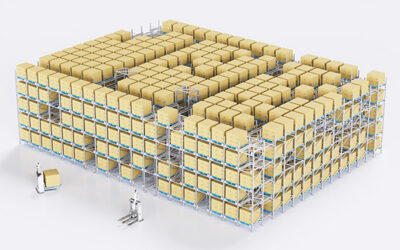
The question of whether automated storage and retrieval systems make sense for low-throughput warehouses comes up frequently in early-stage logistics planning. Many decision makers assume that AS/RS is only justified when there is intense movement, but that assumption misses an important shift in system architecture. Modern shuttle-based AS/RS systems can be configured for modest daily volumes, delivering space savings, labour reduction, and the ability to scale when demand grows. I have worked on projects where throughput was under 15 pallets per hour, yet the investment still produced a positive return after the second year. The key is matching the system design to the actual flow, not paying for capacity that sits unused.
Is AS/RS Ever Practical for Low-Throughput Operations
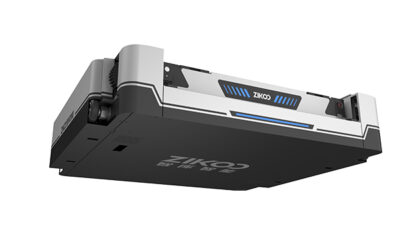
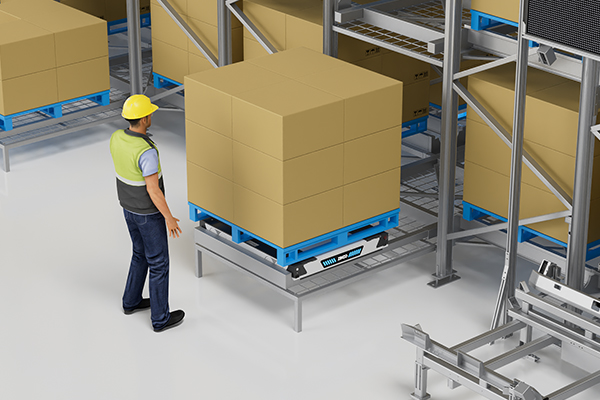
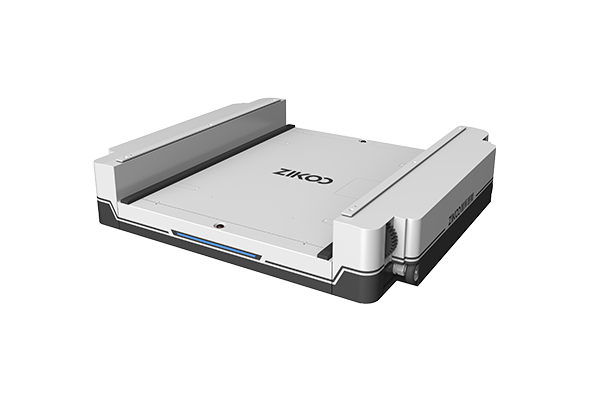
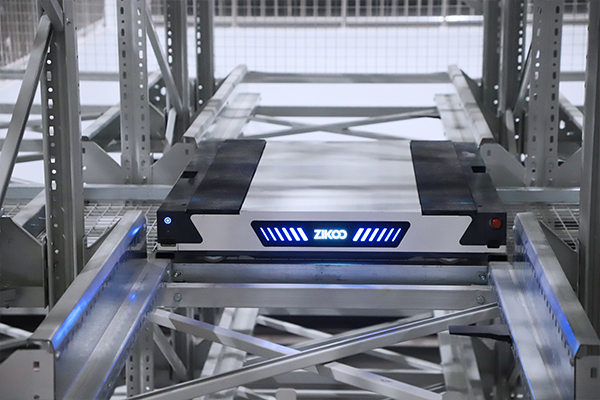
The short answer is yes, with the right technology selection. Traditional stacker crane AS/RS relies on high transaction rates to justify the capital, because each crane serves a single aisle and needs constant work. However, pallet shuttle systems like four-way shuttles operate on a different principle. A single R-bot four-way shuttle can serve multiple aisles and levels, moving both horizontally and vertically with support from an H-bot vertical bidirectional shuttle. This means one shuttle can handle the entire throughput of a small warehouse, eliminating the need for dedicated aisles and making low-volume automation financially rational.
In a facility with low throughput, the priority shifts from transaction speed to storage density and labour reduction. Automated systems excel at storing more pallets in the same floor area and retrieving them on demand without manual forklift operation. When daily movements are low, the shuttle spends most of its time idle, but that idle time costs little because the shuttle itself is a relatively low-cost robot compared to a stacker crane. The electricity drawn by a single R-bot, rated load 1200 kg to 2000 kg depending on model, is minimal during standby. So the economics work not because you run the robot flat out, but because you eliminate ongoing forklift operator costs and recover floor space that would otherwise be wasted in wide aisles.
Key AS/RS Technologies That Fit Low-Volume Scenarios
A warehouse with low throughput is often one with a high SKU count and irregular order patterns. The automation must handle the worst case of long idle periods followed by bursts of activity. Four-way shuttle systems are inherently suited to this because they combine dense pallet storage with flexible path planning. Each pallet position becomes accessible without moving other pallets, so retrieval speed stays consistent regardless of how full the system is.
How Four-Way Shuttle Systems Handle Low Velocity
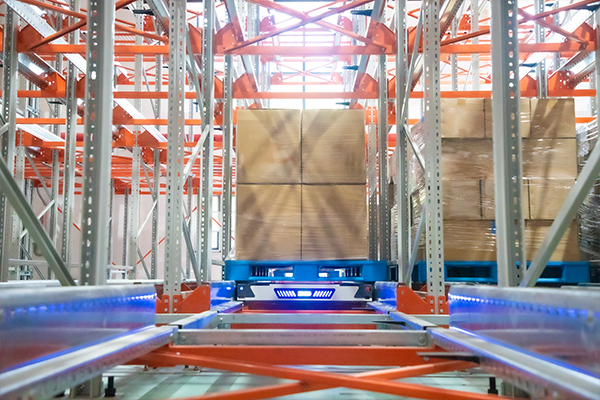
The R-bot four-way shuttle moves at up to 1.6 metres per second empty and 1.2 metres per second loaded, and it integrates with the H-bot vertical shuttle to reach any rack level. In a low-throughput configuration, a single shuttle paired with one or two vertical lifts can manage the entire inventory flow. Because the shuttle is battery operated and charges automatically during idle periods, there is no need for continuous power rails across the racking. This keeps installation simpler and allows the system to be placed into an existing building without major structural changes. The slim body of the R-bot, only 125 mm thick, also means that vertical space between pallet levels can be tighter, maximizing storage density.
Software’s Role in Making Low-Throughput Automation Work
The intelligence layer is just as important as the hardware. PTP Smart Warehouse Software, which integrates WMS, WES, WCS, and RCS functions, can schedule retrieval and putaway tasks in batches instead of trying to optimise for constant flow. In a low-throughput environment, the system might group all inbound pallets into a single hourly window and then let the shuttle return to standby. This avoids the cost of oversized power infrastructure and simplifies maintenance. The software also tracks every pallet movement and can generate reports that show exactly how close the system is to its capacity ceiling, giving managers confidence that they are not overspending on unused capability.
Cost and ROI of a Low-Throughput Automated Storage System
One of the biggest barriers for low-throughput facilities is cost uncertainty. A manual warehouse appears cheaper initially because the only major capital cost is racking and forklifts, while an AS/RS involves robots, software, and integration. But the comparison changes when you account for labour, space, and damage over a five-year period.
A single R-bot four-way shuttle with supporting vertical lifts and racking for around 1,500 pallet positions typically requires an investment in the range of several hundred thousand dollars, depending on the height and configuration. The payback period usually falls between two and four years for a facility moving 10 to 20 pallets per day, because the system replaces at least one and a half forklift operator shifts. Reduced product damage and precise inventory tracking add further savings that are harder to quantify but real.
| Cost Factor | Manual Warehouse | Low-Throughput AS/RS |
|---|---|---|
| Labour per shift | 1.5–2 operators | 0.5 operators |
| Floor space for 1,500 pallets | 1,200–1,500 m² | 700–900 m² |
| Annual damage and loss | 1–3% of inventory value | Under 0.5% |
| Energy consumption per year | Low (forklift fuel) | Moderate (robot charging) |
| Capital cost (5-year TCO) | Lower upfront, higher operating | Higher upfront, lower operating |
If your warehouse has a low ceiling and limited vertical expansion, the space savings alone can justify the system by postponing or eliminating the cost of a building extension. This is a point that comes up often when I evaluate sites where land is expensive or where cold chain requirements make every cubic metre costly.
Scaling Up: How a Modest Start Leads to Future Growth
Perhaps the strongest argument for introducing AS/RS in a low-throughput warehouse is that it is not a dead-end investment. A shuttle-based system is modular by design. You can start with a single R-bot and one H-bot serving a small rack block. When throughput requirements increase, you add a second shuttle on the same rail system and upgrade the software to coordinate multiple vehicles. This incremental expansion is far cheaper than installing a traditional stacker crane, which often requires a complete re-engineering of the rack structure.
The U-bot omnidirectional stacking robot offers another entry point. With a minimum aisle width of only 2,100 mm, it can be deployed in a narrow aisle layout initially, then integrated with AMRs later to form a full pallet-to-person system. Starting with one U-bot and a few rack lanes gives a facility automated vertical storage without committing to a full shuttle grid. As the need for throughput grows, the system can evolve into a six-way shuttle network using R-bot and H-bot combinations. This path respects capital constraints while preserving the option to expand.
Implementation Steps for a Low-Throughput AS/RS Project
Successful rollouts begin with a detailed data study. We typically request at least three months of inventory movement records, including peak periods, to model the system. For low-throughput sites, the key metric is not the average movement rate but the hourly peak and the idle gap between peaks. The system must be sized to clear the peak without stalling, but oversized for the daily average.
After data analysis, the layout design phase determines the optimal rack depth, shuttle quantity, and vertical lift placement. A simulation using the same WCS that will run the physical system validates the throughput under realistic conditions. Installation for a small system usually takes four to six weeks, and because shuttle systems do not require floor rails or extensive power infrastructure, the warehouse can often continue operating in a reduced-capacity mode during the installation.
If your program involves batch picking from a low-SKU, low-turnover product range, it is worth confirming the retrieval pattern with a simulation before finalizing the hardware specification. Reach out at [email protected] to discuss your data and get a configuration analysis.
Common Questions About Low-Throughput AS/RS
Does Low Throughput Automatically Disqualify a Warehouse from Automation
No. Throughput is only one of several factors. If your warehouse has high SKU proliferation, requires precise inventory tracking, or suffers from high labour costs relative to throughput, an automated system can still be viable. The economics shift in favour of automation when space is scarce or when product damage is a persistent problem. Low throughput does not mean no benefit, it just changes the calculation from speed to density, accuracy, and labour independence.
At What Daily Volume Does AS/RS Become Attractive
There is no universal minimum, but sites moving 10 to 15 pallets per day with a stable SKU base and a need for dense storage often reach acceptable payback. What matters more than the absolute number is the pattern. A site that receives a single truckload in the morning and picks slowly throughout the day can achieve high shuttle utilization within a short morning window, making the automation highly efficient despite the low daily total.
Is a Four-Way Shuttle System Too Complex for a Small Warehouse
Not in the way that matters. The shuttle and lift hardware is compact and does not require a mezzanine or floor rail network. The control software handles routing automatically once the warehouse map is configured. The operator interacts with the system through a standard touchscreen or tablet interface that shows inbound and outbound queues, similar to a conventional warehouse terminal. Training for operators and supervisors typically takes under a week.
How Do You Prevent Wasted Investment if Throughput Never Increases
Start with a conservative design that covers current needs and leaves room to add shuttles later. Because the rack structure does not change when you add vehicles, the initial investment is not wasted if growth is slower than expected. The hardware or software can be repurposed within the same rack block if the business profile changes. In many cases, clients see other benefits, such as better inventory accuracy and reduced security losses, that justify the system even without a throughput increase.
What Is the First Step in Evaluating AS/RS for a Low-Throughput Facility
The simplest way to get a reliable assessment is to share a sample of your movement data and warehouse layout. A quick simulation can show whether a single-shuttle configuration can handle your peaks and what the space savings would look like. Send your data to [email protected] or call (+86)-19941778955 for a confidential analysis based on your actual operation rather than general assumptions.
Re-evaluating warehouse automation for a low-throughput facility is not about chasing speed. It is about matching system capability to real operational needs without locking in unnecessary scale. Shuttle-based automated storage systems offer the right balance of density, labour independence, and modular growth potential, and they deserve a place in the evaluation matrix for any warehouse where every square metre and every labour hour counts.
If you’re interested, check out these related articles:
Six-Way Shuttle: The Smart Warehousing Tool for Cost Reduction and Efficiency 2
Six-Way Shuttle Powers Dense Storage: Breaking Space Limitations