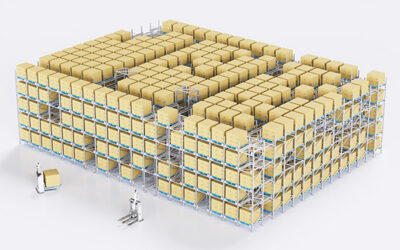
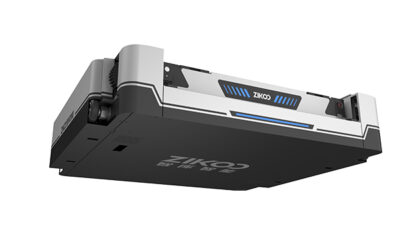
An automated storage and retrieval system only creates value when the right software tells the right machine to move the right pallet at the right moment. Buyers often spend months comparing shuttle speed, rack layout, and crane cycles, then discover that the real project risk sits in the integration layer between the warehouse management system, the warehouse control system, and the automation hardware. This guide explains what each system does, where integration breaks, what architecture choices matter, and what to put in a supplier evaluation checklist before you sign.
What ASRS, WMS, and WCS Each Control
An ASRS is not a single brain. It is a stack of control layers, and each layer makes different decisions at different speeds.
| Control layer | Typical system | Primary responsibility | Integration data |
|---|---|---|---|
| Business/planning | WMS | Orders, inventory, slots, replenishment, labor priorities | SKU master, order wave, putaway rule, inventory status |
| Execution/orchestration | WES/WCS | Task assignment, equipment routing, traffic, exception handling | Transport order, destination, priority, release triggers |
| Equipment control | ASRS controls + RCS | Robot dispatch, motion control, sensor events, safety | Position, status, load presence, fault codes |
The WMS is the planning brain. It decides what should move and why. A warehouse control system decides how a group of machines should execute that movement. The ASRS and its robot control system execute the physical pallet movement. The closest formal model for this separation is the enterprise-control integration hierarchy defined in ISA-95, which divides business planning, operations management, and real-time equipment control into distinct activity domains [1].
This distinction matters because each layer has a different failure mode. A WMS error usually affects data or planning. A WCS error blocks material flow. An ASRS fault stops physical movement. A buyer must therefore evaluate integration quality, not only the features of each individual package.
Why Integration Is Where Automation Projects Stall
Industry research consistently places software integration, data quality, and workforce readiness among the top risks in automation adoption [2]. The reason is straightforward: an ASRS can only execute what the upstream systems describe cleanly. If the WMS uses a different pallet master, a different unit of measure, or a different location hierarchy than the WCS expects, the project needs expensive custom mapping.
The most common failure points include duplicate or conflicting master data, missing exception workflows, unclear ownership of task cancellation, inconsistent barcode or RFID rules, and custom interface code that becomes unsupported after go-live. These are not dramatic failures. They appear as small delays, manual overrides, and falling throughput after launch.
Most integration failures trace back to software boundaries, not robot hardware.
Integration Architectures: From Interfaces to Unified Platforms
There are three common ways to connect ASRS equipment to warehouse software.
Model A: WMS to WCS with direct equipment control. The WMS releases orders to a WCS, and the WCS directly manages conveyors, shuttles, lifts, and stacker cranes. This works for focused projects but can become brittle when new equipment or workflows are added later.
Model B: WMS to WES to WCS/RCS. A warehouse execution system inserts an orchestration layer between planning and equipment control. This is useful in high-volume, multi-process operations where order release must be optimized across picking, replenishment, and inbound tasks.
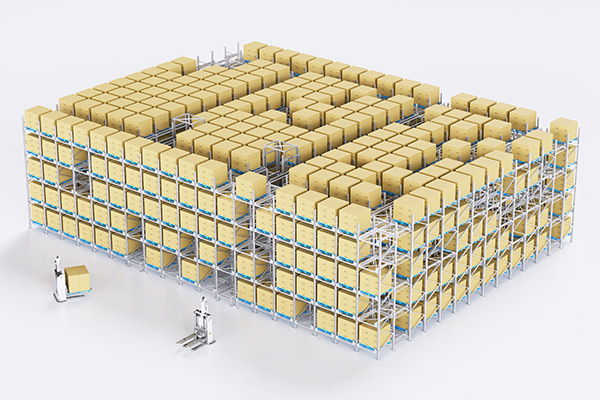
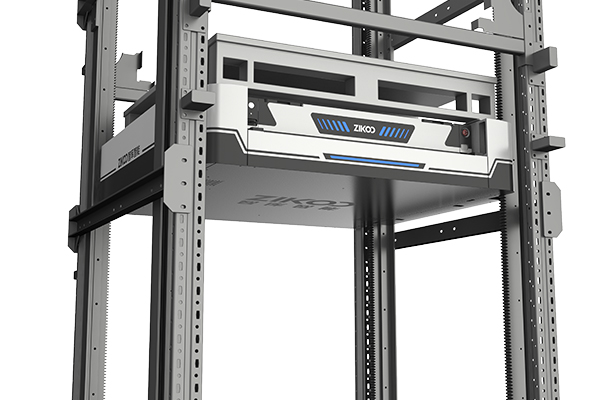
Model C: Unified WMS/WES/WCS/RCS platform. One software suite manages planning, execution, equipment control, and robot control. Fewer interfaces mean less data translation and fewer support boundaries. Zikoo’s PTP Smart Warehouse Software, for example, provides a combined WMS/WES/WCS/RCS structure designed for pallet-to-person storage and retrieval environments.
A flexible WMS/WCS layer is often the difference between a system that works on day one and one that scales.
Buyers should not choose an architecture by slogan. The right choice depends on whether the operation already has a capable WMS, how many equipment types must be coordinated, and whether the warehouse will expand in phases.
What Actually Happens in an ASRS Task Flow
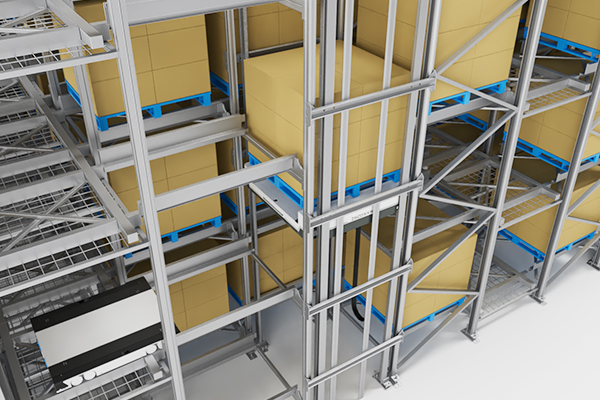
Understanding the physical flow makes integration easier to specify. In a shuttle-based ASRS, a typical outbound task moves through these steps:
- The WMS creates an outbound order and assigns a pallet location.
- The WES or WCS converts that into a transport mission with source, destination, priority, and pick station.
- The RCS dispatches a four-way shuttle to the source lane.
- The shuttle travels within the rack and extracts the pallet.
- A vertical bidirectional shuttle or lift transfers the pallet to the appropriate level.
- The pallet reaches a workstation, conveyor, or staging buffer.
- The WCS receives confirmation and the WMS updates inventory status.
Each step is an integration point. The WMS must hand off a consistent pallet identifier. The WCS must enforce traffic rules and avoid deadlock. The RCS must report position and fault status quickly enough for real-time recovery. If these messages are asynchronous without a clear sequence, pallets can disappear from the system view even when they are physically present.
Safety design follows EN 528 for rail-dependent storage and retrieval equipment [3], while adjacent mobile robots may fall under ISO 3691-4 [4]. Buyers should confirm that the supplier maps these safety signals into the WCS interface, not only into the machine controller.
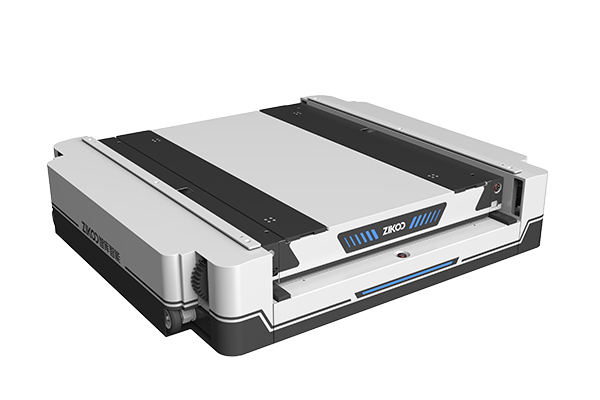
ASRS hardware selection shapes integration complexity before software comes into play.
Buyer’s Integration Checklist and Supplier Questions
Before comparing quotations, define integration acceptance criteria. The table below is a practical starting point.
| Area | What to verify |
|---|---|
| Interface scope | Which systems connect: WMS, ERP, MES, OMS, TMS, automation equipment |
| Data model | Pallet master, location, SKU, batch, and unit-of-measure mapping |
| Latency | How quickly task status, faults, and inventory events update |
| Exception handling | Who owns cancellation, priority override, and manual release |
| Offline mode | What happens to ASRS operations during WMS or network interruption |
| Simulation | Whether the supplier can emulate WMS/WCS traffic before installation |
| Scalability | How new shuttles, aisles, or stations are added without a new interface project |
| Security | User roles, audit logs, and remote access for support |
Useful questions to ask a supplier include: Can you show a reference where your WCS integrated with the customer’s existing ERP rather than your own WMS? Will you provide an interface control document before contract signing? What test cases do you run for order cancellation during retrieval? How do you handle inventory synchronization after a power failure?
A structured integration pre-check can prevent expensive scope changes later. If you want to compare quotations on an equal technical basis, contact the Zikoo engineering team at [email protected] or call (+86)-19941778955 and request a WMS/WCS/ASRS interface map and acceptance test plan.
Before You Sign: Get an Integration Roadmap Check
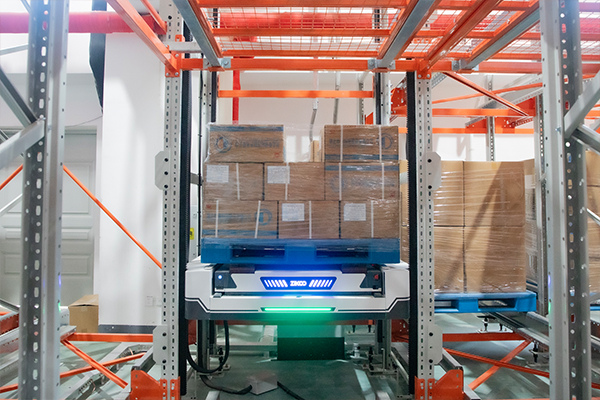
Do not accept a proposal that describes robots, racks, and software as separate delivery items. Ask the supplier to produce a single integration roadmap covering system boundaries, message flows, go-live rehearsal, and post-launch support.
Zikoo Smart Technology Co., Ltd supports pallet-to-person automation projects across power, cold chain, new energy, manufacturing, pharmaceutical, and third-party logistics operations. For an engineering-led review of your WMS/WCS/ASRS interface requirements, contact [email protected] or call (+86)-19941778955. Prepare your current order volume, SKU count, pallet type, facility height, and existing software landscape so the first technical discussion focuses on executable architecture rather than sales assumptions.
Frequently Asked Questions
What is the difference between WMS, WCS, and WES?
A WMS manages warehouse planning: orders, inventory, locations, replenishment, and reporting. A WCS manages real-time equipment execution: routing, task release, traffic, and machine coordination. A WES sits between them and orchestrates work across multiple processes such as picking, replenishment, and inbound. In modern automation projects, these boundaries often overlap, which is why interface and ownership definitions matter more than acronyms.
Does every ASRS project need a WCS?
Not every project needs a separate WCS. Small, single-vendor systems may have equipment control embedded in the ASRS software. However, when the warehouse includes multiple equipment types, multiple pick stations, or a third-party WMS, a dedicated WCS or WES layer usually simplifies operation and future expansion.
Can we integrate a new ASRS with our existing WMS?
Yes, if the existing WMS has a stable interface and your team is willing to define a clear data contract. The supplier should provide an interface control document, a mapping workshop, and end-to-end test cases. Some WMS platforms have restrictive custom logic that increases integration cost, so request a technical assessment before committing to a full project.
What interface standards should we require in an RFP?
Require at least these deliverables: an interface control document, message sequence diagrams for inbound, outbound, replenishment, and exception flows, a defined data model, a simulation or emulation plan, and a service-level response for interface issues. You do not need to mandate a specific protocol as long as the supplier defines versioned, testable, and supportable interfaces.
How long should integration testing take?
The duration depends on the number of systems and the quality of the master data. A focused single-vendor ASRS integration may require several weeks of testing. A multi-vendor project with ERP, WMS, WCS, and automation equipment can take months. Only accept a go-live date after interface testing, functional testing, and a full-volume rehearsal are complete.
What happens to operations during system integration?
A phased or brownfield transition can keep parts of the warehouse operating while the new ASRS is installed and tested. The supplier should explain how existing inventory will be moved, how system cutover will run, and what manual procedures will cover the period when the old and new systems operate in parallel.
References
[1] ANSI/ISA-95.00.01-2018, Enterprise-Control System Integration — Part 1: Models and Terminology, ISA.
[2] MHI Annual Industry Report 2024, The Collaborative Supply Chain: Tech Investment and Workforce Transformation, MHI/Deloitte.
[3] EN 528:2008, Rail dependent storage and retrieval equipment — Safety requirements, CEN.
[4] ISO 3691-4:2020, Industrial trucks — Safety requirements and verification — Part 4: Driverless industrial trucks and their systems, ISO.
If you’re interested, check out these related articles:
Six-Way Shuttle Drives Warehouse Upgrades: Building an Intelligent Automatic 3D Warehouse
Stacker Crane vs Four-Way Shuttle: Which Fits Your ASRS Warehouse Best
Six-Way Shuttle: The Dual-Engine Solution for High-D