Automated warehouse emergency handling is not just about sprinklers and backup generators. When power fails or a rack collapses, the difference between a quick recovery and weeks of downtime often comes down to the machine-level failsafe behaviors built into the shuttle and stacker robots. Procurement teams who focus only on facility safety miss the critical question: how does the automation itself react when something goes wrong? Drawing on system integration experience, I see two layers: the hardware’s autonomous response, and the software’s ability to isolate faults without human intervention. Both need verification before committing to a project.
What Counts as an Emergency in an Automated Warehouse
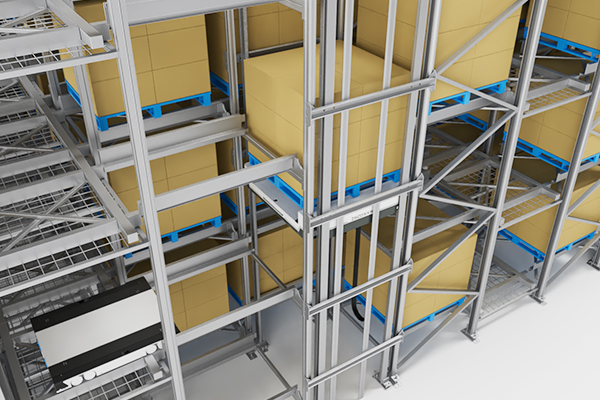
An emergency in an automated warehouse is any unplanned event that threatens personnel safety, inventory integrity, or system availability. The obvious ones are fire, seismic events, and regional power blackouts. Less dramatic but equally disruptive are localized motor failures, a shuttle derailing inside a lane, or a communication dropout between the WMS and a stacker crane. In a dense pallet shuttle system running 1.2 m/s loaded, something as simple as a debris obstruction on a rail can cascade into a multi-shuttle shutdown if the control layer does not isolate it in milliseconds.
The real danger is not the single point of failure but the assumption that the system will “stop safely” without being told how. From project reviews, I have seen that many RFQs list backup power and fire suppression but never ask the vendor to describe the shuttle’s behavior during a mid-aisle power cut. That is the gap procurement teams need to close.
How Shuttle Robots Respond to Power Loss and Equipment Failure
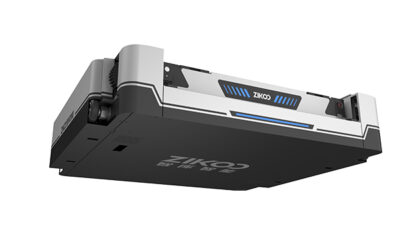
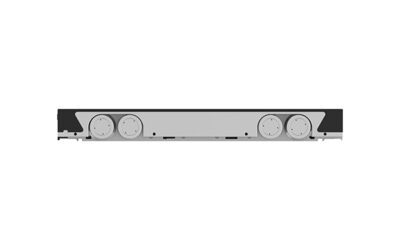
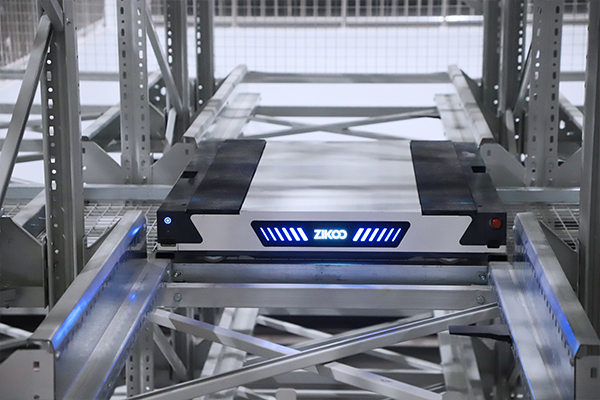
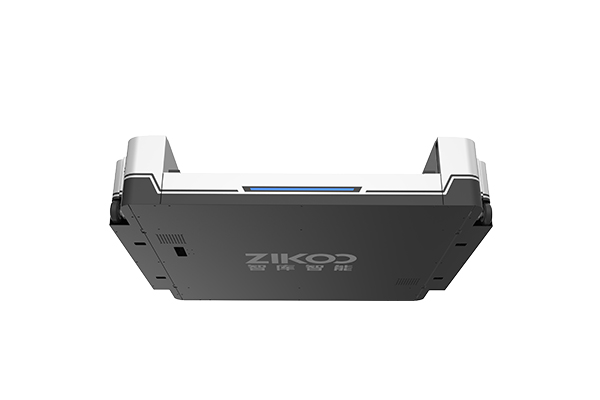
When an R-bot four-way shuttle loses external power, the onboard lithium battery takes over immediately. The 51.2V/40Ah pack keeps the control logic, safety PLC, and wireless module live for at least eight hours, which matters because a truly dead shuttle in a high-density lane becomes a retrieval problem that can take an entire shift to resolve. More importantly, the motor controllers are designed to engage a spring-loaded mechanical brake within 50 milliseconds of voltage drop, locking the shuttle in place before it can drift into the rack structure.
This behavior is not universal across all shuttle designs. Some low-cost shuttles rely on electrical braking alone; a power loss leaves them freewheeling slowly, risking pallet damage or rack collision. When I evaluate a shuttle supplier, I ask for a live demo of a full-load emergency stop from travel speed. That single test reveals more about the mechanical design than any spec sheet.
Shuttle reliability under real conditions directly impacts whether a dense storage project meets its throughput targets. <Six-Way Shuttle Powers Dense Storage: Breaking Space Limitations> covers how six-way shuttle configurations maintain uptime in 7-meter-high lanes, even when individual units enter a fail-safe state and hand off tasks to neighboring shuttles without operator intervention.
The R-bot’s laser-based navigation is another layer of protection. Before executing a pallet pick or place, the shuttle scans the target position. If it detects an unexpected object—a fallen carton, a misplaced pallet, or a maintenance tool left behind—it aborts the movement and flags a zone alert to the WCS. This pre-move check catches many operator-induced emergencies before they happen.
The Role of Warehouse Software in Emergency Protocols
Hardware responses are only half the picture. In a working six-way shuttle system, the PTP software platform continuously polls every shuttle and elevator for heartbeat signals. A communication gap longer than a configurable window—typically 300 milliseconds—triggers an automatic zone isolation. The WES marks all lanes served by that shuttle as unavailable and reroutes active orders to the next closest unit. This rerouting decision happens before the alarm reaches the operator’s screen, which is what prevents a single fault from freezing the entire warehouse.
What I have seen in practice is that the software’s emergency logic needs to be tuned to the physical layout. In a cold storage warehouse running at -25°C, the H-bot vertical shuttle’s motor drives take longer to respond because of increased lubricant viscosity. If the heartbeat timeout is too tight, the system will over-isolate and trigger false emergency stops every few hours. The team needs to model the actual response latency under load for each temperature zone. Generic default settings do not work.
Cold chain environments introduce specific risks that generic ASRS software modules often miss. <Smart Cold Chain Era: [Six-Way Shuttle System](https://www.zikooint.com/solution/r-bot-h-bot-six-way-shuttle-dense-storage-system) Redefines Storage Efficiency with Maximum Density> covers how temperature‑compensated motion profiles and humidity‑rated electronics maintain emergency response reliability without sacrificing throughput in sub‑zero warehouses.
Beyond real-time isolation, the software logs every emergency event with a millisecond timestamp, the shuttle ID, the lane position, and the triggered sensor. After a recovery, this log lets engineers reconstruct the exact sequence, distinguishing a true hardware fault from a momentary network glitch. Over time, the dataset feeds predictive maintenance models: a shuttle that enters fail-safe twice in one week for “obstacle detected—false positive” likely has a dirty laser lens, not a navigation failure.
Fire, Smoke, and Environmental Hazard Handling
In a fire scenario, the automated system must do more than stop. The WMS needs to coordinate with the building management system to close fire doors, activate smoke extraction, and shut down conveyors without trapping personnel in aisles. Shuttles parked in affected lanes must remain stationary; shuttles in adjacent lanes can be commanded to move away from the hazard, pulling inventory with them if the picking rules allow.
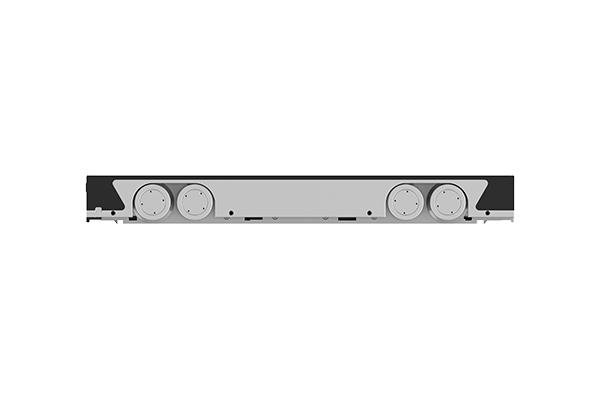
One often-overlooked requirement is the material choice in the shuttle itself. For a new energy battery warehouse, the R-bot configuration removes copper, zinc, and nickel from the vehicle body to eliminate spark risk if a battery pallet leaks. The structural frame uses stainless steel with blackening treatment, and all-rubber buffer wheels prevent metal-to-metal contact. These are not marketing bullet points; they are regulatory compliance decisions that change the risk profile of the entire warehouse during a hazmat incident.
Smoke detection integration is another area where the automation layer adds value. The shuttle’s onboard temperature sensor can flag a hot spot in a specific pallet position before ceiling-mounted detectors register the rise. With that resolution, the facility manager can send a thermal imaging drone down the aisle for confirmation rather than evacuating the entire building. False evacuations in a 24/7 automated warehouse can cost more in lost throughput than the value of the goods at risk, so targeted early detection matters.
What Procurement Teams Should Verify Before Signing
During supplier evaluation, the emergency handling conversation should focus on three specific, verifiable items. First, request a written emergency stop sequence document that covers at least these scenarios: power loss mid-travel, communication loss to the shuttle, fire alarm activation, and emergency egress triggered by a manual push button. If the sequence does not detail what each actuator does within the first second, the supplier has not engineered the behavior—they are assuming it.
Second, examine the battery management strategy. The R-bot’s BMS, for example, reports state-of-charge, cell temperature, and cycle count every ten seconds. If the shuttle enters emergency hold and the battery health is below a threshold, the system knows it cannot rely on the unit for autonomous evacuation and must dispatch a recovery team. A supplier that does not provide per-shuttle battery diagnostics is effectively asking you to trust that a four-year-old lithium pack will perform under stress with no data.
Third, ask for at least two reference sites where the system has experienced a real power failure or fire alarm activation during operation. Not a simulation; a genuine event. Ask the site engineer to describe how long it took to return to full throughput, whether any inventory was damaged, and what they changed in the emergency plan afterward. The answers will tell you more about the supplier’s after-sales support than any uptime guarantee.
Recovery and Resuming Operations After an Incident
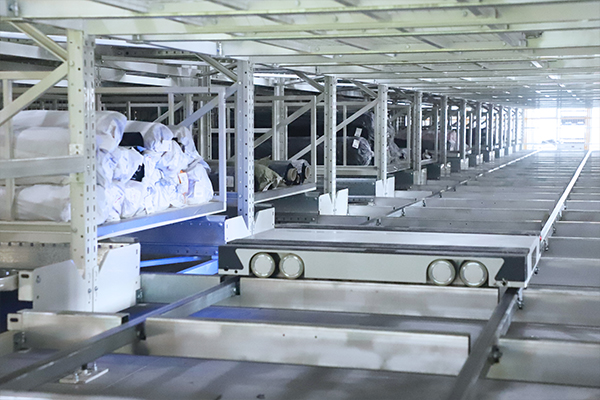
Recovery from an emergency in a dense ASRS is not simply pressing a restart button. After a power outage, each shuttle must be manually called to the maintenance position for a visual inspection of the drive wheels, rails, and battery contacts. In a large installation with 50 or more shuttles, this process alone can take half a shift unless the layout includes dedicated bypass lanes that let maintenance staff access units without emptying full storage aisles.
The software side is equally deliberate. The PTP platform’s restart routine first verifies that all safety interlocks are clear, then synchronizes the inventory record by comparing the last known pallet positions with the current WMS data. Discrepancies—pallets that moved during the event, or orders that were mid-execution—are flagged for manual reconciliation. The system will not resume normal operation until every mismatch is addressed, which is the correct behavior even though it feels slow to an operations manager eager to restart.
One lesson from field experience: the post-incident review session between the automation supplier and the warehouse owner is where long‑term reliability improves. The incident log reveals patterns—a shuttle that failed to brake within specification, a zone controller that restarted three times before stabilizing, a temperature sensor that spiked but did not trigger. These are not just repair tickets; they are design feedback that should flow into the next firmware update or into the layout of the next project. Procurement teams who treat the supplier relationship as a one‑time sale miss this continuous improvement loop.
Questions Buyers Often Miss About Warehouse Emergency Handling
How quickly can a shuttle stop during an emergency?
For the R-bot standard model, the mechanical brake engages within 50 milliseconds of a voltage drop, and the loaded deceleration profile brings a 1,200 kg pallet to a complete stop from 1.2 m/s in under 800 millimeters. This is a measured specification, not a theoretical number. The real-world variation comes from the pallet’s mass distribution: a top‑heavy load will show a slightly longer stopping distance because of the shifted center of gravity. During acceptance testing, I ask the supplier to run the emergency stop test with the heaviest and tallest load configurations planned for that facility.
Does an automated warehouse need a manual fallback mode?
Yes, but not in the way most people imagine. A manual mode does not mean a person climbs into the aisle and hand‑cranks a shuttle out of position. It means the WCS provides a step‑by‑step operator interface that lets a trained technician select a specific unit and command a slow‑speed move to the maintenance zone, with all safety interlocks still active. The motion is driven by the shuttle’s own motors, not by a person applying force. The fallback mode is a recovery tool, not a production mode, and it should be protected by a physical key switch to prevent accidental activation during normal operation.
What separates a well‑designed emergency shutdown from a poorly designed one?
The difference is how much of the warehouse stays operational after the first fault. A well‑designed system isolates the affected lane or level; the rest of the shuttles continue serving active orders. A poorly designed system triggers a cascade where one shuttle’s fault propagates to the zone controller, then to the WMS, and within seconds the entire floor is stopped. The key technical difference is in the communication architecture—whether the shuttle’s fault signal travels peer‑to‑peer among devices with local decision logic, or whether everything must phone home to a central PLC before any action is taken. The distributed architecture is more expensive up front but avoids the single‑point‑of‑failure problem that causes full‑site shutdowns.
How do cold storage emergencies differ from ambient ones?
At -25°C, the shuttle’s battery chemistry delivers roughly 20% less usable capacity, and the lubricant in the wheel bearings stiffens. That means the emergency stop distance needs to be measured at operating temperature, not at room ambient, because the deceleration profile shifts. The H‑bot vertical shuttle’s guide rollers also contract in the cold, changing the clearance between the shuttle and the mast by a fraction of a millimeter. Over multiple cycles, this can generate a debris trail that affects emergency braking later. The remedy is a more frequent rail cleaning schedule and a temperature‑specific commissioning test that records the actual stopping distance at -25°C.
Should the supplier provide emergency handling documentation beyond a general safety manual?
Absolutely. Request the emergency response flowchart for each major system component, not just the overall facility. For a shuttle, that flowchart should map every sensor input, every actuator output, and the timing of each transition. If the supplier cannot produce this because “the software handles it automatically,” that is a red flag. Automation can mask poor engineering, but the real test is whether the engineer who designed the shuttle’s control board can explain exactly how the brake relay is powered and what happens if that relay coil fails open. If your team includes a controls engineer, give them access to that documentation before visiting the reference site. Their technical questions during the site visit will produce more useful answers than a generic checklist. Share your specific emergency response requirements with the supplier early—send your part number and performance expectations to [email protected] or call (+86)-19941778955 to confirm the shuttle’s failsafe behavior matches your operational risk profile.
If you’re interested, check out these related articles:
Six-Way Shuttle: Empowering Industries to Embrace Smart Warehousing
PTP Intelligent Warehouse Software Empowers Enterprises for Smart Upgrades
Software-Driven Hardware: Six-Way Shuttle Maximizes Warehouse Efficiency
Smart Warehousing Starts Here: Cost-Effective Four-Way Shuttle Systems