Core Performance Indicators That Actually Matter for Four-Way Shuttle Systems
Selecting a four-way shuttle system means committing to infrastructure that will run for a decade or more. The specifications on a datasheet tell part of the story, but translating those numbers into warehouse performance requires understanding how each metric affects daily operations. This analysis breaks down the quality indicators that separate systems worth the investment from those that underperform once installed.
Throughput figures deserve scrutiny beyond the headline number. A system rated at 200 pallets per hour under test conditions may deliver 140 in a facility with irregular order patterns or mixed SKU profiles. The gap comes from how the control logic handles task queuing and path conflicts. Speed ratings follow similar logic: a shuttle traveling at 4 m/s horizontally sounds impressive until you account for acceleration curves, deceleration zones near rack intersections, and the vertical lift cycles that punctuate every retrieval. Cycle time calculations that ignore these transitions overstate real-world performance by 15–25 percent in most installations.
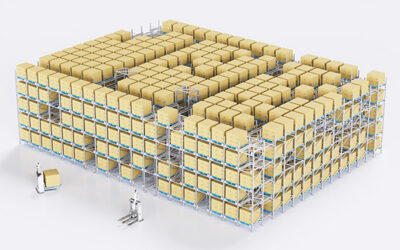
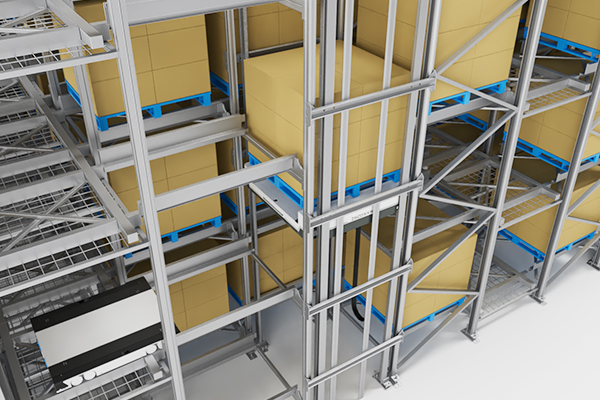
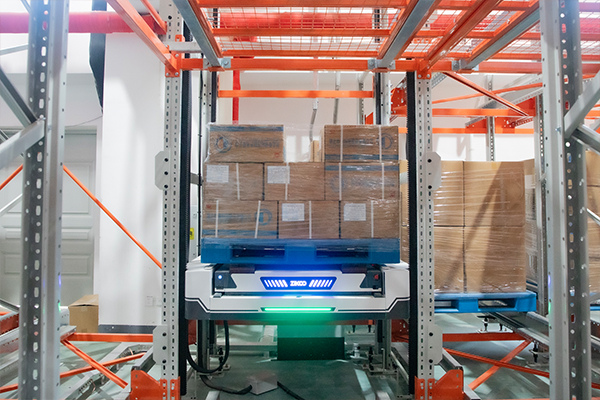
Capacity specifications split into two distinct considerations. Payload rating determines which product categories the system can handle. The R1500J model from Zikoo, rated at 1500 kg, covers most standard pallet loads in food, beverage, and general manufacturing applications. Storage density depends on rack configuration and shuttle access patterns. Six-way systems that combine horizontal four-way shuttles with vertical bidirectional units create three-dimensional movement channels, pushing density higher than conventional AS/RS layouts can achieve.
| KPI | Description | Impact on Operations |
|---|---|---|
| Throughput | Pallets moved per hour | Directly affects order processing and dispatch |
| Speed | Shuttle travel velocity (m/s) | Determines cycle time for storage and retrieval |
| Capacity | Maximum payload (kg) and storage volume | Influences types of goods handled and space usage |
| Accuracy | Positioning precision (mm) | Reduces errors and product damage |
| Energy Usage | Power consumption per cycle (kWh) | Affects operational costs and sustainability goals |
Why Reliability Metrics Reveal More Than Speed Ratings
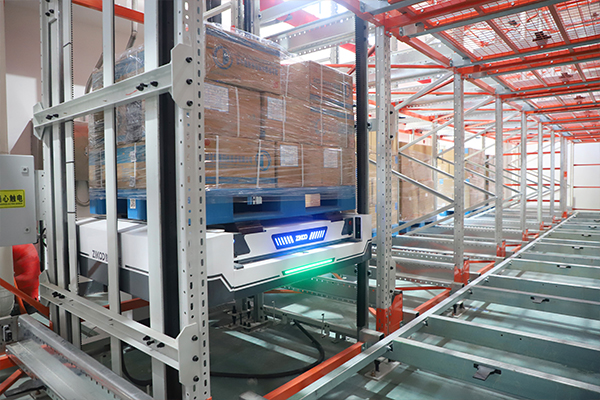
A shuttle that runs fast but breaks down weekly costs more in lost throughput than a slower unit with consistent uptime. Mean Time Between Failures (MTBF) quantifies this tradeoff. Systems with MTBF figures above 10,000 hours typically indicate mature mechanical designs and well-tested control electronics. Below 5,000 hours, expect maintenance interventions to become a regular scheduling constraint.
Mean Time To Repair (MTTR) matters equally. A failure that takes four hours to diagnose and fix disrupts an entire shift. Systems designed with modular components and accessible service points bring MTTR down to under an hour for most common issues. Diagnostic software that pinpoints fault locations before a technician arrives accelerates this further.
Lifecycle cost analysis extends beyond purchase price. A system priced 20 percent lower upfront but requiring twice the maintenance labor and consuming 30 percent more energy per cycle often costs more over a seven-year horizon. Energy consumption per pallet movement, spare parts availability, and firmware update policies all factor into the total ownership calculation.
Operational flexibility addresses a different kind of durability: the ability to handle changing business conditions without major capital expenditure. Systems that accommodate multiple pallet footprints, adjust easily to seasonal volume swings, and integrate new shuttle units without full system shutdowns protect against the operational rigidity that makes some automation investments regrettable within five years.
How Software Integration Determines Real-World System Performance
Hardware moves pallets. Software decides which pallets move when, where they go, and how multiple shuttles coordinate without colliding or idling. The quality gap between shuttle systems often comes down to control logic rather than mechanical specifications.
Warehouse Management Systems (WMS) handle inventory records and order allocation. Warehouse Execution Systems (WES) translate orders into task sequences. Warehouse Control Systems (WCS) direct physical equipment movements in real time. When these layers communicate poorly, shuttles wait for instructions, paths conflict, and throughput drops below rated capacity. Integrated software stacks like Zikoo’s PTP Smart Warehouse Software eliminate the latency and translation errors that plague systems assembled from multiple vendors.
Path optimization algorithms make a measurable difference in dense storage configurations. A shuttle retrieving a pallet from deep storage must navigate around other active shuttles, avoid blocking access lanes needed for concurrent tasks, and return to a charging position when battery levels drop. Naive routing logic creates traffic jams. Sophisticated algorithms anticipate conflicts several moves ahead and reroute dynamically.
Real-time data feeds from the control system enable predictive maintenance and performance monitoring. Tracking motor current draw, wheel wear patterns, and positioning accuracy over time reveals degradation before it causes failures. This data also supports continuous improvement: identifying bottleneck locations, measuring the impact of layout changes, and validating throughput gains from software updates.
Evaluating Scalability and Energy Efficiency Before Purchase
Warehouse automation investments should accommodate growth without requiring replacement. Scalability in four-way shuttle systems means adding shuttles, extending rack runs, or increasing storage height without redesigning the control architecture or replacing existing equipment.
Modular rack systems that accept additional bays and levels support physical expansion. Control software that handles larger shuttle fleets without performance degradation supports operational expansion. The practical test: can the system double its shuttle count and storage positions without a software rewrite or control hardware upgrade? Systems designed around proprietary protocols or fixed-capacity controllers fail this test.
Pallet size flexibility matters for operations handling multiple product categories or serving customers with different shipping standards. The R-bot series supports American Type pallets (1016 × 1219 mm), European Type (1200 × 800 mm and 1200 × 1000 mm), and Japanese Type (1100 × 1100 mm) configurations. Switching between pallet types should require rack adjustments and software parameter changes, not shuttle replacement.
Energy consumption directly affects operating costs and increasingly influences facility sustainability reporting. Lithium battery systems with 7–8 hour continuous operation times reduce charging infrastructure requirements. Regenerative braking recovers energy during deceleration, cutting net consumption per cycle. Low-power standby modes prevent idle shuttles from draining batteries unnecessarily.
If your facility handles mixed pallet types or anticipates significant volume growth, discussing scalability requirements with potential vendors before specification finalization prevents costly constraints later.
What Vendor Support and Total Cost of Ownership Should Look Like
Technical specifications describe what a system can do under ideal conditions. Vendor support determines what happens when conditions are not ideal.
Service level agreements should specify response times for different failure severities. A complete system stoppage warrants a four-hour response commitment. A single shuttle fault affecting throughput but not halting operations might carry a 24-hour response window. Vague commitments to “prompt service” provide no accountability.
Spare parts availability affects MTTR directly. Vendors who stock critical components locally enable same-day repairs. Those who ship from overseas manufacturing facilities add days or weeks to downtime. Ask where spare parts are held and what the typical delivery time is for motors, wheels, sensors, and control boards.
Training programs for maintenance staff and operators reduce dependence on vendor technicians for routine issues. Comprehensive training covers daily operation, basic troubleshooting, preventive maintenance procedures, and safety protocols. Systems that require vendor involvement for minor adjustments create ongoing costs and response delays.
Total cost of ownership calculations should include: initial purchase and installation, annual maintenance labor and parts, energy consumption, software licensing or update fees, and projected costs for capacity expansion. Comparing systems on purchase price alone ignores factors that often dominate the ten-year cost picture.
Return on investment timelines vary with facility size, labor cost environment, and operational complexity. Many installations achieve payback within two to five years through throughput improvements, labor reallocation, and space utilization gains. Facilities with high labor costs or severe space constraints often see faster returns.
Frequently Asked Questions About Four-Way Shuttle Systems
What operational advantages do four-way shuttle systems provide over conventional AS/RS?
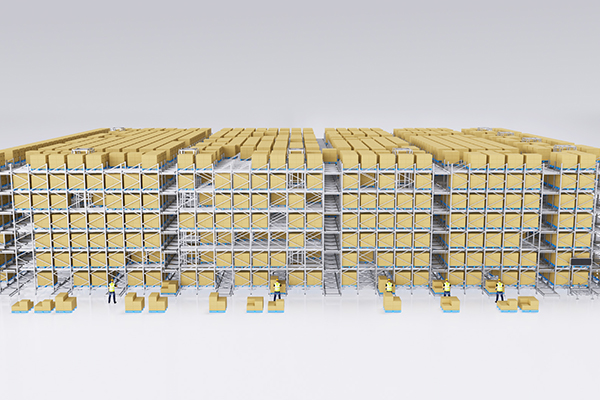
Four-way movement allows shuttles to access any position within a storage level without dedicated aisle space for each rack row. This enables deeper storage configurations and higher density than crane-based systems or single-direction shuttles. Order fulfillment benefits from the ability to retrieve pallets from multiple locations simultaneously using multiple shuttles operating on the same level, reducing wait times during peak periods.
How does Zikoo validate reliability before systems ship?
Each R-bot Four-Way Shuttle undergoes load testing, positioning accuracy verification, and extended run-time trials before delivery. The PTP Smart Warehouse Software runs simulation scenarios that stress-test task scheduling, path conflict resolution, and failure recovery logic. Field performance data from installed systems feeds back into design improvements for subsequent production runs.
What does integration with existing warehouse management systems involve?
The PTP software stack provides standard APIs for data exchange with third-party WMS platforms. Integration typically involves mapping inventory data fields, configuring order import formats, and establishing communication protocols for status updates. Zikoo’s technical team supports the integration process, including testing and validation before go-live. For operations evaluating system compatibility, requesting a technical review of your current WMS architecture with Zikoo’s integration specialists clarifies requirements and timeline.
To discuss specific throughput requirements or request a system configuration proposal, contact Zikoo Smart Technology at [email protected] or (+86)-19941778955.
If you’re interested, you may want to read the following articles:
Smart Storage Revolution: Comprehensive Overview of Four-Way Shuttle Systems for Automatic 3D Warehouses
Stacker Crane vs Four-Way Shuttle: Which Fits Your ASRS Warehouse Best
Software-Driven Hardware: Six-Way Shuttle Maximizes Warehouse Efficiency
PTP Intelligent Warehouse Software Empowers Enterprises for Smart Upgrades