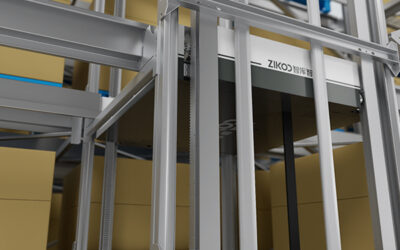
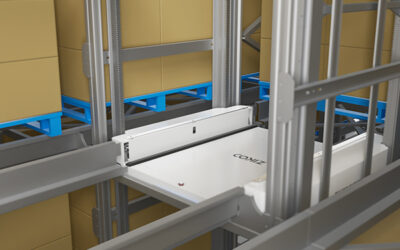
Modern logistics puts pressure on every square meter and every second. Traditional warehouse setups often hit a ceiling—space runs out, retrieval slows down, and scaling feels like starting over. Four-way shuttle systems change that equation. They move in any direction across storage racks, accessing goods without dedicated aisles for each row. For operations facing growth or complexity, this flexibility matters.
Maximizing Storage Density and Space Utilization
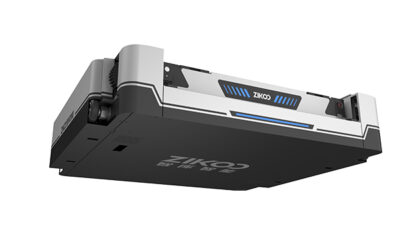
Storage density determines how much inventory fits within a given footprint. Zikoo’s R-bot Four-Way Shuttle targets this directly, working both vertically and horizontally to fill space that conventional systems leave unused. The shuttle body measures just 125 mm thick, which allows tighter rack configurations and more storage levels in the same building height. It handles standard pallet sizes including 1200 × 800–1000 mm (Standard Type R1200B) and 1016 × 1219 mm (American Type R1200A), covering most regional requirements without custom modifications.
Fixed-aisle systems with forklifts or reach trucks need clearance for turning and maneuvering. That clearance adds up. The R-bot accesses storage positions dynamically, reaching any location without permanent aisle allocation. E-commerce fulfillment centers and manufacturing warehouses with high SKU counts see particular gains from this approach.
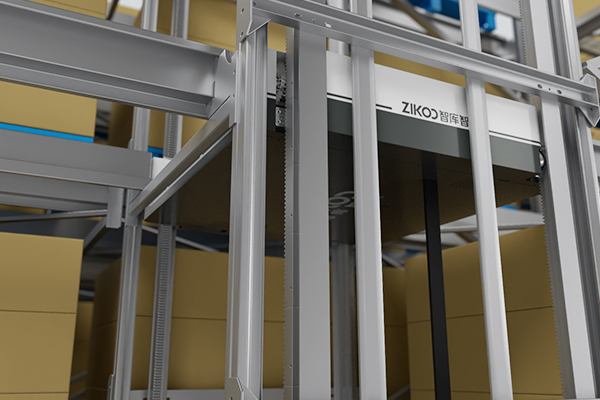
Accelerating Goods to Person Fulfillment Operations
Fulfillment speed depends on how quickly items reach picking stations. Zikoo’s R-bot, running with PTP Smart Warehouse Software, brings pallets directly to operators rather than sending workers into storage areas. The shuttle moves at 1.6 m/s when empty and 1.2 m/s when loaded. Those speeds, sustained across hundreds of daily cycles, compress order processing time considerably.
Minimizing Labor Dependency and Enhancing Safety
Automated material handling shifts labor away from repetitive transport tasks. Fewer workers moving through storage aisles means lower injury exposure and reduced training overhead. The R-bot operates autonomously in areas that would otherwise require constant human presence, which changes both cost structure and risk profile.
| Feature | Manual Picking | R-bot Four-Way Shuttle |
|---|---|---|
| Throughput | Low | High |
| Labor Dependency | High | Low |
| Error Rate | Moderate | Low |
| Safety | Moderate | High |
| Space Utilization | Limited | High |
Optimizing Inventory Accuracy and Control
Knowing exactly what sits where, in real time, prevents stockouts and overordering. The PTP Smart Warehouse Software (WMS/WES/WCS/RCS) tracks every pallet location and movement as the R-bot shuttles operate. Discrepancies between system records and physical inventory shrink because the automation removes manual scanning gaps and placement errors.
Precise positioning also supports proper stock rotation. Perishable goods, pharmaceuticals requiring temperature control, and other time-sensitive inventory benefit from systematic first-in-first-out handling. The software maintains visibility across diverse product types and storage conditions.
Scalability and Adaptability for Future Growth
The R-bot system uses modular components. Adding shuttles or expanding rack structures happens incrementally rather than requiring full system replacement. This matters for businesses with uncertain demand curves or seasonal peaks. Investment scales with actual need rather than projected maximums.
Different operations configure the system differently. Dense e-commerce storage prioritizes retrieval speed across many SKUs. Manufacturing raw material storage might emphasize bulk capacity and batch handling. The same platform accommodates both.
Integrating with Comprehensive Warehouse Software
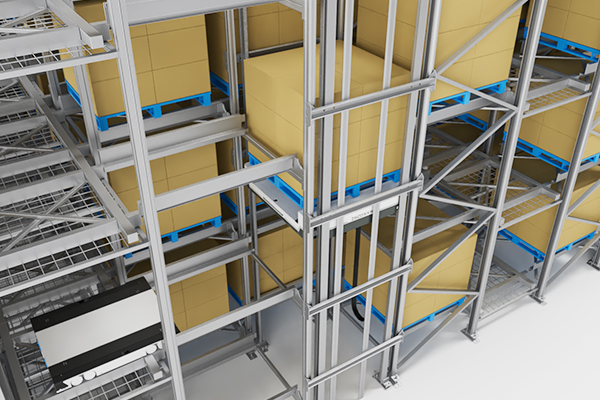
Hardware alone doesn’t create efficiency. Zikoo’s PTP Smart Warehouse Software coordinates the R-bot Four-Way Shuttle alongside U-bot Omnidirectional Stacker Robots and H-bot Vertical Bidirectional Shuttle units. The software handles warehouse execution (WES), warehouse control (WCS), and robot control (RCS) functions through a single platform.
Task assignment, route optimization, and traffic management happen automatically. When multiple shuttles operate in shared space, the software prevents conflicts and balances workloads. This coordination layer determines whether the hardware investment actually delivers expected throughput.
Measuring ROI from Four Way Shuttle Implementation
Financial returns from the R-bot come from several directions. Labor costs drop as automated handling replaces manual transport. Storage capacity increases within existing building space, deferring or eliminating expansion costs. Inventory accuracy improvements reduce carrying costs and lost sales from stockouts.
Throughput gains allow higher order volumes without proportional staffing increases. For operations running near capacity, this creates headroom for growth. The combination typically produces faster payback than single-benefit automation projects.
Frequently Asked Questions About Four Way Shuttle Systems
What are the key benefits of a four way shuttle system in a modern warehouse?
four-way shuttle systems increase storage density by eliminating fixed aisles. Retrieval times drop because shuttles access any position directly. Labor requirements decrease for transport tasks, and inventory accuracy improves through automated tracking. Safety also improves with fewer workers in active storage areas.
How does a four way shuttle compare to traditional warehouse storage methods?
Traditional systems need aisle space for equipment access, which limits how tightly goods can be stored. A four way pallet shuttle moves across and between racks without dedicated pathways, using vertical and horizontal travel to reach any position. This flexibility translates to higher throughput per square meter and faster response to retrieval requests.
What factors should be considered when implementing a four way shuttle system?
Implementation planning for a four-way shuttle system should address warehouse dimensions, ceiling height, floor conditions, and existing infrastructure. Pallet types and weights affect shuttle selection. Integration with current WMS or ERP systems determines how smoothly operations transition. Environmental factors like cold storage requirements influence component specifications.
Optimize Your Warehouse with Zikoo Smart Technology
Zikoo Smart Technology builds robotics and software for warehouse operations facing real constraints. The R-bot Four-Way Shuttle and PTP Smart Warehouse Software work together to address density, speed, and accuracy challenges. Reach out at [email protected] or call (+86)-19941778955 to discuss specific requirements.