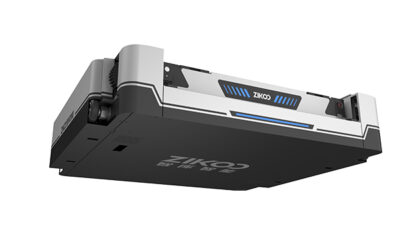
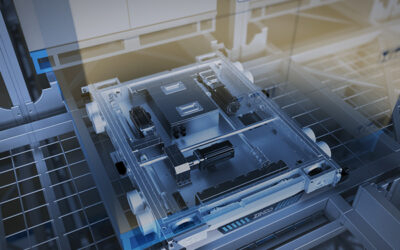
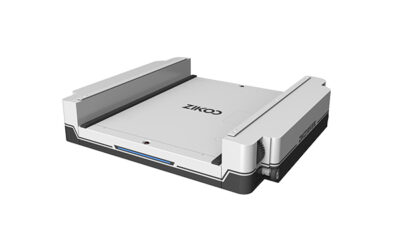
Modern warehouses keep getting squeezed. Faster delivery expectations, tighter accuracy requirements, more SKUs crammed into the same footprint. The old ways of moving pallets around just don’t cut it anymore. Automation has become the practical answer for operations trying to stay competitive, and four-way shuttle systems sit at the center of that shift. Zikoo Smart Technology builds pallet-to-person robotics that tackle these problems head-on, with the four-way shuttle doing much of the heavy lifting when it comes to warehouse efficiency and flexibility.
How Four-Way Shuttles Change Storage and Retrieval
Four-way shuttles work differently from conventional systems because they move in any direction within the racking structure. That omnidirectional capability means every pallet position becomes accessible without dedicated travel aisles eating up floor space. Zikoo’s R-bot Four-Way Shuttle measures just 125 mm thick and handles loads up to 1.5 tons. It accommodates various pallet sizes, including 1200 × 800–1000 mm for the Standard Type (R1200B) and 1016 × 1219 mm for the American Type (R1200A). This range makes it practical across different storage environments. Speed matters too. Empty shuttles hit 1.6 m/s while loaded units reach 1.2 m/s on most models.
R-bot Four-Way Shuttle Specifications
| Model | Rated Load (kg) | Body Dimensions (L×W×H mm) | Pallet Sizes Supported (mm) |
|---|---|---|---|
| Standard (R1200B) | 1200 | 1000 × 972 × 125 | 1200 × 800–1000 |
| American (R1200A) | 1200 | 1192 × 840 × 125 | 1016 × 1219 |
| Japanese (R1500J) | 1500 | 1192 × 900 × 125 | 1100 × 1100 |
| Heavy-duty (R1500B) | 1500 | 1192 × 972 × 125 | 1200 |
| Large Pallet (R2000B) | 2000 | 1250 × 1300 × 150 | 1400 |
These specs show how the R-bot fits different operational needs, whether that’s e-commerce fulfillment or cold chain storage where conditions get demanding. The four-direction movement eliminates the need for separate inbound and outbound aisles, which pushes storage density higher. High-volume operations see real throughput gains from this design. This kind of dynamic movement has become a baseline expectation for automated storage systems that actually perform.
What Changes in Day-to-Day Operations
When four-way shuttles go into a warehouse, the numbers shift. Labor costs drop because fewer people handle pallets manually. Order cycles get shorter. Throughput climbs. Zikoo’s PTP Smart Warehouse Software ties into the hardware and coordinates everything so shuttles work together instead of getting in each other’s way. Routes get optimized, idle time shrinks, and the whole workflow tightens up. That coordination shows up in supply chain metrics.
Picking Gets Faster and More Accurate
Four-way shuttles enable goods-to-person picking, which flips the traditional model. Instead of workers walking through aisles hunting for items, the requested pallets come to them at picking stations. Accuracy improves because there’s less room for human error in navigation. Speed increases because travel time disappears. Zikoo’s U-bot Omnidirectional Stacking Robot and H-bot Vertical Bidirectional Shuttle add more capability here. The U-bot handles narrow aisle storage with lifting heights reaching 8 meters. The H-bot moves pallets vertically, working with the R-bot to create a six-way shuttle system that operates in three dimensions. Orders consolidate faster and items arrive where they need to be.
Growing Without Starting Over
Shuttle systems scale in ways that fixed automation can’t match. The modular design means adding capacity doesn’t require tearing everything out and rebuilding. More shuttles, more racking modules, and the system expands. Businesses with seasonal demand swings or growth plans find this flexibility valuable. The warehouse can evolve alongside the business without major operational disruptions or capital outlays that dwarf the original investment.
For a deeper understanding of how these systems drive warehouse upgrades, consider reading 《Six-Way Shuttle Drives Warehouse Upgrades: Building an Intelligent Automatic 3D Warehouse》.
The Money Side of Shuttle Systems
Four-way shuttle systems make financial sense when you look at the full picture. Operating costs decline because you need fewer people and energy consumption gets optimized through smarter movement patterns. Automated handling reduces product damage, which adds up over time. Vertical space utilization means existing facilities hold more inventory, delaying or eliminating the need for expensive expansions. A warehouse transitioning from manual operations to an automated shuttle system might see labor costs drop 30% and storage capacity increase 20%, with ROI landing somewhere in the 2-3 year range depending on the operation.
What Drives ROI
| Factor | Impact on ROI |
|---|---|
| Labor Costs | Significant reduction through automation |
| Space Utilization | Maximized density, delaying or avoiding expansion |
| Throughput | Increased order fulfillment capacity and speed |
| Inventory Accuracy | Reduced errors, minimizing stockouts and returns |
| Product Damage | Minimized handling errors, preserving product value |
| Energy Consumption | Optimized movement, potentially lowering energy use |
These factors stack up. The long-term savings typically exceed the upfront investment, which makes the case for modernization straightforward once the numbers are on the table.
Software Makes the Hardware Work
Automated shuttles only reach their potential when smart software runs the show. Zikoo’s PTP Smart Warehouse Software handles WMS, WES, WCS, and RCS functions in one integrated system. It manages inventory, directs shuttle movements, and assigns tasks to maximize performance. Real-time analytics reveal where bottlenecks form and where optimization opportunities exist. The software layer ensures hardware runs at full capacity and adapts dynamically when demand shifts or inventory changes. This integration is what separates systems that perform from systems that just exist.
For more insights into how software empowers smart upgrades, we recommend 《PTP Intelligent Warehouse Software Empowers Enterprises for Smart Upgrades》.
Building for What Comes Next
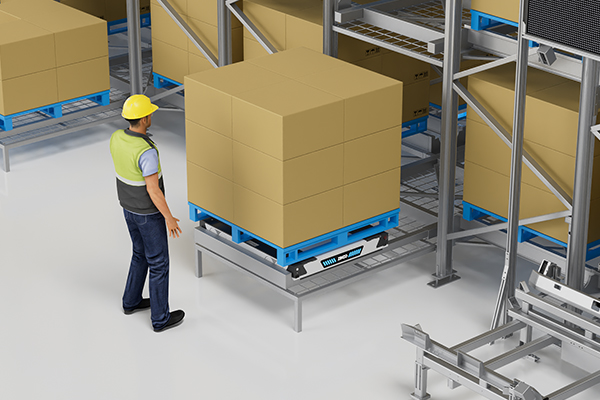
Four-way shuttle technology positions warehouses for whatever logistics demands emerge. E-commerce keeps growing, customer expectations keep rising, and market conditions keep shifting. These systems flex with changing requirements, scaling up or down as business needs dictate. The broader automation trend points toward smarter, more connected warehouse environments. Operations running R-bot systems stay ahead of that curve rather than scrambling to catch up. That positioning matters for long-term competitiveness and operational stability.
Transform Your Warehouse with Zikoo Smart Technology
Ready to bring four-way shuttle technology into your intralogistics operation? Contact Zikoo Smart Technology Co., Ltd. and see how our R-bot Four-Way Shuttles and PTP Smart Warehouse Software can change how your warehouse runs. Reach out at [email protected] or call (+86)-19941778955 for a consultation tailored to your situation.
Frequently Asked Questions About Four Way Shuttles
What are the core benefits of a four-way shuttle system in a modern warehouse?
Four way shuttle systems boost warehouse efficiency by maximizing storage density, speeding up goods-to-person retrieval, cutting labor costs, and improving order accuracy. The omnidirectional movement gives flexible access to inventory, which translates to better throughput and smarter space use. Zikoo’s R-bot Four-Way Shuttle delivers these benefits while integrating with our PTP Smart Warehouse Software for coordinated performance.
How does shuttle technology compare to traditional warehouse storage solutions?
Traditional static racking and manual retrieval systems fall short on automation, speed, and flexibility. They tend toward lower storage density, heavier labor requirements, and slower processing. four-way shuttle technology from Zikoo Smart Technology provides dynamic, high density storage with rapid automated retrieval. That makes these systems practical for high-volume operations looking for real improvements in warehouse efficiency and the ability to adapt as conditions change.
What factors should businesses consider when implementing automated shuttles?
When evaluating automated shuttle systems, look at warehouse layout and how space gets used, required throughput and order fulfillment rates, how the system will integrate with existing WMS/WES platforms, budget constraints, and future scalability needs. The types of goods being handled and the desired automation level matter too. Zikoo Smart Technology works with operations to assess these factors, ensuring our R-bot Four-Way Shuttles and PTP Smart Warehouse Software fit the specific requirements for optimal warehouse efficiency.