Four-way shuttle systems solve a specific problem that most warehouse operators know too well: you need more storage capacity, but expanding your footprint is either impossible or prohibitively expensive. These systems let you store more in the same space while moving goods faster than conventional methods allow.
China has become the manufacturing center for this technology, with several companies pushing the boundaries of what automated storage can accomplish. If you are evaluating suppliers or trying to understand whether this technology fits your operation, the details below cover what actually matters for procurement decisions.
How Four-Way Shuttles Actually Work
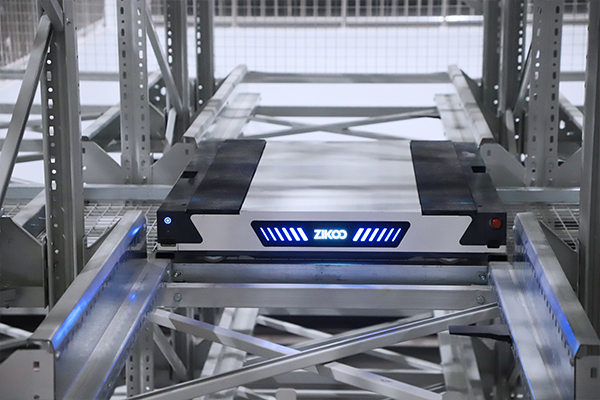
A four-way shuttle is an autonomous robot that moves pallets or containers within a racking structure. Unlike older two-way systems that only travel forward and backward along a single aisle, these shuttles move in all four cardinal directions. That sounds like a small difference, but it changes how you design storage layouts entirely.
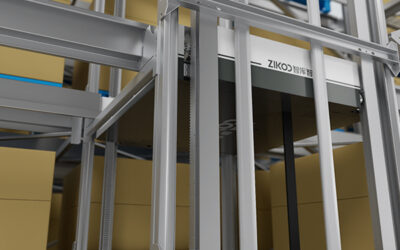
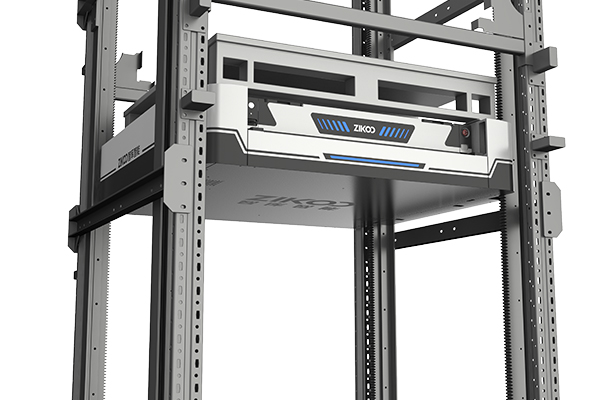
The shuttle receives instructions from your warehouse management system, travels along rails to the target location, lifts the load with onboard mechanisms, and delivers it to a pickup point. For multi-level operations, vertical shuttles or elevators handle the up-and-down movement. When you combine horizontal four-way movement with vertical transport, you get what some manufacturers call a six-way system, meaning the shuttle can reach any position in three-dimensional space.
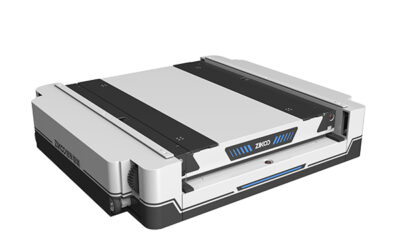
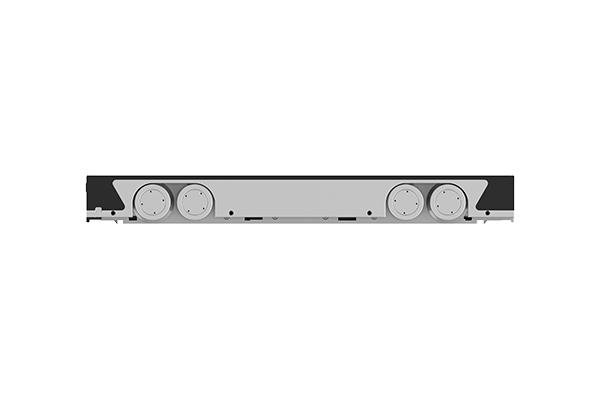
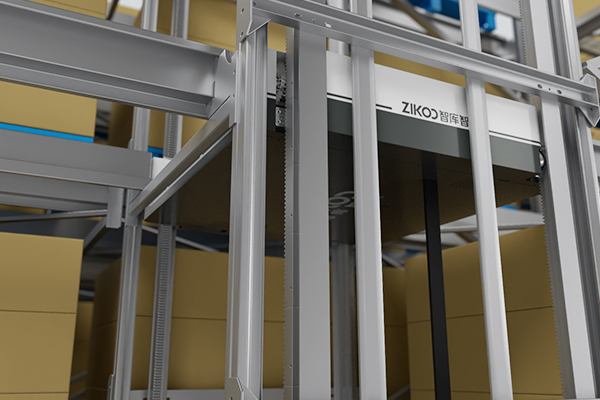
The R-bot Four-Way Shuttle from Zikoo illustrates current capabilities in this category. At 125 mm body thickness, it fits into dense racking configurations while handling loads up to 1.5 tons. Paired with the H-bot vertical bidirectional shuttle, the system covers all three spatial axes for palletized goods.
What These Systems Actually Deliver
The marketing materials for automated storage systems tend to promise everything. Here is what four-way shuttles actually deliver in practice, based on real deployments.
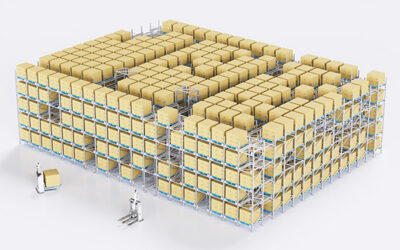
Storage density increases substantially because you eliminate most of the aisle space that forklifts require. In a recent e-commerce fulfillment project, we deployed R-bot shuttles integrated with vertical conveyors. The facility had been struggling with peak season bottlenecks and limited storage. After implementation, the system processed over 80 pallets per hour for combined inbound and outbound operations. That represented a 40% throughput increase within the existing building footprint, with no construction required.
Multiple shuttles operate simultaneously in the same racking system, which is where the throughput gains come from. Each shuttle works independently, so adding capacity means adding shuttles rather than redesigning your layout.
| Benefit | What It Means in Practice | Typical Impact |
|---|---|---|
| Storage Density | Vertical and horizontal space utilization improves because aisles shrink | Up to 50% more capacity in the same footprint |
| Throughput | Multiple shuttles work concurrently on retrieval and put-away | Faster order fulfillment, reduced cycle times |
| Flexibility | Shuttles can be reassigned dynamically based on demand | Better handling of demand fluctuations |
| Labor | Repetitive transport tasks shift from people to machines | Lower operating costs, fewer handling errors |
| Accuracy | Automated positioning eliminates most placement mistakes | Better inventory control, fewer mispicks |
Chinese Manufacturers in This Space
The Chinese market for four-way shuttle technology is competitive, with several manufacturers investing heavily in both hardware and software development. Most offer integrated solutions rather than standalone robots, recognizing that the shuttle itself is only one component of a working system.
Manufacturers typically specialize in particular applications. Cold chain automation requires different engineering than ambient temperature warehousing. Pharmaceutical storage has its own regulatory requirements. Manufacturing logistics involves different load types and cycle patterns than e-commerce fulfillment.
Zikoo Smart Technology’s product line reflects this specialization approach. The U-bot Omnidirectional Stacking Robot handles narrow aisle applications. The R-bot Four-Way Shuttle addresses dense storage requirements. The H-bot Vertical Bidirectional Shuttle manages vertical transport. Each robot serves a specific function within a larger system architecture.
Evaluating Potential Suppliers
Choosing a four-way shuttle manufacturer involves more than comparing robot specifications. The hardware matters, but integration capability often determines whether a project succeeds or fails.
The shuttle must communicate seamlessly with your warehouse management system. If that integration is clunky or incomplete, you lose most of the efficiency gains you were trying to capture. Zikoo’s PTP Smart Warehouse Software includes WMS, WES, WCS, and RCS components specifically designed to work with their shuttle hardware. That kind of unified platform simplifies implementation and reduces the integration risk that plagues many automation projects.
Beyond software, consider the manufacturer’s track record with environments similar to yours. Cold storage projects require proven cold-rated components. High-throughput operations need demonstrated reliability under sustained load. Custom applications demand engineering capability, not just catalog products.
| Selection Factor | What to Evaluate | Why It Matters |
|---|---|---|
| System Integration | Compatibility with existing WMS/ERP, unified software platform availability | Determines whether the system actually works with your operations |
| Scalability | Ability to add shuttles or reconfigure layouts as needs change | Protects your investment against future requirements |
| Reliability | Manufacturer’s uptime track record, maintenance support, spare parts availability | Downtime costs money, sometimes more than the equipment itself |
| Customization | Engineering capability for non-standard applications | Standard products do not fit every situation |
| Total Cost | Energy consumption, maintenance requirements, expected lifespan | Initial price is only part of the financial picture |
Where This Technology Is Heading
Four-way shuttle systems are incorporating more intelligence into their operation. Machine learning algorithms now handle path optimization in ways that would have required manual programming a few years ago. Predictive maintenance systems flag components before they fail, reducing unplanned downtime.
Battery technology continues to improve, extending operating time between charges and reducing the number of shuttles needed to maintain continuous coverage. Integration with other automation technologies, including autonomous mobile robots and automated picking systems, creates more fluid material handling workflows.
Specialized applications are expanding. Extreme cold chain environments, pharmaceutical constant temperature storage, and hazardous materials handling all have shuttle variants designed for their specific requirements. The technology is moving toward warehouses that optimize themselves in real time rather than following fixed programming.
Frequently Asked Questions
What is the typical ROI for investing in a four-way shuttle system?
Payback periods typically range from one to three years, depending on your current labor costs, storage constraints, and throughput requirements. The ROI calculation should include reduced labor, increased storage capacity within your existing footprint, and throughput improvements. If you are currently turning away business because you cannot store or move enough product, the payback accelerates.
How do four-way shuttles handle different product sizes and weights?
Most systems use adjustable forks or carriers that accommodate a range of pallet sizes and weights. Manufacturers publish specifications for maximum load capacity and dimensional limits. If your inventory includes non-standard sizes or exceptionally heavy items, discuss those requirements early in the evaluation process to confirm compatibility.
Are four-way shuttle systems suitable for cold storage environments?
Yes, but you need cold-rated versions. Standard shuttles are not designed for freezer temperatures. Cold chain variants use components and materials engineered for sustained operation at low temperatures. Confirm the manufacturer has deployed systems in environments matching your temperature requirements.
What kind of maintenance is required for four-way shuttle systems?
Routine preventative maintenance includes battery monitoring, software updates, and mechanical component inspection. Most manufacturers offer service plans that include remote diagnostics, allowing them to identify issues before they cause downtime. Budget for maintenance when calculating total cost of ownership. If you are considering a four-way shuttle deployment and want to understand how these systems would integrate with your existing operations, contact Zikoo Smart Technology at [email protected] or (+86)-19941778955.
If you’re interested, you may want to read the following articles:
PTP Intelligent Warehouse Software Empowers Enterprises for Smart Upgrades
Smart Warehousing Starts Here: Cost-Effective Four-Way Shuttle Systems