Warehouse Automation: Practical Solutions for Modern Logistics Challenges
Running a warehouse today feels like solving a puzzle where the pieces keep changing shape. Orders come faster, workers are harder to find, and customers expect everything yesterday. Warehouse automation has become the most reliable way to keep operations running smoothly without burning through resources. The right combination of robotics and intelligent software can reshape how goods move through a facility, cutting costs while actually improving accuracy.
Why Warehouse Automation Has Become Non-Negotiable
Supply chains are under pressure that would have seemed extreme just a few years ago. Delivery windows have shrunk dramatically, and the margin for error has all but disappeared. Traditional warehousing approaches struggle to keep pace when order volumes spike or when half the workforce calls in sick.
Warehouse automation directly tackles these pain points. Automated systems handle repetitive tasks without fatigue, which means consistent performance across every shift. Human workers can then focus on problem-solving and quality control rather than endless walking and lifting.
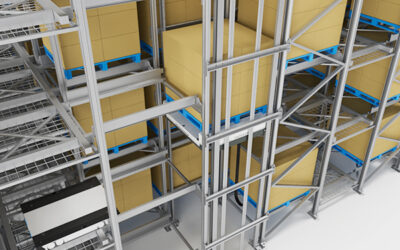
The space savings alone often justify the investment. Automated storage systems stack goods higher and pack them tighter than manual operations ever could. A facility that once held 10,000 pallets might accommodate 15,000 or more after automation, all within the same footprint. When real estate costs keep climbing, that density matters.
Error rates drop significantly too. Manual picking typically runs at 97-99% accuracy. Automated systems routinely achieve 99.9% or better. Those extra percentage points translate directly into fewer returns, happier customers, and less wasted inventory.
Core Technologies Behind Effective Automated Warehouse Systems
A well-designed automated warehouse system brings together several specialized technologies, each handling what it does best. The real power comes from how these components coordinate.
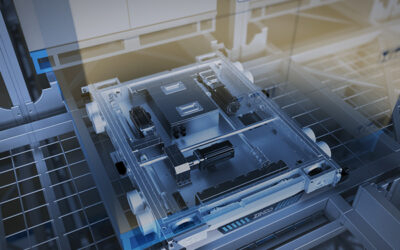
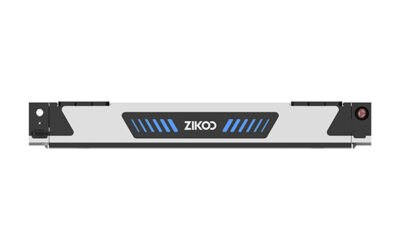
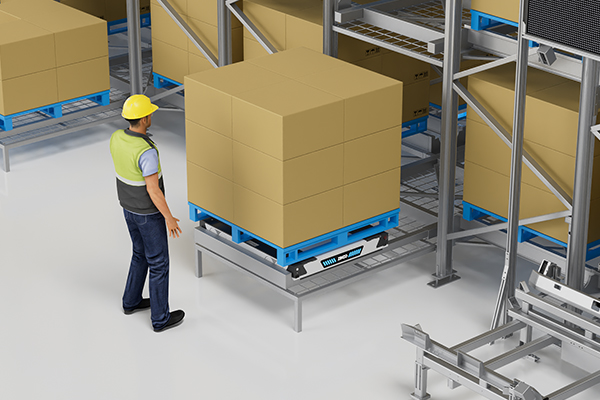
The R-bot Four-way Shuttle handles dense pallet storage with remarkable efficiency. At just 125 mm tall, it slides beneath pallets and moves them in any horizontal direction. The slim profile means storage racks can be packed closer together without sacrificing accessibility. A single R-bot carries up to 1.5 tons, and multiple units work together without collision or confusion.
| R-bot Model | Rated Load (kg) | Body Dimensions (L x W x H mm) | Pallet Sizes Supported (mm) | Empty Speed (m/s) | Loaded Speed (m/s) |
|---|---|---|---|---|---|
| Standard (R1200B) | 1200 | 1000 × 972 × 125 | 1200 × 800–1000 | 1.6 | 1.2 |
| American (R1200A) | 1200 | 1192 × 840 × 125 | 1016 × 1219 | 1.6 | 1.2 |
| Japanese (R1500J) | 1500 | 1192 × 900 × 125 | 1100 × 1100 | 1.6 | 1.2 |
| Heavy-duty (R1500B) | 1500 | 1192 × 972 × 125 | 1200 | 1.6 | 1.2 |
| Heavy-duty Large Pallet (R2000B) | 2000 | 1250 × 1300 × 150 | 1400 | 1.35 | 1.0 |
The H-bot Vertical Bidirectional Shuttle connects different storage levels. It occupies just one storage position while enabling movement across all six spatial directions when paired with R-bots. Positioning accuracy reaches ±1 mm, which matters when pallets need to slot into tight spaces repeatedly. Standard models move at 1 m/s empty and 0.5 m/s loaded.
The U-bot Omnidirectional Stacking Robot works best in narrow aisle configurations. Its U-shaped design allows a turning radius of just 1370 mm, navigating aisles as tight as 2100 mm wide. Lifting capacity reaches 8 meters with 1000 kg loads. These robots integrate smoothly with autonomous mobile robots and robotic arms for more complex workflows.
PTP Smart Warehouse Software ties everything together. Rather than juggling separate warehouse management, execution, control, and robot systems, this platform unifies all four functions. Every robot knows where every other robot is, what tasks are pending, and how to optimize routes in real time.
For deeper insight into how integrated software transforms warehouse operations, check 《PTP Intelligent Warehouse Software Empowers Enterprises for Smart Upgrades》.
Real Cost Savings and Return Timelines
Warehouse automation delivers measurable financial benefits, though the specifics depend heavily on starting conditions and implementation scope.
Labor represents the largest ongoing expense in most warehouses. Automated systems handle picking, transport, and storage tasks that would otherwise require multiple workers per shift. The savings compound over time as wages rise and turnover costs accumulate. Facilities that previously needed 50 workers for a shift might operate with 15-20 after automation, with those remaining employees handling supervision and exception management.
Accuracy improvements create their own savings. Every mispicked order generates costs for returns processing, replacement shipping, and customer service time. When error rates drop from 2% to 0.1%, those costs nearly disappear.
Space utilization gains often surprise operators. High-density storage systems using R-bots and H-bots can double or triple effective capacity. Some businesses avoid building new facilities entirely by automating existing ones.
The PTP Smart Warehouse Software enables continuous optimization through data analysis. Patterns emerge that human managers might miss. Maybe certain products should be stored closer to shipping docks. Maybe picking routes could be shortened by rearranging inventory zones. These incremental improvements add up to significant efficiency gains over months and years.
Most implementations achieve positive ROI within 1-3 years, depending on scale and complexity.
Building Systems That Grow With Your Business
Nobody can predict exactly how their business will look in five years. Warehouse automation needs to accommodate that uncertainty.
Modular design makes phased implementation practical. A facility might start with a basic R-bot installation handling high-volume SKUs. As confidence builds and budgets allow, H-bots can be added to create full six-way shuttle capability. The initial investment stays manageable while the path to expansion remains clear.
Scalability works in both directions. Seasonal businesses can deploy additional robots during peak periods and scale back afterward. The software handles coordination regardless of fleet size, adjusting routes and task assignments automatically.
Different product types and storage requirements can coexist within the same system. Temperature-controlled zones, hazardous materials areas, and standard storage all connect through the same software platform. This flexibility proves valuable as product mixes evolve.
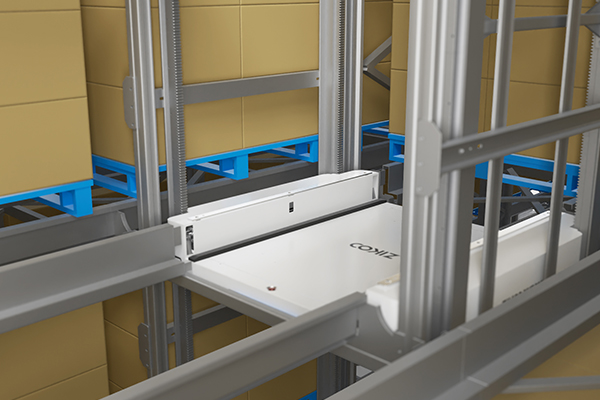
To understand how six-way shuttle systems create true three-dimensional warehouse capability, read 《Six-Way Shuttle Unlocks the Era of True 3D Intelligent Warehousing》.
Practical Challenges and How to Handle Them
Warehouse automation projects encounter predictable obstacles. Acknowledging them upfront makes solutions easier to implement.
Initial capital requirements concern most decision-makers. Modular approaches help by spreading investment over time. Starting with the highest-impact areas first generates returns that fund subsequent phases. Financing options and lease arrangements can also smooth cash flow impacts.
Integration with existing systems requires careful planning. Most warehouses already run WMS and ERP platforms that cannot simply be replaced. The PTP Smart Warehouse Software connects with these existing systems rather than demanding their removal. Data flows between platforms, maintaining continuity while adding new capabilities.
Employee concerns deserve serious attention. Workers naturally worry about job security when robots arrive. Successful implementations involve staff early, explaining how roles will change rather than disappear. Training programs build new skills. Many workers find that operating automated systems is more interesting than the repetitive tasks they replace.
Maintenance and support need ongoing attention. Robotic systems require regular service to maintain performance. Establishing clear maintenance schedules and support relationships before go-live prevents problems from becoming crises.
Finding the Right Partner for Your Automation Project
The automation provider matters as much as the technology itself. Experience, product range, and support capabilities all influence outcomes.
Zikoo Smart Technology Co., Ltd. focuses specifically on pallet-to-person robotics, which means deep expertise in this particular domain. The product lineup covers the full range of warehouse automation needs, from U-bot stackers to R-bot shuttles to H-bot elevators. The PTP Smart Warehouse Software provides the intelligence layer that makes hardware effective.
Customization capability matters because no two warehouses are identical. Cookie-cutter solutions rarely deliver optimal results. A provider willing to adapt configurations to specific operational requirements will generate better outcomes than one pushing standard packages.
Track record provides evidence of capability. Successful implementations across various industries demonstrate that a provider can handle different challenges and environments.
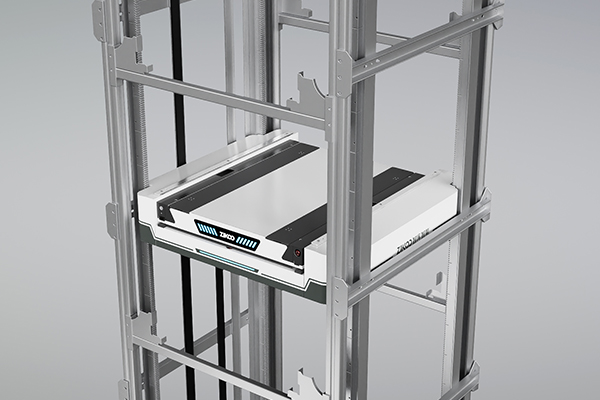
For guidance on evaluating four-way shuttle manufacturers, consider 《Looking for Reliable Four-Way Shuttle Manufacturers? Choose Zikoo Robotics》.
Start Your Warehouse Transformation
Zikoo Smart Technology Co., Ltd. brings proven pallet-to-person robotics and integrated software to warehouses ready for change. Reach out for a consultation that addresses your specific operational challenges.
Email: [email protected]
Phone: (+86)-19941778955
FAQ
What ROI timeline should I expect from warehouse automation?
Most warehouse automation projects reach positive ROI within 1-3 years. The exact timeline depends on your starting labor costs, facility size, order volume, and which technologies you implement. Facilities with high labor costs and significant manual handling typically see faster payback. Zikoo’s integrated systems are designed to accelerate returns through combined efficiency gains across storage density, picking accuracy, and throughput speed.
How do I determine which automation approach fits my warehouse?
Start by documenting your current pain points and growth projections. Consider your product characteristics, order patterns, available space, and budget constraints. A warehouse handling heavy pallets has different needs than one processing small parcels. Zikoo Smart Technology provides consultation services that assess your specific situation and recommend appropriate combinations of U-bot, R-bot, and H-bot systems along with software integration tailored to your operations.
What obstacles typically arise during automation deployment?
Budget management, system integration, and workforce transition represent the most common challenges. Zikoo addresses budget concerns through modular solutions that allow incremental investment. Integration challenges are handled through comprehensive software that connects with existing WMS and ERP platforms. Workforce transition receives support through training programs and ongoing technical assistance. The goal is minimizing disruption while maximizing the benefits of your new automated warehouse system.