E-commerce order volumes keep climbing, and fulfillment centers feel the squeeze. More SKUs, faster delivery promises, tighter margins. Traditional warehousing methods—manual forklifts running fixed aisles, static racking that wastes vertical space—struggle to keep pace. Bottlenecks form at putaway. Retrieval slows during peak hours. Labor costs rise while throughput stalls. Pallet four-way shuttles offer a way out of this bind, delivering the storage density and retrieval speed that online retail demands without requiring a larger footprint or proportionally larger headcount.
What Makes a Pallet Four-Way Shuttle Different from Conventional AS/RS
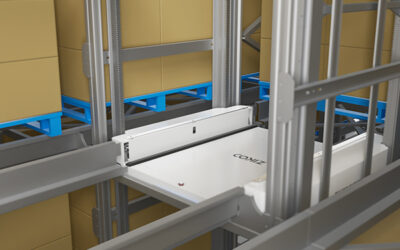
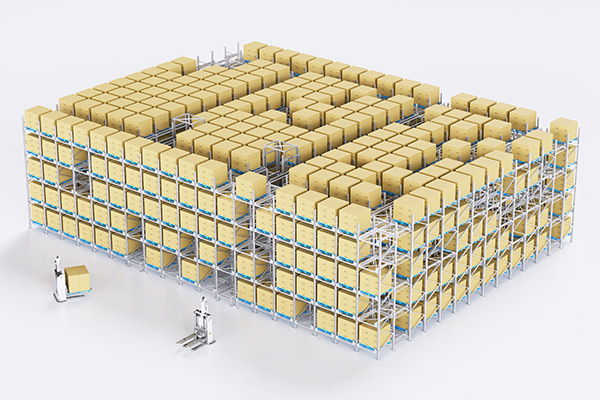
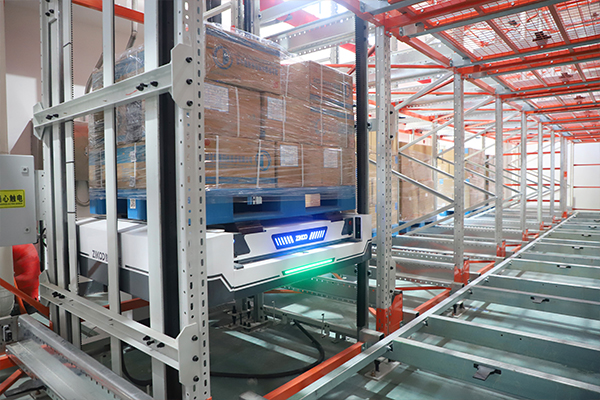
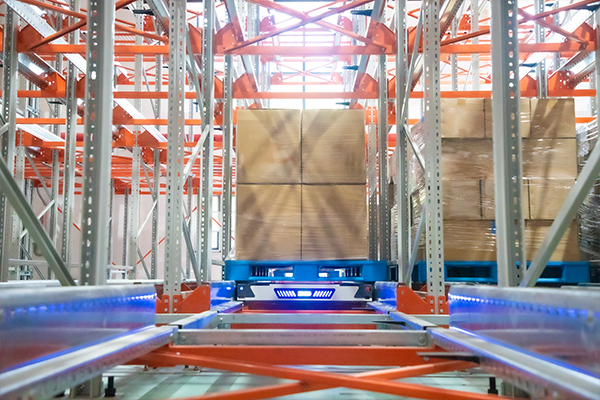
Pallet four-way shuttle systems belong to the automated storage and retrieval family, but they operate on a fundamentally different principle than crane-based AS/RS. A crane runs on a single axis—up and down the aisle, in and out of the rack. A four-way shuttle moves pallets in all four horizontal directions within the racking structure. No rotation needed. No turntable delays. The shuttle navigates aisles and bays independently, depositing or retrieving pallets while vertical lifts or conveyors handle level changes.
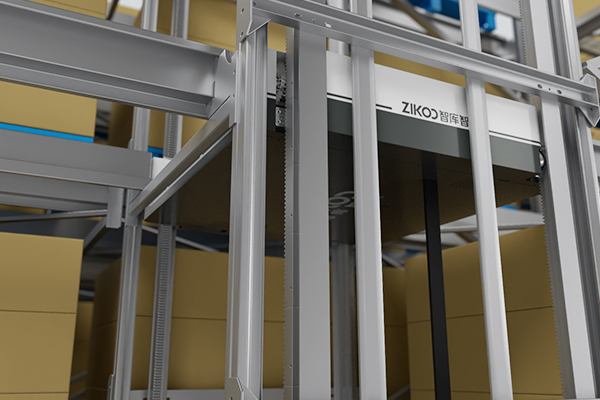
This omnidirectional capability changes what’s possible with storage layout. Racks can be deeper. Aisles can be narrower or eliminated entirely in buffer zones. Every cubic meter of warehouse space becomes usable storage rather than access corridor. The system architecture typically includes the shuttles themselves, specialized racking designed for their dimensions, and the vertical transport elements that connect storage levels to picking stations or outbound conveyors.
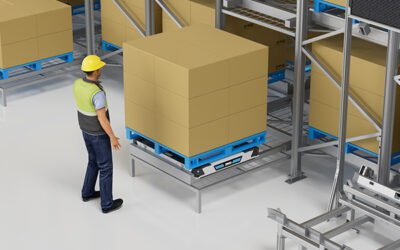
The operational model shifts from person-to-goods to goods-to-person. Operators stay at ergonomic workstations. Pallets arrive. Picks happen. Pallets return to storage or move to shipping. Walking time drops to near zero. Search time disappears. The warehouse transforms from a static storage environment into a dynamic material flow system where inventory moves to meet demand rather than waiting for someone to fetch it.
Why E-commerce Fulfillment Centers Gain the Most from Four-Way Shuttle Technology
The operational profile of e-commerce fulfillment—high SKU counts, variable order sizes, unpredictable demand spikes, pressure to ship same-day or next-day—aligns precisely with what four-way shuttles do well. The advantages cluster around three areas: space, speed, and labor.
Extracting Maximum Storage from Minimum Footprint
Urban fulfillment centers pay premium rates per square meter. Every pallet position that fits within the existing walls represents avoided real estate cost. Four-way shuttles eliminate the fixed aisles that crane-based systems require between every rack row. Storage configurations can go deeper—ten, fifteen, even twenty pallets deep in some layouts—because the shuttle can reach any position without dedicated aisle access. Vertical expansion becomes practical too, since shuttles operating on multiple levels work in parallel rather than sharing a single crane.
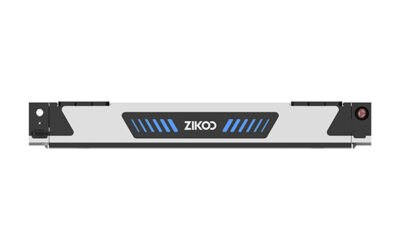
The density gains are substantial. A facility that stored 5,000 pallets with conventional racking might hold 12,000 or more with a four-way shuttle system in the same footprint. During peak seasons—Black Friday, holiday shipping, promotional events—that extra capacity means the difference between meeting demand and turning away orders. The R-bot Four-Way Shuttle from Zikoo, for instance, uses a slim body profile specifically engineered to maximize storage density while maintaining the throughput rates that e-commerce operations require.
Accelerating Throughput Without Proportional Labor Increases
Multiple shuttles operate simultaneously across different levels and zones. While one shuttle retrieves a pallet from deep storage on level four, another deposits incoming inventory on level two, and a third delivers a pick pallet to the outbound station. This parallel operation multiplies throughput capacity without multiplying labor headcount.
The goods-to-person workflow changes what operators do with their time. Instead of walking aisles, scanning locations, and driving forklifts, they stand at pick stations where pallets arrive automatically. Pick rates increase because the limiting factor becomes hand speed rather than travel time. A fulfillment center I worked with redesigned their storage strategy around an automated shuttle system and saw a 40% reduction in labor hours dedicated to putaway and retrieval. Storage density increased 30% within the same building envelope. The labor savings alone justified the investment within three years; the density gains extended the facility’s useful life by another decade.
Physical strain drops when operators no longer walk miles per shift or climb in and out of forklift cabs. Injury rates fall. Turnover decreases. Training time for new hires shortens because the system handles the complex navigation and inventory location decisions that previously required experienced warehouse workers.
How Four-Way Shuttles Compare to Other Automated Storage Options
The choice between automation technologies depends on operational requirements, budget constraints, and facility characteristics. Four-way shuttles occupy a specific position in the automation landscape.
| Feature | Pallet Four-Way Shuttle | Traditional AS/RS (Crane-based) | Manual Pallet Racking |
|---|---|---|---|
| Storage Density | Very High | High | Low to Medium |
| Throughput | Very High | High | Low |
| Flexibility | High (scalable, modular) | Medium (fixed structure) | High (initial setup) |
| Labor Efficiency | Very High | High | Low |
| Space Utilization | Excellent | Good | Poor |
| Initial Cost | Medium to High | High | Low |
Crane-based AS/RS delivers high density and throughput but locks the facility into a fixed configuration. Adding capacity means major construction. Four-way shuttles scale by adding more units to the existing racking structure—a modular expansion that can happen in phases as demand grows. Manual racking costs less upfront but consumes more floor space per pallet and requires proportionally more labor as volume increases.
What Integration Challenges to Expect When Deploying Four-Way Shuttles
The hardware—shuttles, racking, lifts—represents only part of the implementation. Software integration, facility preparation, and operational protocols determine whether the system delivers its potential performance or creates new bottlenecks.
Getting WMS, WES, and WCS to Work Together
A four-way shuttle system requires three software layers operating in coordination. The Warehouse Management System handles inventory records, order management, and overall warehouse processes. The Warehouse Execution System optimizes task sequencing and material flow. The Warehouse Control System directly commands the automated equipment—telling each shuttle where to go, which pallet to retrieve, and when to charge.
Integration gaps between these layers create problems. If the WMS doesn’t communicate inventory updates in real time, shuttles retrieve pallets that have already been allocated to other orders. If the WES doesn’t account for shuttle travel times, pick waves arrive at stations faster than operators can process them, creating congestion. If the WCS can’t dynamically reroute shuttles around temporary obstructions, a single maintenance event cascades into system-wide delays.
Zikoo’s PTP Smart Warehouse Software addresses this by providing unified WMS, WES, and WCS functionality on a single platform. The R-bot Four-Way Shuttle operates within this integrated environment, receiving optimized task assignments based on real-time inventory positions, order priorities, and equipment status. Dynamic path planning prevents collisions. Task allocation balances workload across shuttles. Inventory updates propagate instantly across all system layers.
Preparing the Facility for Shuttle Operations
The racking structure must match the shuttle’s dimensions and weight capacity with tight tolerances. Rail alignment matters—deviations of a few millimeters can cause tracking errors or premature wear. Floor flatness affects shuttle performance and longevity; uneven surfaces create vibration that stresses mechanical components.
Power infrastructure needs attention. Charging stations must be positioned where shuttles can reach them without blocking active storage lanes. Data network connectivity throughout the racking structure enables communication between shuttles and the control system. Some facilities require ceiling height modifications or column relocations to maximize storage potential.
These infrastructure requirements aren’t insurmountable, but they need to be identified early in the planning process. A site survey that misses floor flatness issues or underestimates power requirements creates delays and cost overruns during installation.
Building Safety Protocols and Maintenance Routines
Automated systems operating at speed require robust safety measures. Four-way shuttles incorporate collision avoidance sensors, emergency stop mechanisms, and designated maintenance zones where shuttles can be safely accessed. Personnel entering the racking structure during operation must follow lockout procedures.
Maintenance schedules should include routine inspections of mechanical components, software updates, and predictive maintenance based on operational data. Shuttle systems generate extensive telemetry—motor temperatures, travel times, error codes—that can identify developing problems before they cause failures. Establishing these monitoring and maintenance routines during initial deployment prevents unplanned downtime later.
How to Determine Whether Four-Way Shuttles Fit Your Operation
Not every fulfillment center benefits equally from four-way shuttle technology. The decision requires honest assessment of current operations, realistic growth projections, and detailed financial analysis.
Evaluating Your Current Operational Profile
Start with the numbers that define your operation. What’s your current order volume? How many SKUs do you manage? What’s your inventory turnover rate? How much of your warehouse space actually holds product versus serving as access corridors? Where do bottlenecks form during peak periods?
Four-way shuttles deliver the strongest returns for operations with high transaction volumes, broad product ranges, and pressure to maximize space utilization. If your current system handles demand comfortably with room to grow, the investment may be premature. If you’re turning away orders during peak seasons or considering a facility expansion, the calculus changes.
Growth projections matter as much as current state. E-commerce volumes can double or triple within a few years. A system sized for today’s demand may be inadequate within 24 months. Conversely, overbuilding creates carrying costs for capacity that sits idle.
Running the Numbers on ROI
The financial case for four-way shuttles rests on several factors, each measurable against your current operation.
| ROI Factor | Impact of Four-Way Shuttles | Measurement Metric |
|---|---|---|
| Labor Costs | Significant reduction in manual handling and travel time | FTE reduction, labor cost per order |
| Space Utilization | Up to 2-3x increase in storage density | Pallets per square meter |
| Throughput | Substantial increase in picks and puts per hour | Orders per hour, lines per hour |
| Order Accuracy | Reduced human error through automation | Error rate, returns rate |
| Energy Consumption | Optimized movement patterns | kWh per pallet moved |
| Scalability | Modular expansion as business grows | Cost per additional storage location |
Initial capital expenditure runs higher than manual racking but lower than crane-based AS/RS in most configurations. The payback period typically falls between two and five years, depending on labor costs in your market, current space constraints, and throughput requirements. Operations in high-wage markets or expensive real estate environments see faster returns.
Considering Phased Implementation
Full-scale deployment isn’t the only option. Phased implementation starts with a high-volume product zone or a specific warehouse section, proving the technology and refining operational procedures before expanding. This approach spreads capital expenditure over time, minimizes disruption to ongoing operations, and provides real performance data to validate ROI projections before committing to full deployment.
The modular nature of four-way shuttle systems supports this strategy. Racking can be extended. Additional shuttles can be added. Software scales without major reconfiguration. A facility might start with 20 shuttles serving a single zone and expand to 80 shuttles across the entire operation over several years as demand grows and the initial investment proves out.
Where Four-Way Shuttle Technology Goes from Here
The trajectory points toward deeper integration and broader capability. Artificial intelligence and machine learning are already optimizing shuttle pathing and task allocation; the next generation will incorporate predictive models that anticipate demand patterns and pre-position inventory before orders arrive. Integration with other robotic systems—automated guided vehicles for floor-level transport, robotic picking arms for case and piece picking—will create end-to-end automation where pallets flow from receiving through storage through picking to shipping with minimal human intervention.
The modular architecture that makes four-way shuttles attractive today also future-proofs the investment. Adding shuttles scales throughput. Extending racking expands capacity. Software updates introduce new capabilities without hardware replacement. For e-commerce operations navigating unpredictable growth, this adaptability may matter as much as the immediate performance gains.
Frequently Asked Questions
Do four-way shuttle systems make sense for smaller e-commerce operations?
The economics favor medium to large operations with significant throughput and storage density requirements. Smaller businesses can explore modular implementations, starting with a limited zone and expanding as volume justifies additional investment. The break-even point depends on local labor costs and real estate prices—operations in expensive markets may find the math works at lower volumes than those in regions with abundant affordable warehouse space.
What timeline should we expect for implementation?
Implementation typically runs six to eighteen months from contract signing to full operation, depending on warehouse size, system complexity, and integration requirements. Site preparation, racking installation, shuttle commissioning, and software integration each require dedicated time. Rushing any phase creates problems that surface during operation. Thorough planning and realistic scheduling prevent the delays that come from discovering issues mid-installation.
Can four-way shuttles handle the product diversity typical in e-commerce?
Four-way shuttle systems accommodate a wide range of palletized goods within their design parameters. Weight limits, pallet dimensions, and load stability requirements define the boundaries. Most e-commerce inventory fits comfortably within standard specifications. Operations with unusual product characteristics—extremely heavy items, non-standard pallet sizes, unstable loads—should verify compatibility during the planning phase.
What ROI timeline is realistic for e-commerce fulfillment applications?
Return on investment typically materializes within two to five years, driven primarily by labor cost reductions, increased throughput, and space utilization gains. Operations with high labor costs, expensive real estate, or severe space constraints see faster returns. The specific timeline depends on your current operational costs, the system configuration selected, and how fully you utilize the new capacity.
If your fulfillment operation faces pressure to increase throughput, maximize storage density, or reduce labor costs, a detailed assessment can determine whether four-way shuttle technology fits your specific requirements. Contact us at [email protected] or (+86)-19941778955 to discuss your situation.
If you’re interested, check out these related articles:
Smart Cold Chain Era: Six-Way Shuttle System Redefines Storage Efficiency with Maximum Density
Software-Driven Hardware: Six-Way Shuttle Maximizes Warehouse Efficiency
Six-Way Shuttle Unlocks the Era of True 3D Intelligent Warehousing
Six-Way Shuttle: The Ultimate Warehousing Solution for Cost Reduction and Efficiency
PTP Intelligent Warehousing Platform: Building a Flexible and Smart Logistics Ecosystem