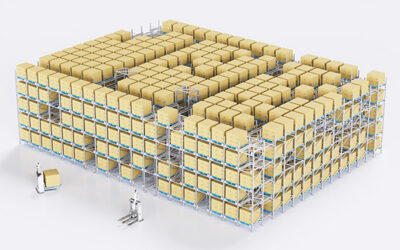
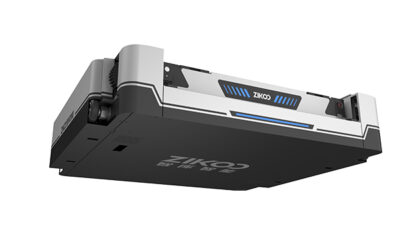
Handling heavy components has a way of exposing every weakness in an operation: slow manual steps, rising labor strain, and safety hazards that never quite go away. We’ve seen how robotics changes that equation—lifting efficiency, cutting costs, and improving safety in one move. Here, we look at how advanced robotic systems tackle heavy component picking and assembly line supply, from storage density to vertical transport, software orchestration, and what’s coming next.
Understanding the Challenges in Heavy Component Handling and Assembly Supply
The logistics and manufacturing sectors are under pressure to optimize, especially around heavy components. These items present unique challenges that traditional methods struggle to handle efficiently and safely. We examine these issues to underscore why advanced robotic solutions are needed.
1. Manual Handling Risks and Safety Concerns in Industrial Operations
Manual handling of heavy components exposes workers to significant risks, including musculoskeletal injuries, crushing accidents, and fatigue-induced errors. These incidents drive medical costs, reduce productivity, and create potential legal liabilities. Keeping people safe remains a top priority in industrial environments. Beyond immediate harm, repetitive heavy lifting contributes to long-term health problems that affect retention and morale. Human variability also makes consistent, precise handling of large, awkward loads difficult, raising the likelihood of component and equipment damage and inflating operational costs.
2. Inefficiencies and Bottlenecks in Traditional Assembly Line Supply Chains
Traditional assembly lines often hit bottlenecks when heavy components enter the flow. Manual or semi-automated transport systems struggle to keep pace with modern throughput targets, leading to slower output, longer lead times, and reduced productivity. The sequential nature of many assembly processes means a delay at one stage ripples across the entire line. The physical movement of large items usually requires specialized equipment and trained personnel, adding complexity and cost. Inadequate material flow undermines inventory management, creating either excess buffer stock or critical shortages.
3. The Impact of Space Constraints on Heavy Component Storage and Movement
Many facilities, especially older ones, operate with limited floor space and constrained vertical capacity. Heavy components need robust racking and clear pathways, further shrinking usable area. Maximizing storage density becomes central to effective warehouse management. Traditional methods call for wider aisles for forklifts and other manual equipment, wasting valuable square footage. Poor vertical utilization caps inventory capacity and forces larger footprints that are costly to acquire or expand. These constraints directly limit scalability and responsiveness to demand swings.
4. High Labor Costs and the Need for Automation in Manufacturing
The cost of skilled labor for heavy component handling and assembly continues to climb, from wages and benefits to training and the risks tied to manual work. Automation offers a practical path to contain these expenses. With robotic systems in place, teams can shift to more complex, value-added tasks. That reduces direct labor costs and helps alleviate shortages in physically demanding roles. And because automated systems run consistently without breaks, holidays, or fatigue, they support continuous productivity and a stable workforce.
Robotic Solutions Revolutionizing Heavy Component Picking and Assembly
Robotics provides a complete set of solutions to the challenges above, turning heavy component logistics into a safer, more efficient, and cost-conscious operation. We deploy specialized robotic systems built for heavy loads and complex assembly sequences.
1. How Omnidirectional Stacker Robots Enhance Heavy Component Storage and Retrieval
Omnidirectional stacker robots, such as the U-bot, offer exceptional maneuverability in confined spaces. Their ability to move in any direction eliminates the need for wide aisles, significantly increasing storage density. These robots can navigate corridors as tight as 2100 mm, enabling facilities to use previously inaccessible areas for heavy component storage. This agility speeds up retrieval and improves put-away efficiency. Precise omnidirectional control also reduces the risk of damage to goods and infrastructure, a common concern with large, heavy items.
2. The Role of Four-Way Shuttles in Optimizing Palletized Heavy Goods Movement
Four-way shuttles are critical for optimizing the movement of palletized heavy goods within high-density storage systems. These robots can travel longitudinally and transversely within racking structures, providing flexible access to any storage location. This capability dramatically improves throughput and reduces reliance on slower, less adaptable material handling equipment. For industries dealing with varying pallet sizes and weights, four-way shuttles offer adaptable solutions. Their intelligent autonomous handling ensures smooth integration into complex intralogistics workflows.
If you’re interested, check 《Four-Way Shuttle: Leading the New Trend in Automated Storage System》.
3. Vertical Bidirectional Shuttles for Efficient Heavy Component Flow and Density
Vertical bidirectional shuttles, like the H-bot, serve as key vertical transportation hubs in intelligent warehousing systems. They efficiently transfer heavy components between different levels of a storage rack, maximizing vertical space utilization. These shuttles integrate smoothly with horizontal transport systems, creating a three-dimensional material flow network. This vertical movement capability is vital for achieving high storage density and throughput in multi-level warehouses. Their compact design occupies minimal footprint, further optimizing facility layout.
4. Integrated Smart Warehouse Software for Seamless Robotic Operations
The efficacy of robotic hardware grows with sophisticated software systems. PTP Smart Warehouse Software orchestrates the entire fleet of robots, managing inventory, optimizing routes, and coordinating tasks. This integration ensures reliable communication and collaboration between different robotic units and existing warehouse management systems. The software provides real-time visibility into inventory levels and robot status, enabling proactive decision-making and continuous optimization. This centralized control system is fundamental for maximizing efficiency and adaptability in dynamic operational environments.
If you’re interested, check 《PTP Intelligent Warehouse Software Empowers Enterprises for Smart Upgrades》.
Zikoo Smart Technology’s Advanced Robotic Systems for Heavy Components
Zikoo Smart Technology specializes in pallet-to-person robotics, offering a suite of advanced solutions tailored for heavy component handling and assembly line supply. Our systems are engineered for robustness, precision, and easy integration across diverse industrial environments.
1. U-bot Omnidirectional Stacker Robots for Narrow Aisle Heavy Lifting
The U-bot Omnidirectional Stacker Robot is specifically designed for narrow aisle storage scenarios, requiring a minimum aisle width of only 2100 mm. Its unique U-shaped body and 1370 mm minimum turning radius provide exceptional maneuverability. The U-bot handles rated loads of 1000 kg and lifts up to 8 meters. It features dual laser SLAM hybrid navigation for safe operation and a 3D depth camera for precise pallet positioning, compensating for deviations up to ±50 mm. The rack-and-pinion forward mast structure further enhances operational efficiency.
| Model | Rated Load | Lifting Height | Min. Aisle Width | Continuous Operation |
|---|---|---|---|---|
| U1045 | 1000 kg | 4500 mm | 2100 mm | 6–8 hours |
| U1060 | 1000 kg | 6000 mm | 2140 mm | 6–8 hours |
| U1080 | 1000 kg | 8000 mm | 2140 mm | 6–8 hours |
2. R-bot Four-Way Shuttles for Dense Pallet Storage and Supply
The R-bot Four-Way Pallet Shuttle is an intelligent warehouse robot optimized for pallet-to-person dense storage. With a slim body thickness of 125 mm and a load capacity up to 1.5 tons, it offers flexible four-way movement and intelligent autonomous handling. R-bot models are available for various pallet sizes, including standard, American, and Japanese types, with speeds up to 1.6 m/s empty and 1.2 m/s loaded. Heavy-duty versions can carry up to 2000 kg. These robots are ideal for dense storage in e-commerce, cold chain, and manufacturing environments.
| Model | Rated Load | Body Dimensions (L×W×H) | Max Speed (Loaded) | Continuous Operation |
|---|---|---|---|---|
| R1200B (Standard) | 1200 kg | 1000 × 972 × 125 mm | 1.2 m/s | 8 hours |
| R1500J (Japanese) | 1500 kg | 1192 × 900 × 125 mm | 1.2 m/s | 8 hours |
| R2000B (Heavy-duty) | 2000 kg | 1250 × 1300 × 150 mm | 1.0 m/s | 7 hours |
3. H-bot Vertical Bidirectional Shuttles for High-Throughput Vertical Transport
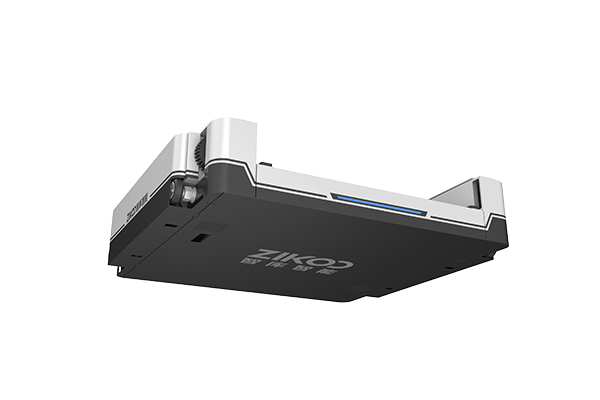
The H-bot Vertical Two-Way Shuttle is the vertical transportation hub in intelligent warehousing systems. Designed for pallet-to-person dense storage, it occupies only a single storage location. The H-bot collaborates with the R-bot Four-way Shuttle to create a three-dimensional warehousing network, significantly enhancing overall operational efficiency. Standard models handle up to 1800 kg with a positioning accuracy of ±1 mm. They are suitable for high-rack stereoscopic warehouses and existing warehouse renovation projects, operating in temperatures from -25℃ to 45℃.
| Model | Rated Load | Body Dimensions (L×W×H) | Loaded Speed | Positioning Accuracy |
|---|---|---|---|---|
| H1800B (Standard) | 1800 kg | 1300 × 1464 × 288 mm | 0.5 m/s | ±1 mm |
| H1800A (American) | 1800 kg | 1300 × 1332 × 288 mm | 0.5 m/s | ±1 mm |
| H1800J (Japanese) | 1800 kg | 1300 × 1392 × 288 mm | 0.5 m/s | ±1 mm |
4. PTP Smart Warehouse Software: Orchestrating Robotic Efficiency
Zikoo’s PTP Smart Warehouse Software (WMS/WES/WCS/RCS) forms the intelligent backbone of our robotic solutions. This full-featured platform orchestrates the entire automated warehouse, from inventory management and order fulfillment to real-time robot dispatch and task allocation. It enables reliable communication and coordination among all robotic systems, optimizing workflows and minimizing human intervention. The software provides advanced analytics and visualization tools, offering deep insights into operational performance and enabling continuous improvement. This integrated approach maximizes the efficiency and adaptability of the robotic fleet.
We believe a robust software platform is vital to realizing the full value of warehouse automation. You might find this article insightful: 《Zikoo Robotics and the PTP Platform: Leading the Future of Smart Warehousing》.
Benefits of Implementing Robotics for Heavy Component Logistics
Implementing robotic solutions for heavy component picking and assembly line supply yields substantial benefits across multiple operational dimensions. These advantages contribute to a more competitive and resilient supply chain.
1. Achieving Significant Improvements in Operational Efficiency and Throughput
Robotic systems operate continuously and consistently, significantly increasing the speed and volume of heavy component handling. This leads to higher throughput on assembly lines and faster order fulfillment in warehouses. Automation reduces processing times and eliminates human-induced delays, ensuring a steady flow of materials. The precision of robots minimizes errors and rework, further enhancing overall operational efficiency. This translates into quicker production cycles and improved customer satisfaction.
2. Enhancing Workplace Safety and Reducing Manual Handling Injuries
Automating heavy component tasks removes human workers from hazardous environments, drastically reducing the risk of injuries. Robots handle heavy, bulky, or awkwardly shaped items, preventing strain, crushing, and other accidents. This commitment to safety improves employee well-being and reduces the financial burden of workplace incidents. A safer work environment also contributes to lower employee turnover and higher morale.
3. Maximizing Storage Density and Optimizing Warehouse Space Utilization
Robots like the U-bot omnidirectional stacker can operate in much narrower aisles and higher racks than traditional equipment. This capability allows for a dramatic increase in storage density, making more efficient use of existing warehouse space. Companies can store more inventory within the same footprint, delaying or avoiding costly facility expansions. Optimized space utilization directly impacts operational costs and scalability.
For more information on optimizing warehouse space, consider reading: 《Maximizing Space Velocity in Modern Warehouses》.
4. Reducing Labor Costs and Improving Overall Supply Chain Resilience
By automating repetitive and physically demanding tasks, businesses can significantly reduce labor expenditures associated with heavy component handling. This includes not only wages but also costs related to recruitment, training, and injury compensation. Robotic systems provide a consistent, reliable workforce that is not subject to human limitations or labor market fluctuations. This enhanced reliability and reduced dependency on manual labor improve the overall resilience of the supply chain, making it less vulnerable to disruptions.
Future Trends and Innovations in Heavy Component Robotics
The field of robotics for heavy component handling is continuously evolving, driven by advancements in artificial intelligence, sensor technology, and collaborative systems. We foresee several key trends shaping the future.
1. The Evolution of AI and Machine Learning in Robotic Picking
Artificial intelligence and machine learning algorithms are becoming increasingly sophisticated, enabling robots to perform more complex picking tasks. Future robots will possess enhanced object recognition, adaptive gripping, and predictive analytics capabilities. This allows them to handle a wider variety of heavy components with greater precision and autonomy. AI-driven systems will learn from experience, continuously optimizing their picking strategies and adapting to new product configurations.
2. Advanced Sensors and Vision Systems for Precision Handling
Next-generation robots will integrate more advanced sensors and vision systems, including high-resolution 3D cameras and lidar. These technologies provide robots with a more comprehensive understanding of their environment and the components they handle. This leads to even greater precision in picking and placement, minimizing errors and preventing damage. Improved sensor fusion will allow robots to operate effectively in dynamic, unstructured environments, further expanding their application scope.
3. Collaborative Robotics (Cobots) in Assembly Line Integration
Collaborative robots, or cobots, are designed to work safely alongside human operators without requiring extensive safety caging. This integration will become more prevalent in heavy component assembly lines, where cobots can assist humans with heavy lifting and repetitive tasks. This hybrid approach combines the strength and precision of robots with the cognitive flexibility of human workers. It enhances productivity and safety while maintaining a human presence in critical assembly stages.
4. Sustainable and Energy-Efficient Robotic Solutions for Industry
Future robotic systems will prioritize sustainability and energy efficiency. Manufacturers are developing robots with lighter materials, optimized power consumption, and longer battery life. This reduces the environmental footprint of automated operations and lowers energy costs. Innovations in regenerative braking and smart charging systems will further enhance energy efficiency, aligning with broader industry goals for sustainable manufacturing and logistics.
Partner with Zikoo Smart Technology for Your Automation Needs
At Zikoo Smart Technology, we are committed to delivering advanced robotic solutions that address the complex challenges of heavy component picking and assembly line supply. Our expertise in pallet-to-person robotics, including U-bot Omnidirectional Stacker Robots, R-bot Four-Way Shuttles, and H-bot Vertical Bidirectional Shuttles, combined with our PTP Smart Warehouse Software, provides a unified and integrated approach to intelligent warehousing. We invite you to explore how our systems can improve safety and drive efficiency across your operations. Contact us today to discuss your specific requirements and discover a tailored solution.
Email: [email protected]
Phone: (+86)-19941778955
FAQs
1. What types of heavy components can Zikoo’s robots handle?
Zikoo’s robots are engineered to handle a wide range of heavy components, primarily palletized goods. Our R-bot Four-Way Pallet Shuttle models can manage loads up to 2000 kg, while U-bot omnidirectional stacker robots lift 1000 kg to heights of 8 meters. We offer customized solutions for specific component dimensions, weights, and environmental conditions, ensuring adaptability across various industries.
2. How do Zikoo’s robots integrate with existing warehouse management systems?
Zikoo’s PTP Smart Warehouse Software (WMS/WES/WCS/RCS) is designed for clean integration with existing warehouse management systems. Our software platform acts as an intelligent orchestrator, communicating with your current infrastructure to ensure smooth data exchange and coordinated operations. This allows for a phased implementation, minimizing disruption to your current workflows.
3. What are the space requirements for implementing Zikoo’s robotic solutions?
Our robotic solutions are designed to maximize space utilization. The U-bot omnidirectional stacker robots require narrow aisles, as tight as 2100 mm, significantly reducing floor space needs compared to traditional forklifts. H-bot vertical bidirectional shuttles optimize vertical space. We conduct thorough site assessments to design a layout that best leverages your existing footprint.
4. How quickly can a robotic system be implemented and operational?
The implementation timeline for a robotic system varies depending on complexity and scale. However, Zikoo’s modular design and comprehensive PTP software facilitate relatively rapid deployment. We work closely with clients through planning, installation, and testing phases to ensure a smooth transition and quick operational readiness, often achieving full functionality within months.
5. What kind of ROI can be expected from investing in these robotic solutions?
Investing in Zikoo’s robotic solutions typically yields a strong return on investment through reduced labor costs, increased operational efficiency, improved safety, and optimized space utilization. Companies often experience significant savings in personnel, reduced product damage, and enhanced throughput, leading to a payback period that can be as short as 1-3 years, depending on the scale of implementation.