Keeping lines running is central to efficiency and profitability, and we’ve seen how a single snag can ripple through a schedule, inflate costs, and test customer patience. The root of many stoppages ties back to material flow and storage. By building advanced Automated Storage and Retrieval Systems (ASRS) into production—not alongside it—we keep materials moving, sharpen inventory accuracy, and ease the load on operators. What follows explains why downtime happens, how ASRS resolves the core issues, the specific robots and software we deploy, and how careful planning, real-time analytics, and industry-fit configurations lead to measurable ROI, resilience, and lasting advantage. The aim is straightforward: a steady, predictable flow that prevents costly stops.
Understanding the Critical Impact of Downtime in Production Workflows
1. Identifying common causes of operational delays and inefficiencies
Operational delays and inefficiencies are common across production environments. Manual material handling creates bottlenecks as people navigate complex layouts and track inventory by hand. Inaccurate inventory counts—a hallmark of traditional warehouses—pause lines while missing components are located. Aging or poorly maintained equipment triggers unexpected breakdowns that halt work. Inadequate storage compounds these issues, wasting space and making essential items harder to reach.
2. Exploring the financial and operational consequences of production downtime
Downtime carries heavy financial and operational penalties. Revenue is lost when orders go unfulfilled, labor costs rise with overtime, and expedited shipping adds further expense. Schedules slip, supply chains absorb the shock, and customer relationships can suffer. Frequent interruptions chip away at reliability and market competitiveness, with effects that spread across the value chain and undermine profitability and share.
3. Recognizing the need for advanced automation in modern manufacturing and logistics
Modern manufacturing and logistics call for advanced solutions that keep pace with complex supply chains and tighter delivery windows. ASRS and related automation address the root causes of downtime by streamlining material flow and improving inventory accuracy. Moving from manual to automated processes is necessary to stay competitive and maintain continuity. We see this as a necessary evolution for industry leaders.
If you’re interested, check 《Understanding ASRS Systems for Modern Warehouse Efficiency》.
How Automated Storage and Retrieval Systems Revolutionize Production Efficiency
1. Defining ASRS and its core components for seamless integration
Automated Storage and Retrieval Systems (ASRS) are advanced material handling systems built to store and retrieve items automatically in warehouses and distribution centers. Core components include automated robots, storage racks, and sophisticated control software. Working together, they manage inventory with minimal human intervention. Tight integration ensures raw materials flow from storage to production lines efficiently, and finished goods move smoothly to shipping.
2. Explaining the principles of automated material flow and inventory management
ASRS runs on precision and speed to enable automated material flow. Items are stored and retrieved based on real-time demand to cut transit times and reduce bottlenecks. Algorithms optimize storage locations to maximize space. This intelligent approach eliminates extensive manual searching and handling—common causes of delay. The system maintains accurate inventory records, preventing stockouts and overstocking.
3. Highlighting the benefits of ASRS in minimizing human error and manual handling
ASRS substantially reduces human error and manual handling. Automated tasks are performed with consistent accuracy, avoiding mistakes inherent in manual processes. Less hands-on work lowers labor costs and improves safety. It also frees teams to focus on higher-value tasks. The net result is a more reliable, efficient operation.
Zikoo’s ASRS Solutions for Optimizing Production Workflows
At Zikoo, we develop cutting-edge ASRS solutions tailored to diverse industrial needs. Our robots and software integrate tightly to enhance efficiency and reduce operational costs. We focus on delivering systems that provide both high density storage and high throughput. Our solutions are designed for flexibility and scalability, adapting to evolving business requirements.
1. Introducing Zikoo’s R-bot Four-way Shuttle for dense storage and rapid retrieval
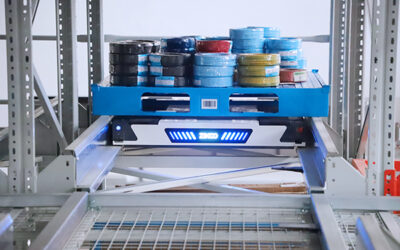
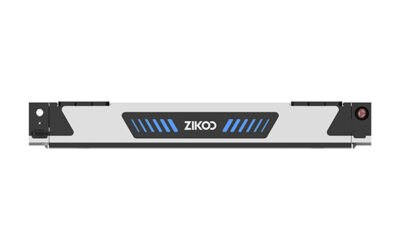
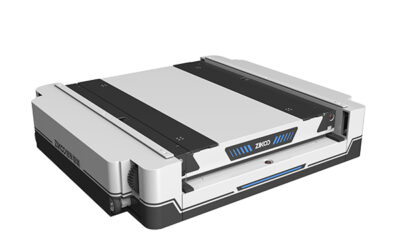
The Zikoo R-bot Four-way Shuttle is a core component for dense storage and rapid retrieval. It is an intelligent warehouse robot optimized for pallet-to-person scenarios. Its slim 125 mm body and 1.5-ton load capacity allow flexible four-way movement. The R-bot enables intelligent autonomous handling and multi-shuttle collaborative operation. When integrated with the H-bot, it forms a six-way shuttle system. This system adapts to various palletized goods storage and picking scenarios across industries.
| Model Option | Weight (kg) | Rated Load (kg) | Dimensions (L×W×H mm) | Pallet Sizes Supported (mm) | Empty Speed (m/s) | Loaded Speed (m/s) | Battery (V/Ah) | Continuous Operation (hours) |
|---|---|---|---|---|---|---|---|---|
| Standard (R1200B) | 270 | 1200 | 1000 × 972 × 125 | 1200 × 800–1000 | 1.6 | 1.2 | 51.2/40 or 30 | 8 |
| American (R1200A) | 265 | 1200 | 1192 × 840 × 125 | 1016 × 1219 | 1.6 | 1.2 | 51.2/40 or 30 | 8 |
| Japanese (R1500J) | 270 | 1500 | 1192 × 900 × 125 | 1100 × 1100 | 1.6 | 1.2 | 51.2/40 or 30 | 8 |
| Heavy-duty (R1500B) | 275 | 1500 | 1192 × 972 × 125 | 1200 | 1.6 | 1.2 | 51.2/40 or 30 | 8 |
| Heavy-duty Large Pallet (R2000B) | 400 | 2000 | 1250 × 1300 × 150 | 1400 | 1.35 | 1.0 | 51.2/40 or 30 | 7 |
Four-Way Pallet Shuttle systems are a strategic investment for optimized warehouse operations.
2. Detailing the H-bot Vertical Bidirectional Shuttle’s role in vertical transportation and throughput
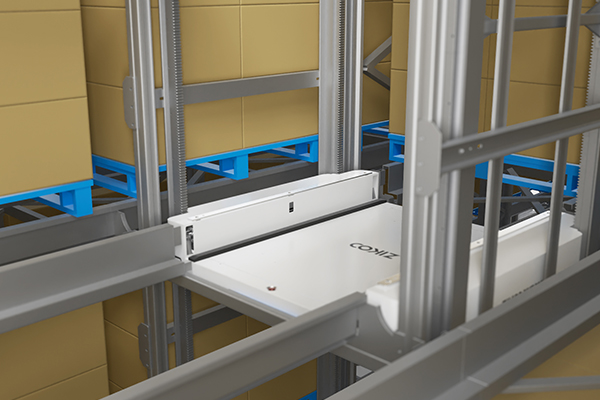
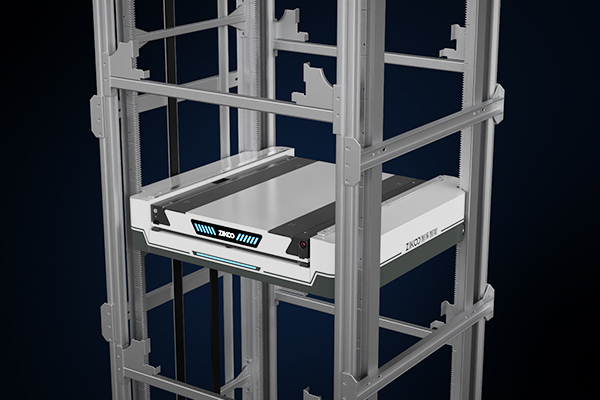
The H-bot Vertical Bidirectional Shuttle acts as the “vertical transportation hub” for intelligent warehousing. It optimizes pallet-to-person dense storage and picking scenarios. Its compact design uses only a single storage location. The H-bot collaborates with the R-bot to create a three-dimensional warehousing network. This integration significantly boosts overall warehousing system efficiency and throughput.
| Model Option | Body Weight (kg) | Dimensions (L×W×H mm) | Rated Load (kg) | Pallet Sizes Supported (mm) | Empty Speed (m/s) | Loaded Speed (m/s) | Acceleration (m/s²) Empty | Acceleration (m/s²) Loaded |
|---|---|---|---|---|---|---|---|---|
| Standard (H1800B) | 345 | 1300 × 1464 × 288 | 1800 | 1200 × 800–1200 | 1 | 0.5 | 1 | 0.3 |
| American (H1800A) | 325 | 1300 × 1332 × 288 | 1800 | 1016 × 1219 | 1 | 0.5 | 1 | 0.3 |
| Japanese (H1800J) | 335 | 1300 × 1392 × 288 | 1800 | 1100 × 1100 | 1 | 0.5 | 1 | 0.3 |
| Heavy-duty Large Pallet (Custom) | Customized | Customized | Customized | Customized | Customized | Customized | Customized | Customized |
Vertical Two-Way Shuttle technology is crucial for maximizing vertical space utilization.
3. Showcasing the U-bot Omnidirectional Stacking Robot for narrow aisle and high-level storage
The U-bot Omnidirectional Stacking Robot is an intelligent solution for narrow aisle storage. It requires a minimum aisle width of only 2100 mm. Its U-shaped design and 1370 mm turning radius ensure exceptional maneuverability. The U-bot lifts items up to 8 meters and handles 1000 kg loads. It operates collaboratively with other automated equipment like AMRs and robotic arms. This robot is ideal for high-density storage in various industries.
| Model Option | Dimensions (mm) | Rated Load (kg) | Self-weight (kg) | Lifting Height (mm) | Min. Aisle Width (mm) | Pos. Accuracy (mm) | Battery (V/Ah) | Continuous Operation (hours) |
|---|---|---|---|---|---|---|---|---|
| U1045 | 2198 × 1784 × 2100 | 1000 | 3000 | 4500 | 2100 | ±10 | 48 / 210 | 6–8 |
| U1060 | 2198 × 1820 × 2685 | 1000 | 3300 | 6000 | 2140 | ±10 | 48 / 210 | 6–8 |
| U1080 | 2198 × 1820 × 3465 | 1000 | 3500 | 8000 | 2140 | ±10 | 48 / 210 | 6–8 |
The Omnidirectional Stacker Robot enhances storage density and operational flexibility.
4. Explaining the PTP Smart Warehouse Software (WMS/WES/WCS/RCS) for integrated control
The PTP Smart Warehouse Software provides integrated control for all ASRS components. This system includes WMS (Warehouse Management System), WES (Warehouse Execution System), WCS (Warehouse Control System), and RCS (Robot Control System). It orchestrates robot movement, manages inventory, and optimizes workflows in real time. The PTP software ensures reliable communication across automation layers, maximizing efficiency and minimizing errors. This integrated approach is vital for achieving true smart warehousing.
If you’re interested, check 《PTP Intelligent Warehouse Software Empowers Enterprises for Smart Upgrades》.
Strategic Integration of ASRS to Proactively Reduce Production Downtime
1. Planning for seamless ASRS deployment within existing production lines
Successful ASRS deployment starts with careful planning. We run thorough site assessments to map current workflows and spot integration points. Our team designs custom layouts to minimize disruption and maximize the benefits of automation. That includes evaluating current infrastructure and recommending targeted modifications. A phased rollout helps keep production running while the system comes online.
2. Leveraging real-time data and analytics for predictive maintenance and operational insights
Real-time data and analytics make proactive downtime reduction possible. ASRS generates rich operational data that we analyze to detect patterns and forecast failures. This enables predictive maintenance, fixing issues before they stop production. Insights from the data also guide continuous improvement, lifting efficiency and reliability over time.
3. Achieving continuous material supply and demand synchronization with intelligent automation
Intelligent automation keeps material supply synchronized with demand. ASRS retrieves and delivers materials precisely when needed, removing delays caused by manual fetching. This balance prevents line interruptions and sustains steady output. It also supports dynamic schedule adjustments based on live demand shifts.
4. Customizing ASRS solutions for specific industry needs and operational challenges
We tailor ASRS solutions to specific industry requirements. Cold chain, pharmaceuticals, and manufacturing each present distinct challenges. Our engineers adjust robot configurations, software functions, and integration strategies to address those needs. This tailored approach delivers optimal performance and strong returns.
If you’re interested, check 《Flexible Smart Warehousing: Tackling Multi-SKU Challenges in the Fast Fashion Era》.
Measuring the Return on Investment from ASRS Integration in Production
1. Quantifying efficiency gains and throughput improvements after ASRS implementation
ASRS delivers measurable gains in efficiency and throughput. Automated systems run 24/7, raising processing speed and volume. We track KPIs such as order fulfillment rates, material movement cycles, and overall production output. These metrics show marked improvements in capacity and pace.
2. Analyzing cost reductions through optimized labor, space, and inventory management
Cost reduction is a central outcome of ASRS integration. Less manual handling lowers labor expense. High-density storage improves space utilization and trims warehousing costs. Better inventory accuracy cuts carrying costs and reduces losses from expired or obsolete stock. Together, these savings drive a rapid return on investment.
3. Enhancing operational resilience and adaptability to market fluctuations
ASRS strengthens resilience and adaptability. Automated systems scale up or down quickly to match market swings. They deliver consistent performance during labor shortages and peak seasons. This flexibility helps businesses respond quickly to change while maintaining service levels and competitive standing.
4. Ensuring long-term sustainability and competitive advantage through advanced automation
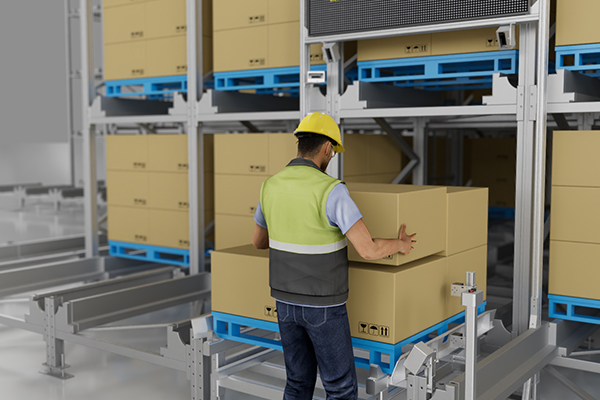
Advanced automation supports long-term sustainability and advantage. By optimizing resource use and reducing waste, ASRS contributes to greener operations. Adopters gain an edge in efficiency, cost control, and reliability. This strategic investment positions them for sustained growth and market leadership.
Partner with Zikoo Smart Technology for Your Automation Journey
Ready to upgrade your production workflows and reduce downtime? Zikoo Smart Technology Co., Ltd. offers advanced ASRS solutions tailored to your specific needs. Our expert team provides full support from system design to implementation and maintenance. Contact us today to discuss how our innovative robotics can enhance your operational efficiency and drive significant cost savings.
Email: [email protected]
Phone: (+86)-19941778955
FAQs
1. What specific types of ASRS are best suited for reducing downtime in manufacturing?
For manufacturing, high-density ASRS systems like Zikoo’s R-bot Four-way Shuttle and H-bot Vertical Bidirectional Shuttle are highly effective. These systems ensure rapid, precise material delivery to production lines, minimizing delays. The U-bot Omnidirectional Stacking Robot is also beneficial for narrow aisle storage, optimizing space and accessibility for components.
2. How does ASRS integration impact existing production line layouts and processes?
ASRS integration often optimizes existing layouts by maximizing vertical space and streamlining material flow. It can require reconfiguring receiving, staging, and dispatch areas. The impact is generally positive, leading to reduced floor space requirements, faster material access, and improved overall process synchronization.
3. What is the typical ROI period for implementing ASRS in a production environment?
The typical ROI period for ASRS varies depending on system complexity, operational scale, and specific industry. However, many businesses see a return within 1-3 years due to significant reductions in labor costs, optimized space utilization, decreased inventory errors, and increased throughput. This makes ASRS a financially sound investment.
4. Can ASRS systems be integrated with other factory automation technologies?
Yes, ASRS systems are designed to integrate with other factory automation technologies. This includes AGVs (Automated Guided Vehicles), AMRs (Autonomous Mobile Robots), robotic arms, and MES (Manufacturing Execution Systems). Zikoo’s PTP Smart Warehouse Software facilitates this integration, creating a cohesive and highly automated production ecosystem.
5. What are the maintenance requirements for Zikoo’s ASRS robots?
Zikoo’s ASRS robots, like the R-bot, H-bot, and U-bot, require routine preventative maintenance to ensure optimal performance and longevity. This includes regular inspections, software updates, battery checks, and component lubrication. Our systems are designed for reliability, and we provide full maintenance support and training to minimize any potential downtime.