High-volume food warehousing does not reward cautious manual workflows. Robotics for high-volume food handling becomes a reliable investment only when the system is matched to pallet dimensions, throughput peaks, cold chain limits, and the traceability rules that govern food movement. In our project work, I do not start with robot speed. I start with whether the shuttle, vertical lift, and warehouse software hold the same pallet data and timing assumptions. Where those layers disagree, even a fast robot creates waiting time and audit risk. Buyers who treat the project as a system decision get a smoother commissioning and a cleaner ROI calculation.
Robotics Pressure Points in High-Volume Food Warehousing
Food operations create three pressure points that manual and semi-automated warehouses struggle to absorb. First, inbound pallets arrive in surges that do not match outbound demand. Second, storage must respect expiry, allergen separation, and warehouse zones without forcing double handling. Third, peak throughput has to coexist with cleaning, inspection, and temperature control. A robot system that ignores these pressure points shifts the bottleneck from the floor to the software queue or the charging room. That is why our team reviews pallet dimensions and hourly peaks before recommending any shuttle or lift configuration.
Robot Selection for Food Throughput, Temperature, and Hygiene
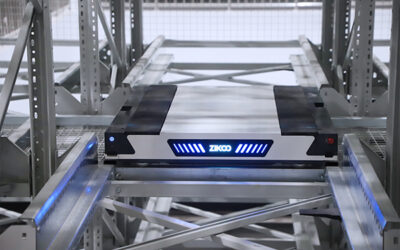
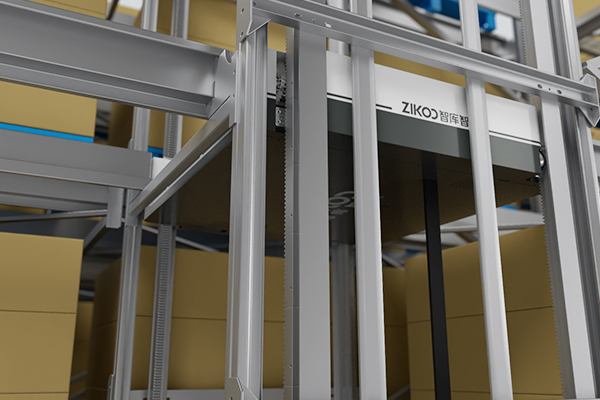
Pallet dimensions and rated load matter more than top speed in food environments. The R-bot four-way shuttle supports several regional pallet sizes and load ratings, from 1,200 kg to 2,000 kg depending on the model. The H-bot vertical shuttle carries pallets up to 1,800 kg and operates from -25℃ to 45℃. The U-bot omnidirectional stacker handles narrow aisle pallet access with a 1,000 kg rated load. The table below puts these roles into a selection sequence.
| Robot | Food warehouse role | Rated load | Key specification for food environments |
|---|---|---|---|
| R-bot Four-way Shuttle | Dense pallet storage and retrieval | 1,200 to 2,000 kg | 125 mm body, -15℃ standard, -25℃ cold chain custom battery |
| H-bot Vertical Bidirectional Shuttle | Vertical pallet transfer between levels | up to 1,800 kg | ±1 mm positioning, -25℃ to 45℃ operation |
| U-bot Omnidirectional Stacking Robot | Narrow aisle pallet access and picking | 1,000 kg | 2,100 mm minimum aisle, 6 to 8 hour operation |
Food operators should not choose the fastest robot first. The more important question is whether the robot can complete a full shift inside the required temperature band without opportunistic charging. If your food operation includes frozen storage or mixed temperature zones, it is worth confirming the battery configuration and charging position before finalizing the layout. Send your temperature range and shift pattern to [email protected] and we can confirm which model fits without adding a second charging room.
Four-Way Shuttle and Vertical Lift Configurations for High-Volume Pallet Flow
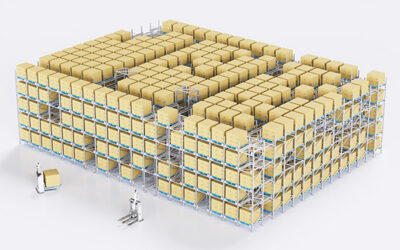
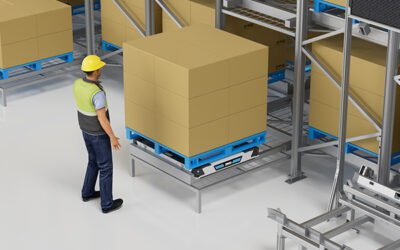
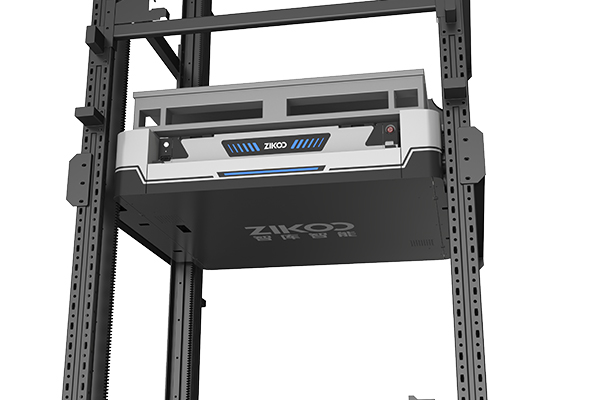
High-volume food pallet flow depends less on individual acceleration than on whether storage position and vertical transfer are balanced. The R-bot moves in four directions across a level and handles pallet access without an aisle-bound crane. Its 125 mm body height leaves more vertical space for food pallets than a taller carrier would. When paired with the H-bot vertical shuttle, the configuration moves pallets in six directions across a three-dimensional storage block. The H-bot maintains ±1 mm positioning accuracy, which matters when food pallets vary slightly in footprint or when rack positions are tight.
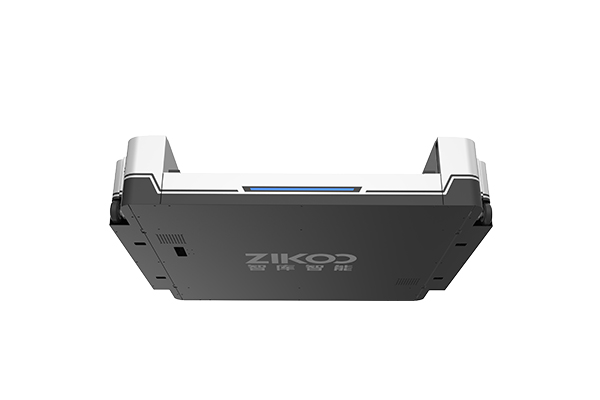
Dense food storage creates pressure to use every vertical meter without turning inventory into static bulk capacity. <Six-Way Shuttle Powers Dense Storage: Breaking Space Limitations> covers how six-direction shuttle networks make dense pallet positions accessible while keeping retrieval paths open.
Throughput also depends on how the shuttle fleet is sized against inbound and outbound pallet movements. We look at full pallets per shift, not peak motor speed. For a food warehouse with a narrow outbound window, the system may need more shuttles on the upper storage levels and a second lift location in the dispatch zone. That decision is cheaper to make in layout design than after installation.
Software Control for Food Traceability and Outbound Priority
Robots do not create traceability on their own. The PTP Smart Warehouse Software acts as the control layer for WMS, WES, WCS, and RCS functions. For high-volume food products, the software has to hold batch, location, and status data in one sequence so the right pallet is picked before its expiry window closes. If the WMS knows the lot but the WCS only knows the position, the robot can retrieve the correct pallet physically while the record lags behind. That gap creates audit findings and scrappage risk in perishable categories.
Food traceability becomes harder when pallet moves and inventory state are managed in separate systems. <PTP [Intelligent Warehousing](https://www.zikooint.com/asrs-automated-storage-and-retrieval-system-solutions) Platform: Building a Flexible and Smart Logistics Ecosystem> covers how one software layer ties storage, picking, and inbound/outbound data together for multi-site food logistics.
Priority outbound is another software problem. A retail distribution center may need to release frozen goods before dry goods because trailers leave on fixed schedules. The software should accept order cut-off rules and then instruct shuttles, lifts, and workstations in a coherent sequence. We configure outbound priorities during simulation, not after a missed shipment.
Pre-Commitment Checks for Food Robotics Projects
Before committing to a robotics project for high-volume food products, three checks reduce the most common implementation surprises. Confirm that pallet dimensions and rated loads are fixed, because different regional pallet types change the shuttle model. Confirm the minimum and peak temperature for each zone. Confirm which software system owns inventory lot data today and who will own the handoff during commissioning. We usually run these checks in a short configuration session because most food projects are not constrained by robot performance. They are constrained by mismatched pallet profiles, cold chain charging, or unclear software integration.
If your project has open questions on pallet type, sub-zero storage, or WMS integration, send your pallet dimensions, target pallets per hour, and temperature range to [email protected] or call (+86)-19941778955. We will return a configuration check and a realistic throughput estimate before you commit to a supplier.
Common Questions About Robotics for High-Volume Food Products
Are these systems suitable for frozen food warehouses?
Yes. The H-bot operates from -25℃ to 45℃, and the R-bot has a cold chain solution using a -25℃ dedicated lithium battery with 6 to 8 hours of continuous operation. The larger issue is charging location. Low-temperature charging requires the correct port design and protection against condensation, so we usually place charging stations in a controlled zone rather than inside the freezer. That one layout decision has more effect on uptime than the robot model itself.
Will a high-volume food operation need a separate maintenance team?
A common worry is that automation adds a large maintenance department. In practice, the requirement is closer to a trained operator plus planned inspection. The shuttle and lift systems run on lithium batteries with software-visible diagnostics, so most maintenance work is battery replacement, rail inspection, and sensor cleaning. Food sites benefit when the in-house team can handle daily checks and the supplier handles deeper preventive maintenance on a fixed schedule.
How long does it take to see a throughput improvement?
It depends on the existing inbound and outbound pattern. In a well-defined pallet flow, throughput improvement appears as soon as the shuttle fleet and lift positions are tuned to the peak outbound window. Warehouses with uneven pallet sizes or fragmented inventory records take longer because the system has to absorb data cleanup before the physical flow becomes smooth. We prefer to run simulation with the client’s actual pallet profile and order cut-off times before quoting a throughput number.
Can the system maintain traceability during peak food outbound periods?
In programs we support, traceability weakens when inventory records are updated after the physical move. We configure the WMS/WCS handoff so the pallet location and lot status update in the same transaction. During peak periods, the software can lock priority lots for outbound staging without breaking the sequence. If traceability documentation is a hard audit requirement for your food operation, share your pallet type, throughput target, and temperature range with [email protected] and we can confirm which configuration supports that audit path before you finalize the project.
If you’re interested, check out these related articles:
Six-Way Shuttle Empowers 3PL Providers to Build Next-Generation Smart Logistics Hubs
Six-Way Shuttle Powers Dense Storage: Breaking Space Limitations
Smart Warehousing Starts Here: Cost-Effective Four-Way Shuttle Systems
PTP Intelligent Warehousing Platform: Building a Flexible and Smart Logistics Ecosystem
Six-Way Shuttle: Pioneering the Future of Smart Warehousing