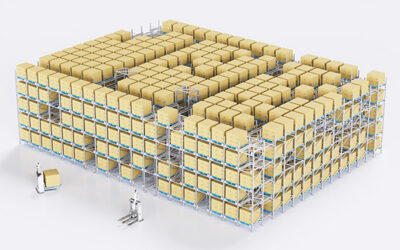
Four-way shuttle system scalability is not an automatic feature of modular hardware. It depends on how lane configurations are laid out during initial design and whether the control software can manage a growing fleet without creating bottlenecks. In over a decade of designing pallet-to-person automation for cold chain, manufacturing, and 3PL facilities, I have seen projects where expansion required weeks of downtime because the original layout assumed a static throughput — and others where adding capacity was a matter of plugging in new shuttles and updating the WCS. The difference comes down to decisions made long before the first pallet is stored.
Scalability Features of Four-Way Shuttle Systems
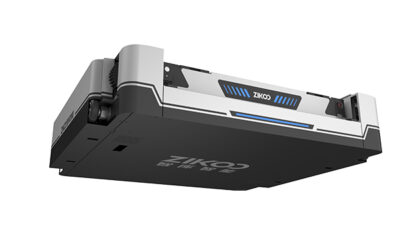
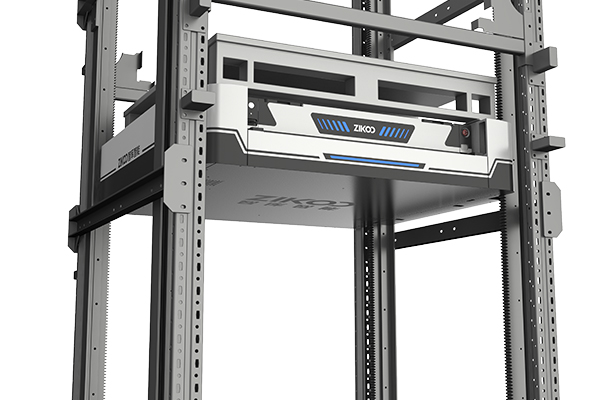
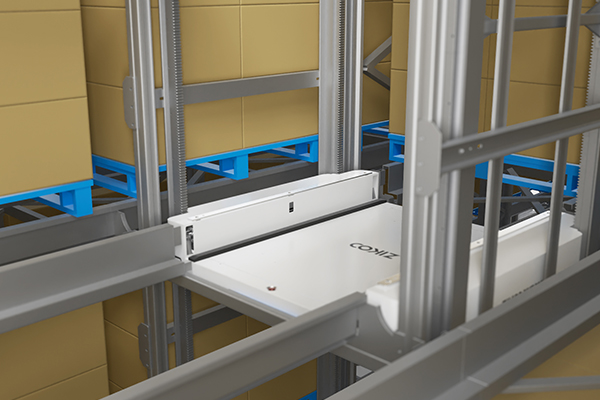
At the hardware level, a four-way shuttle system’s scalability rests on three building blocks: the shuttle robots, the rack lanes they travel on, and the vertical lifts that move pallets between levels. The R-bot Four-way Shuttle, for example, is a slim 125 mm thick robot that carries up to 1,500 kg on rail inside storage lanes. Adding more shuttles increases pallet-handling capacity without changing the aisle infrastructure, provided the lane endpoints and charging stations can accommodate the additional traffic. The system can start with a few lanes and a handful of shuttles for 1,000 pallet positions and later grow to 10,000 positions by extending the rack, adding lanes, and integrating more shuttles and lifts. This modularity is the foundation of scalability.
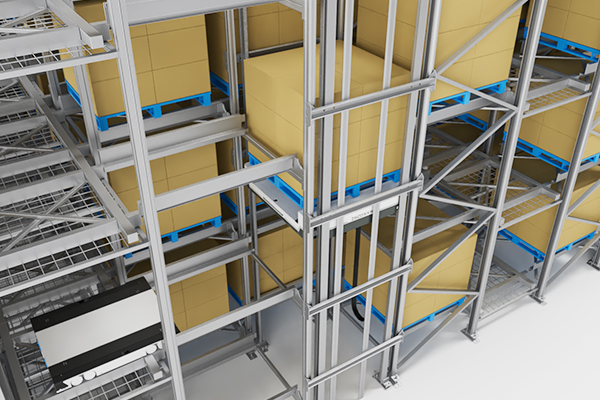
Vertical expansion follows a similar logic. The H-bot Vertical Bidirectional Shuttle occupies only a single storage location at each level yet moves pallets between rack tiers with ±1 mm positioning accuracy. As shuttle fleets grow, additional H-bot lifts can be inserted at any column to increase vertical throughput. Together, R-bot shuttles and H-bot lifts form a six-way shuttle network that scales in three dimensions—adding lanes, levels, or both—without a full system redesign.
Designing for Expansion: Lane Configuration and Layout
Expanding a four-way shuttle system later is far less disruptive if the initial rack design anticipates growth. In projects we have delivered for manufacturing and cold storage clients, we reserve at least one empty lane adjacent to the active storage area. This spare lane makes it possible to extend the rack without dismantling existing shelving. Planning the rack height and floor loading for an additional level from day one also eliminates costly structural reinforcement when demand grows.
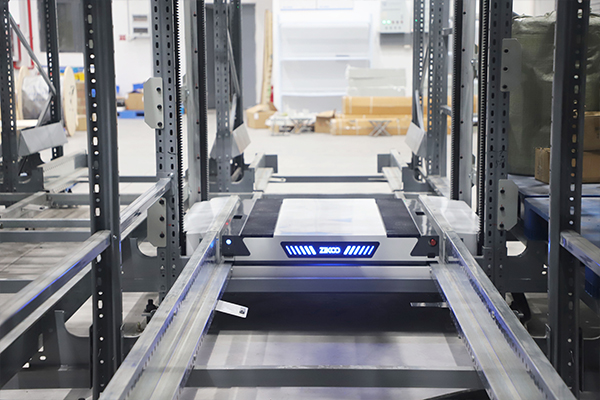
Pallet size is another factor that locks in or limits future options. Systems configured for 1200×1000 mm pallets can accept other dimensions such as 1100×1100 mm with adjustable lane rails, but if the original racks are welded to a single dimension, later pallet changes force a rack rebuild. The table below shows how different R-bot models map to pallet families and expansion flexibility.
| R-bot Model | Pallet Size (mm) | Rated Load (kg) | Expansion Flexibility |
|---|---|---|---|
| R1200B | 1200 x 800–1000 | 1200 | Adjustable width lane |
| R1200A | 1016 x 1219 | 1200 | Fixed lane, specific footprint |
| R1500J | 1100 x 1100 | 1500 | Fixed lane, specific footprint |
| R1500B | 1200 x 800–1000 | 1500 | Adjustable width lane, heavier load |
| R2000B | 1400 x 1200–1300 | 2000 | Wider lane, may require reinforced rails |
Choosing a versatile pallet family like the R1200B or R1500B at the start preserves the ability to introduce different shuttle models later without altering the rack structure.
How Expanding a Four-Way Shuttle System Works in Practice
The physical expansion process typically starts with adding rack bays and rails to the end of each lane. If a spare lane was pre-provisioned, the new rail inserts bolt on, and new shuttles can be commissioned within days. Charging capacity must also scale; each R-bot model draws from a lithium battery that supports eight hours of continuous operation, and the charging stations need to be placed so that returning shuttles do not block active lanes. In designs we have built for third-party logistics providers, we install charging rails at both ends of each lane to prevent queuing.
Battery management is not the only scaling constraint. Throughput does not rise linearly with every additional shuttle because lane endpoints and lift queues eventually saturate. The WCS must re-optimize dispatch rules as fleet size grows, rebalancing shuttles across aisles to prevent hotspots. When we configure expansion-ready systems, we simulate throughput at 50%, 100%, and 150% of the initial fleet to determine how many shuttles can be added before congestion offsets the gain.
If your current throughput projection doubles within two years, it is worth confirming the dispatch logic and queue modeling before finalizing the hardware count. Reach out at [email protected] to run a throughput simulation specific to your SKU profile.
Software Scalability in Automated Storage Systems
Software is often the bottleneck in expansion projects. The PTP Smart Warehouse Software stack, which bundles WMS, WES, WCS, and RCS layers, handles shuttle fleet management across hundreds of robots, but the control logic and compute resources must scale with lane count. As lanes are added, the WCS must solve more complex routing problems in real time to avoid deadlocks at lane intersections. This is navigable if the initial software architecture allocates sufficient compute headroom and if the system supports distributed controllers at each aisle block.
A common mistake is treating the WCS as a static component that simply needs more licenses. In practice, expansion may require re-partitioning the warehouse map, adding new aisle controllers, and updating the route graph. Doing this without a shutdown means staging a parallel software environment and cutting over lane by lane. In projects where we anticipated growth, we designed the software stack with a modular aisle-controller architecture from the beginning, which allowed new racks to be commissioned without disrupting active storage.
Cost and ROI of an Expandable System vs. One-Time Build
Building expansion-ready capacity upfront adds incremental cost but avoids far larger expenses later. A spare lane structure adds roughly 5 to 8 percent to the initial steel purchase, depending on rack height and load rating. Retrofitting that same lane later often costs twice the initial steel expense once you account for dismantling existing racks, halting operations, and re-leveling the floor.
The financial equation shifts further when you consider revenue loss during expansion downtime. A facility that stops picking for three weeks to add lanes loses more in throughput than the entire cost of pre-provisioning those lanes during construction. Shuttle robots themselves can be phased in gradually; operators start with a small fleet and lease or purchase additional units as volume grows. This converts a capital expenditure into a variable cost tied to actual throughput.
| Cost Factor | Upfront Expansion-Ready | Retrofit Later |
|---|---|---|
| Extra lane steel | 5–8% of initial steel | 100% plus dismantling |
| Rack reinforcement | Included in design | 2–3x initial cost |
| Shuttle robots (per unit) | Same unit price, phased | Same unit price, urgent |
| Production downtime | Zero during construction | 1–3 weeks typical |
| Software reconfiguration | Planned in architecture | Urgent re-architecture |
Real-World Expansion Scenarios and Risks
Expansion does not always go smoothly, and the failures I have seen come from the same handful of root causes. One facility had the rack height to add a third level but had not upgraded the electrical panel, so the additional charging load tripped breakers during peak periods. Another installed extra shuttles but did not widen the lift staging buffers, causing pallets to stack up at the H-bot entry and reduce throughput below the original baseline.
Building envelope constraints also matter. A warehouse with a 10-meter ceiling might have space for two levels of pallets today, but if the rack design does not accommodate a third level, future expansion stops there. Floor loading is another hard limit. A dense storage system with 1.5-ton pallets stacked two high puts over 3 tons per column on the slab, and adding another level moves that to 4.5 tons—a figure that must be verified against the original foundation design.
These risks are avoidable if the initial site survey accounts for the maximum plausible expansion. I require a structural engineer to certify the floor loading for the full build-out scenario, not just the current phase. When that condition is met, a four-way shuttle system can scale gracefully from a modest installation to a high-throughput automated warehouse serving entirely different throughput levels than the day-one operation.
A Practical Path to an Expandable Automated Storage System
Deciding whether a four-way shuttle system is suitable for future expansion comes down to how the initial lane layout, pallet family, charging infrastructure, and software architecture are configured. A system designed for 5,000 positions can become one that handles 15,000 positions if the planning accounts for the expansion path from the outset. The cost of that planning is small relative to the cost of rebuilding later.
If you are evaluating whether a four-way shuttle system can meet your future storage needs, the answer starts with a lane layout that matches your five-year growth projection and a software stack that can manage an expanding fleet. Send your projected pallet position growth and facility dimensions to [email protected] or call (+86)-19941778955, and we will prepare a scalability analysis specific to your operation.
Common Questions about Four-Way Shuttle System Expansion
How much does it cost to expand a four-way shuttle system later?
The cost depends almost entirely on whether the initial design reserved spare lanes and planned for additional shuttles. When expansion lanes are pre-provisioned, adding a new aisle requires only installing rails and commissioning shuttles, which typically costs a fraction of the original build. Without that preparation, expansion involves dismantling existing racks, extending steel, and rewiring charging infrastructure, easily doubling the per-lane cost. The labor and downtime alone often exceed the cost of the original steel.
Can I add more shuttles to an existing system without shutting down?
It is possible if the lane layout leaves access to the charging rails and if the WCS supports hot-adding new robot identities. In practice, the biggest obstacle is charger placement: if charging pads are located at active lane endpoints, new shuttles must be inserted during a maintenance window. Systems with charging stations at both ends of each lane or with side-mounted charging rails allow new shuttles to be introduced while the system runs.
What happens if my pallet sizes change after installation?
Pallet size changes affect the shuttle model and lane rail spacing. If the original lanes use adjustable rails and the shuttle model chosen covers a range of widths—such as the R1200B which handles 1200×800–1000 mm pallets—a shift within that range poses no problem. Moving to a completely different footprint, like from 1200 mm to 1100 mm square, requires a different shuttle model and potentially re-railing the lane. For that reason, we recommend selecting a pallet family early and adhering to it.
Is there a limit to how much I can expand a four-way shuttle system?
Physical limits come from the building structure: ceiling height, floor loading, and column spacing. A rack that starts at two levels can grow to three or four if the foundation was designed for it and the lifts can reach the added elevation. Throughput saturation is a subtler limit; adding more shuttles eventually creates queueing at lifts and lane intersections, and beyond a certain fleet size, the control software must partition the warehouse into zones, which adds complexity. Most facilities can double or triple their initial capacity before hitting these walls.
How long does expansion take?
A pre-planned expansion adding one lane and four shuttles can take as little as three to five days, including rail installation and commissioning. An unplanned expansion that requires dismantling active racks and rewiring may stretch to several weeks. The largest variable is whether the facility can isolate the expansion area from live operations. If you are planning future expansion and want to minimize downtime, share your current layout and growth timeline at [email protected] for a detailed expansion roadmap.
If you’re interested, check out these related articles:
Looking for Reliable Four-Way Shuttle Manufacturers? Choose Zikoo Robotics
Six-Way Shuttle: The Smart Warehousing Tool for Cost Reduction and Efficiency
Smart Cold Chain Era: Six-Way Shuttle System Redefines Storage Efficiency with Maximum Density
Stacker Crane vs Four-Way Shuttle: Which Fits Your ASRS Warehouse Best
Smart Storage Revolution: Comprehensive Overview of Four-Way Shuttle Systems for Automatic 3D Warehouses