The pressure on warehouse operations keeps building. Labor costs climb year after year, and finding reliable workers gets harder with each hiring cycle. I’ve watched companies struggle with this squeeze—margins thinning while customer expectations for faster delivery only intensify. The math eventually forces a decision: either absorb the costs or fundamentally change how work gets done. Smart automation offers a path forward, one that addresses the immediate staffing crunch while building something more resilient for whatever comes next.
The Real Forces Driving Warehouse Labor Reduction
The logistics industry sits at an uncomfortable crossroads. Wage pressures show no signs of easing, and the pool of available warehouse workers continues to shrink. These aren’t temporary fluctuations—they reflect structural shifts in labor markets that affect every operation relying on manual processes.
What makes this particularly challenging is the timing. Customer expectations have moved decisively toward faster fulfillment. Same-day and next-day delivery went from premium services to baseline expectations. Meeting these demands with traditional labor models means either paying premium wages during peak periods or accepting service failures. Neither option works long-term.
Manual processes also carry inherent limitations. Human workers tire, make mistakes, and can only move so fast. These aren’t criticisms—they’re simply the physics of human performance. When throughput demands exceed what manual operations can reliably deliver, something has to give.
| Key Driver | Impact on Warehouse Operations |
|---|---|
| Rising Labor Costs | Increased operational expenses, reduced profit margins |
| Staffing Shortages | Delayed fulfillment, decreased throughput, recruitment challenges |
| Demand for Faster Fulfillment | Need for quicker processing and shipping times, increased pressure on labor |
| Operational Efficiency | Manual processes prone to errors, slower processing |
| Supply Chain Resilience | Vulnerability to labor disruptions, limited adaptability |
How Pallet-to-Person Robotics Changes Material Handling
Traditional warehouse picking requires workers to walk to inventory locations, often covering miles during a single shift. Pallet-to-person robotics flips this model entirely. The inventory comes to the worker instead.
This approach eliminates the single biggest time sink in manual operations: travel. Workers stay at ergonomic workstations while robots handle the movement of goods. The productivity gains compound quickly across thousands of daily picks.
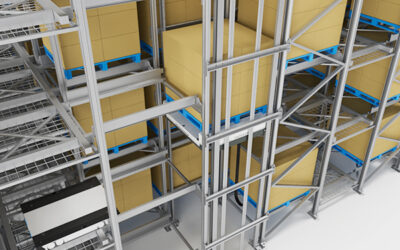
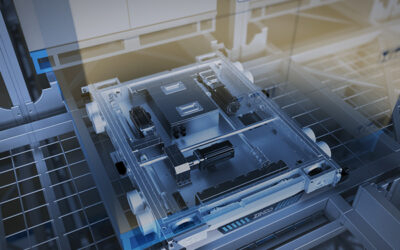
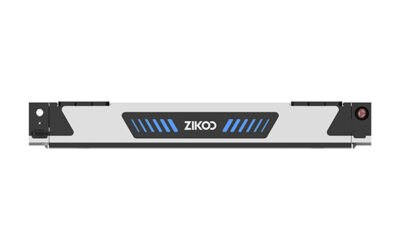
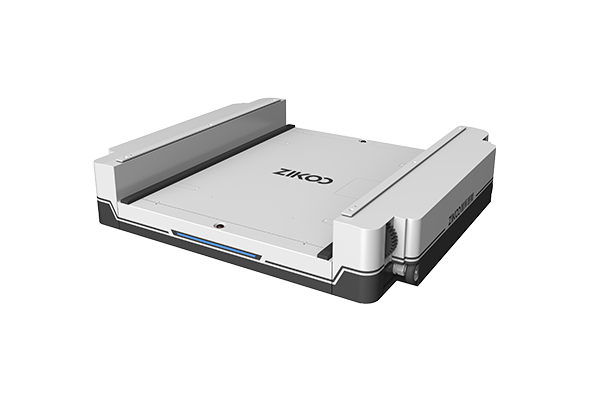
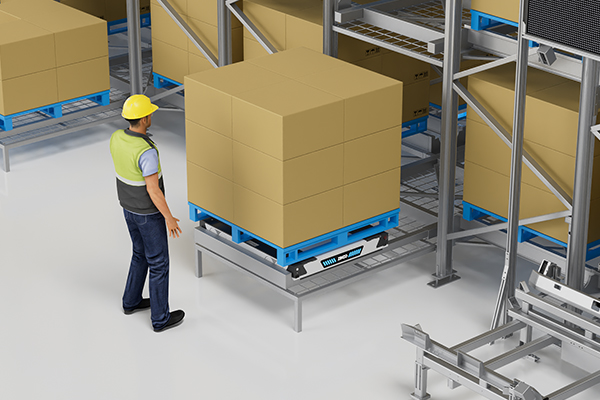
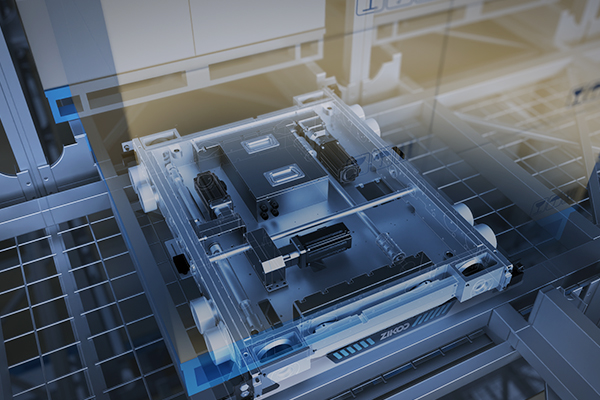
Zikoo’s robot lineup addresses different aspects of this challenge. The R-bot Four-way Shuttle operates in dense storage environments, moving pallets weighing up to 1.5 tons despite its slim 125 mm profile. The four-way movement capability means it navigates tight spaces that would be impossible for conventional equipment. When multiple R-bots work together with the H-bot vertical bidirectional shuttle, they create a six-way shuttle system that adapts to various storage configurations.
The U-bot Omnidirectional Stacking Robot tackles narrow aisle storage differently. Its U-shaped design achieves a 1370 mm turning radius, operating in aisles as narrow as 2100 mm. It lifts loads up to 8 meters high while carrying 1000 kg. For high-bay storage that would otherwise require specialized lift equipment and trained operators, the U-bot handles the work autonomously.
The H-bot serves as the vertical transportation link, occupying just a single storage location while connecting different levels of the warehouse. Working alongside the R-bot, it creates a three-dimensional network that maximizes cubic space utilization.
What Strategies Actually Work for Reducing Warehouse Labor Costs?
The strategies that deliver real labor cost reductions target the tasks consuming the most worker hours. Picking and retrieval typically top that list. Deploying specialized robotics like Zikoo’s U-bot Omnidirectional Stacker Robots and R-bot Four-way Shuttles removes human operators from these repetitive cycles. Beyond direct labor savings, this approach improves workplace safety by eliminating manual heavy lifting. The space optimization these systems enable—denser storage, narrower aisles—adds another layer of cost efficiency that compounds over time.
For more information on optimizing your warehouse, consider reading 《Looking for Reliable Four-Way Shuttle Manufacturers? Choose Zikoo Robotics》.
Software That Makes Warehouse Labor Reduction Possible
Robots alone don’t solve the labor challenge. Without intelligent coordination, automated systems create new problems—bottlenecks, conflicts, inefficient routing. The software layer determines whether automation delivers on its promise.
Zikoo’s PTP Smart Warehouse Software integrates four critical systems: Warehouse Management Systems (WMS), Warehouse Execution Systems (WES), Warehouse Control Systems (WCS), and Robot Control Systems (RCS). This integration matters because these functions need to work as a unified whole, not as separate applications passing data back and forth.
The software handles dynamic task assignment, sending robots where they’re needed based on real-time conditions rather than fixed schedules. Route optimization prevents traffic jams in the aisles. Inventory tracking maintains accuracy without manual cycle counts. The result is material flow that happens continuously with minimal human oversight.
This orchestration capability is where the real warehouse labor reduction occurs. Individual robots handle specific tasks, but the software ensures those tasks combine into efficient operations. Workers shift from executing tasks to monitoring systems and handling exceptions—a fundamentally different role that requires fewer people.
How Does Robotics Actually Improve Efficiency and Cut Manual Labor?
The efficiency gains from robotics come from eliminating wasted motion and human variability. Robots don’t take breaks, don’t slow down as shifts progress, and execute the same task with identical precision every time. When software orchestration adds dynamic task assignment and optimized routing, the system operates at sustained throughput levels that manual operations simply cannot match. Zikoo’s R-bot and U-bot systems, coordinated through the PTP Smart Warehouse Software, handle picking and stacking continuously. Human workers move into supervisory and maintenance roles where their judgment adds value. The productivity increase is substantial, and error rates drop significantly.
Measuring What Automation Actually Delivers
Automation investments need to show returns. The question isn’t whether pallet-to-person robotics can reduce labor—it clearly can. The question is whether the savings justify the investment for a specific operation.
The calculation involves several components. Direct labor cost reduction is the most obvious: fewer workers needed for the same throughput, or the same workers handling significantly higher volumes. But secondary benefits often matter just as much. Error rates drop when robots handle picking, which means fewer returns, less rework, and happier customers. Throughput increases translate to faster fulfillment without proportional cost increases.
Space utilization improvements deserve attention too. Dense storage systems reduce the footprint needed for the same inventory, which either delays facility expansion or allows more SKUs in existing space. Safety improvements lower insurance costs and reduce the disruption from workplace injuries.
| ROI Metric | Description | Impact of Automation |
|---|---|---|
| Labor Cost Savings | Reduction in wages, benefits, and recruitment expenses | Direct savings from fewer manual tasks |
| Error Reduction | Decrease in picking, packing, and inventory errors | Reduced returns, rework, and customer dissatisfaction |
| Increased Throughput | Higher volume of orders processed per hour/day | Improved capacity, faster fulfillment |
| Space Utilization | Optimized use of vertical and horizontal storage space | Reduced need for facility expansion, lower storage costs |
| Safety Improvement | Fewer workplace accidents and injuries | Lower insurance premiums, improved employee well-being |
| Inventory Accuracy | Real-time, precise tracking of stock levels | Minimized stockouts, reduced carrying costs |
What Kind of ROI Should You Expect from Automated Warehouse Solutions?
ROI from warehouse automation typically materializes across multiple categories simultaneously. Reduced overtime and lower hiring costs provide immediate savings. Improved accuracy means fewer returns and the customer satisfaction issues that come with them. Space optimization can defer or eliminate facility expansion costs. For operations implementing Zikoo’s pallet-to-person systems, the combined effect usually delivers measurable returns within 18 months to 3 years. The exact timeline depends on current labor costs, throughput requirements, and how fully the automation capabilities get utilized.
Getting Through the Hard Parts of Implementation
Warehouse automation projects fail for reasons that have little to do with the technology itself. Integration with existing systems creates friction. Staff resist changes to familiar workflows. Planning assumptions prove wrong once robots start moving through actual aisles.
The technical integration challenges are real but manageable. Existing WMS platforms need to communicate with new robot control systems. Physical infrastructure may need modifications—floor surfaces, racking configurations, power distribution. These requirements surface during proper planning but can derail projects that skip thorough assessment.
The human side often proves trickier. Workers worry about job security. Supervisors lose familiar control mechanisms. Processes that worked for years suddenly need redesign. Managing this transition requires clear communication about how roles will change and genuine investment in training.
Zikoo’s implementation approach addresses both dimensions. System design accounts for existing infrastructure and workflows. Installation follows a structured process that minimizes operational disruption. Post-implementation optimization catches the issues that only emerge once systems run under real conditions. The goal is a transition that feels manageable rather than overwhelming.
Where Human Workers Fit in Automated Warehouses
The narrative around warehouse automation often frames it as robots replacing workers. The reality in well-designed operations looks different. Robots take over tasks that are repetitive, physically demanding, and frankly not great jobs for humans. What remains for human workers tends to be more interesting.
Supervision and exception handling require judgment that robots lack. When something goes wrong—damaged goods, system conflicts, unusual orders—human intervention resolves the situation. Maintenance keeps the automated systems running. Data analysis identifies optimization opportunities. Strategic planning shapes how the operation evolves.
These roles require different skills than traditional warehouse work. The transition involves genuine upskilling, not just reassignment. Workers who previously spent shifts walking aisles and lifting boxes learn to operate control interfaces, interpret system data, and troubleshoot equipment issues.
The collaboration model works when both humans and robots do what they’re best at. Robots handle the physical throughput with tireless consistency. Humans handle the complexity and judgment calls. The combination produces operations that neither could achieve alone—higher throughput, fewer errors, and work that’s actually sustainable for the people involved.
Ready to Transform Your Warehouse Operations?
Zikoo Smart Technology Co., Ltd. delivers warehouse labor reduction through pallet-to-person robotics and intelligent software designed for real operational challenges. Our U-bot, R-bot, and H-bot systems address the specific bottlenecks limiting your throughput and driving up costs. Contact our team at [email protected] or (+86)-19941778955 to discuss your situation. We’ll help you understand what automation can realistically deliver for your operation.
Frequently Asked Questions About Warehouse Labor Reduction Solutions
What are the initial investment costs for implementing automated warehouse labor reduction solutions?
Investment costs vary considerably based on the scope of automation. Factors include facility size, the specific technology deployed (such as pallet-to-person robotics like Zikoo’s U-bot or R-bot), and how extensively the new systems integrate with existing infrastructure. The total typically covers hardware, software licensing, installation, and training. While the upfront commitment is significant, the labor savings and efficiency gains usually generate strong returns within a few years. Zikoo provides detailed cost analyses during the planning phase so you understand the full picture before committing.
How long does it take to see a measurable return on investment from warehouse automation for labor reduction?
Most operations see measurable ROI from warehouse labor reduction automation within 18 months to 3 years. The timeline depends on several variables: initial investment level, the labor costs being displaced, throughput improvements achieved, and how much error reduction contributes to savings. Operations using advanced pallet-to-person robotics often hit ROI targets faster because the efficiency gains are substantial from day one. Higher-volume facilities with significant labor costs typically see the fastest payback.
Will implementing warehouse labor reduction solutions lead to job losses for existing staff?
Automation changes the nature of warehouse work more than it eliminates positions entirely. Manual tasks get automated, but new roles emerge around robot maintenance, system supervision, and data analysis. The shift moves workers from physically demanding, repetitive tasks toward positions requiring more judgment and technical skill. For many operations, the bigger challenge is finding enough workers in the first place—automation addresses that shortage rather than creating unemployment. Zikoo supports clients with training programs that help existing staff transition to new roles.
What are the key benefits of Zikoo’s pallet-to-person robotics for labor reduction?
Zikoo’s pallet-to-person robotics, including the U-bot Omnidirectional Stacker Robots and R-bot Four-Way Shuttles, deliver warehouse labor reduction by automating the most labor-intensive activities. Manual picking and retrieval—the tasks that consume the most worker hours—shift to robots that operate continuously without fatigue. This cuts direct labor costs while reducing the physical strain that causes injuries and turnover. The systems also improve picking accuracy and increase throughput, addressing multiple operational challenges simultaneously.
How does Zikoo’s PTP Smart Warehouse Software contribute to labor optimization?
Zikoo’s PTP Smart Warehouse Software (integrating WMS, WES, WCS, and RCS functions) orchestrates the entire automated operation. It manages inventory in real time, assigns tasks to robots based on current conditions, and optimizes routing to prevent congestion. This coordination minimizes the human oversight needed to keep operations running smoothly. The software ensures robots like the U-bot and R-bot work at maximum efficiency, reducing idle time and maintaining consistent throughput. The visibility and control it provides translate directly to labor savings by eliminating the manual coordination that traditional operations require.