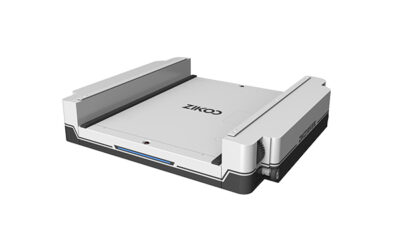
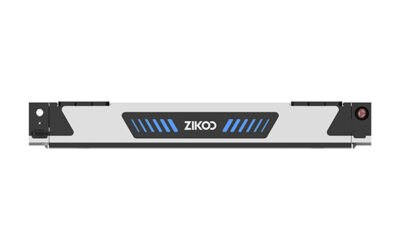
4-way shuttle systems in temperature-controlled storage fail most often not because the shuttle cannot run cold, but because the buying process treats a freezer as a standard warehouse with a lower thermostat setting. A cold storage shuttle has to survive condensation at door transitions, reduced lithium battery capacity, slower charging behavior, and rack layouts that preserve airflow around frozen pallets. After ten years of designing pallet automation for cold chain, pharmaceutical, and food facilities, I now ask buyers to confirm three details before comparing equipment: minimum temperature exposure, battery runtime at that temperature, and condensation control. Those factors decide total ownership cost more than empty travel speed.
Cold Storage Changes the Shuttle System Requirements
Temperature-controlled storage shifts the priority from raw throughput to equipment survival and recoverability. In an ambient warehouse, the main specification is how many pallets per hour the shuttle fleet can move. In a freezer or pharmaceutical cold room, the first question is whether the shuttle, battery, and charging station are rated for the lowest temperature the space will actually reach, not the average set point.
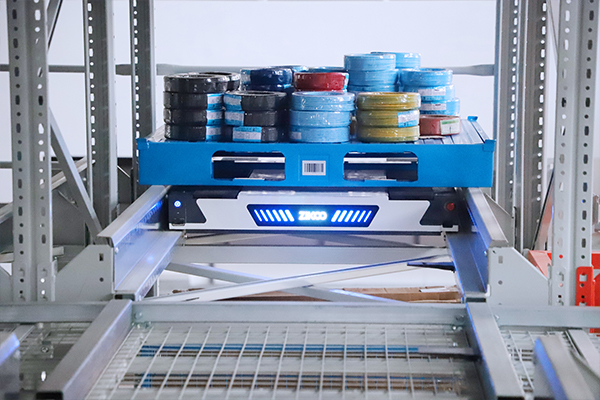
The R-bot data sheet rates standard models down to -15°C. That covers many chilled warehouses and constant temperature pharmaceutical rooms. For frozen storage, the cold chain custom solution uses a -25°C low-temperature lithium battery and a low-temperature charging port. The dividing line matters because a shipping dock that dips below zero in winter is a different problem from a freezer holding -20°C every hour.
| Environment | Typical set point | R-bot configuration |
|---|---|---|
| Chilled storage | 0°C to 5°C | Standard, rated to -15°C |
| Frozen deep storage | -18°C to -25°C | Cold chain solution, rated to -25°C |
| Mixed-temperature transfer | 0°C to -25°C swings | Cold chain configuration with PCBA coating |
This table matters because suppliers often quote the same shuttle model for every environment. The shuttle may be identical in mechanical terms, but the battery and coating specification is where cold storage projects go wrong.
What Changes When a Shuttle Moves From Chilled to Frozen Storage?
Chilled storage may range from 0°C to 5°C, but frozen storage often sits between -18°C and -25°C. The mechanical movement remains similar, but the battery capacity, charging behavior, and condensation exposure change. A standard R-bot rated to -15°C may be acceptable in the chilled room but not in the freezer. For the frozen zone, the -25°C low-temperature battery and low-temperature charging port are specified to keep runtime within the shift window without removing the shuttle from the cold environment.
Battery Chemistry and Charging Decide Whether Frozen Storage Shuttle Systems Stay Productive
Lithium batteries lose usable capacity as temperature drops. Charging them below freezing without a low-temperature design creates resistance that shortens cell life. The R-bot product specifications list a 51.2V/40Ah or 51.2V/30Ah lithium battery, with continuous operation of about 8 hours on a full charge for most models. The heavy-duty large pallet version runs about 7 hours. The cold chain solution delivers 6 to 8 hours of continuous operation at -25°C. That difference is not a downgrade. It is a recognition that frozen storage places a heavier energy load on every movement.
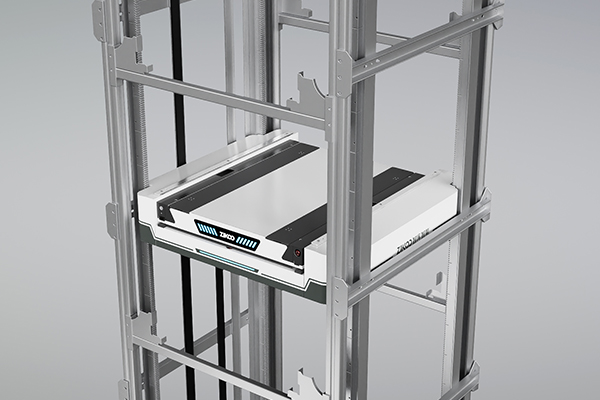
The charging point matters as much as the battery. A low-temperature charging port lets the shuttle recharge automatically inside the temperature-controlled envelope without a worker handling cold battery packs. Special PCBA coating adds protection in high-humidity environments. If a supplier cannot show how the shuttle charges at the temperature you run, the project carries a hidden labor cost. Either batteries get swapped into a warm room, or the shuttle leaves the freezer to charge and brings condensation back with it.
I have seen standard -15°C shuttle fleets placed in -20°C freezers because the order was written before the temperature profile was finalized. The shuttle still moved, so the project looked successful. Within the first year, battery runtime dropped below the shift length, charging cycles lengthened, and the warehouse added a manual battery swap procedure that the original layout did not accommodate. The fix was not a different shuttle. It was a corrected battery specification and charging station location.
How Does Low-Temperature Charging Differ From Ambient Charging?
At ambient temperatures, the shuttle can charge at a regular charging port without special cell heating. In cold storage, charging below the battery’s rated temperature can cause lithium plating and shortened capacity. The cold chain solution uses a low-temperature charging port designed for automatic charging inside the freezer. That keeps the shuttle in the same environment and prevents the condensation cycle that occurs when a machine moves to a warm room, chills again, and carries moisture back into the rack.
Cold storage automation often prioritizes storage density first, but the environmental envelope shapes which shuttle configuration can be sustained. <Smart Cold Chain Era: [Six-Way Shuttle System](https://www.zikooint.com/solution/r-bot-h-bot-six-way-shuttle-dense-storage-system) Redefines Storage Efficiency with Maximum Density> covers how six-way shuttle layouts achieve maximum density while keeping cold chain operations stable across repeated freeze-thaw work cycles.
Airflow, Rack Design, and Pallet Dimensions Are Not Secondary
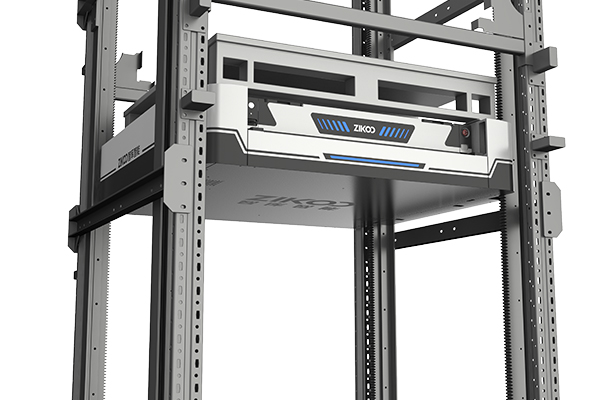
In a cold store, rack density can become an airflow problem. Four-way shuttle systems permit deeper storage lanes and higher density, but the value of that density depends on whether air reaches every pallet face. If rack rows are packed too tightly and shuttle rails close off the bottom clearance, frozen goods near the center of a lane can take far longer to reach the target temperature. The shuttle body is thin at 125 mm, so it does not need tall clearance, but the rack structure still needs enough vertical opening for cold air movement.
Pallet dimensions also decide which R-bot model fits. The American type accepts 1016 x 1219 mm pallets. The Japanese type accepts 1100 x 1100 mm pallets. The standard type accepts 1200 x 800 to 1200 x 1000 mm pallets. Choosing a model by pallet size is not a finishing detail. It changes lane width, rack depth, and how many pallets the system stores per cubic meter.
If your cold storage profile includes zones below -15°C, high-humidity transfer rooms, or pallet dimensions outside the standard envelope, it is worth confirming the minimum charging temperature and battery runtime before the rack layout is frozen. Send your temperature profile, pallet type, and daily pallet movement to [email protected] and ask for a cold storage shuttle configuration sheet. That step often catches the gap between the standard -15°C shuttle rating and the actual freezer temperature before it reaches the contract.
Software Keeps Dense Cold Storage Shuttle Systems Recoverable
Hardware performs poorly in cold storage when the software cannot handle a partial equipment failure. A shuttle may go offline for battery maintenance, condensation inspection, or a rail obstruction. In a dense four-way storage lane, one blocked shuttle can block the entire row unless the control software resequences tasks around it. The WCS and RCS layers in the PTP Smart Warehouse Software manage task assignment, shuttle routing, and elevator coordination. That matters because a freezer operation cannot stop for hours while a technician works inside the chamber.
A cold storage system also needs prediction, not only reaction. If the software can move high-priority pallets to the outbound face before the morning gate, the operation avoids a burst of shuttle movement during the warmest part of the day. That reduces condensation exposure and spreads battery drain more evenly. Shuttle fleets with software-level path assignment handle this more cleanly than systems where the shuttle relies on fixed mechanical routes.
Warehouse hardware alone does not decide whether a cold storage automation project stays running when a shuttle is removed for service. <Software-Driven Hardware: Six-Way Shuttle Maximizes Warehouse Efficiency> covers how software-level path assignment and task rerouting keep throughput stable across multiple shuttle fleets.
Four-Way Shuttle Systems Fit Dense Cold Storage, but Not Every Cold Room
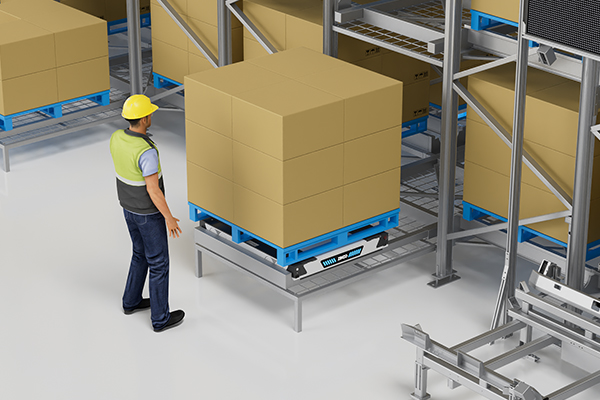
The right comparison is not four-way shuttle versus stacker crane in the abstract. It is which system matches the warehouse height, throughput pattern, and temperature profile. Four-way shuttles with an H-bot vertical shuttle create a six-way movement network that permits dense storage without requiring a fixed aisle for each crane. That returns more storage positions per square meter when rack height is moderate and the operation values flexible task routing. A stacker crane still makes sense in high-bay single-deep or double-deep cold rooms where the building can tolerate a tall crane and the outbound pattern is predictable.
| System | Best cold storage fit | Storage density | Main limitation |
|---|---|---|---|
| Four-way shuttle plus H-bot | Multi-deep frozen pallet storage, medium-height racks | High | Cold battery and condensation management |
| Stacker crane AS/RS | High-bay single-deep or double-deep frozen rooms | Medium to high | Building tolerances and fixed crane paths |
| Manual reach truck racking | Low-volume mixed-temperature storage | Low | Labor hours in cold environment |
| Pallet AMR | Flexible low-density movement in chilled zones | Low to medium | Battery degradation and floor uniformity |
The H-bot data sheet lists an operating range from -25°C to 45°C and positioning accuracy of ±1 mm. That accuracy matters because a misaligned pallet at the rack face becomes a larger problem in a freezer, where service time is expensive and delays can expose goods to temperature drift.
Before deciding between dense shuttle storage and a more conventional ASRS, the structural and operational trade-offs are worth mapping. <Stacker Crane vs Four-Way Shuttle: Which Fits Your [ASRS Warehouse](https://www.zikooint.com/asrs-automated-storage-and-retrieval-system-solutions) Best> compares throughput, rack height, and system complexity for the two approaches, which matters when ceiling height and air handling equipment already constrain the building.
Buyers Should Confirm These Specifications Before Finalizing a Cold Storage Project
Cold storage projects carry a specific risk that ambient warehouse projects do not. A system can meet every mechanical specification and still underperform because the battery was selected for -15°C when the freezer runs at -22°C, or because the charging station was placed outside the temperature-controlled envelope and the shuttle carries condensation back into the rack. These failures do not appear in a datasheet comparison. They appear after installation, when the supplier has left and the warehouse team is managing daily recovery work.
Zikoo Smart Technology Co., Ltd supplies R-bot four-way shuttles, H-bot vertical bidirectional shuttles, and PTP Smart Warehouse Software as one system, with cold chain configurations rated for -25°C and low-temperature charging. The next step is not a broad automation consultation. Send your warehouse temperature range, pallet dimensions, SKU count, and target pallets per hour to [email protected] or call (+86)-19941778955 and ask for a cold storage shuttle layout simulation. You will quickly see which configuration fits your frozen flow without adding manual battery handling.
Common Questions About Four-Way Shuttle Systems in Cold Storage
What minimum temperature can a four-way shuttle system handle?
Standard four-way shuttle systems can operate down to -15°C, which covers most chilled and constant temperature pharmaceutical environments. If the storage zone runs colder, the cold chain configuration is specified for -25°C using a low-temperature dedicated lithium battery. The key is to use the actual minimum temperature the shuttle will see near the rack face, not the warehouse set point, because charging and runtime change measurably below freezing. Always confirm whether the quoted model includes the low-temperature battery, charging port, and PCBA coating rather than only the base shuttle.
Why does cold storage require a different shuttle battery?
It is a common mistake to assume that a standard lithium battery will work in a freezer if the ambient rating is slightly above the storage temperature. Standard R-bot batteries run for about 8 hours on a full charge, but very cold environments reduce usable capacity and make charging at low temperature harder on the cells. The cold chain solution uses a -25°C low-temperature battery and a low-temperature charging port so the shuttle can recharge inside the temperature-controlled envelope. That avoids the condensation cycle created when batteries or complete shuttles move from a freezer to a warm charging room and back.
How do you control condensation in automated cold storage?
It depends on where the shuttle travels and where it charges. If the shuttle stays inside the temperature-controlled area for operation and charging, condensation is easier to manage because the machine does not move repeatedly between humid and cold zones. The cold chain configuration handles automatic charging inside the low-temperature environment and special PCBA coating for high-humidity protection. If the shuttle must exit through a transfer door into an ambient staging area, a short conditioning zone or door sequence becomes necessary to limit moisture reaching the electronics and rack rails.
What should buyers verify before choosing a cold storage shuttle supplier?
The most productive version of this question is not who has the largest shuttle range, but whether the supplier can prove that the battery, charging arrangement, and rack airflow fit the buyer’s specific temperature profile. Ask for the minimum operating and charging temperatures, continuous runtime at the lowest temperature, condensation mitigation detail, and a pallet-size match for the exact pallets in the building. Without those four points, a datasheet comparison tells you very little. If you are compiling a shortlist, send your temperature range and pallet dimensions to [email protected] and request a cold storage configuration confirmation before ordering.
If you’re interested, check out these related articles:
Six-Way Shuttle: The Ultimate Warehousing Solution for Cost Reduction and Efficiency
Six-Way Shuttle: Empowering Industries to Embrace Smart Warehousing