I review four-way shuttle system costs with procurement teams across power, cold chain, pharmaceutical and 3PL projects, and the first question is always about price per unit. A shuttle itself is a specific line item, but the total system cost is governed by technical parameters most RFQs don’t nail down on the first pass. This article maps the real cost structure, from pallet compatibility and load ratings to battery runtime and software layers, so you can build a budget that works with your operation rather than one that simply matches a benchmark number.
What Makes Up the Total Cost of a Four-Way Shuttle System?
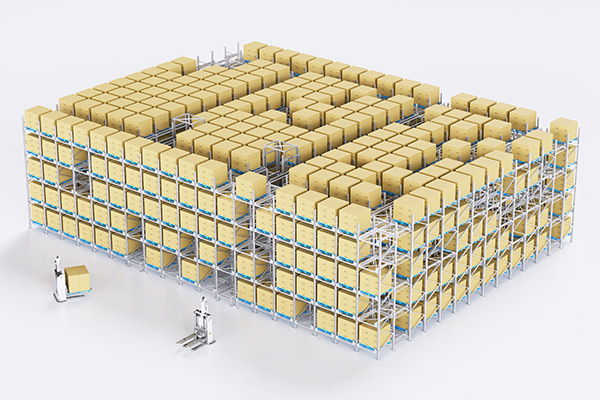
A four-way shuttle system purchase covers more than the robots. We break it into six cost blocks when supporting a project evaluation.
| Cost Component | What It Covers |
|---|---|
| Shuttle robots | Per-unit hardware including chassis, drive units, and lithium battery |
| Racking and guidance rails | Structural steel and pre-installed guide tracks for four-way travel |
| Lifting/transfer stations | Elevators, vertical conveyors, or H-bot shuttle units for tier changes |
| Control and safety infrastructure | Sensors, communication buses, safety barriers, and emergency stops |
| Software (WMS/WCS/RCS) | Warehouse management, control, and robot scheduling systems |
| Engineering, integration and commissioning | System design, installation labor, testing, and go-live support |
When we quote a dense storage system, the robot hardware is rarely the largest portion. Racking and software integration regularly exceed shuttle costs, especially in multi-level or cold storage configurations.
What hidden costs catch buyers off guard?
The most common unexpected items are facility modifications, power supply upgrades, and software customization for unique workflows. If your site has column grids that conflict with rail placement or requires reinforced floors, those items sit outside the supplier’s standard scope and need separate budget allocation. I advise clients to request a site survey report before final pricing.
How Technical Choices Drive Four-Way Shuttle System Cost
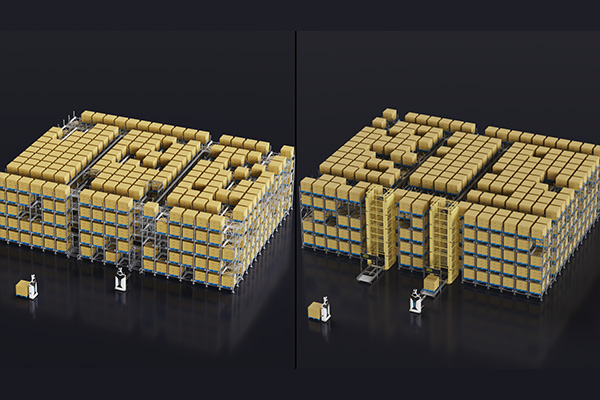
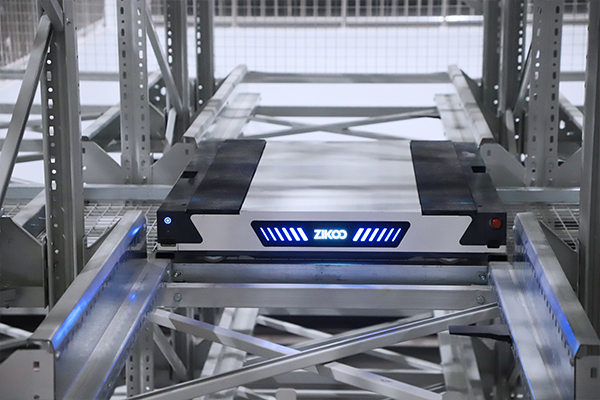
Every specification you set changes the final number. The R-bot Four-way Shuttle from our product line illustrates this clearly.
The standard model (R1200B) carries 1200 kg with a 1200 × 800–1000 mm pallet and a body thickness of 125 mm, running at 1.6 m/s empty. If your pallet type shifts to American footprint (1016 × 1219 mm), we switch to the R1200A. Both use lithium batteries rated for 8 hours continuous operation. But when a project needs 1500 kg capacity on 1100 × 1100 mm Japanese-standard pallets, we move to the R1500J, which changes shuttle dimensions and slightly alters aisle and rail layout. A 2000 kg heavy-duty requirement pushes you to the R2000B, with a larger body, higher weight, and lower travel speed, impacting throughput calculations and tier-transfer equipment sizing.
Cold chain storage introduces another cost multiplier. Standard shuttles work down to –15 °C, but for –25 °C operation we must specify a dedicated low-temperature lithium battery, PCBA coating, and separate charging port design. These are not optional extras; they are essential for system reliability and must be budgeted at the bid stage.
How does pallet type affect shuttle price?
A pallet that deviates from the shuttle’s standard contact surface may require a customized handling mechanism or additional pallet centering sensors. I have seen evaluations where a seemingly small pallet variation added 8–12% to per-shuttle cost because of re-engineering and testing. Confirm your target pallet footprint before soliciting quotes.
How to Budget for a Four-Way Shuttle System Without Surprises
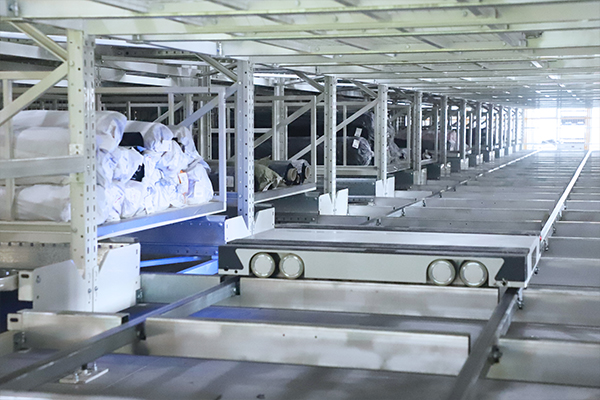
The most reliable way to budget is to start with a throughput and capacity calculation, not a per-shuttle price list. We usually ask clients for daily inbound and outbound volume, peak hour flow, pallet dimensions, minimum and maximum storage temperatures, and the SKU count with velocity ranges. Those numbers determine how many shuttles, lifts, and workstations you actually need.
After you receive a quotation, put every line item into three buckets: one-time capital, annual software license or maintenance, and power/labor operating cost. Many proposals quote a five-year maintenance contract but bury it in a footnote. I recommend normalizing all supplier quotes to a seven-year total cost of ownership view, including battery replacement cycles.
Most of the unforeseen budget overruns I’ve tracked in project deliveries trace back to scope mismatches. The system that looks cheapest on day one may lack the control software module or safety integration already included in another vendor’s proposal. Standardizing the scope of supply across bidders is the single most effective step you can take before comparing prices.
What ROI Can You Expect from a Four-Way Shuttle System?
ROI doesn’t come from a single metric. In projects I’ve worked on, labor reduction typically accounts for 40–60% of the recurring saving, while increased storage density contributes the rest through deferred building expansion or avoided external warehouse lease.
A shuttle system can double the pallet positions in the same footprint compared to selective racking with forklift aisles. Combine that with 24/7 operations and you may push throughput beyond what a manual team can deliver, particularly during peak retail seasons or frozen storage shifts where labor is scarce.
Payback periods I observe in manufacturing and cold storage applications are often between 2 and 4 years, assuming the warehouse was originally at capacity and the alternative was renting additional space. A system sized for current volume with limited expansion headroom will stretch the payback, so I always advise including at least a 20% throughput growth buffer in the design specification.
How long does it take to achieve full ROI?
Most integrated systems reach steady-state within 3 to 6 months after commissioning. ROI clock usually starts counting from go-live, and a well-specified system should hit breakeven within 3 years for cold storage or high-labor-cost regions. The key is not to delay the software tuning phase; an under-optimized WCS can hold back throughput for months.
How to Select a Four-Way Shuttle Supplier with Real Cost Transparency
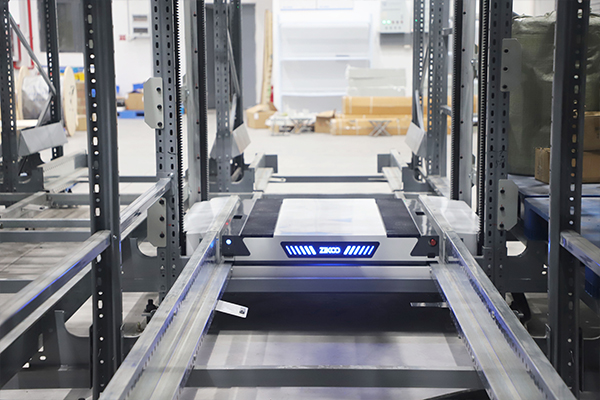
Cost transparency is visible in the quotation structure. A supplier who separates hardware, software, engineering, and commissioning into discrete line items gives you the data to compare real value. Vague “turnkey” lump sums often hide gaps.
Ask for a reference site operating similar pallet types, throughput, and temperature conditions to your own. When we deliver a project, we provide the commissioning report and system availability data for the first quarter of operation. Those numbers reveal actual uptime, not spec-sheet availability.
Software integration depth also dictates long-term cost. A WCS that only supports basic pallet moves will eventually require manual intervention for exceptions, inventory rotation, or replenishment waves. Our PTP Smart Warehouse Software (WMS/WES/WCS/RCS) is designed to handle multi-tenant workflows and dynamic order batching, which reduces the headcount needed to operate the system. While software is a line-item cost today, it is the biggest lever for labor efficiency across the system’s life.
If you are evaluating a four-way shuttle deployment and want a cost model built against your specific pallet type, daily flow and temperature requirements, send your part number, pallet dimensions and target storage depth to [email protected]. We will structure a seven-year TCO comparison that includes racking, shuttle fleet sizing, vertical lift configuration and PTP software, so the proposal matches real operating numbers.
Answering Your Four-Way Shuttle System Cost Questions
What is the typical price range for one four-way shuttle?
It depends on load rating, pallet compatibility and battery type. A standard 1200 kg shuttle designed for 1200 mm pallets sits in a different tier than a 2000 kg heavy-duty unit built for 1400 mm pallets with cold storage battery. Quotes can vary by a factor of two or more across models, so price range alone is meaningless without the corresponding specification sheet.
Do domestic and imported shuttle system costs differ significantly?
Yes, but the gap is narrowing. Domestic manufacturers now produce shuttle robots with comparable lithium battery life and positioning accuracy, often at 20–40% lower hardware cost than imported equivalents. Software stability and long-term support remain the more important differentiator in total cost of ownership.
Are customized solutions much more expensive than standard ones?
A custom pallet interface or modified battery housing adds engineering time, but the cost impact is usually one-time and modest if the core platform can accommodate the change. In programs we’ve supported, a true non-standard requirement added 5–15% to unit cost; the far larger budget risk is ordering a standard shuttle that cannot handle the existing pallet fleet.
What ongoing costs should I plan for after installation?
Annual costs include preventive maintenance, battery replacement every 3–5 years, software license fees, and potentially spare parts for high-wear items like drive wheels. For a mid-sized system, I typically see these running 2–4% of the initial capital per year, but cold storage and high-throughput installations trend toward the higher end due to more frequent component cycles.
Do suppliers provide performance guarantees that protect my investment?
The strongest commitment we offer is a system availability SLA measured during the first quarter of operation. If the system fails to reach agreed throughput or uptime, the project enters a structured correction period. Request an availability test protocol in the contract. If your facility involves temperature extremes, heavy pallets or multi-floor workflows, share your requirements with us at [email protected] or (+86)-19941778955; we will outline a commissioning and guarantee framework suited to your operational conditions.
If you’re interested, check out these related articles:
Looking for Reliable Four-Way Shuttle Manufacturers? Choose Zikoo Robotics
Six-Way Shuttle: Pioneering the Future of Smart Warehousing
Multi-Scenario Smart Adaptation: Zikoo’s Six-Way Shuttle Powers the Digital Transformation of Warehousing
Six-Way Shuttle: The Smart Warehousing Tool for Cost Reduction and Efficiency 2