AS/RS total investment isn’t a single price tag you can pull from a brochure—it’s the sum of a dozen engineering decisions, from racking density to shuttle speed. Over the past decade, I’ve designed and delivered automated storage and retrieval systems for industries ranging from cold chain to new energy, and the one constant is that early cost assumptions often miss the biggest budget movers. This article walks through the actual cost drivers, how configuration choices swing the numbers, and where a pallet shuttle AS/RS can deliver a lower total cost of ownership than conventional stacker crane setups.
What Makes Up the Total Investment of an AS/RS System?
Before we attach numbers, it helps to separate an AS/RS project into cost buckets. I group them in three: hardware, software, and services.
Core Hardware
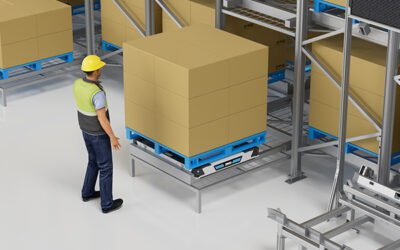
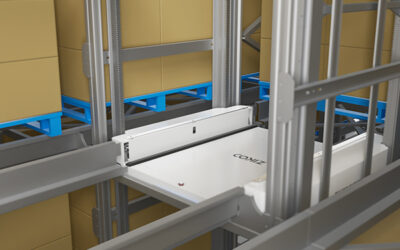
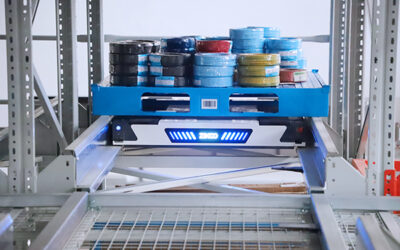
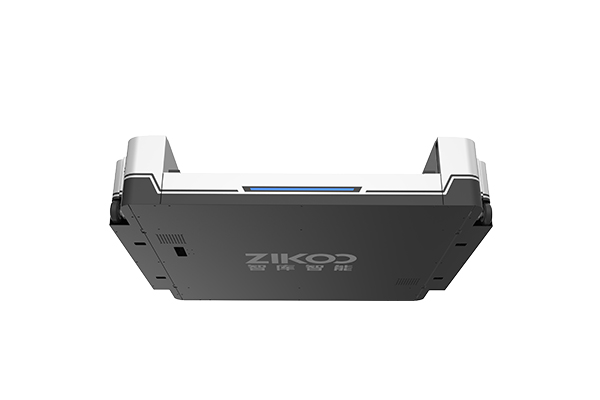
This is the steel, shuttles, lifts, conveyors, and racking. Racking alone can be a third of the bill. For a pallet shuttle system, the four-way shuttles—like our R-bot series—are the workhorses. A single R-bot handles up to 1.5 tons and moves in four directions, but you don’t buy just one; a medium-sized warehouse might deploy 12 to 20 shuttles to maintain throughput. Then there are vertical lifts (H-bots) to shuttle pallets between levels. Material costs scale with storage height and the number of levels.
Software and Controls
The brain of the system. WMS, WES, WCS, and RCS coordinate inventory, task allocation, and robot routing. A custom integration layer between your ERP and the AS/RS can run $50,000 to $150,000, depending on complexity. Off-the-shelf packages exist, but nearly every project I’ve been part of needed some tailoring.
Installation and Integration
On-site installation, cabling, safety fencing, and commissioning can equal 15–20% of total hardware cost. Downtime during cutover adds an operational cost that many RFPs ignore. If your warehouse is live, you’ll need a phased rollout plan.
How Configuration Choices Drive AS/RS Investment Costs
Every tray of the scale you tip—upfront capital, energy bill, maintenance hours—traces back to a handful of configuration choices.
Throughput Requirements
If you need 200 pallets per hour inbound and 250 outbound, the system must have enough shuttle fleet, lifts, and conveyor capacity. A four-way shuttle system with H-bot vertical lifts can hit these numbers, but overspecifying throughput is the quickest way to double the budget. I’ve seen facilities where cutting the outbound target by 15% saved 30% on shuttle quantity without affecting operations.
Storage Density and Building Layout
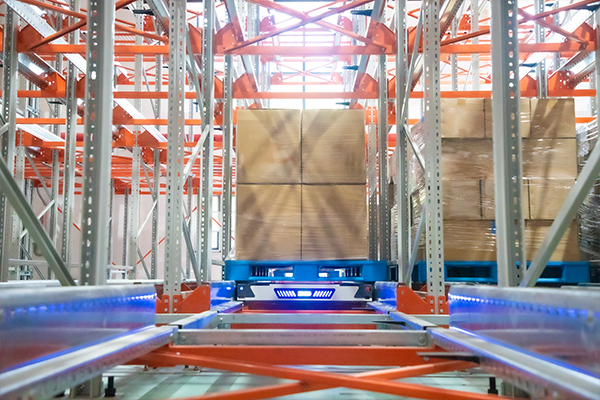
The denser you store, the less building you need. A six-way shuttle setup using R-bots and H-bots can stack pallets 10 or more levels high in an aisle-free block, cutting floor space by up to 50% compared to traditional reach-truck layouts. But the racking structure becomes heavier and more expensive per pallet position. Taller warehouses also mean higher lift speeds and stronger H-bots. It’s a trade-off: more real estate cost versus more steel and robotics cost.
Picking Strategy and Automation Level
Full pallet moves keep costs lower. If you add layer picking or case picking, you introduce robotic arms, conveyors, and vision systems that drive complexity and cost. Most of our projects stay at pallet-to-person, which balances automation ROI and simplicity.
Comparing Investment: Four-Way Shuttle vs. Stacker Crane AS/RS
For buyers deciding between a traditional stacker crane AS/RS and a modern pallet shuttle AS/RS, the number on the first quote can be misleading. I’ve put together a quick reference table based on typical system designs:
| Cost Factor | Stacker Crane AS/RS | Four-Way Shuttle AS/RS (Zikoo) |
|---|---|---|
| Racking cost per pallet position | Lower (simpler structure) | 10–15% higher (denser racking) |
| Robotics cost per 1,000 pallet positions | 1–3 stacker cranes | 10–20 shuttles + 1–2 lifts |
| Building footprint per 10,000 pallets | ~2,000 m² (wider aisles) | ~1,200 m² (aisle-free dense block) |
| Energy consumption per pallet move | Higher (crane mast weight) | Lower (shuttle weight 270–400 kg) |
| System scalability | Add cranes in fixed bays | Simply add more shuttles to the track |
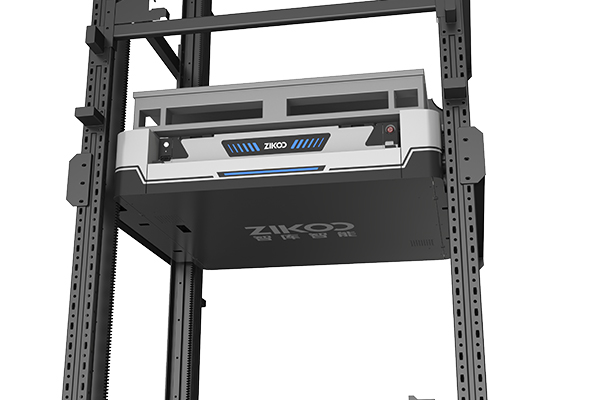
With a shuttle system, the initial software integration is often more involved, but the flexibility to scale throughput by adding shuttles—rather than rebuilding bays—frequently tips the long-term investment equation. If you’re comparing stacker cranes and shuttle systems and the numbers on your desk still look too similar, it’s worth examining how your SKU profile interacts with dwell time and peak throughput. A quick simulation with your actual order lines can reveal which technology delivers the lower total cost. You can reach our engineering team at [email protected] to discuss your specific numbers.
Hidden Costs That Inflate the AS/RS Bill
A few costs that rarely appear on the initial supplier quote but show up in the final tally:
Building Modifications and Permits
Your floor must be level to within ±5 mm over 50 meters. Many older warehouses need floor grinding or concrete topping. Electrical upgrades, fire suppression systems for dense storage, and permitting can add $100,000 to $500,000, depending on local codes. One cold chain client we worked with needed additional insulation panels because the AS/RS structure changed air flow.
Training and Change Management
Operators will need weeks of training on the WMS interface and manual recovery procedures. Factor in labor during ramp-up. Some plants budget 3% of total project cost for this.
System Integration and Testing
Your ERP will talk to the WCS, but only after 2–4 months of integration testing. If your IT team can’t support the project full-time, plan for external developer support, which runs $80–150 per hour.
When Does an AS/RS Investment Become Worthwhile?
The ROI timeline depends on three things: labor savings, space savings, and error reduction. In a typical warehousing operation, labor accounts for 50–60% of operational cost. An AS/RS can reduce picking and put-away staff by 60–80%. If your warehouse runs 3 shifts, the annual labor saving can hit six figures.
Beyond labor, the space compression often avoids a building expansion. A four-way shuttle system can store 30% more pallets in the same footprint, deferring a $2–5 million construction project.
Typical payback periods I’ve observed fall between 2.5 and 4 years for high-throughput, multi-shift operations. For single-shift or low-volume warehouses, the payback stretches to 5–7 years, and sometimes the investment doesn’t justify—manual remains more cost-effective. The key is to run a detailed simulation with your actual order profiles. Every project we engineer starts with that simulation; it’s the only honest way to calculate ROI.
Steps to Get an Accurate AS/RS Investment Figure for Your Project
-
Map your data. Gather 12 months of inbound and outbound order lines, peak volumes, and SKU velocity. Without this, any quote is a guess.
-
Define throughput targets. Be specific: pallets per hour, lines per day, and peak surges. Overestimating throughput is the number one budget killer.
-
Shortlist technologies that match your storage density and picking style. If you need high density and pallet movement, a four-way shuttle system likely fits; if you need mixed case picking, consider a shuttle plus robotic picking station.
-
Request an itemized quote. A credible supplier will break down racking, shuttles, lifts, controls, software, installation, and expected maintenance. If the quote is a single number with no engineering backup, walk away.
-
Include a 15–20% contingency on top of the quoted hardware/software cost for building mods, integration surprises, and scope changes.
At Zikoo, we often spend 4–6 weeks engineering a concept design before the first quote goes out. That front-end effort prevents six-figure missteps later. If you have a project in mind, send your warehouse data and volume targets to [email protected] or call (+86)-19941778955, and we’ll run a simulation to give you a realistic investment range—no obligation, just engineering facts.
Answers to Common AS/RS Investment Questions
Is a four-way shuttle system more expensive than traditional racking?
It depends on how you measure. Upfront capital for a shuttle system is higher, often 30–50% more than selective racking with forklifts. But measured per pallet position stored, the cost advantage flips. Because a dense shuttle block stores pallets with no wasted aisles, you can fit 10,000 pallets in the space that 7,500 would occupy in traditional racking. When that saves you a building expansion, the shuttle system becomes the cheaper alternative, not the premium option.
How long does an AS/RS project take to pay back?
Most projects we deliver for multi-shift operations achieve payback in 3–4 years. Labor savings and increased throughput are the primary drivers. For a single-shift distribution center with 50 workers, cutting headcount by 30% can save $400,000 yearly. Space savings that avoid a new facility accelerate the timeline. Run a simulation with your real order data—it’s the only way to get a number you can take to the board.
Can I start small and expand my AS/RS later?
Yes, and that’s one reason four-way shuttle systems are popular for growing businesses. The modular nature—rails, shuttles, and lifts—allows phase-by-phase deployment. We’ve built systems that started with 5,000 pallet positions and expanded to 20,000 over three years without rebuilding the core. Just make sure the initial steel structure and software license are sized for the end goal; retrofitting a stiff steel grid later wastes money.
What are the most common budgeting mistakes?
Number one is ignoring building readiness costs—floor flatness, electrical, and fire suppression. I’ve seen projects where these added 20% to the total bill because the warehouse was built in the 1990s. Second is assuming standard WMS software will just work; integration to an older ERP always takes longer than planned. A detailed site survey before the quote avoids these surprises.
How do I choose between a four-way shuttle system and an AGV-based system?
AGVs work well for horizontal transport between zones, but they don’t offer the storage density of a shuttle AS/RS. If your goal is to compress storage and handle pallet movement at high throughput, a shuttle system wins. If your process is more about flexible routing between workstations with lower density, AGVs might fit. We often integrate both—shuttles in the storage block and AGVs for front-end delivery. Share your layout and throughput targets with us at [email protected], and we’ll map the trade-offs specific to your operation.
If you’re interested, check out these related articles:
Software-Driven Hardware: Six-Way Shuttle Maximizes Warehouse Efficiency
Stacker Crane vs Four-Way Shuttle: Which Fits Your ASRS Warehouse Best
Six-Way Shuttle: The Dual-Engine Solution for High-D