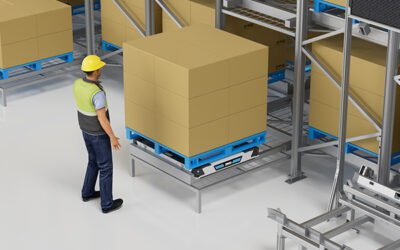
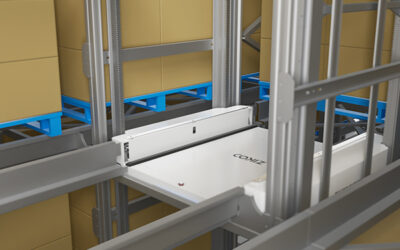
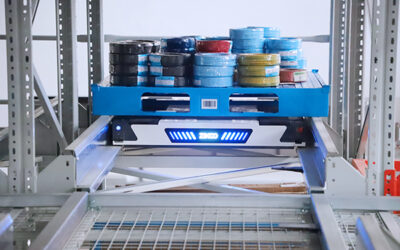
When a procurement team first requests pricing for a pallet automated storage system, the question often comes in a single sentence: “What does a four-way shuttle system cost?” I have spent over ten years engineering these systems, and the honest answer is that the price of a pallet automated storage system is not a fixed number. It emerges from a detailed calculation of throughput requirements, building geometry, SKU profiles, and the level of software intelligence the operation demands. A system with 10,000 pallet positions and 50 double-cycles per hour has a fundamentally different cost structure from one with 2,000 positions and light daily throughput. This article explains, in concrete terms, how those costs are built up so that logistics directors and engineers can read supplier quotations with sharper eyes.
How the Core Hardware Configuration Sets the Baseline
The single largest cost driver in a pallet automated storage system is the physical equipment on the floor. Long before any software license or service contract appears in the quote, the bill of materials for shuttles, elevators, conveyors, and racking establishes a cost floor that marketing numbers cannot reduce.
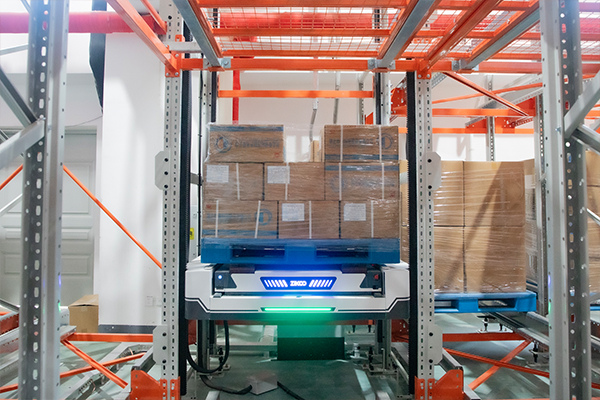
A four-way shuttle like the R-bot, which carries up to 1.5 tons and moves in all four directions within a rack, is a dense storage workhorse. I have configured projects where the R-bot’s slim 125 mm body was the only way to pack an extra 20% of pallet positions into a building with low floor-load limits. The number of shuttles required is the first multiplier: a site needing 15 shuttles to hit the target cycle rate will cost roughly three times as much in shuttle hardware as a site that runs with five. Next, if the vertical transfer relies on H-bot bidirectional elevators, each elevator adds a six-figure hardware cost and a dedicated column of rack positions cannot be used for storage. Narrow-aisle sites that demand the U-bot omnidirectional stacker robot, with its 2,100 mm minimum aisle width, carry a different chassis cost and a different racking steel profile altogether.
| Cost Category | Typical Share of Hardware Budget | Main Sensitivity |
|---|---|---|
| Shuttles (R-bot or similar) | 30–45% | Throughput peaks and fleet size |
| Elevators (H-bot) | 15–25% | Building height and cycle speed |
| Racking & steelwork | 20–30% | Warehouse dimensions and seismic zone |
| Conveyor interfaces | 5–15% | Number of dock doors and picking stations |
| Safety & enclosures | 3–8% | Local regulatory environment |
Each row in that table is a multiplier of the warehouse footprint. I have learned that a quick way to sanity-check a quote is to multiply the number of shuttles by the unit cost the supplier discloses, then ask whether the racking steel figure aligns with the building length, width, and height. Discrepancies there usually point to missing integration scope.
If your program involves cold storage below 0°C, the hardware equation changes further. The R-bot’s low-temperature lithium battery pack and special PCBA coating add roughly 12–18% to the shuttle unit cost, but the alternative of heated enclosures or derated performance is often more expensive in the long run. At this stage, it is worth confirming whether the supplier’s shuttle design already accounts for condensation and low-temperature charging, reach out at [email protected].
How Warehouse Scale and Daily Throughput Multiply the Total
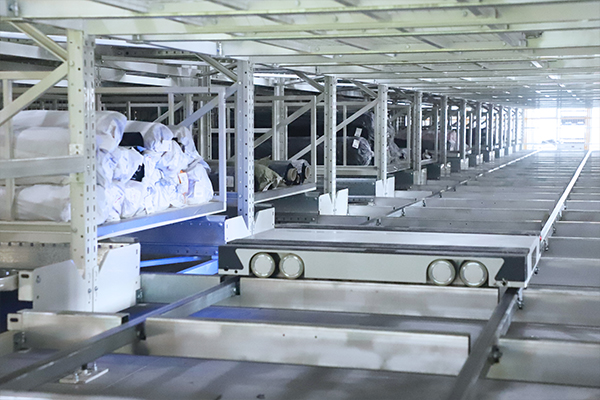
The same set of shuttles deployed in a 3,000-square-meter warehouse and a 12,000-square-meter facility will produce two very different total project costs, even if the shuttle count is identical. The reason is that warehouse scale drives the length of cable trays, the number of access points, the travel distances for elevators, and the fire suppression infrastructure. I have worked on projects where the racking steel alone, due to a 14-meter building height and high-seismic design requirements, consumed 40% of the total hardware budget before a single robot was installed.
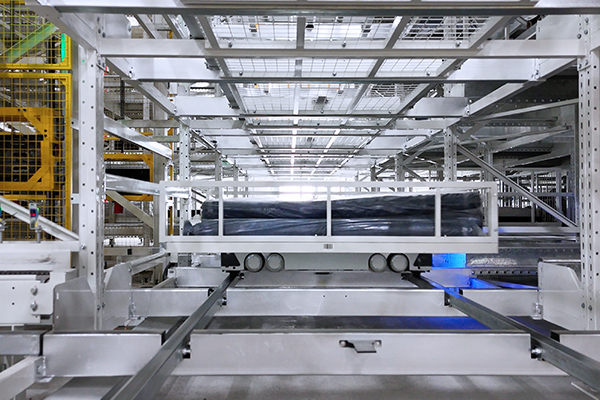
Throughput adds a second dimension. A system designed for 30 pallets per hour inbound and 30 outbound might operate with three R-bot shuttles and one H-bot. Raise the requirement to 80 pallets per hour, and suddenly the fleet count doubles, the elevator speed specification moves from 0.5 m/s loaded to 1.0 m/s empty, and the control system must handle parallel task assignment. These are not linear mark-ups. The control software licensing fee, which I discuss next, typically steps up at throughput thresholds because the real-time dispatching algorithms place higher demand on server infrastructure.
Software and Control Systems: The Invisible Cost Multiplier
When I review quotes for pallet automated storage systems, the software line often appears deceptively compact. Yet the PTP Smart Warehouse Software platform that I work with daily, integrating WMS, WES, WCS, and RCS layers, can account for 15–25% of the total project cost. This is not a license fee for a static program; it is the cost of building a digital twin of the warehouse, tuning wave-release logic to the specific SKU velocity profile, and writing the interface between the shuttle fleet manager and the host ERP.
The hardware moves pallets. The software decides which pallet moves when, and that decision has a direct financial consequence. A well-tuned RCS that groups outbound orders by zone can reduce shuttle travel distance by 12–18% compared with a basic FIFO dispatch, which in turn can reduce the fleet size by one or two shuttles. In a recent five-aisle dense storage configuration, the difference between a standard WCS and the full WES-driven dynamic slotting was the cost of an entire extra aisle of racking and one H-bot elevator. I tell clients that the software specification meeting deserves as much budget scrutiny as the hardware walkthrough.
Installation, Commissioning, and the Overlooked Integration Fees
Systems integration work rarely appears in a vendor’s first cost breakdown, but it is the phase where timeline and cost risk concentrate. Installation of pallet automated storage equipment involves steel erection, shuttle rail alignment to ±2 mm across 100-meter runs, electrical cabling, network infrastructure, and safety commissioning. On a 5,000-position system, a team of six engineers and technicians will typically spend eight to fourteen weeks on site before the first pallet runs in automatic mode.
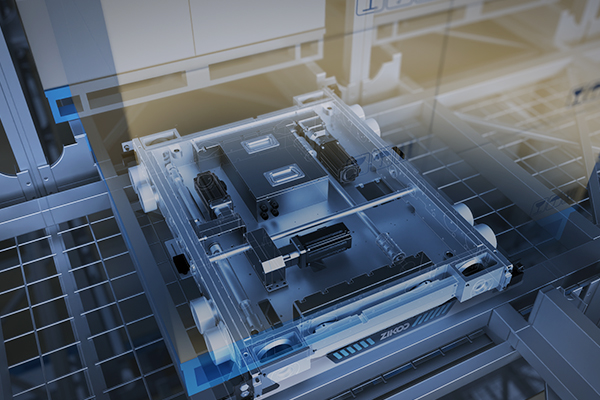
During commissioning, the supplier’s engineers test edge cases: what happens when a shuttle loses Wi-Fi mid-aisle, how quickly the fleet recovers after a controlled emergency stop, whether the WCS correctly reassigns tasks when an elevator reports a door fault. I have personally spent late nights in cold storage facilities verifying that R-bot shuttles dock accurately with H-bot elevators at minus 25°C, because the lithium battery behavior at those temperatures differs from lab conditions. None of this is free. Integration fees, including travel, accommodation, and remote support during the ramp-up phase, typically range from 8–15% of the hardware cost, though they can exceed that on international projects with extended commissioning windows.
How to Build a Realistic Budget and Compare Quotations
With the cost components on the table, the practical question becomes: how should a logistics manager assemble a budget and evaluate supplier proposals? I suggest breaking the total investment into five committed cost buckets and assigning a confidence rating to each.
| Budget Bucket | Share of Total Investment | Confidence Level |
|---|---|---|
| Shuttles, elevators, racking | 45–60% | High (configurable, spec-based) |
| Software platform & integration | 15–25% | Medium (depends on ERP interfaces and customizations) |
| Installation & commissioning | 8–15% | Medium (site-dependent) |
| Civil works & building modifications | 5–12% | Variable (retrofit projects higher) |
| Contingency | 5–10% | Low (reserve for unknowns) |
When two quotes differ by 30% for the same scope, I drill into three numbers immediately: the number of shuttles, the elevator cycle time specification, and whether the software is a full WES or a basic WCS. I have seen suppliers quote a lower shuttle count by assuming 90% system utilization around the clock, a number that fails during peak season. I have also seen software licensing quoted as a flat annual fee that escalates sharply after year three. None of these are hidden costs if the buyer knows to ask.
For organizations entering detailed negotiations, the most effective question is not “What is the total price?” but “What throughput does this design guarantee at year three under peak-week conditions, and what is the cost to add 20% more capacity two years later?” The answer reveals whether the system is sized with headroom or running close to its limit.
I recognize that calculating the cost of a pallet automated storage system can feel like assembling a puzzle with shifting pieces, especially when every supplier structures its quotation differently. The underlying logic, however, is consistent: throughput and building constraints define the hardware fleet; the software intelligence determines how hard that fleet works; integration and commissioning ensure the numbers on paper translate to pallets moved per hour. If you share your facility dimensions, pallet specifications, and target daily moves at [email protected], we can walk through a structured cost model that reflects your actual conditions, not an industry average. You can also reach our team at (+86)-19941778955 to discuss the specifics of your project timeline.
Common Questions About Pallet Automated Storage System Costs
The short answer is that return on investment depends on labor savings, space efficiency, and throughput gains
ROI periods for four-way shuttle systems in our project data range from 2.5 to 4.5 years, depending on local labor costs, energy prices, and the operational baseline the automation replaces. A cold storage facility that previously paid a premium for manual labor in minus 18°C conditions, plus product loss from temperature excursions during manual handling, often recovers the investment faster than a ambient warehouse with modest throughput. We calculate ROI with the client’s actual labor rates, forklift fleet costs, and facility lease savings from the reduced footprint, because using generic industry multipliers produces misleading payback figures.
Maintenance costs are not a fixed percentage of hardware but reflect the system’s duty cycle
A four-way shuttle fleet running three shifts in a high-throughput e-commerce facility naturally consumes more wear items than a system handling one shift in a manufacturing raw-materials store. In my experience, annual maintenance contracts covering preventive visits, remote monitoring, and critical spare parts range from 3% to 6% of the initial hardware cost. The R-bot’s lithium battery lifespan, typically three to five years depending on charging frequency and ambient temperature, is the largest predictable replacement expense. We recommend clients build a battery replacement reserve into year-four budgets so it does not arrive as a surprise.
Software upgrades and licensing renewals should be mapped out before contract signing
The PTP platform’s annual software assurance fee typically ranges from 12% to 18% of the software license value, and it covers version upgrades, security patches, and functional enhancements. I always advise procurement teams to lock in the renewal rate for at least the first five years, because otherwise the supplier holds a pricing lever after the system is operational. The larger cost, however, is the integration effort if the host ERP system changes. A new ERP release can require a fresh interface development project, and that cost should be anticipated if the organization has an ERP upgrade on its roadmap.
It is common for two suppliers to quote very different prices for what looks like the same scope
The difference usually traces back to three items: the assumed system utilization rate, the shuttle fleet sizing methodology, and whether the software is a basic WCS or a full WES. A supplier that bases its fleet count on 85% utilization during a single shift will quote fewer shuttles than one that designs for 75% utilization across two overlapping shifts. The lower quote may meet the technical specification on paper but fail during peak month. I recommend asking each supplier to document their utilization assumption and to run a simulation with your actual order profile, because the simulation output makes those assumptions visible.
The most practical step before committing to a budget is to request a concept design study
A concept study that includes a 3D layout, throughput simulation, and a detailed line-item cost breakdown usually takes two to four weeks and costs a fraction of the project value. This study answers the question of whether a pallet automated storage system fits your building and your operational profile without committing to the full investment. I have seen concept studies prevent expensive mistakes, such as ordering equipment that would not fit the column grid or designing for a throughput rate that the inbound dock door count could not physically support. Share your facility drawings and SKU data, and we can confirm whether the numbers align before any procurement decision is made.
If you’re interested, check out these related articles:
Smart Warehousing Starts Here: Cost-Effective Four-Way Shuttle Systems
Reshaping Warehouse Value: Six-Way Shuttle Leads the Digital Transformation
Six-Way Shuttle: The Ultimate Warehousing Solution for Cost Reduction and Efficiency
Six-Way Shuttle: Empowering Industries to Embrace Smart Warehousing