A four-way shuttle system is not something you rip out and swap like a conveyor motor. Replacement feasibility comes down to design decisions made long before installation—whether the system uses modular, non-proprietary components and open software protocols, or whether it locks you into a single supplier’s ecosystem. As a warehouse automation engineer who has spent a decade designing pallet shuttle systems, I’ve seen replacement projects succeed without major infrastructure changes, and I’ve seen them require near-total rebuilds. The difference is always in the original architecture. This article walks procurement teams and technical buyers through the specific engineering and supplier factors that determine if a shuttle fleet can be replaced without gutting the warehouse.

Modularity and the Mechanical Foundation for Replacement
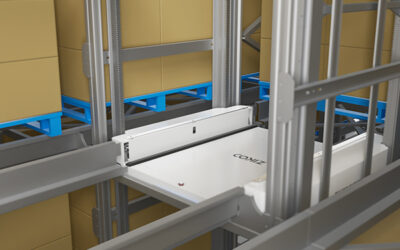
A shuttle’s replaceability starts with its physical design and how it interfaces with the rack structure. If the system uses a captive rail design where the shuttle body shape and guide wheels are uniquely machined for a single rack profile, swapping in a different brand means replacing rails across every level, every aisle. That is not a shuttle swap—that is a rack teardown.
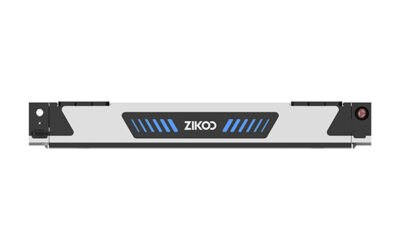
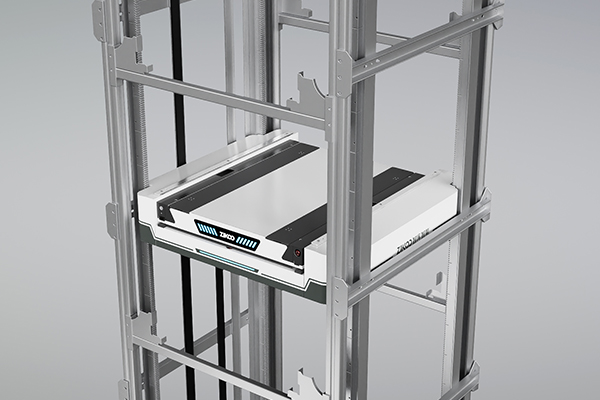
In contrast, shuttles built around common pallet dimensions and adjustable guide assemblies can often be switched with minimal fixture modifications. The R-bot, for example, supports multiple pallet sizes—1200×800 mm, 1200×1000 mm, 1016×1219 mm, and 1100×1100 mm—by altering its chassis width and load plate configuration without changing the core drive or control modules. This adaptability means the shuttle can be re-configured if pallet standardization changes, and it also means a different shuttle with similar dimensional adjustability could theoretically fit the same rack lane without retooling the uprights.
Beyond dimensions, the mechanical interface with the rack entry and exit points matters. Some shuttles rely on bespoke landing platforms that mate only with the supplier’s vertical lift or conveyor port. If that lift cannot be separated from the shuttle’s control logic, you have a vertical-axis lock-in as well. A truly modular system separates the shuttle’s lane-change mechanism from the lift interface so that either can be upgraded independently. When auditing a supplier, ask for a mechanical interface control document—these define the exact positions, tolerances, and load ratings where the shuttle hands off to other equipment. If a supplier hesitates to share this document, that hesitation itself is a warning sign about long-term replaceability.
Where Software Lock-In Hides in Shuttle Systems
Even when the mechanical interface is open, the software layer can make replacement impractical. Shuttle movements, collision avoidance logic, battery charging windows, and fault recovery sequences are all executed through the onboard controller and the upper-level warehouse control system. If the shuttle’s communication protocol is proprietary and the WCS ties every motion command to a manufacturer-specific message format, then integrating a different shuttle requires rewriting the entire material flow logic.
I’ve seen projects where the shuttle hardware met every mechanical specification, but the lack of an open, documented API for task dispatching added four months to the commissioning schedule. That delay alone made the replacement project economically unviable for the operator. Buyers evaluating a system should verify three software attributes: first, that the shuttle controller exposes a standard industrial protocol (such as OPC UA or a well-documented TCP/IP socket interface) for task assignment and status feedback; second, that the WCS can be configured with a device driver layer that decouples the vehicle type from the task logic; third, that the supplier is willing to provide the communication interface specification as a deliverable, not as a black-box integration service.
If your planned system needs to talk to an existing WMS or ERP, confirming open API capabilities early can prevent future replacement headaches—reach out to [email protected] to discuss integration requirements and interface documentation standards.
Battery, Motor, and Drivetrain Serviceability
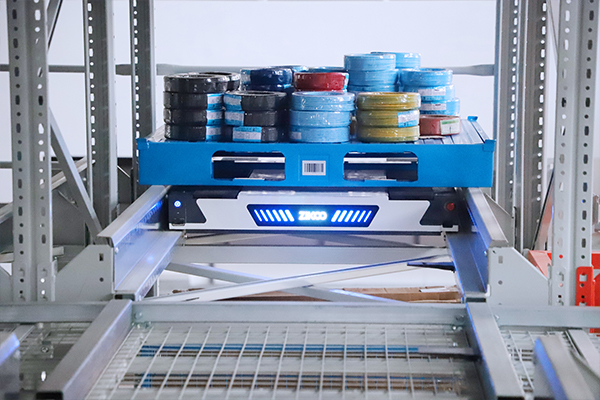
Even when the system is mechanically and electronically open, replacement decisions get tripped up by consumable components. Shuttle batteries degrade to 80% capacity typically within 3–5 years of shift work. If the battery pack is a sealed, supplier-specific assembly with custom connectors and a proprietary battery management system, then replacing the entire fleet is often cheaper than re-engineering a battery retrofit. That turns a manageable maintenance cycle into a forced capital decision.
Open-serviceable shuttles use modular lithium packs with standard CAN bus communication and connectors that can be sourced from multiple industrial battery manufacturers. The R-bot uses a 51.2V/40Ah lithium pack for most models, and because the charging connector and management protocol follow common battery management practices, field replacement does not require sending the shuttle back to the factory. Ask any potential supplier these three questions: Can the battery be swapped by on-site maintenance staff without dismantling the shuttle frame? Is the battery management data accessible through the shuttle’s diagnostic interface in a standard format? Are the traction motors and wheel assemblies field-replaceable, and are drawings available for the bolt patterns and connectors?
Assessing Supplier Commitment to Open Design
The most reliable indicator of long-term replaceability is not a spec sheet—it is the supplier’s commercial behavior. A supplier that genuinely supports an open, modular architecture will provide detailed interface documentation before a purchase order is signed. They will offer spare parts pricing that reflects standard industrial margins, not captive-market premiums. And they will accept a contractual obligation to support third-party integration for a defined period.
When comparing suppliers, I recommend a practical test: request a sample of the shuttle-to-WCS communication log from a test run. A supplier confident in openness will provide it with minimal redaction. A supplier that refuses or provides only heavily filtered data is signaling that the integration layer is proprietary in ways that go beyond intellectual property protection—it is the lock-in mechanism itself. I’ve seen this test save buyers from being trapped in a system that could not be linked with a different brand’s shuttle even when both used identical rack gauge and pallet dimensions.
Ease of replacement also correlates with the complexity of the shuttle’s safety system. If the safety controller is a proprietary box that cannot be re-certified when the vehicle floor is modified, then even simple load capacity upgrades become a regulatory dead end. Suppliers who design shuttles with modular safety sensors and separable safety logic allow recertification of individual subsystems.
The Hidden Cost of Replacement and Migration
A replacement project has two cost components: the shuttle hardware and the operational downtime. A shuttle that can be swapped in a phased rollout—one aisle at a time while the rest of the system runs—saves weeks of lost throughput compared to a system that requires a full shutdown because every shuttle must be replaced simultaneously to avoid fleet-controller conflicts. This phased capability depends on whether the fleet management software can manage heterogeneous shuttle types on the same network. If the software cannot, then a replacement event means a total cutover during a shutdown window.
The following table compares typical replacement scenarios:
| Scenario | Downtime | Infrastructure Change | Relative Cost |
|---|---|---|---|
| Same-brand upgrade with open controller | Minimal, phased possible | None | Low |
| Different brand, open mechanical and software interface | Moderate, phased possible | Minor fixture adjustments | Medium |
| Different brand, proprietary rail profile and protocol | Extended, full shutdown required | Rail and lift replacement | High |
| Proprietary system with end-of-life supplier | Extended, full rebuild | Complete rack re-engineering | Highest |
Phased replacement also demands that the supplier of the new shuttle is willing to co-exist with the incumbent hardware during migration. That willingness is a strong indicator of engineering confidence. If every discussion leads to a “rip and replace” proposal, the supplier may not have designed for interoperability from the start.
For a real-world check on whether your existing rack layout can support a modular shuttle migration, share your pallet dimensions and throughput targets with our team at [email protected] or call (+86)-19941778955. We can run a compatibility audit that maps your current lane geometry against shuttle interface requirements without disrupting live operations.
What Buyers Ask About Shuttle Fleet Replacement
Can I keep my existing racking if I change shuttle brands?
It depends on the rail profile and the shuttle’s guidance mechanism. If the existing rack uses C-channel rails with a standard depth and the replacement shuttle has adjustable guide wheels that can be set to that channel width, the rack can stay. In a project I evaluated, a warehouse with European-standard pallet racking transitioned from one shuttle brand to another by replacing the rail wear strips and adjusting the new shuttle’s wheel offset—no structural rack changes. If the original shuttle rides on a proprietary I-beam or box rail welded to the upright, however, the rail must be replaced, which often means modifying the rack columns at every level. Ask the new supplier to send an engineer to measure the rail cross-section and run a clearance study before assuming the rack is reusable.
Does a four-way shuttle system always lock me into the original software platform?
Not always, but the risk is real. If the shuttle communicates via a documented, open protocol and the warehouse execution layer uses a modular device driver approach, then swapping shuttles can be a software configuration exercise. In practice, the deeper the software integration between shuttle, lift, and conveyor, the more layers need reconfiguration. A system that separates the pallet movement logic from the vehicle-specific command set allows a cleaner cutover. Before purchasing, writing the requirement for a “device-agnostic task broker” into the technical specification protects your future options, even if you have no immediate replacement plan.
How do I future-proof my purchase against supplier obsolescence?
Start by demanding a three-part package during the RFQ phase: the mechanical interface control document, the shuttle communication protocol specification, and a statement of compliance for the battery and motor serviceability. Also require that the supplier agrees, in writing, to provide these documents as maintainable deliverables, not as one-time screenshots. I’ve seen procurement teams add a “technology escrow” clause to the service agreement, requiring the supplier to deposit interface specifications with a third party if they cease supporting the product. Even if that clause is never triggered, the supplier’s willingness to sign it tells you a great deal about how much lock-in is baked into their business model.
Can a phased replacement work without shutting down the whole warehouse?
Phased replacement is possible when the fleet management software supports mixed-type operations and when each shuttle lane can be isolated physically and electrically. You replace one aisle’s shuttles, commission them under a separate fleet instance if necessary, then cut over that aisle while the rest continue running. This requires careful planning of WMS task assignments so that the old and new shuttle zones do not interact in ways the controller can’t handle. In my experience, a clean interface between the WCS and the upper-level WMS, with zone-based routing, is what makes phased commissioning possible. Without it, you are locked into a full shutdown. If your replacement timeline is tight, confirm this capability with the new supplier during the technical design review—not during commissioning week.
Let our engineers review your current shuttle fleet layout and interface documentation to map a replacement path that minimizes downtime. Send your site drawings and existing supplier specs to [email protected], or call (+86)-19941778955, and we will outline a phased migration plan tailored to your rack geometry and WMS architecture.
If you’re interested, check out these related articles:
Six-Way Shuttle: The Smart Warehousing Tool for Cost Reduction and Efficiency
Six-Way Shuttle: The Smart Warehousing Tool for Cost Reduction and Efficiency 2
Six-Way Shuttle Powers Dense Storage: Breaking Space Limitations
Six-Way Shuttle: The Ultimate Warehousing Solution for Cost Reduction and Efficiency