Four-way shuttle system limitations are rarely discussed during sales pitches, but they can turn a promising ROI projection into a financial drain. These systems require specific building dimensions, predictable throughput, and uniform pallet sizes; when those conditions aren’t met, the result is a warehouse that underperforms and overruns budget. Drawing from a decade of designing pallet-to-person automation, this article explains when a four-way shuttle is not the right choice, so you can make a confident decision.
Building Constraints That Rule Out a Four-Way Shuttle
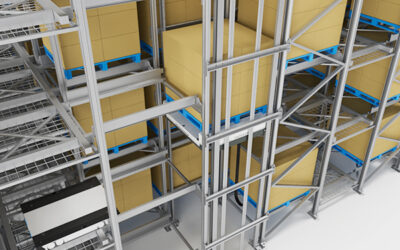
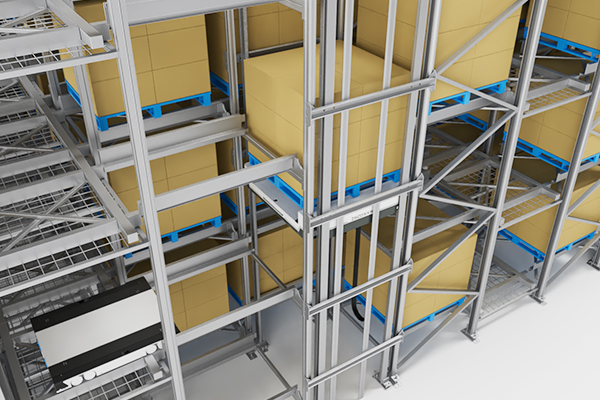
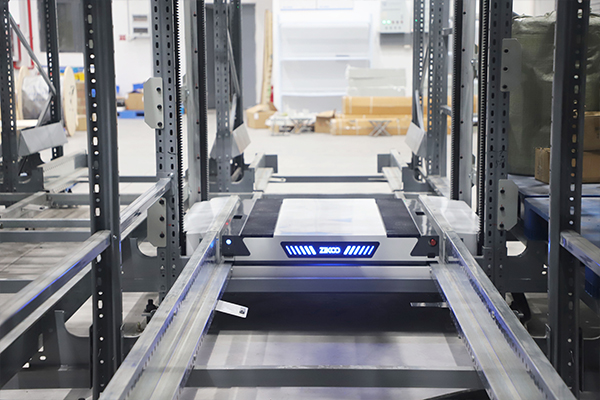
Ceiling height is the most common deal-breaker. Four-way shuttle systems operate within racking structures that typically require a minimum clear height above 8 meters to justify the vertical density. In a facility with a 6-meter ceiling, the shuttle’s ability to move between levels (via an elevator like the H-bot) adds little value because you can only stack pallets two or three high; a conventional pallet rack with reach trucks becomes cheaper and simpler. Floor flatness is equally critical. Shuttles travel on rails embedded in the racking, and the floor must support the full rack load while remaining level to within a few millimetres across dozens of metres. Older warehouses often have uneven floors that require costly grinding or levelling before installation. Additionally, the rack footprint demands clearance for shuttle insertion and charging stations; existing columns or irregular layouts can reduce storage capacity, negating the density advantage. Before committing, I recommend a full 3D survey to confirm that your building can accommodate the system without requiring major structural reinforcement, because the cost of raising the roof or reinforcing the floor can easily surpass the benefits of automation.
Throughput and Order Profile Mismatches
A four-way shuttle is optimized for medium-to-high throughput. If your operation handles fewer than 20 pallet moves per shuttle per hour, you’re underutilizing the hardware. On the other hand, if your peak throughput exceeds what a fixed fleet can deliver while accounting for charging cycles, you’ll create a bottleneck at the elevator or picking stations. I’ve seen distribution centres where seasonal promotions overwhelmed the system because the shuttle count was fixed; adding more shuttles later required restructuring the rack layout. The SKU profile also matters. Four-way shuttles work best with a moderate number of SKUs, each with high quantities. When you hold 10,000 or more SKUs and only a few units per SKU, the storage density becomes a liability: each order retrieval triggers many shuttle moves, and the cost per storage location climbs. In such cases, goods-to-person systems using bots or AMRs are more flexible. The key is to simulate your actual order patterns against the shuttle’s retrieval logic. A credible supplier will help you model this before you buy.
Pallet and Load Limitations to Watch For
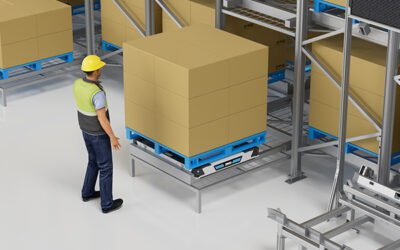
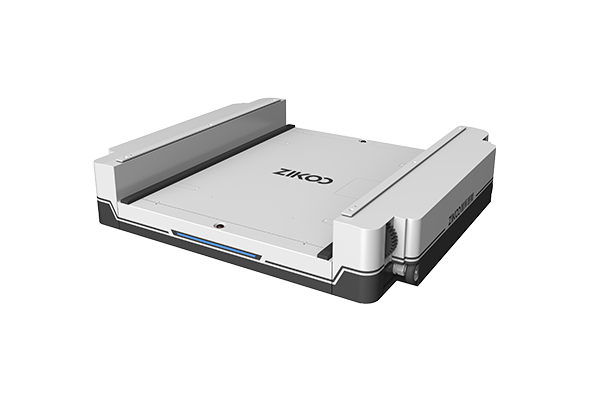
Standard four-way shuttles are built around specific pallet footprints. The R-bot series, for instance, accommodates 1200 by 800 to 1000 mm pallets in its standard configuration, 1016 by 1219 mm for the American type, and 1100 by 1100 mm for the Japanese type. A custom pallet size deviating from these dimensions means a custom shuttle, which increases both cost and delivery time. Load weight is another constraint. Most shuttles handle up to 1.2 to 1.5 tons, with a heavy-duty variant reaching 2 tons. If your inventory includes heavy steel coils or machinery parts exceeding 2.5 tons, a four-way shuttle may not be viable unless you split the load, which sacrifices storage density. Load stability matters just as much. Shuttles accelerate at up to 1.6 m/s² unloaded and 1.2 m/s² loaded; top-heavy or inadequately wrapped pallets risk tipping during transit. In one food manufacturing project, inconsistent pallet quality caused jams at transfer points. Before committing, audit your pallet specifications and load integrity. If your pallet pool is mixed or your loads are irregular, a fixed-path conveyor or a specialized AGV might be more reliable.
If your pallet dimensions or load weights fall outside the standard specifications listed above, it’s worth confirming shuttle compatibility before finalizing your BOM. Share your pallet profiles with our team at [email protected], and we’ll help you evaluate the options.
Operational Environment and Maintenance Barriers
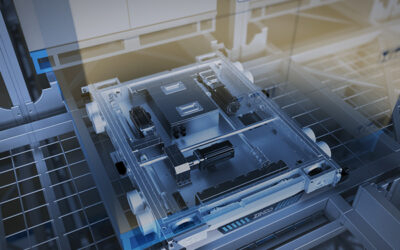
Four-way shuttles rely on lithium batteries that perform well at room temperature but behave differently in cold environments. The R-bot cold-chain solution operates down to minus 25 degrees Celsius, yet battery runtime drops by roughly 30 percent at those extremes, forcing more frequent charging cycles and reducing effective throughput. In a 24/7 deep-freeze warehouse, a shuttle may spend a significant portion of its day heading to the charger. The protective PCBA coating that prevents humidity damage also adds cost and complexity. If your facility is dusty or chemically active, the sensors and motors may require more frequent maintenance. I’ve observed shuttle components corrode faster in salt-processing plants, despite IP-rated enclosures. Scheduled maintenance every 1,000 operating hours is typical, and you’ll need a stock of spare parts and trained technicians. For operations in remote areas, parts lead time can extend downtime. Ask the supplier for a preventive maintenance schedule and the expected mean time between failures (MTBF) of key components; if those numbers don’t align with your tolerance for downtime, consider solutions with simpler mechanics, such as stacker cranes.
The Cost Equation: When the Investment Doesn’t Pay Off
The total cost of a four-way shuttle system encompasses the shuttles, racking, elevators, conveyors, WMS/WCS software, installation, and facility modifications. Payback periods typically range from 3 to 5 years, but this assumes high utilization and labour savings that offset the capital expenditure. For a warehouse with only 2,000 to 3,000 pallet positions and low throughput, the cost per pallet position can exceed $1,000, making the system economically unviable compared to traditional racking with narrow-aisle forklifts. If labour costs are low or available space is not constrained, the business case weakens further. Another often-overlooked expense is software integration. Mapping an existing WMS to the shuttle’s control system (RCS) can take months and cost hundreds of thousands of dollars, especially if your IT team is lean or your WMS is outdated. Before signing, run a detailed total cost of ownership (TCO) analysis over a 7-year horizon, including battery replacements, software updates, and potential throughput growth. If the numbers don’t work on paper, they won’t work in reality.
Better Alternatives for When a Four-Way Shuttle Isn’t Right
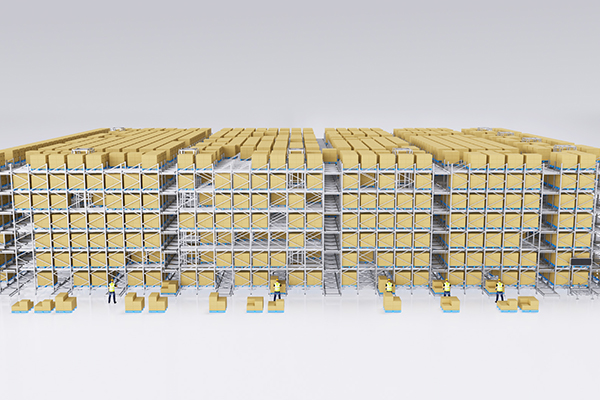
When a four-way shuttle falls short, several alternatives exist depending on the constraint. For low ceilings (under 8 meters), selective pallet racking paired with reach trucks or VNA forklifts can deliver good density without the capital outlay. If throughput is the bottleneck, an optimized stacker crane ASRS with a robust WMS may offer higher throughput per aisle, albeit at a higher cost per cubic foot. For operations with extreme SKU variety and low volume per SKU, autonomous mobile robots (AMRs) or goods-to-person stations provide the needed flexibility. In cold storage, specialized automated storage and retrieval systems with heated components may outperform shuttles. Zikoo’s U-bot omnidirectional stacker robot, for example, operates in aisles as narrow as 2.1 meters and lifts up to 8 meters, making it well-suited for retrofit projects. The key is to match the technology to your specific limitation, not to the marketing brochure. A good engineer will tell you when their product isn’t the right fit and guide you toward a solution that actually works.
If your project involves any of the limitations discussed, such as low ceilings, erratic demand, non-standard pallets, or harsh environments, it’s worth getting a technical assessment before you invest. Reach out to our engineering team at [email protected] or call (+86)-19941778955 with your building plans and operational data, and we’ll help you determine whether a four-way shuttle is the right fit or if an alternative would yield better value.
Common Questions About Four-Way Shuttle System Suitability
What is the main disadvantage of a four-way shuttle system?
The primary drawback is that its advantages, high density and flexibility, depend on a specific set of building and operational conditions. If your ceiling is too low, pallets are non-standard, or throughput is erratic, the system’s efficiency collapses, and the capital investment becomes difficult to recover. Unlike simpler storage methods, a four-way shuttle cannot adapt to a poor fit environment; it demands alignment from the start.
Can a four-way shuttle system be installed in an existing warehouse?
Yes, but retrofitting often adds cost. Existing warehouses need sufficient clear height, level floors, and adequate electrical infrastructure. Structural columns, ramps, or uneven floors may reduce available rack positions or require expensive modifications. In some cases, new construction is more practical than trying to force a shuttle system into an unsuitable building. We typically assess the facility before proposing a solution.
How do I know if my throughput justifies a four-way shuttle?
A good rule of thumb is to calculate your expected pallet moves per hour per shuttle. If that number falls below 20 moves per shuttle, you’re likely underusing the system. Conversely, if peak demand exceeds the fleet’s capacity after accounting for charging downtime, you risk bottlenecks. Request a throughput simulation from the supplier using your real order data to see whether a shuttle fleet can meet your service-level targets.
Is a four-way shuttle cost-effective for a small warehouse?
Usually not. A warehouse with fewer than 2,000 pallet positions spread across a small footprint cannot achieve the density needed to offset the fixed costs of shuttles, elevators, and software. In such cases, VNA forklifts or reach trucks often deliver comparable storage density at a fraction of the initial investment. The break-even point depends on labour rates and throughput, but for very small operations, the business case rarely closes.
What is the typical lifespan of a four-way shuttle system?
With proper maintenance, a shuttle can operate reliably for 10 to 15 years. Battery replacement every 3 to 5 years is common, and sensors and motors may need refurbishment around the 8-year mark. The racking structure itself lasts decades, but the electronic components follow a lifecycle similar to industrial automation equipment. If your operation expects to relocate or expand within 5 years, the investment may be harder to justify. If you are evaluating a system and want a detailed lifespan projection based on your usage profile, send your operational data to [email protected], and we’ll provide a tailored estimate.
If you’re interested, check out these related articles:
Six-Way Shuttle: Empowering Industries to Embrace Smart Warehousing
Six-Way Shuttle Unlocks the Era of True 3D Intelligent Warehousing