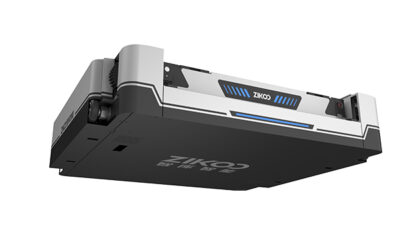
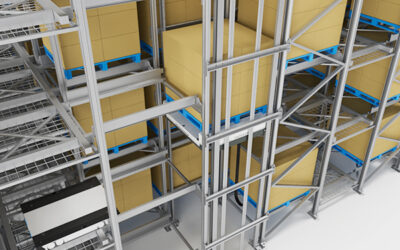
Sorting operations in a pallet-based warehouse rarely fail because a shuttle is too slow. They usually fail because tasks arrive in the wrong sequence, dwell points are poorly selected, and the control system chases order lines instead of managing the interaction between receiving, storage, retrieval, and shipping. A four-way shuttle dense storage system changes that dynamic by turning selective racks into an active sorting grid in which pallets move horizontally in four directions and, when mated with vertical lift equipment, across multiple levels.
In project terms, optimizing sorting with shuttle technology means aligning mechanical performance, slotting logic, wave planning, and software task execution so that the right pallet reaches the right workstation or dock door exactly when it is needed. This article explains the key engineering and evaluation decisions that produce that outcome.
What Makes Sorting a System Problem, Not Just a Machine Problem
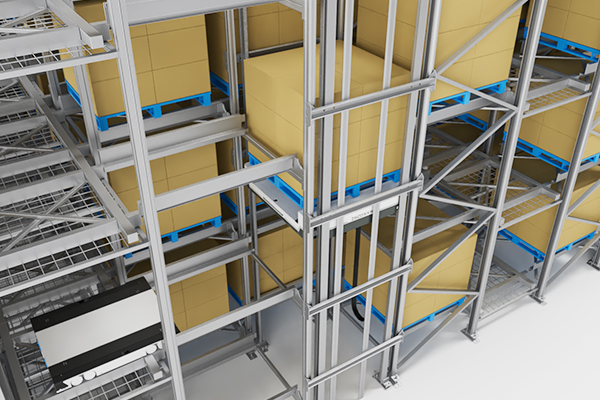
Sorting in a high-density shuttle installation is not equivalent to conveyor sortation. A sorter physically diverts an item or carton from one stream into another. Shuttle-based sorting combines storage, retrieval, sequence building, and replenishment. A pallet may be picked from a deep lane, carried to a lift, elevated to another level, and placed at an outbound buffer in a sequence that matches truck loading.
Optimization therefore has to address task interleaving, storage location assignment, travel distance, lift capacity, and queue depth at workstations. If any of those variables is ignored, additional shuttle speed produces only a more expensive wait state.
Safety and structural standards set the physical boundary within which this optimization happens. In Europe, rail-dependent storage and retrieval equipment is governed by EN 528 safety requirements for automated storage and retrieval machines [1]. On the rack side, ANSI MH16.1 establishes design, testing, and utilization requirements for industrial steel storage racks [2]. These standards do not optimize throughput by themselves, but they define the tolerances and clearances that a sorting model must respect.
How Four-Way and Six-Way Shuttle Sorting Work
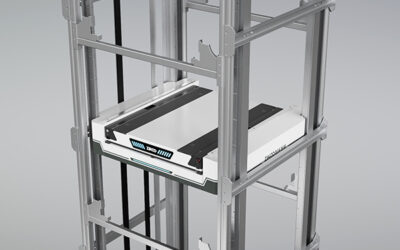
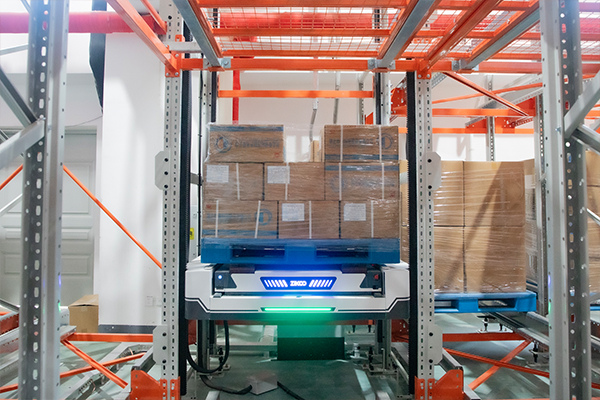
A four-way shuttle travels along rails within the rack structure and can change direction at intersections. This allows it to move from one storage lane to another without returning to a fixed aisle. When integrated with a vertical lift such as the H-bot vertical bidirectional shuttle, the system gains vertical movement, creating a Six-way shuttle system capable of moving pallets through six spatial directions: forward, reverse, left, right, up, and down.
This capability supports three sorting patterns that are especially valuable in order fulfillment and distribution:
- Order-sequence buffering. Outbound pallets are stored and then retrieved in reverse stop order, reducing dock labor and shortening trailer loading time.
- Wave-based replenishment. Fast-moving pallets are positioned near lift stations before active waves begin, reducing peak-period travel.
- Dynamic slotting. A pallet is not permanently married to one location. The control system can move it closer to demand based on order velocity, seasonal profile, or dock schedule.
Mechanical performance works in combination with software. Current four-way shuttle platforms commonly run faster empty than loaded, with acceleration and lift transfer times shaping practical throughput more strongly than top speed alone. For example, a shuttle with an empty speed of 1.6 m/s and loaded speed of 1.2 m/s may still be slower in practice than a lower-speed machine if the latter has better path planning and shorter lift transfer cycles.
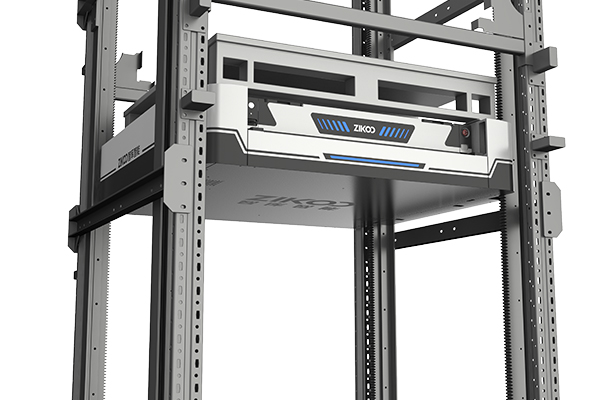
Saving travel time requires more than high shuttle speed. <Software-Driven Hardware: Six-Way Shuttle Maximizes Warehouse Efficiency> covers how software-defined routing and task interleaving raise sorting throughput in live warehouse operations.
Metrics That Decide Sorting Success
Before changing slotting rules or shuttle counts, it is useful to measure the correct variables. Many sorting projects are judged by pallets per hour, but that number is incomplete without order line context, peak wave shape, and queue depth.
| Metric | What it measures | Sorting implication |
|---|---|---|
| Pallets per hour per shuttle | Gross equipment capacity | Reveals ceiling, not realizable throughput |
| Retrieval lines completed per wave | System productivity under real order mix | Better predictor of outbound performance |
| Order cycle time | Time from order release to outbound staging | Shows whether sorting reduces true lead time |
| Mis-sort or sequence error rate | Accuracy of pallet-to-door assignment | Direct cost impact on dock and transport |
| Lift utilization | Time vertical transport is busy vs blocking | Major bottleneck in multi-level systems |
| Travel distance per order | Slotting quality | More actionable than raw speed |
A useful engineering model treats shuttle sorting as a queuing system in which throughput equals the share of time that each shuttle is performing value-added moves. Travel, waiting, lift transfer, and charging are non-value-added unless they are deliberately scheduled. Verification should follow a deterministic test procedure, consistent with the repeatable acceptance testing approach in VDI 3561 [3]. Rack tolerances and clearances also matter because physical misalignment creates cycle losses even when the control system is correct; EN 15620 addresses the dimensional and deformation requirements for adjustable pallet racking systems used in such installations [4].
How to Evaluate a Shuttle Supplier for Sorting Work
Sorting optimization is a software problem as much as a mechanical one. The supplier selection process should therefore evaluate not only shuttle specifications, but also control software ownership, simulation capability, project references, and the ability to prove system behavior before installation.
During qualification, several points deserve practical verification:
- Ask for project references with similar order profiles. A supplier that has delivered a high-bay retrieval system has not necessarily optimized an e-commerce wave-release operation with high SKU mix.
- Review the software stack. The WMS, WES, WCS, and RCS layers must be able to share task status in real time. A black-box interface between shuttle control and warehouse execution software is a common hidden integration risk.
- Request a simulation before contract. The supplier should model order arrivals, slotting rules, shuttle counts, lift locations, and workstation capacity. A configuration that meets target throughput in a slide deck is not the same as one that holds target throughput under a stress wave.
- Check performance acceptance criteria. Define required pallets per hour, maximum order cycle time, sequence accuracy rate, and test duration before commissioning begins.
- Inspect maintenance and spares support. Sorting performance degrades rapidly when shuttle downtime removes capacity, and response time should be specified for critical components.
- Confirm standards compliance. Mechanical safety, rack structure, and electrical control should follow relevant standards such as EN 528 and ANSI MH16.1 [1], [2].
Most sorting failures discovered after go-live trace back to gaps in one of those qualification areas, not to an undiscovered limitation in shuttle hardware. Common risks include untested system interfaces, unrealistic wave assumptions, insufficient queue depth at workstations, and slotting rules that protect storage density at the expense of retrieval speed.
A repeatable engineering standard is one of the strongest signs of a reliable automation partner. <Standardization Empowers Global Delivery: Zikoo Robotics Six-Way Shuttle Expands Overseas> covers how standardized interfaces reduce commissioning time and project risk.
Get a sorting baseline before you commit
If you already have historical outbound data, send your SKU profile, daily order lines, peak-hour wave pattern, hour-of-day outbound volume, and building layout to [email protected]. Request a data-based simulation that compares current sorting performance against a four-way shuttle sorting concept under a realistic peak-day model.
System Design Decisions That Improve Sorting
Several design choices affect sorting performance more than shuttle count:
- Regional slotting by velocity. Place fast movers near lift stations and dock proxemics, while deep storage absorbs slow-moving reserve pallets.
- Move buffering away from the dock. Use an outbound buffer that holds sequenced pallets instead of allowing random retrieval order to be corrected by forklift labor at the dock.
- Decouple receiving from active sorting. Inbound pallets should enter the system without competing aggressively with outbound missions that have tighter time windows.
- Plan lift capacity around wave peaks. A single vertical shuttle can become the dominant constraint in multi-level sorting, especially when both inbound and outbound flows share the same lift.
- Integrate execution software early. The PTP Smart Warehouse Software layer needs to translate order priorities into mission sequences rather than treating all retrieval requests as equal.
For case-level or mixed pallet operations, a hybrid approach can help: use high-density shuttle storage for reserve pallets and a goods-to-person or narrow-aisle picking system for split-case work. This prevents slow picks from blocking the shuttle grid and keeps pallet movement focused on bulk retrieval and sequence building.
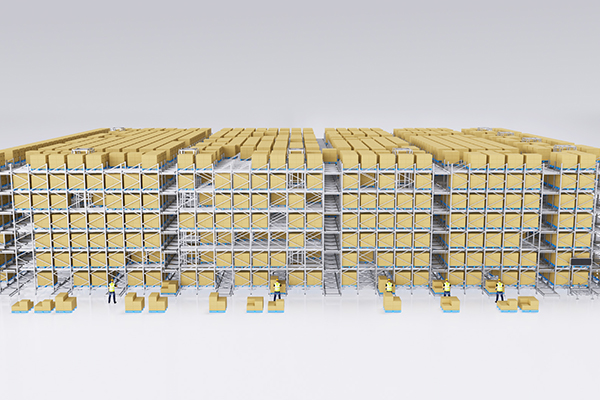
Sorting optimization only produces ROI when the cost per order cycle drops against a realistic profile. <Six-Way Shuttle: The Smart Warehousing Tool for Cost Reduction and Efficiency> covers how dense shuttle workflows translate into lower handling cost.
Implementation Path and Risk Controls
A sorting-focused shuttle project should be implemented in stages:
- Data audit. Validate SKU dimensions, pallet quality, order lines, wave patterns, and building clearances. Missing dimensional data creates unsafe or unusable storage locations.
- Baseline modeling. Build a current-state performance model before proposing new equipment. Without it, sorting improvement cannot be isolated from operational noise.
- Simulation and configuration freeze. Test shuttle count, lift placement, workstation count, and slotting logic against multiple demand scenarios.
- Phased cutover. Move a product category or warehouse zone first, measure dwell time, and correct routing before expanding.
- Acceptance testing. Run sustained tests using the agreed performance protocol, including peak-wave simulation and sequence accuracy measurement [3].
- Continuous tuning. Slotting frequency and order profiles change seasonally; sorting rules should be reviewed at least quarterly.
Cold chain, new energy, and pharmaceutical warehouses add environmental and material constraints. Battery range at low temperatures, humidity protection, and contamination control may influence shuttle configuration and cycle availability. In these cases, sorting optimization must include environmental derating of throughput assumptions rather than applying ambient-temperature performance curves directly.
Build a Sorting Plan with Zikoo Smart Technology
If you are planning a new high-density sorting workspace or want to upgrade an existing retrieval system, Zikoo Smart Technology Co., Ltd. can model your operation and recommend a phased configuration. Send the following information to [email protected]:
- Current SKU profile and pallet dimensions
- Daily inbound and outbound pallet volumes
- Peak-hour order and wave profiles
- Warehouse layout and available clear height
- Existing WMS/WES/WCS interfaces
- Performance targets: pallets per hour, sequence accuracy, and order cycle time
- Special requirements such as cold storage, humidity, or contamination control
You can also reach the engineering team by phone at (+86)-19941778955. A practical sorting concept should be based on your demand profile, not on a generic equipment list.
Frequently Asked Questions
What is the difference between sorting with four-way shuttles and fixed conveyor sortation?
A fixed sorter diverts items from one material flow into another. A four-way shuttle system performs storage, retrieval, buffering, and sequence building in the same rack structure. It is better suited to pallet-level sorting and order sequencing, while conveyor sortation is generally more appropriate for cases or polybags.
How do shuttle systems improve sorting accuracy?
Accuracy improves through software-directed pallet assignment to shelves, lifts, and dock doors rather than manual address selection. When the WMS, WCS, and RCS layers share real-time location data, sequence errors can be detected before a pallet reaches the dock, reducing manual intervention.
Which warehouse profile benefits most from shuttle-based sorting?
Operations with high pallet volume, moderate-to-high SKU count, wave-based outbound, multi-level storage, and target throughput that requires coordinated storage and retrieval benefit most. A warehouse with very low throughput or extremely stable shuttle-free pallet flow may not need shuttle automation.
Can shuttle sorting be implemented in an existing warehouse?
Yes, in many cases. Existing selective rack buildings can be converted to four-way shuttle storage if column grid, floor flatness, clear height, rack structure, and vertical lift placement are suitable. A feasibility data audit should be completed before design begins.
How long does it take to implement a shuttle sorting system?
Implementation time depends on building status and system scope. A retrofit may take a phased approach over several months, starting with one zone or product family. Commissioning includes rack inspection, control integration, dry runs, sustained throughput testing, and operational training.
References
[1] European Committee for Standardization, EN 528: Rail dependent storage and retrieval equipment — Safety requirements, CEN, Brussels, 2008.
[2] Rack Manufacturers Institute, ANSI MH16.1: Specification for the Design, Testing and Utilization of Industrial Steel Storage Racks, RMI, Charlotte, NC, 2021.
[3] VDI-Gesellschaft Produktion und Logistik, VDI 3561: Test criteria for automated storage and retrieval systems, Beuth Verlag, Berlin, 1997.
[4] European Committee for Standardization, EN 15620: Steel static storage systems — Adjustable pallet racking — Tolerances, deformations and clearances, CEN, Brussels, 2021.
If you’re interested, check out these related articles:
Six-Way Shuttle: The Smart Warehousing Tool for Cost Reduction and Efficiency 2
Looking for Reliable Four-Way Shuttle Manufacturers? Choose Zikoo Robotics
Standardization Empowers Global Delivery: Zikoo Robotics Six-Way Shuttle Expands Overseas