An ASRS project rarely fails at the robot. It fails earlier, in a feasibility model built on annual tonnage instead of peak-hour order lines, or later, in a contract that never defined how throughput would be measured on acceptance day. This guide follows the path from feasibility through go-live and names the evidence that closes each gate. The emphasis is practical: what to measure, what to specify, what to test, and which decisions cannot be deferred to a supplier. It applies to pallet-handling automated storage and retrieval systems, including shuttle-based and crane-based architectures.
What Feasibility Must Prove Before Capital Is Approved
Feasibility is a data exercise before it is a layout exercise. The output that matters is not a picture of a rack. It is a defensible statement of how many pallet movements the operation must complete in its busiest hour, how many storage locations the inventory needs at its seasonal peak, and what would have to be true for the investment to pay back. If those three numbers cannot be produced, every architecture decision that follows is an opinion with a budget attached.
Annual tonnage hides the shape of the demand. Two warehouses can move the same number of pallets per year while one needs several times the peak capacity, because the work arrives in a narrow window around a dispatch cut-off. Peak hour demand should be built from order lines, pallet moves per flow, and the staffing model, not from a monthly total divided by working days. Putaway, replenishment, outbound, and returns each have a different profile and a different equipment path.
Storage sizing carries a similar trap. Locations are not inventory divided by pallets per position. Lanes fill with partial batches, seasonal stock occupies space for weeks, and a share of positions is always blocked by work in progress or by a pallet awaiting quality release. A capacity plan without a reserve allowance will be short on the day the operation needs it most.
The business case should be written against the do-nothing option. Labor, floor space, inventory accuracy, energy, maintenance, and the cost of the constraint the building imposes today all belong in the comparison. Close this gate with written thresholds: the throughput, capacity, and payback figures that must hold for the project to proceed, and the conditions under which it should not.
| Feasibility input | What it drives | Common mistake |
|---|---|---|
| Pallet and load data (dimensions, weight, condition, overhang) | Rack clearances, vehicle rating, level pitch, safety checks | Using nominal pallet size and ignoring actual variance |
| Inventory profile (SKUs, pallets per SKU, seasonality, shelf life) | Storage locations, lane depths, replenishment rules | Sizing on average inventory instead of peak |
| Throughput by flow (putaway, replenishment, outbound, returns) | Vehicle and station count, aisle layout | Using annual tonnage or an average day instead of peak hour |
| Order profile (lines per order, units per line, cut-off structure) | Picking stations, workstations, sortation | Sizing on pallet counts only |
| Building constraints (clear height, floor tolerance, column grid, fire compartments) | Architecture choice, number of levels, fire strategy | Assuming the building supports the tallest possible rack |
| Growth and flexibility (volume, SKU mix, channel shift) | Modularity, reserve capacity, expansion path | Designing exactly to today’s volume |
The business case has to survive a comparison of operating cost, not only capital cost, because labor, space, and accuracy move at different rates over the life of the system. <Six-Way Shuttle: The Smart Warehousing Tool for Cost Reduction and Efficiency> covers cost reduction and efficiency arguments for shuttle-based storage.
Choosing the Storage Architecture and Sizing It Honestly
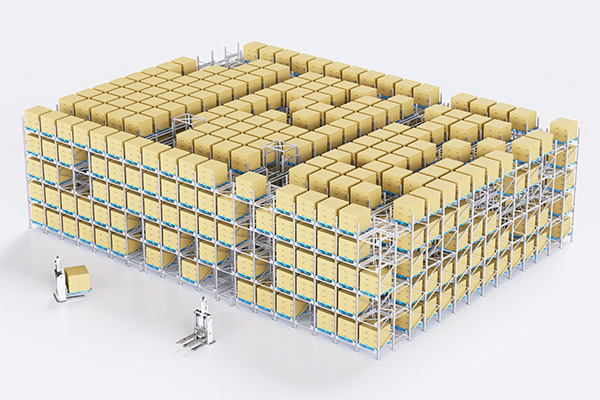
Architecture selection matches three constraints: how fast a location must be reached, how densely it must be stored, and what happens when one machine stops. Crane-based systems reach high locations quickly and sequence work predictably, but throughput is bounded by the aisle, and a crane outage removes that aisle from service. Shuttle-based systems trade some per-aisle speed for fleet redundancy and denser storage, provided that the transfer points and lifts at the ends can keep pace with the vehicles.
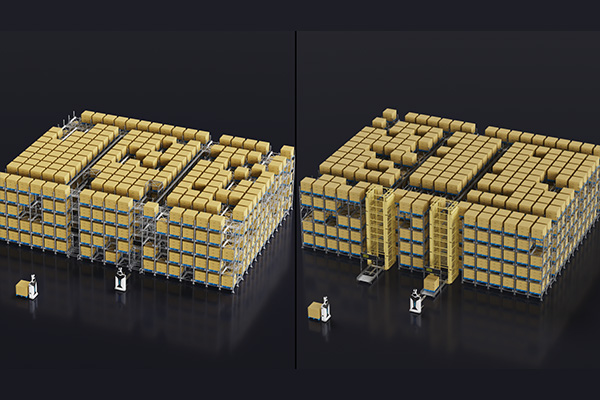
A six-way arrangement adds vertical transfer machines so that horizontal vehicles can hand a pallet to a lift and keep working. That decouples vertical movement from the horizontal fleet, which matters in a tall building with a high required rate. The cost appears at the interface between shuttle and lift, which becomes the part of the layout most sensitive to timing and to level alignment.
Level pitch is a fixed geometric constraint, not a design preference. Vehicle body height, pallet height with load, beam depth, and clearance for lift and settle combine to set the minimum distance between levels. Usable clear height divided by that pitch sets the number of levels. A compact vehicle buys levels. It does not buy throughput, and it will not compensate for a layout that queues at the stations.
Storage architecture sets the ceiling on what any later optimization can achieve, and a dense four-way shuttle layout behaves very differently from a crane-based high bay under the same inventory profile. <Smart Storage Revolution: Comprehensive Overview of Four-Way Shuttle Systems for Automatic 3D Warehouses> covers how four-way shuttle systems are configured for automatic 3D warehouses.
Sizing the fleet is a cycle-time calculation, not a ratio of pallets to machines. Required moves per hour multiplied by the average cycle time in minutes, divided by sixty, gives the number of vehicles that would be busy continuously. That figure must then be divided by a realistic duty factor covering charging, blocked lanes, empty travel, and queuing at transfer points. A bidder who cannot show this calculation is quoting a feeling, and the number will not survive the acceptance test.
Fire strategy belongs in this stage, not after the steel is ordered. In-rack sprinkler layout, smoke detection inside the rack, and the way the automation stops and releases doors on alarm all interact with level pitch, aisle width, and the permit that governs the building. Changing any of them later usually means changing the rack.
Building an RFQ That Makes Bids Comparable
Wide price spreads on the same warehouse are rarely a pricing question. They are a scope and definition question. One bidder excludes racking, another excludes sprinklers, a third assumes the customer supplies the WMS interface, and each has interpreted throughput differently. The RFQ should remove that freedom before the numbers are opened.
Define performance as a measured rate under stated conditions: the order mix, the inbound and outbound split, the staffing level, the measurement window, and the starting condition of the system. Define availability with a formula rather than an adjective, and define how maintenance time, planned stops, and blocked time are counted. Define the scope battery limits item by item, including civil works, fire detection and suppression, power distribution to the equipment, network cabling, battery charging areas, staging space, and training.
here is how the same requirement reads when it becomes testable.
Reject this line: “Throughput: 250 pallets per hour.”
Replace it with: “Sustained outbound throughput of 250 pallets per hour at the stated order mix, measured over a continuous test window after ramp-up, at the stated staffing level, with replenishment running concurrently, and with the measurement method attached to the bid.”
| RFQ field | What to request | Why it matters |
|---|---|---|
| Performance definition | Rate, mix, staffing, window, start condition | Makes two bids numerically comparable |
| Scope battery limits | Itemized inclusions and exclusions across trades | Prevents a low bid that omits fire, power, or racking |
| Acceptance method | Test procedure, measurement points, defect classes, fix windows | Turns acceptance into a plan instead of a discussion |
| Interface ownership | Which party owns each host, WMS, WCS, and RCS interface | Places integration risk on a named party |
| Service and spares | Response times, critical spares list, warranty start definition | Protects availability after handover |
| Schedule and milestones | Dated milestones with dependencies named | Exposes the real critical path before award |
Optional but useful: ask each bidder for the throughput model with formulas intact. Comparing assumptions is faster and more revealing than comparing totals.
Detailed Design and Software Integration Before Steel Arrives
Acronyms vary between suppliers, so the contract should assign functions rather than names. In a typical stack, the host system owns orders and finance, the warehouse management layer owns inventory and allocation, the execution layer owns task orchestration and equipment coordination, and the robot control layer owns the vehicle fleet. Whatever the labels, each interface needs an owner, a message set, and a test.
Master data is the quiet dependency behind every automated transaction. Pallet dimensions with tolerance, weight limits, barcode formats and label placement, batch and shelf-life rules, pallet quality rejection criteria, and the logic for multiple inventory owners in a shared facility all have to be agreed and loaded before integration can be meaningful. Late master data is the most common reason an integration test slips without anyone appearing to be at fault.
Design the exception paths as carefully as the normal ones. A damaged pallet, a double place, an unreadable label, a full station, a full lane, and a recovery after power loss each need a defined behavior, a defined operator message, and a defined audit record. Exceptions that are left to go-live become the recurring manual interventions that erode the business case.
Traffic and route logic decide whether the fleet’s theoretical capacity survives contact with the layout. One-way loops, station assignment, charging strategy, and congestion at transfer points belong in the simulation and in the design review, not in the first week of operation.
Safety and fire integration are required, not optional. Access doors with interlocks, muting arrangements for pallet transfer, the fire alarm interface that stops equipment and releases doors, and the emergency stop architecture all need approval from the authority having jurisdiction in the project’s location. Power and network design matter for the same reason: a single network path or an unprotected control server turns a small outage into a stopped building.
Factory Acceptance, Shipping and Site Installation
A factory test can prove that a machine executes its sequences, that safety circuits behave as designed, and that the control system exchanges messages correctly with a host emulator. It cannot prove site throughput, because the building, the rack, the network, and the real order mix are not present. Treat factory acceptance as a defect-finding gate with a classified punch list, and leave the performance judgment for commissioning.
Site readiness is where installation schedules are usually lost. Before equipment arrives, confirm the floor level and flatness survey, anchor design, power availability at the correct points, lighting, network termination, environmental control, fire system status, staging area, crane or lift access, and the permits required for work in an operating building. A missing anchor or an unresolved power connection stops a crew as effectively as a missing machine.
The installation sequence itself is mostly predictable: rack erection, level survey, rail alignment, vehicle placement and per-level checks, conveyor and station assembly, electrical works, network commissioning, and then integration. Brownfield projects add the harder variable of a live operation, which is normally handled by zone-by-zone transfer, a temporary manual buffer, and strict segregation between construction traffic and warehouse traffic.
Delivery risk is easier to manage when equipment is built to a documented standard rather than a project-specific one-off. <Standardization Empowers Global Delivery: Zikoo Robotics Six-Way Shuttle Expands Overseas> covers how standardized shuttle platforms are delivered and supported across overseas projects.
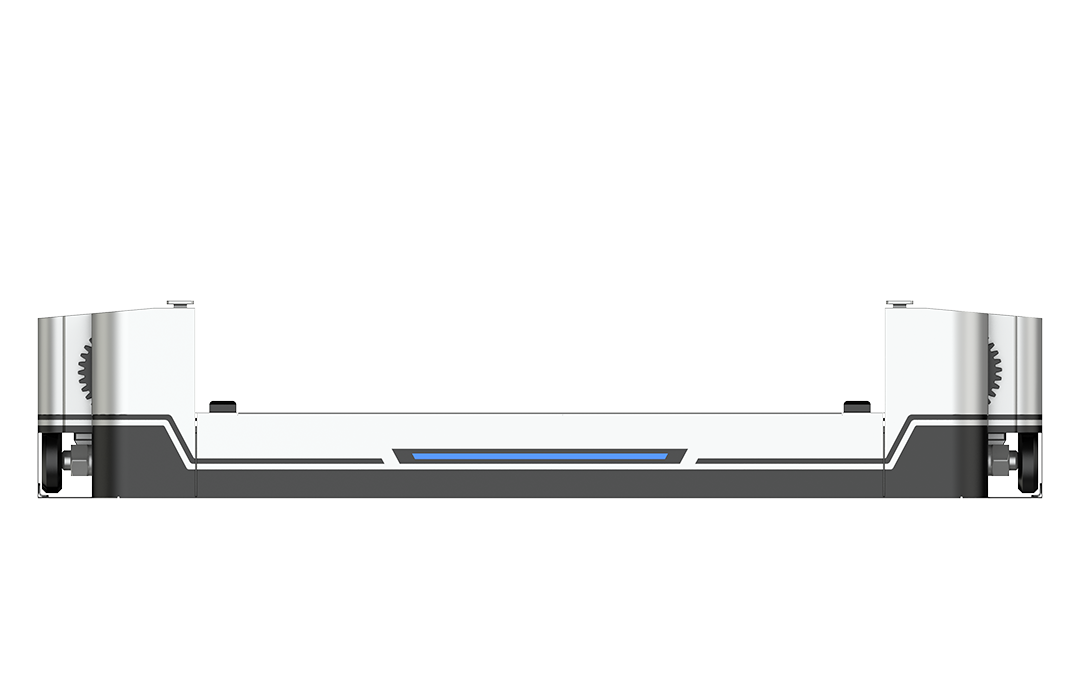
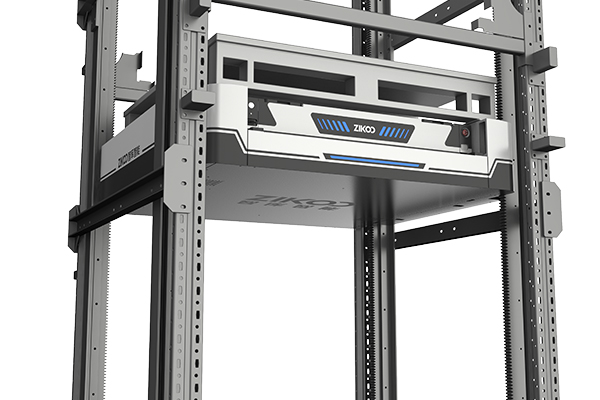
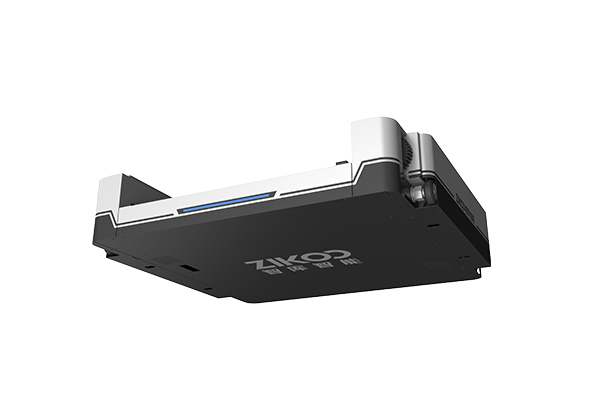
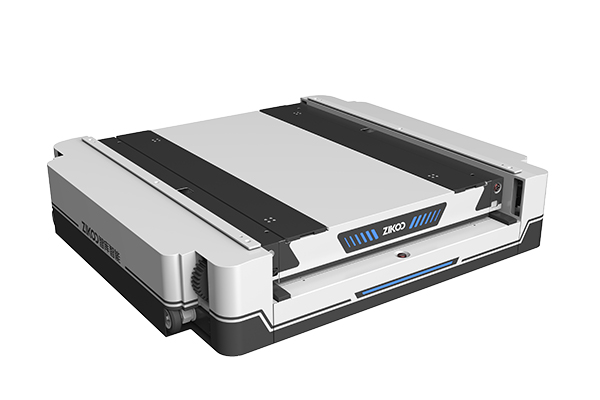
Vertical transfer is where small alignment errors become visible. In Zikoo’s H-bot vertical bidirectional shuttle, positioning accuracy is specified at ±1 mm, and that tolerance matters less as a catalogue figure than as a commissioning checkpoint: a deck that does not line up with the rack rail produces load transfer faults that read as random stoppages until the alignment is corrected.
Commissioning and the Acceptance Gate
Commissioning runs in layers. Static checks and single-machine manual operation come first, then automatic single cycles, then integration with the control layer, then order flow with the host system, and finally hot commissioning with realistic orders. Skipping a layer does not save time; it moves the failure into a busier environment where the cause is harder to isolate.
Acceptance is a measurement event, and its credibility depends on how it was defined months earlier. The test window, the order mix, the staffing level, the starting condition of the lanes, and the treatment of blocked time all change the result. A throughput figure quoted without its mix is not a specification. A test run on a pre-filled warehouse is not the same as steady state with replenishment, returns, and station congestion running at the same time.
Availability deserves the same treatment. Define the measurement period, what counts as scheduled time, how planned maintenance is treated, and how a fault is classified. Record defects by class with an agreed fix window, because a list of open items with no severity ranking cannot be closed. Inventory accuracy and exception rates belong in the same acceptance document; a system that moves pallets quickly while losing count is not accepted in any useful sense.
Expect the first weeks of operation to sit below the design rate. Throughput stabilizes as slotting matches real demand, master data errors are corrected, replenishment parameters settle, and operators stop improvising around the new flow. The acceptance test should be scheduled for the stabilized state, with the ramp period treated as a separate, planned phase rather than an excuse.
Go-Live, Handover and the First 90 Days
Cutover is a logistics problem more than a technical one. Freeze master data changes before the switch, complete physical inventory counts, load the starting state, and define the fallback position for each zone if the cutover has to pause. Zones that go live together should share a dependency, not a calendar date.
Hypercare needs named people, not goodwill. Supplier engineers, the internal controls team, maintenance technicians, and supervisors should be on site or on call during the first weeks, with a daily review of throughput, availability, inventory accuracy, order cycle time, and exception count. Small deviations caught on day three are configuration issues. The same deviations caught on day thirty are usually described as user error.
Handover is a document set and a skills test at the same time. As-built drawings, electrical schematics, network diagrams, control parameters and their backups, software versions and licenses, spare parts inventory, and maintenance procedures all have to be transferred and then used by the receiving team without the supplier standing beside them. Define the warranty start date explicitly, because acceptance, go-live, and handover can fall on three different days.
Where ASRS Projects Slip and How to Catch It Early
Most overruns leave a signal months before they appear in a progress report. The table below pairs the common causes with the early signal and the control that addresses it while there is still time.
| Risk | Early signal | Control |
|---|---|---|
| Master data arrives late or wrong | Test orders fail on dimensions or barcodes during integration | Name a data owner with dated milestones and validate the format before factory testing |
| Scope boundary gap in civil, fire, or power works | Bid clarifications keep returning to the same items | Publish a responsibility matrix with the RFQ and confirm it at award |
| Throughput definition mismatch | Bidder numbers cannot be reproduced from their own assumptions | Require the throughput model with the bid and review it before signing |
| Fire approval delay | Permit comments remain open during detailed design | Engage the authority having jurisdiction before the rack order is placed |
| Weak operator adoption | Manual interventions rise in the first week | Train by role and review the exception log daily during hypercare |
| Spares and service gaps | Critical parts have long lead times and no committed response | Agree the critical spares list and response times in the contract |
Bring Your Project Data to the Next Gate
The most useful conversation happens before the layout is fixed. Send the pallet and load data with real variance, the throughput profile by flow with its peak hours, the inventory and order history at line level, and the acceptance definition you intend to put in the contract. Those four inputs let an engineering team test whether the intended architecture can actually deliver the rate you need, and where the design would break first. Contact the team at info@zikoo-int.com or (+86)-19941778955 to review them against a specific building and flow. A data review is a technical check, not a substitute for your own fire, safety, and planning approvals.
FAQ
How long does an ASRS project take from approval to go-live?
There is no reliable standard duration, because the critical path usually runs through fire strategy approval, building works, and power infrastructure rather than equipment manufacturing. Manufacturing slots can often be reserved in parallel with those approvals. Ask each bidder for a milestone schedule with dependencies named, then check which milestones you control. The ramp period after go-live is a separate phase and should be planned and resourced as one, not treated as the end of the project.
What data should be ready before a feasibility study starts?
At minimum: pallet and load dimensions with realistic variance, at least a year of inventory and order history at line level, peak day and peak hour profiles by flow, building drawings with clear height and floor tolerance, and a documented growth plan. Without that material, the study produces a layout that looks plausible and cannot be defended when the operation runs its first busy season.
Who owns WMS, WCS and RCS in an ASRS project?
Assign responsibility by function rather than by acronym, since suppliers use the labels differently. Typically the host system owns orders and finance, the warehouse management layer owns inventory and allocation, the execution layer owns task orchestration and equipment coordination, and the robot control layer owns the fleet. Whatever the split, one party should own the integrated throughput number, and that party should also own the integration test.
Can an ASRS be installed without stopping existing operations?
Usually yes, with conditions. Zone-by-zone transfer, a temporary manual buffer, segregated construction areas, revised traffic routes, and additional handling labor during cutover are the normal measures. Some tie-ins, particularly to fire alarm and power distribution, still need a planned shutdown window. The cost and risk do not disappear; they move into the cutover plan, which is why that plan deserves the same review as the equipment design.
What should the acceptance test measure?
Throughput at a defined order mix and staffing level, availability over a stated period with a stated formula, inventory accuracy, exception rate, and recovery behavior after a fault. Define all five before the contract is signed, and record how blocked time and planned maintenance are counted. The test does not prove long-term reliability or performance in a peak season, so keep those as separate review points in the first year of operation.
If you’re interested, check out these related articles:
Smart Warehousing Starts Here: Cost-Effective Four-Way Shuttle Systems
Six-Way Shuttle Empowers 3PL Providers to Build Next-Generation Smart Logistics Hubs
Looking for Reliable Four-Way Shuttle Manufacturers? Choose Zikoo Robotics