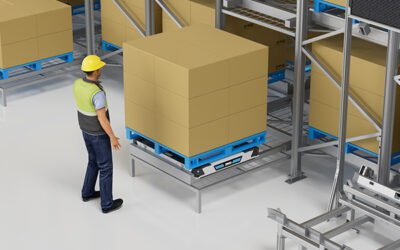
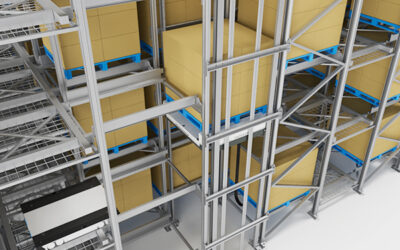
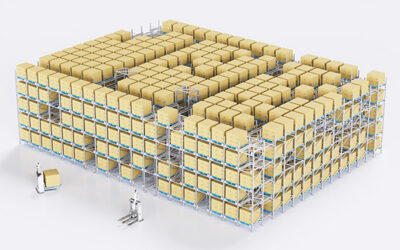
Automated storage and retrieval systems do not fail because the chosen technology is fundamentally wrong. They fail when the delivery model is unclear. In an ASRS project, the OEM designs and builds the core equipment; the integrator assembles the site-specific system, installs it, and makes the software and material handling components work together. The ASRS integrator vs OEM decision is therefore an accountability decision before it is a technology decision.
What an ASRS Integrator Actually Does
An ASRS integrator behaves like the general contractor and control-system architect for your warehouse. It translates a process requirement into a coordinated system: racking, automated storage and retrieval machines, conveyors, workstations, fire and safety interfaces, WMS/WCS integration, power distribution, commissioning, operator training, and ramp-up support.
The integrator normally carries the performance risk at the system level. That includes machine safety, load testing, clearance verification, and handover documentation under applicable installation and inspection standards [1]. This is also where the broader business case becomes operational: industry reporting consistently frames ASRS value around labor, space, and throughput, but those gains materialize only when the delivery model supports the operating plan rather than simply delivering hardware [2].
What an OEM Brings to the Table
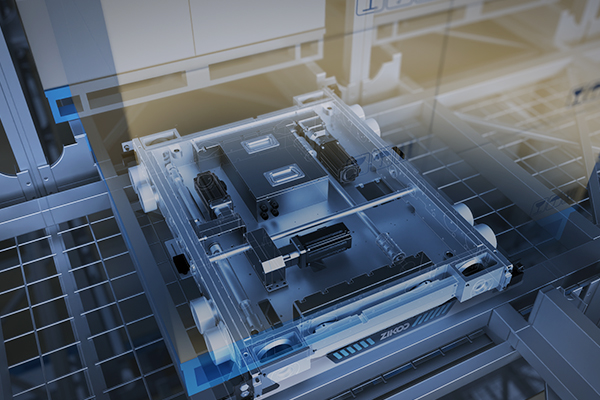
An OEM owns the product architecture: the robot or crane configuration, drive system, safety PLC, battery strategy, load handling device, and spare parts catalog. This is where cycle limits, temperature ratings, positioning accuracy, and long-term serviceability are set.
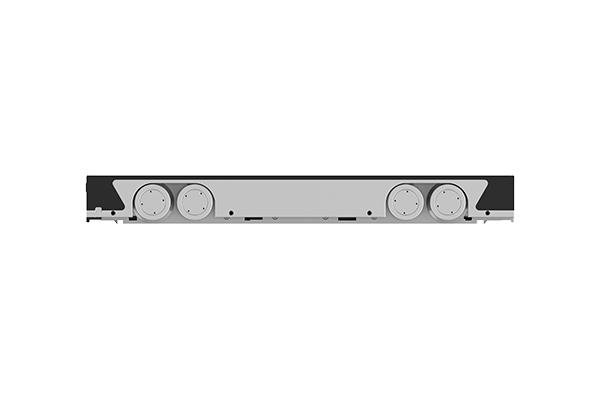
For example, a dense four-way shuttle platform with a 125 mm body height and rated loads from 1200 kg to 2000 kg supports high-density pallet storage that a standard unit-load crane cannot replicate in the same footprint. When the hardware is this tightly tuned to racking geometry, the OEM is best positioned to define configuration limits and prevent field changes that invalidate equipment performance.
The limitation is different. An OEM without a project-delivery arm may not accept construction risk, permitting risk, software integration risk, or post-go-live performance liability. That gap is why many ASRS projects still need an integrator, even when the OEM supplies excellent machines.
Where the Lines Blur: Integrator-Led vs OEM-Led Delivery
Many suppliers now offer both hardware and turnkey integration. The real question is not the label, but which entity owns the control architecture, the WCS dispatch logic, and the acceptance test.
In a hybrid delivery model, an integrator may specify an OEM shuttle platform, a separate firm may supply racking, and another firm may write the WES. If one company accepts the throughput guarantee while another controls the robot scheduler, the owner becomes the unintended systems integrator.
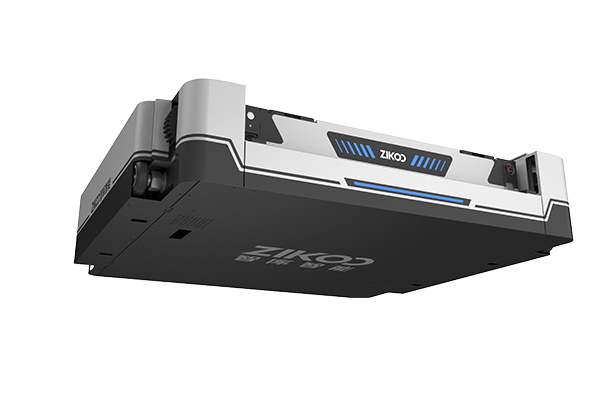
Architecture should decide the balance of authority. A crane-based high-bay system may be led effectively by an integrator with structural, fire-rating, and material flow experience. A shuttle-based dense system is often better led by the OEM because shuttle behavior, racking tolerance, lifts, and WCS orchestration are tightly coupled. Cycle-time calculations should follow standard performance-data principles so that travel, lift, and transfer assumptions remain realistic [3].
Architecture is the first real hiring criterion. <Stacker Crane vs Four-Way Shuttle: Which Fits Your ASRS Warehouse Best> covers the engineering trade-offs that determine whether an integrator or OEM should lead the design.
Decision Framework, Vetting, and Accountability
Different project profiles favor different delivery leaders.
- Greenfield crane-based ASRS: integrator lead with OEM design authority on crane and drives.
- Brownfield dense shuttle retrofit: OEM lead, with integrator managing building interfaces and IT systems.
- Multi-site rollout: integrator lead for repeatable installation, OEM for standardized equipment.
- WMS-heavy operation: integrator lead because warehouse process and host-system integration dominate risk.
- New robotic platform or custom end effector: OEM lead because the core hardware is not yet proven in the field.
Vetting should not stop at the reference list. Ask who actually wrote the WCS, who owns the software after commissioning, and who legally accepts the performance test. Confirm quality management system certification [4], and confirm that storage layouts, clearances, and material handling practices comply with workplace storage safety requirements [5]. A technical review against your racking layout can filter candidates faster than a sequence of sales presentations.
Cost, Schedule, and Operational Risk
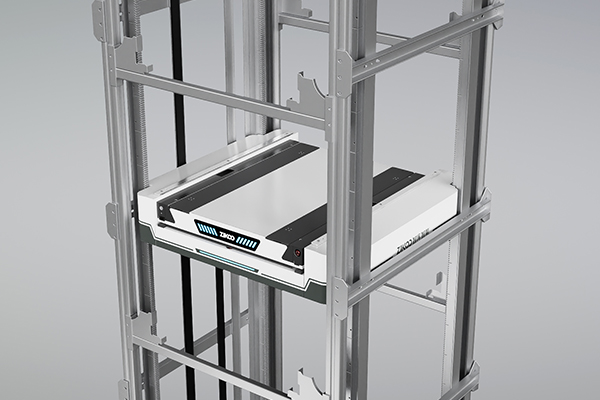
Capital cost is only one layer. Lifecycle cost includes energy, software licenses, maintenance labor, spare parts, and lost throughput during unplanned downtime. The delivery model determines who absorbs those variances.
An integrator may bid low and pass schedule risk through subcontracting. An OEM may protect hardware margins but leave integration risk with the owner. The safer structure is a single legal entity that accepts equipment performance, system performance, and the cutover schedule. When that is not available, split the contract deliberately: equipment warranty from the OEM, system performance from the integrator, and software ownership defined before the first purchase order is signed.
Cost effectiveness is not a bid-line issue. <Six-Way Shuttle: The Ultimate Warehousing Solution for Cost Reduction and Efficiency> covers the operating levers that turn a lower capital cost into a lower total cost.
Which One Should You Actually Hire?
Hire an OEM-led team when the core value is a tightly tuned pallet shuttle or crane system and you want fewer third parties in the equipment loop. Hire an integrator-led team when your project requires process redesign, WMS integration, multiple automation islands, and significant building modifications.
If a single firm owns both the hardware and the project execution, the accountability chain is shorter. Verify that the firm is not simply an OEM selling hardware through a contracting label. The best evidence is project documentation: who supplied the equipment, who wrote the WCS, who installed the racking, and who signed the final acceptance test.
If the business case depends on dense, modular pallet storage rather than a high-bay crane, the delivery partner must prove shuttle-system throughput in your specific racking profile. <Smart Warehousing Starts Here: Cost-Effective Four-Way Shuttle Systems> covers the sizing decisions that separate a clean installation from a costly retrofit.
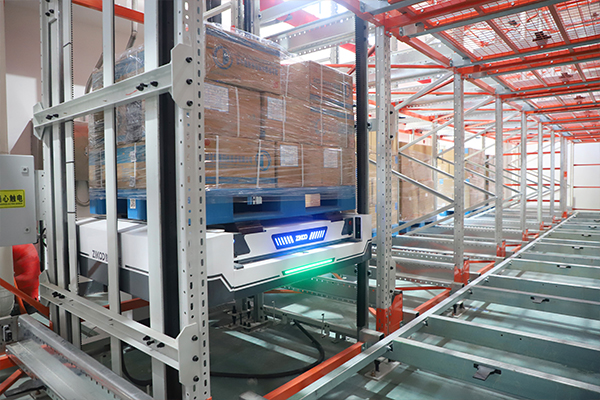
Before you issue an RFP, define which party accepts the throughput guarantee. Zikoo Smart Technology Co., Ltd engineers pallet-to-person robotics and smart warehouse software for power, cold chain, new energy, manufacturing, pharmaceutical, and third-party logistics projects. If you are comparing an ASRS integrator vs OEM, send your warehouse dimensions, pallet specification, temperature range, and throughput target to [email protected] or call (+86)-19941778955. A short technical review can clarify which delivery model fits before you commit to a long vendor selection cycle.
Frequently Asked Questions
Is an OEM always better than an integrator for ASRS projects?
No. An OEM is stronger when the core equipment and its control loop are proprietary, while an integrator is stronger when site conditions, software integration, and process change dominate the project risk. The better partner depends on where your project carries the most uncertainty.
Can one company act as both OEM and integrator?
Yes. Some manufacturers now provide turnkey delivery. In that case, confirm that project execution is an owned capability, not a subcontracting wrapper around a hardware sale. Ask for evidence that the same organization managed installation, WCS configuration, commissioning, and after-sales support.
How do I verify an integrator’s ASRS experience?
Request a reference where the integrator was directly responsible for WCS integration, installation, and performance testing. Contact the end user and ask what happened during ramp-up, who resolved software faults, and whether the integrator stayed accountable after handover.
Who is responsible if the ASRS misses the throughput guarantee?
It depends on the contract. Ideally one legal entity owns the complete performance guarantee. Otherwise responsibility may be split across equipment suppliers, software developers, and the integrator. Define throughput test conditions, pallet mix, SKU profile, and acceptance windows before signing.
Should I choose an integrator for a brownfield warehouse retrofit?
A brownfield site often favors an integrator with building-fit and phased-installation experience. However, if the retrofit is mainly a new shuttle system in existing racking, the OEM may be better placed to control clearances, interface details, and equipment behavior.
Does the OEM or integrator own the WCS software after commissioning?
Either model is possible. Before contracting, clarify license ownership, escrow arrangements, and your right to modify or transfer the software. This directly affects future system changes and prevents vendor lock-in.
References
[1] ASME B30.13-2022, Storage/Retrieval (S/R) Machines and Associated Equipment, The American Society of Mechanical Engineers, 2022.
[2] Material Handling Industry (MHI), 2023 Annual Industry Report, MHI. [Online]. Available: https://www.mhi.org/publications/report
[3] FEM 9.851, Performance Data of S/R Machines — Cycle Times, European Federation of Materials Handling and Storage Equipment.
[4] ISO 9001:2015, Quality management systems — Requirements, International Organization for Standardization, 2015.
[5] Occupational Safety and Health Administration (OSHA), “Materials Handling and Storage,” 29 CFR 1910.176, U.S. Department of Labor.
If you’re interested, check out these related articles:
Six-Way Shuttle Powers Dense Storage: Breaking Space Limitations
Smart Storage Revolution: Comprehensive Overview of Four-Way Shuttle Systems for Automatic 3D Warehouses
Smart Warehousing Starts Here: Cost-Effective Four-Way Shuttle Systems