Picking an Automated Storage and Retrieval System is one of those calls that quietly decides how your warehouse runs day in and day out. After walking countless aisles and troubleshooting bottlenecks firsthand, we’ve seen the right ASRS tighten flow, cut missteps, and pay for itself faster than most expect. Below, we map the strengths of each technology to small, medium, and large facilities, so you can line up capabilities with real needs and make a confident decision for your site.
Understanding the Core Needs of Different Warehouse Sizes
Warehouse operations swing widely based on footprint and throughput. We group facilities into small, medium, and large to align ASRS choices with actual patterns on the floor. Each tier brings its own constraints and opportunities for automation.
1. Defining small, medium, and large warehouse categories
Small warehouses typically sit under 5,000 square meters, often serving urban distribution or specialized storage. Medium warehouses span 5,000 to 20,000 square meters, balancing capacity with moderate throughput. Large warehouses exceed 20,000 square meters and run as major distribution centers that demand high capacity and rapid processing. These buckets help us tune automation strategies to fit.
2. Identifying common challenges in each warehouse size segment
Small sites wrestle with tight space and the push for higher-density storage. Medium facilities need flexible systems that adapt to demand swings and varied product sets. Large operations chase maximum throughput, lower labor costs, and clean integration across vast footprints. Solving for these pain points sets the stage for successful automation.
3. Key factors influencing ASRS selection for optimal efficiency
ASRS selection hinges on floor space and vertical clearance, inventory profiles such as size, weight, and temperature sensitivity, required throughput, and budget. Scalability and integration with existing systems matter just as much, since today’s choice needs to grow with tomorrow’s volume. We favor options that deliver quick wins and long-term adaptability.
Comparing Automated Storage and Retrieval Systems (ASRS) Technologies
Zikoo Smart Technology Co., Ltd. provides ASRS solutions built for different operating contexts. We center on shuttle-based systems and omnidirectional robots, each with clear advantages depending on your layout and flow. The aim is straightforward, higher storage density, better efficiency, and lower operating cost.
1. In-depth analysis of shuttle-based ASRS for high-density storage
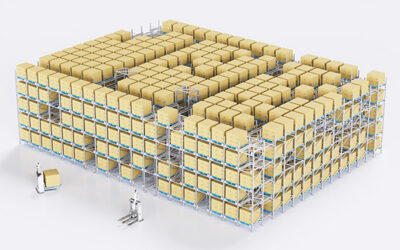
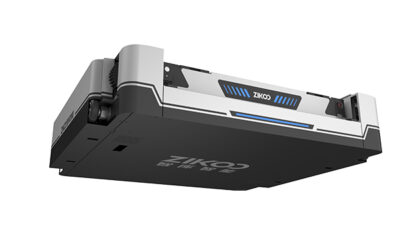
Shuttle-based ASRS, such as the R-bot Four-way Shuttle, shine in high-density scenarios. Deep lane storage and flexible access drive space efficiency. With a slim profile and four-way travel, the R-bot supports fast pallet-to-person operations. Paired with the H-bot Vertical Bidirectional Shuttle, you get a six-way shuttle setup that strengthens both vertical and horizontal moves. Together they form a resilient three-dimensional warehousing network. If you’re interested, check 《Why Shuttles Are the Future of Smart Warehousing》.
R-bot Four-way Shuttle Technical Specifications
| Model | Weight (kg) | Rated Load (kg) | Body Dimensions (L×W×H mm) | Pallet Sizes Supported (mm) | Empty Speed (m/s) | Loaded Speed (m/s) | Battery (V/Ah) | Continuous Operation (hours) |
|---|---|---|---|---|---|---|---|---|
| Standard Type (R1200B) | 270 | 1200 | 1000 × 972 × 125 | 1200 × 800–1000 | 1.6 | 1.2 | 51.2/40 or 30 | 8 |
| American Type (R1200A) | 265 | 1200 | 1192 × 840 × 125 | 1016 × 1219 | 1.6 | 1.2 | 51.2/40 or 30 | 8 |
| Japanese Type (R1500J) | 270 | 1500 | 1192 × 900 × 125 | 1100 × 1100 | 1.6 | 1.2 | 51.2/40 or 30 | 8 |
| Heavy-duty Type (R1500B) | 275 | 1500 | 1192 × 972 × 125 | 1200 | 1.6 | 1.2 | 51.2/40 or 30 | 8 |
| Heavy-duty Large Pallet Type (R2000B) | 400 | 2000 | 1250 × 1300 × 150 | 1400 | 1.35 | 1.0 | 51.2/40 or 30 | 7 |
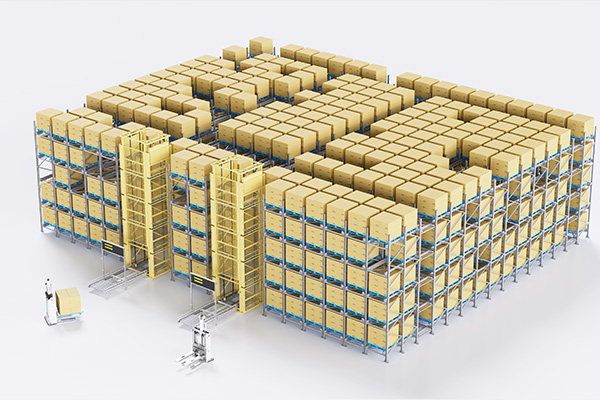
H-bot Vertical Bidirectional Shuttle Technical Specifications
| Model | Body Weight (kg) | Body Dimensions (L×W×H mm) | Rated Load (kg) | Pallet Sizes Supported (mm) | Empty Speed (m/s) | Loaded Speed (m/s) | Acceleration Empty (m/s²) | Acceleration Loaded (m/s²) | Operating Temperature (°C) |
|---|---|---|---|---|---|---|---|---|---|
| Standard Type (H1800B) | 345 | 1300 × 1464 × 288 | 1800 | 1200 × 800–1200 | 1 | 0.5 | 1 | 0.3 | -25 to 45 |
| American Type (H1800A) | 325 | 1300 × 1332 × 288 | 1800 | 1016 × 1219 | 1 | 0.5 | 1 | 0.3 | -25 to 45 |
| Japanese Type (H1800J) | 335 | 1300 × 1392 × 288 | 1800 | 1100 × 1100 | 1 | 0.5 | 1 | 0.3 | -25 to 45 |
| Heavy-duty Large Pallet Type | Customized | Customized | Customized | Customized | Customized | Customized | Customized | Customized | -25 to 45 |
2. Evaluating omnidirectional stacking robots for narrow aisle operations
The U-bot Omnidirectional Stacking Robot fits narrow aisles where vertical capacity matters. A U-shaped frame and tight turning radius give it sharp maneuverability. It handles up to 1000 kg and lifts to 8 meters, making pallet moves efficient in constrained spaces. The U-bot also pairs with other automation, such as AMRs, to boost flexibility across workflows.
U-bot Omnidirectional Stacking Robot Technical Specifications
| Model | Dimensions (L×W×H mm) | Rated Load (kg) | Self-weight (kg) | Lifting Height (mm) | Min. Aisle Width (mm) | Driving Positioning Accuracy (mm) | Battery (V/Ah) | Continuous Operation (hours) |
|---|---|---|---|---|---|---|---|---|
| U1045 | 2198 × 1784 × 2100 | 1000 | 3000 | 4500 | 2100 | ±10 | 48 / 210 | 6–8 |
| U1060 | 2198 × 1820 × 2685 | 1000 | 3300 | 6000 | 2140 | ±10 | 48 / 210 | 6–8 |
| U1080 | 2198 × 1820 × 3465 | 1000 | 3500 | 8000 | 2140 | ±10 | 48 / 210 | 6–8 |
3. Examining integrated solutions for complex picking and storage needs
When operations require both pallet storage and split-case picking, the U-bot + AMR Narrow Aisle Picking System brings both sides together. The U-bot covers high-level storage while AMRs handle fast, low-level moves and picks. This setup supports multi-SKU workflows and lifts picking efficiency and storage density. Our integrated approach improves adaptability and throughput when inventory profiles get complex.
U-bot + AMR Narrow Aisle Picking System Performance Indicators
| Metric | Value |
|---|---|
| Picking Efficiency | ≥300 pieces/hour |
| Inbound/Outbound Efficiency | ≥80 pallets/hour |
| Storage Density Improvement | over 30% |
| Positioning Accuracy | ±10 mm |
| Minimum Aisle Width | 2100 mm |
| Supported SKU Quantity | up to 10,000 |

Selecting the Best ASRS for Your Warehouse Size and Operational Needs
The best fit comes from mapping ASRS capabilities to your exact constraints. We break down small, medium, and large facilities with pointed recommendations that protect space, lift throughput, and deliver durable value.
1. Matching small warehouses with space-saving ASRS solutions
For small sites, vertical space and density are the levers that move the needle. The U-bot Omnidirectional Stacking Robot thrives with minimal aisle width, enabling efficient pallet storage and retrieval where every meter counts. Expect a clear bump in usable storage without adding square meters.
2. Optimizing medium-sized warehouses with flexible and scalable ASRS
Medium facilities benefit from systems that scale cleanly. The R-bot Four-way Pallet Shuttle provides high density and strong throughput, and its modular design supports staged expansion. Combine R-bot with the H-bot Vertical Bidirectional Shuttle for a six-way system that moves both horizontally and vertically with ease, keeping performance steady as volumes grow.
3. Implementing high-throughput ASRS for large-scale distribution centers
Large distribution centers need sustained speed at scale. The integrated six-way shuttle system that pairs R-bot and H-bot delivers the throughput and storage intensity these environments demand. It supports fast order fulfillment and steady uptime, with headroom for future growth. We believe that by leveraging advanced automation, large distribution centers can achieve unprecedented levels of operational efficiency. For more insights, consider 《The Era of 3D Intelligent Logistics: Six-Way Shuttle Redefines the Automatic 3D Warehouse》.
Maximizing ROI and Operational Efficiency with the Right ASRS Investment
ASRS is a strategic spend that pays back in both operations and finance. We prioritize systems that tighten processes now and keep creating value as your business evolves.
1. Assessing the impact of ASRS on labor costs and productivity
Automation reduces manual touches, trims labor costs, and cuts error-driven rework. Systems run continuously, driving higher picking accuracy and faster cycle times. Over time, the savings stack up and often offset the upfront investment.
2. Calculating the return on investment for various ASRS implementations
Our ROI models weigh labor savings, storage gains, damage reduction, and throughput improvements. R-bot and H-bot consistently show short payback windows thanks to their density and efficiency. A clear financial analysis removes guesswork and surfaces the full benefit.
3. Future-proofing your warehouse with scalable and adaptable ASRS technologies
Scalability and adaptability keep your operation ready for what’s next. Our modular ASRS, including R-bot and H-bot, expand alongside your business. The PTP Smart Warehouse Software platform provides end-to-end management and control, ensuring smooth integration and future upgrades. This keeps your investment effective and current for years.
For further reading on how Zikoo Robotics can help accelerate your warehouse evolution, please refer to 《How Zikoo Accelerates Warehouse Evolution with Advanced Shuttle Systems》.
Transform Your Warehouse Operations
Optimize your storage and retrieval processes with Zikoo Smart Technology Co., Ltd.’s advanced ASRS solutions. Our team of experts is ready to help you design and implement a system tailored to your specific needs, ensuring maximum efficiency and a strong return on investment.
Contact us today to discuss your warehouse automation project.
Email: [email protected]
Phone: (+86)-19941778955
FAQs
1. What is the primary benefit of implementing an ASRS in a small warehouse?
The primary benefit is higher storage density. Systems like the U-bot Omnidirectional Stacking Robot make better use of vertical space, limiting the need for physical expansion. That turns constrained footprints into productive capacity while improving day-to-day efficiency.
2. How do shuttle systems like the R-bot and H-bot enhance storage density?
The R-bot Four-way Pallet Shuttle and H-bot Vertical Bidirectional Shuttle enable deep lane storage and multi-level operations. Four-way movement from the R-bot supports flexible placement, while the H-bot handles vertical transfer, creating a compact six-way storage network that maximizes cubic utilization.
3. Can ASRS solutions like the U-bot integrate with existing warehouse management systems?
Yes. ASRS solutions like the U-bot are built to integrate with existing WMS platforms. Zikoo’s PTP Smart Warehouse Software provides the interfaces and protocols needed for reliable data exchange and coordinated operations, reducing disruption during rollout.
4. What are the typical considerations for ASRS implementation in cold chain environments?
Cold chain deployments require robots designed for low-temperature work, including options such as the R-bot’s cold chain custom solution with -25℃ dedicated lithium batteries. Material choices, insulation, and automated charging suited for extreme conditions are also key to reliable performance.
5. How does the U-bot + AMR system improve picking efficiency for multi-SKU operations?
It combines high-level storage with fast, low-level picking. The U-bot manages bulk storage, while AMRs execute rapid split-case picks in accessible zones. With dynamic path planning, this collaborative flow raises throughput and handles diverse SKU mixes without slowing the line.