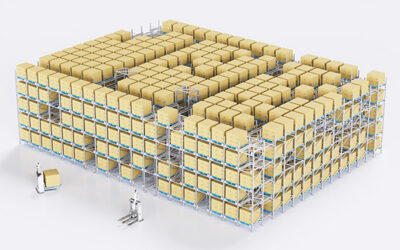
Modern warehousing comes down to speed, accuracy, and making every cubic meter work. Traditional setups strain under those demands, which shows up as bottlenecks and higher costs. Automated Storage and Retrieval Systems (ASRS) change the equation by automating storage and movement. We will explore how traditional operations differ from ASRS, compare performance on throughput, space, accuracy, labor, and safety, and show the strategic upside and ROI. Zikoo’s shuttles and software sit at the center of that shift, with real products, real specs, and a path to scale.
Understanding Traditional Warehouse Operations and Their Limitations
Traditional warehouses rely heavily on manual labor and conventional storage methods. While they offer flexibility, they often face significant challenges in modern supply chains.
1. Manual Processes and Their Impact on Throughput
Traditional warehouses often involve manual picking, packing, and transportation. These manual processes contribute to slower throughput rates and potential bottlenecks, especially during peak seasons. Manual operations limit the volume of goods moved per hour. This directly impacts order fulfillment times and overall operational speed.
2. Space Utilization and Storage Density Challenges
Traditional warehousing, with its wider aisles and less Dense storage, often underutilizes vertical space and overall footprint. This leads to higher real estate costs per stored item. Conventional racking systems require significant floor space for access. This reduces the total storage capacity within a given area.
3. Labor Dependency, Costs, and Safety Concerns
Traditional warehouses have a high dependency on human labor. This includes significant associated costs for wages, training, and benefits. Labor shortages pose a constant challenge. Manual material handling also introduces safety risks, increasing the potential for accidents and injuries.
The Rise of ASRS: Defining Automated Storage and Retrieval Systems
Automated Storage and Retrieval Systems (ASRS) represent a paradigm shift in warehousing. They leverage advanced robotics and software to optimize storage and retrieval processes.
1. Core Components and Functionality of ASRS
ASRS systems integrate several fundamental elements. These include storage racks, S/R machines (cranes, shuttles), conveyors, and warehouse control systems (WCS). These components work together to automate storage and retrieval tasks. They ensure efficient movement and precise placement of goods.
2. Types of ASRS and Their Applications
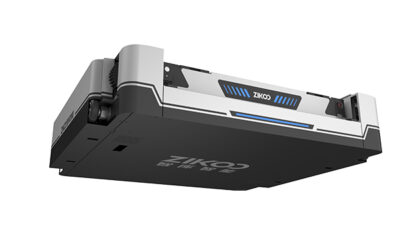
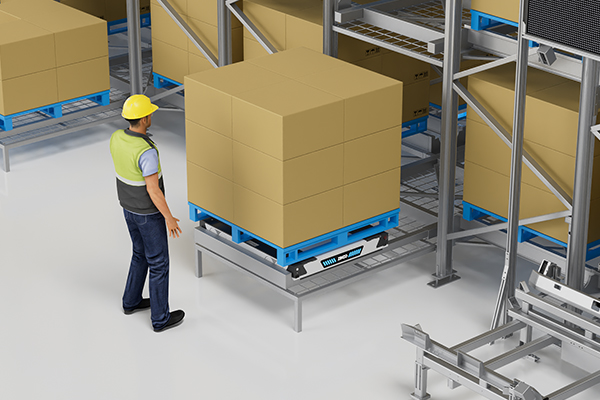
Different ASRS types exist, including unit-load ASRS, mini-load ASRS, and shuttle-based systems. Zikoo’s R-bot four way pallet shuttle and H-bot Vertical Two-Way Shuttle fit into the shuttle-based ASRS category. They are particularly effective for pallet-to-person Dense storage.
If you’re interested, check 《Unlocking Dense Storage with Four-Way Shuttle: A Smarter Approach to ASRS by Zikoo Robotics》.
3. The Role of Software in ASRS: WMS, WES, WCS, RCS Integration
Software orchestrates ASRS operations. Warehouse Management Systems (WMS), Warehouse Execution Systems (WES), Warehouse Control Systems (WCS), and Robot Control Systems (RCS) are critical. Zikoo’s PTP Smart Warehouse Software integrates these functions. This enables end-to-end automation and an optimized workflow.
If you’re interested, check 《PTP Intelligent Warehouse Software Empowers Enterprises for Smart Upgrades》.
Direct Efficiency Comparison: ASRS vs. Traditional Warehouses
This section provides a data-driven comparison of key efficiency metrics between ASRS and traditional warehousing.
1. Throughput and Order Fulfillment Speed
ASRS systems achieve significantly higher throughput rates. They offer faster order fulfillment capabilities due to continuous automation. Manual processes limit traditional warehouses, leading to slower speeds.
2. Maximizing Space Utilization and Storage Density
ASRS systems dramatically improve space utilization. They reduce aisle width and leverage vertical space. Zikoo’s R-bot and H-bot solutions offer high-density designs. These systems can increase storage density by 30-80% or more.
| Feature | Traditional Warehouse | ASRS System (Zikoo) |
|---|---|---|
| Aisle Width | Wide (3-4 meters) | Narrow (1.5-2.5 meters) |
| Vertical Space Use | Limited | Maximized (up to 30 meters) |
| Storage Density | Low to Medium | High to Very High |
| Pallet Access | Manual/Forklift | Automated/Robotic |
| Footprint Reduction | N/A | Significant (30-80% increase in storage capacity) |
3. Accuracy and Inventory Management
ASRS offers superior accuracy in inventory tracking. It minimizes human error, stockouts, and mispicks. Real-time inventory visibility improves stock control. This ensures precise stock levels and reduces discrepancies.
4. Labor Optimization and Cost Reduction
ASRS reduces reliance on manual labor. This allows reallocation of human resources to strategic tasks. Long-term labor cost savings are substantial. This positively impacts operational expenditure.
5. Safety Enhancements and Ergonomics
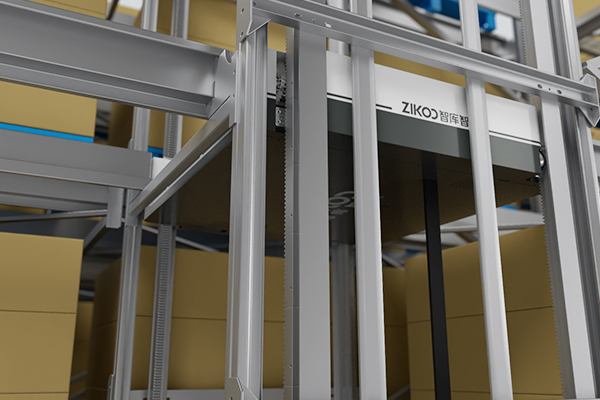
ASRS significantly improves workplace safety. It automates hazardous tasks, reducing accident and injury risks. This eliminates dangers associated with manual handling and forklift operations.
Strategic Advantages and ROI of Implementing ASRS
Beyond operational efficiency, ASRS offers significant strategic advantages and a compelling return on investment for businesses.
1. Scalability and Adaptability for Future Growth
Modular ASRS designs allow for easier scalability. Zikoo’s flexible robotic solutions accommodate fluctuating demand. They support future business expansion without extensive structural changes.
If you’re interested, check 《The Modular Revolution: Unlocking Maximum Space Potential with Zikoo’s Six-Way Shuttle》.
2. Competitive Edge and Customer Satisfaction
Improved efficiency, faster fulfillment, and higher accuracy enhance a company’s competitive position. This translates into increased customer satisfaction. Reliable and swift service builds customer loyalty.
3. Calculating the Return on Investment (ROI) for ASRS
Calculating ASRS ROI considers several factors. These include labor savings, space optimization, reduced errors, and increased throughput. These elements collectively demonstrate financial benefits over time.
4. Sustainability and Energy Efficiency Considerations
ASRS systems offer environmental benefits. They reduce energy consumption through optimized movements. Smaller facility footprints also contribute to corporate sustainability goals.
Zikoo Smart Technology’s ASRS Solutions: Enhancing Warehouse Efficiency
Zikoo’s solutions contribute significantly to ASRS technology. Our products address critical efficiency challenges.
1. R-bot Four-way Shuttle: Dense Storage and Flexible Movement
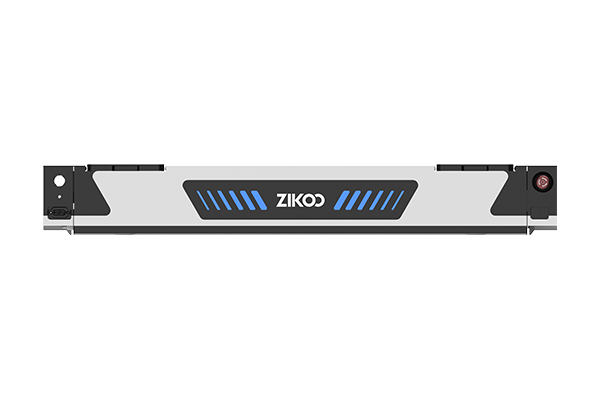
The R-bot four way pallet shuttle is a core handling solution for Dense storage. It features a slim body (125 mm) and can carry up to 1.5 tons. It offers flexible four-way movement and intelligent autonomous handling. Multi-shuttle collaborative operation is also possible. The R-bot integrates with the H-bot to achieve Six-way shuttle system functionality. This adapts to various palletized goods storage and picking scenarios.
| Model Options | Weight (kg) | Rated Load (kg) | Dimensions (L×W×H mm) | Pallet Sizes Supported (mm) | Empty Speed (m/s) | Loaded Speed (m/s) |
|---|---|---|---|---|---|---|
| Standard (R1200B) | 270 | 1200 | 1000 × 972 × 125 | 1200 × 800–1000 | 1.6 | 1.2 |
| American (R1200A) | 265 | 1200 | 1192 × 840 × 125 | 1016 × 1219 | 1.6 | 1.2 |
| Japanese (R1500J) | 270 | 1500 | 1192 × 900 × 125 | 1100 × 1100 | 1.6 | 1.2 |
| Heavy-duty (R1500B) | 275 | 1500 | 1192 × 972 × 125 | 1200 | 1.6 | 1.2 |
| Heavy-duty Large Pallet (R2000B) | 400 | 2000 | 1250 × 1300 × 150 | 1400 | 1.35 | 1.0 |
2. H-bot Vertical Bidirectional Shuttle: The Vertical Transportation Hub
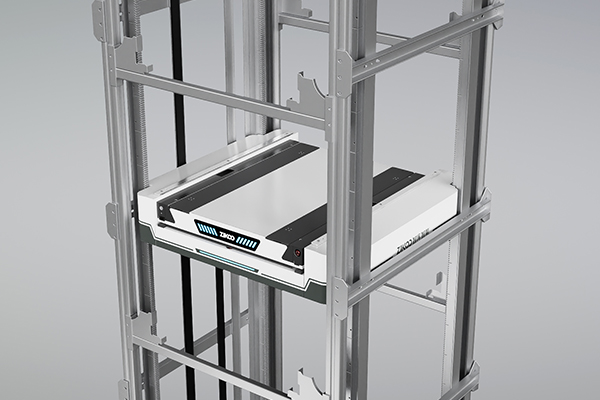
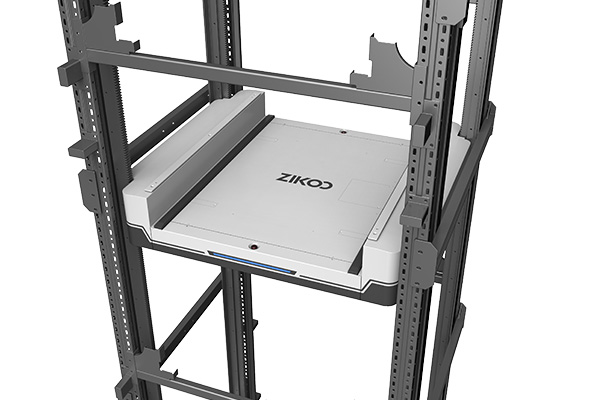
The H-bot Vertical Two-Way Shuttle serves as the vertical transportation hub. It is designed for pallet-to-person Dense storage. Its compact layout occupies only one storage location. It collaborates with the R-bot four way pallet shuttle to create a three-dimensional warehousing network. This integration enhances overall operational efficiency.
If you’re interested, check 《Six-Way Shuttle Unlocks the Era of True 3D Intelligent Warehousing》.
| Model Options | Body Weight (kg) | Dimensions (L×W×H mm) | Rated Load (kg) | Pallet Sizes Supported (mm) | Empty Speed (m/s) | Loaded Speed (m/s) | Acceleration Empty (m/s²) | Acceleration Loaded (m/s²) |
|---|---|---|---|---|---|---|---|---|
| Standard (H1800B) | 345 | 1300 × 1464 × 288 | 1800 | 1200 × 800–1200 | 1 | 0.5 | 1 | 0.3 |
| American (H1800A) | 325 | 1300 × 1332 × 288 | 1800 | 1016 × 1219 | 1 | 0.5 | 1 | 0.3 |
| Japanese (H1800J) | 335 | 1300 × 1392 × 288 | 1800 | 1100 × 1100 | 1 | 0.5 | 1 | 0.3 |
| Heavy-duty Large Pallet (Custom) | Customized | Customized | Customized | Customized | Customized | Customized | Customized | Customized |
3. U-bot Omnidirectional Stacking Robot: Narrow Aisle and High-Level Storage
The U-bot Omnidirectional Stacker Robot is an intelligent warehouse robot. It is designed for pallet-to-person narrow aisle storage. It requires a minimum aisle width of 2100 mm. Its U-shaped body and 1370 mm turning radius provide exceptional maneuverability. The robot lifts goods from 0 to 8 meters. It has a rated load capacity of 1000 kg. It can collaborate with AMRs and robotic arms.
If you’re interested, check 《Successful Conclusion: Zikoo Robotics Showcases U-Bot and Six-Way Shuttle at Logis Tech Tokyo 2025》.
| Model | Dimensions (mm) | Rated Load (kg) | Self-weight (kg) | Lifting Height (mm) | Min. Aisle Width (mm) | Positioning Accuracy (mm) | Battery Config. | Continuous Operation (hours) |
|---|---|---|---|---|---|---|---|---|
| U1045 | 2198 × 1784 × 2100 | 1000 | 3000 | 4500 | 2100 | ±10 | 48 V / 210 Ah LiFePO4 | 6–8 |
| U1060 | 2198 × 1820 × 2685 | 1000 | 3300 | 6000 | 2140 | ±10 | 48 V / 210 Ah LiFePO4 | 6–8 |
| U1080 | 2198 × 1820 × 3465 | 1000 | 3500 | 8000 | 2140 | ±10 | 48 V / 210 Ah LiFePO4 | 6–8 |
4. PTP Smart Warehouse Software: The Brain Behind the Automation
Zikoo’s integrated software suite includes WMS, WES, WCS, and RCS. This PTP Smart Warehouse Software provides intelligent control and optimization. It offers real-time visibility for our ASRS solutions. The software ensures reliable operation and maximum efficiency.
Ready to Elevate Your Warehouse Operations?
Ready to raise the efficiency of your warehouse operations to a new level? Contact Zikoo Smart Technology today for a personalized consultation. We will show you how our cutting-edge ASRS solutions, including the R-bot, H-bot, and U-bot, can optimize your storage, retrieval, and fulfillment processes. Explore our innovative pallet-to-person robotics and smart warehouse software to get the most from your facility.
Email: [email protected]
Phone: (+86)-19941778955
FAQs
What is the primary difference in operational speed between ASRS and traditional warehouses?
ASRS systems achieve significantly higher operational speeds and throughput rates. They often process hundreds of items per hour, compared to dozens in manual traditional warehouses. This results from continuous automated operation and optimized movement paths.
How much space can an ASRS system save compared to a traditional warehouse?
ASRS systems can increase storage density by 30-80% or more. They achieve this by utilizing vertical space, reducing aisle widths, and optimizing rack configurations. This significantly reduces the required warehouse footprint compared to traditional layouts.
Are ASRS systems only suitable for large enterprises?
While ASRS systems represent a significant investment, their scalability and modularity make them viable for businesses of various sizes. Zikoo’s R-bot and H-bot solutions are particularly adaptable. The long-term ROI in labor savings, efficiency gains, and accuracy often justifies the initial capital for small to medium-sized enterprises.
What kind of maintenance do ASRS systems require?
ASRS systems require regular preventive maintenance. This ensures optimal performance and longevity, similar to any complex machinery. Maintenance typically involves software updates, mechanical inspections, and component checks. Zikoo provides end-to-end support and maintenance services for its robotic solutions.
How do Zikoo’s robots integrate into an ASRS system?
Zikoo’s R-bot four way pallet shuttle, H-bot Vertical Two-Way Shuttle, and U-bot Omnidirectional Stacker Robot integrate cleanly into ASRS environments. Our PTP Smart Warehouse Software controls them to manage tasks, optimize routes, and ensure collaborative operation. This maximizes efficiency in pallet-to-person Dense storage scenarios.