Implementing an Automated Storage and Retrieval System (ASRS) is a serious spend for any warehouse, and the lingering question is what it pays back. We map ROI in practical terms—financial and operational—so the capital plan lines up with day-to-day performance. Our framework covers costs, software and integration, measurable gains in labor and space, and clear formulas for ROI and payback, with real data to anchor the numbers. The aim is to help businesses decide with confidence and capture the full value of their automation.
Understand what ROI really means for warehouse automation projects
Financial ROI captures the monetary gains from an ASRS, including cost savings and increased revenue. Operational ROI reflects improvements in efficiency, accuracy, and service levels. Automation ROI differs from traditional material handling investments because it blends advanced robotics with software, producing deeper, system-level change. Typical ROI expectations for pallet-to-person systems involve significant labor and space savings, often leading to payback periods of 1-3 years.
ROI Concept Diagram
| Component | Description | Impact on ROI |
|---|---|---|
| Cost | Initial investment in hardware, software, and integration. | Reduces ROI |
| Savings | Reduced labor, space, and operational errors. | Increases ROI |
| Time | Duration over which benefits accrue and payback is achieved. | Influences payback period |
Identify all cost components involved in an ASRS investment
A sound ROI calculation starts by listing every capital and operational cost tied to an ASRS. We break down these expenditures to make the financial picture clear.
Capital costs for robots, shuttles, and vertical transport equipment
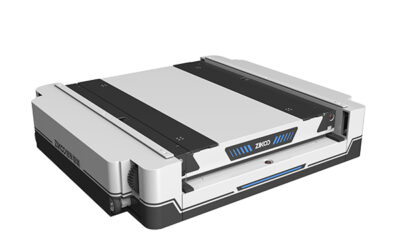
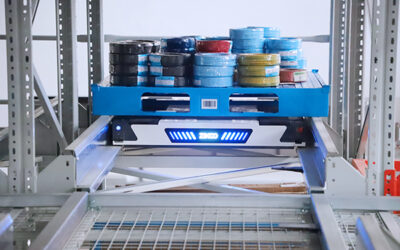
Capital expenditure covers the purchase of physical equipment. This encompasses robots like the R-bot Four-way Shuttle, designed for Dense storage. It also includes vertical transport solutions such as the H-bot Vertical Bidirectional Shuttle. The U-bot Omnidirectional Stacking Robot is another key component for narrow aisle applications.
Software and system integration costs that affect ROI accuracy
Software costs include PTP Smart Warehouse Software (WMS/WES/WCS/RCS), which orchestrates all automated processes. System integration involves connecting new automation with existing IT infrastructure. These costs are vital for accurate ROI assessment, as they ensure seamless operation and reliable data flow.
Quantify measurable benefits that drive ASRS ROI results
Cost reduction matters, and so do the operational gains that directly influence ROI. Quantifying these benefits gives a full view of the system’s value.
Labor savings and productivity gains from automated storage systems
Pallet-to-person automation significantly reduces manual labor requirements. This leads to substantial labor cost savings and increased throughput. For instance, the U-bot + AMR Narrow Aisle Picking System can achieve picking efficiency of ≥300 pieces per hour.
Space utilization improvements and long-term facility cost avoidance
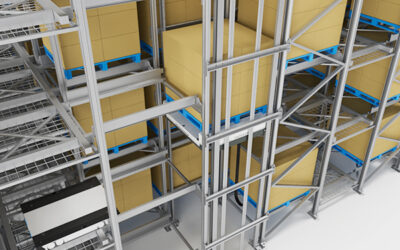
ASRS maximizes warehouse space, reducing the need for facility expansion. This is particularly true for Dense storage solutions like the R-bot Four-way Shuttle, which optimizes pallet-to-person scenarios. Improved space utilization translates into long-term cost avoidance.
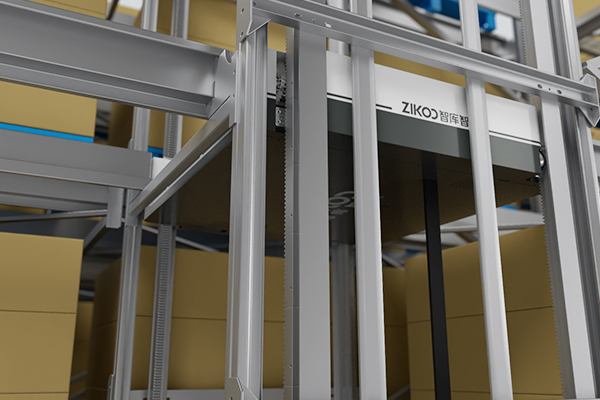
We see companies achieve over 30% storage density improvement with our systems. If you are looking to maximize your warehouse space, you might find Six-Way Shuttle Powers Dense Storage: Breaking Space Limitations helpful.
Apply ROI formulas and evaluate payback period with real data
ROI comes down to clear formulas that weigh costs and benefits over time. We use them to determine the payback period and long-term value.
Step-by-step ROI calculation example using warehouse automation metrics
- Calculate Total Investment (TI): Sum all capital and integration costs.
- Calculate Annual Savings (AS): Quantify labor, space, and error reduction savings per year.
- Calculate ROI: (AS / TI) × 100%.
- Determine Payback Period: TI / AS (in years).
For example, a manufacturing facility with a warehouse net size of L60m × W20m × H10m can achieve 1616 storage locations with a high-density layout. This system delivers an inbound and outbound efficiency of ≥80 pallets per hour. This efficiency meets production material requirements, demonstrating tangible benefits.
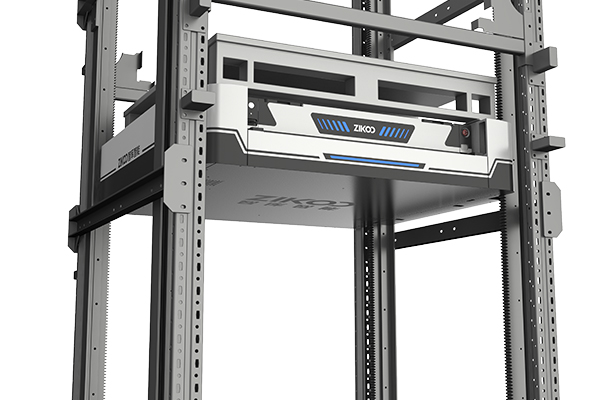
This approach lets us run sensitivity analysis on fluctuating labor rates and volume growth, providing a robust evaluation of the system’s financial performance.
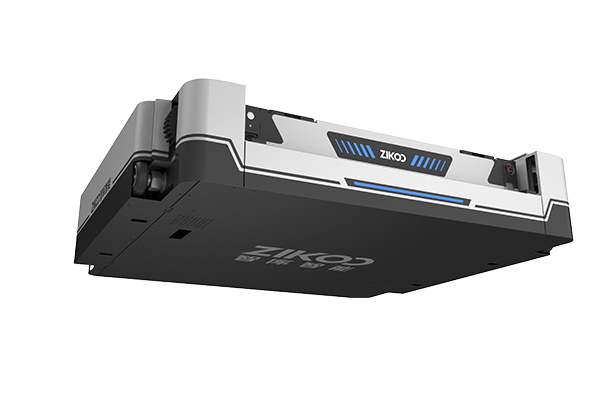
We often find that our Six-Way Shuttle: The Smart Warehousing Tool for Cost Reduction and Efficiency provides additional insights into optimizing your investment.
ROI Formula Graphic and Payback Timeline Chart
| Metric | Formula | Explanation |
|---|---|---|
| ROI | (Annual Savings / Total Investment) * 100% | Percentage return on initial investment. |
| Payback Period | Total Investment / Annual Savings | Time required to recoup the initial investment. |
Request a Customized ASRS ROI Assessment
Maximize your warehouse efficiency and profitability with a tailored ASRS solution. Our team at Zikoo Smart Technology Co., Ltd. specializes in ROI assessments for your unique operational needs. Contact us today to explore how our intelligent warehousing solutions can improve your logistics.
Email: [email protected]
Phone: (+86)-19941778955
FAQs
What is a good ROI benchmark for an ASRS project?
A good ROI benchmark for an ASRS project generally falls between 15% and 30% annually. The payback period often ranges from 1 to 3 years, depending on the scale and complexity of the system. These figures are shaped by labor costs, real estate values, and operational efficiency gains.
Which variables most strongly influence ASRS ROI?
Labor costs, warehouse space utilization, and throughput requirements most strongly influence ASRS ROI. High labor costs and limited space make automation more attractive. Increased throughput demands also drive faster ROI by maximizing system utilization.
How accurate are ROI estimates before system deployment?
ROI estimates are highly accurate when based on detailed operational data and realistic projections. We use advanced modeling and simulation tools to account for various scenarios. This ensures our estimates reflect potential real-world performance.
How does warehouse software impact automation ROI?
Warehouse software, such as PTP Smart Warehouse Software, significantly impacts automation ROI by optimizing system performance. It manages inventory, coordinates robot movements, and provides real-time data for continuous improvement. This software integration enhances efficiency and reduces errors.
Is ASRS ROI suitable for cold chain or special environments?
Yes, ASRS ROI is highly suitable for cold chain and special environments. Specialized solutions, like our R-bot Four-way Shuttle with -25℃ low-temperature batteries, ensure reliable operation. These systems reduce human exposure to harsh conditions and maintain product integrity, driving significant ROI.