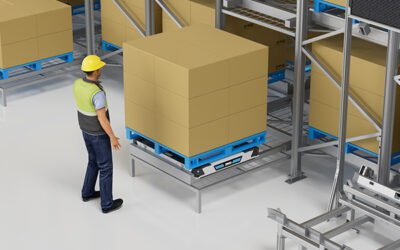
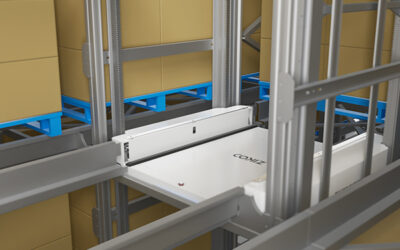
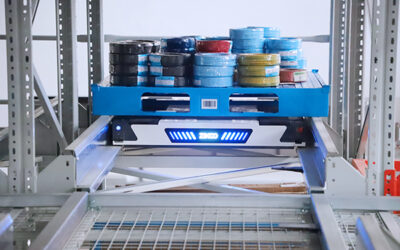
When warehouse operators compare automated vs traditional warehouse cost, they often fixate on initial equipment price tags and miss the larger picture. A forklift-based manual warehouse may look cheaper on day one, but its long-term expense in labor, space, error handling, and limited throughput can quickly surpass the cost of a dense automated storage system. As an engineer who has designed and deployed four-way shuttle AS/RS for facilities across power, cold chain, and manufacturing, I’ve seen how a well-planned robotic system turns storage into a precision operation that lowers per-pallet cost and builds operational resilience over years.
What Makes Up Warehouse Costs in Automated and Traditional Setups?
The cost structure of any warehouse splits into upfront capital (CAPEX) and ongoing operational expenses (OPEX). In a traditional narrow-aisle forklift warehouse, CAPEX includes racking, forklift fleet, and warehouse management software if used. OPEX is dominated by forklift operators, maintenance, energy, and the indirect costs of lower accuracy and space inefficiency.
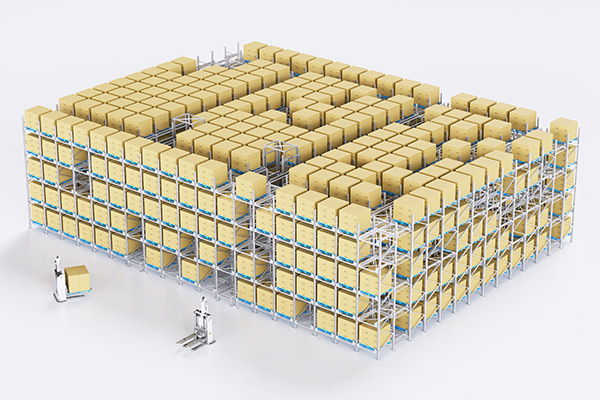
An automated system with four-way shuttles and lifts shifts that profile. The physical floor can be tighter because shuttles need only access aisles at the rack face, not wide travel lanes. CAPEX rises with robotic hardware, control software integration, and a higher upfront engineering effort. But OPEX drops: one operator manages a console instead of driving a forklift, and storage density climbs from 60% to over 80% in net usable space.
The table below compares typical cost drivers for both models in a mid-sized pallet warehouse (~5,000 pallets).
| Cost Category | Traditional Forklift Warehouse | Automated Shuttle AS/RS |
|---|---|---|
| Racking & Infrastructure | $300,000 – $500,000 | $400,000 – $600,000 |
| Material Handling Equipment (forklifts/shuttles/lifts) | $150,000 – $250,000 | $500,000 – $800,000 |
| Software (WMS/WCS) | $30,000 – $50,000 | $80,000 – $120,000 |
| Implementation & Integration | $50,000 – $80,000 | $100,000 – $150,000 |
| Annual Labor (operators) | $180,000 – $240,000 (3-4 shifts) | $60,000 – $90,000 (1-2 operators) |
| Annual Maintenance | $20,000 – $30,000 | $30,000 – $45,000 |
| Annual Energy | $15,000 – $20,000 | $10,000 – $15,000 |
| Space/Rent Savings (if applicable) | Often 20-30% less floor area needed |
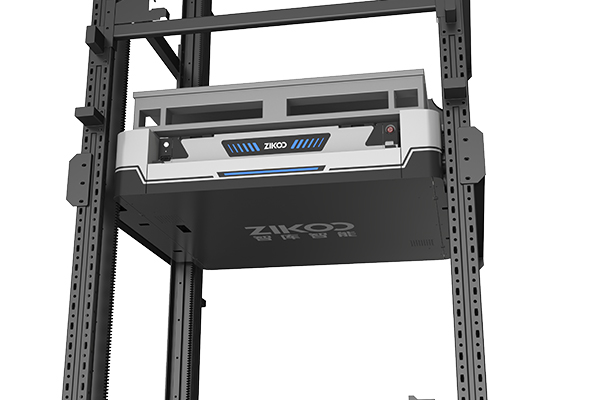
These numbers shift by region and system specification, but the pattern holds: automated systems carry a heavier CAPEX but dramatically reduce labor and space costs.
How Much Labor Cost Can Automation Really Remove?
Labor is often the deciding factor. In a manual warehouse with 24/7 operations, you may need three or four shifts of forklift operators, plus pickers and loaders. Automated shuttle systems consolidate those tasks into supervisory roles. The robots handle travel and retrieval autonomously.
From projects I’ve delivered in food and beverage logistics, we’ve seen a reduction from 12 direct labor positions per shift to three operators monitoring the system. That translates to over $150,000 per year in direct savings at typical wage rates. Beyond payroll, you remove the hidden costs of training, safety incidents, and variable productivity from shift changes.
If your current facility spends more than 40% of its operating budget on manual material handling, automation likely moves the needle fast. Send your labor headcount and average wage to [email protected] for a quick workforce reduction projection tailored to your operation.
How Do Space and Throughput Multiply Cost Savings in Automation?
Many cost comparisons stop at equipment and labor. Storage density and throughput compound over time. A four-way shuttle system can operate in aisles as narrow as 2.1 meters, while a reach truck needs 2.8–3.2 meters. Over 10,000 pallet positions, that reclaims thousands of square meters.
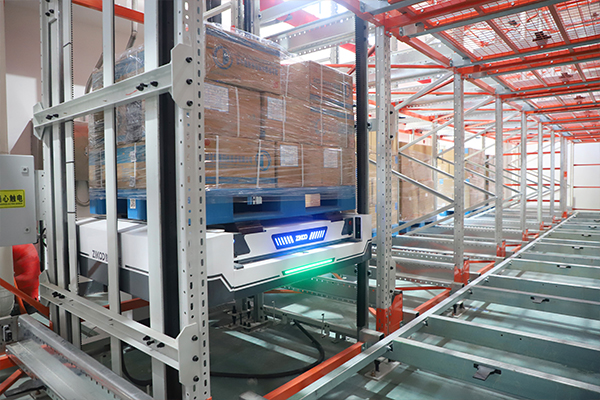
In a pharmaceutical redistribution center we planned, converting from selective pallet racking to an R-bot Four-Way Shuttle dense storage layout increased capacity from 4,500 to 6,100 pallets within the same floorplate. The cost of building or leasing that extra space would have far exceeded the automation premium.
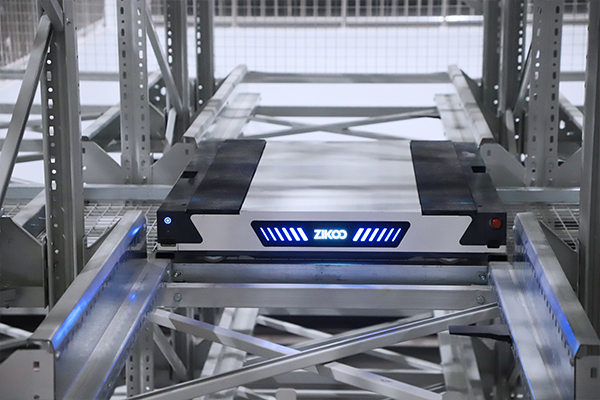
Throughput speed matters too. One R-bot shuttle can move at 1.6 m/s unloaded and 1.2 m/s with a load, and multiple shuttles operate on the same level simultaneously. This parallelism keeps retrieval rates stable during order peaks, a flexibility manual warehouses struggle to match without adding temporary labor.
What ROI and Payback Period Can You Expect from Automation?
A straightforward payback calculation divides total investment by annual savings. For the 5,000-pallet example above, an automated system might cost $1M more than a new manual setup. If annual savings in labor, space, and error reduction total $250,000, payback arrives in four years.
Static payback misses the dynamic gains. Smart software like Zikoo’s PTP platform reduces travel distances through predictive slotting and order batching. Over the system’s 15-year lifespan, those fractional seconds per move compound into hundreds of hours saved. We typically model a 10-15% additional throughput gain from software-driven optimization alone.
Maintenance also improves predictability. Four-way shuttles use lithium batteries that run 8 hours per charge with a simple swap system. Forklift battery watering, equalization, and replacement intervals add unplanned downtime. In high-volume cold storage, where every minute of stoppage risks product spoilage, that reliability difference carries direct financial weight.
What Unexpected Expenses Arise in Both Automated and Traditional Warehouses?
Not every warehouse is ready for automation. If your pallets are non-standard, your floor is uneven, or your temperature swings outside the -15℃ to 45℃ range without proper conditioning, extra adaptation costs surface. I’ve seen projects where civil foundation upgrades absorbed 10% of the automation budget.
Traditional warehouses face their own slow-burning costs. Forklift accidents, rack damage, and inventory inaccuracy can bleed 2-4% of revenue annually. Automated systems, with their positional accuracy of ±1 mm, cut those losses dramatically.
Long-term value is more than numbers. Automated storage gives you real-time inventory visibility by pallet position, enabling just-in-time fulfillment strategies impossible with clipboards and walkie-talkies. For companies supplying automotive or pharmaceutical clients, that data traceability is becoming a baseline purchasing requirement.
How Can You Get a Tailored Cost Comparison for Your Warehouse?
Every warehouse faces a unique mix of pallet sizes, flow rates, and temperature requirements. Generic comparisons get you partway, but a real economic decision needs your data plugged into the model. We run these projections daily for operations across cold chain, manufacturing, and e-commerce. Share your current layout, pallet counts, and throughput targets with our engineering team at [email protected] or call (+86)-19941778955. You’ll receive a five-year total cost analysis specific to your facility, no generic assumptions, no pushy sales pitch.
Common Questions About Automated Warehouse Investment
Does automation only work for greenfield projects?
Not at all. Retrofits are common. I’ve led installations in operating warehouses where we phased the system in lane by lane without disrupting daily shipments. The key is a structural survey early on and floor load capacity checking before design.
What if my SKU count grows significantly later?
Four-way shuttle systems handle growth well because shuttles can be added on the same rail network. Software reassigns storage locations dynamically. Expanding from 8 to 12 shuttles on a level is a day’s work with proper preparation.
How long does the system stay operational before major overhaul?
We design for a 15-year service life with routine battery swaps and sensor recalibration intervals. The first major overhaul typically comes after 10-12 years, when control cabinets and PLCs may need an upgrade. Forklift fleets require replacement every 5-7 years, so the timeline compares favorably.
Can automation really handle peak season variability?
Yes. The reserve capacity in shuttle systems means you can run the system harder during peaks without adding labor. One food distributor runs 16 hours a day for most months and 22 hours a day during holiday peaks, all with the same core team. That elasticity is a direct cost advantage.
How do I get a realistic cost comparison for my facility?
A quick conversation with an engineer who understands pallet shuttle technology can save weeks of spreadsheet guesswork. A one-day analysis of your current operation often reveals whether automation makes financial sense. When you’re ready to see the numbers for your own warehouse, drop our team your basic data, it takes less than a day to get back a preliminary assessment.
If you’re interested, check out these related articles:
Six-Way Shuttle Powers Dense Storage: Breaking Space Limitations
Reshaping Warehouse Value: Six-Way Shuttle Leads the Digital Transformation
Six-Way Shuttle Drives Warehouse Upgrades: Building an Intelligent Automatic 3D Warehouse
Stacker Crane vs Four-Way Shuttle: Which Fits Your ASRS Warehouse Best
Six-Way Shuttle: Empowering Industries to Embrace Smart Warehousing