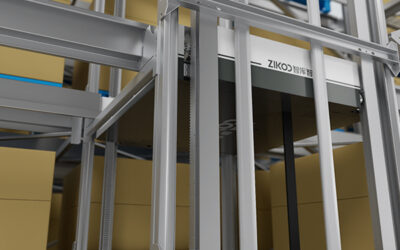
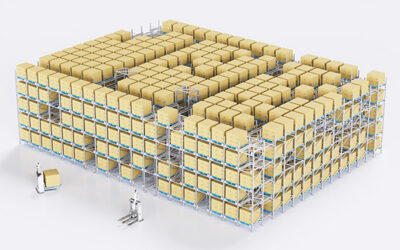
A China-based AS/RS manufacturer can significantly reduce pallet storage cost and compress delivery lead times, but the distance involved turns due diligence into an engineering discipline. The audit below focuses on the areas most likely to decide project success: the manufacturing boundary, verifiable references, safety documentation, pallet compatibility, throughput under real constraints, software ownership, cold-chain behavior, and the contract terms that make performance obligations enforceable.
1. Legal Entity and Manufacturing Boundary
Start with the difference between an OEM, a trading company, and an integrator. A supplier may present itself as an ASRS manufacturer while outsourcing shuttles, lifts, racking, or controls to third parties. That is not automatically disqualifying, but you must know where design authority and warranty responsibility sit.
Request the business license, export license, factory address, and the entity that will sign the contract. Ask for the manufacturing scope: which structures are produced in-house, which components are purchased, and which software modules are original. If the company cannot clearly state its manufacturing boundary, treat the uncertainty as a project risk.
2. Audit Real Project References Before Accepting Any Claim
A reference list with familiar logos is not evidence. Ask for five to ten projects with pallet sizes, temperature conditions, SKU counts, and throughput profiles close to your operation. Request site videos, performance reports, and permission to speak with one or two reference contacts. If a supplier only provides renderings and marketing slides, deprioritize the claim.
A supplier can show a completed warehouse and still not prove that the project hit its original performance baseline. <Looking for Reliable Four-Way Shuttle Manufacturers? Choose Zikoo Robotics> covers how to turn reference lists into audit evidence you can actually use.
3. Certifications Are Table Stakes—Read Them Line by Line
Safety documentation is often accepted at face value. Ask for the exact certificate numbers, issue dates, product scope, and notified body. A CE certificate for an electrical cabinet does not cover a shuttle system. Confirm that the system follows the relevant machinery and storage equipment requirements, including rail-dependent storage and retrieval equipment safety standards [1].
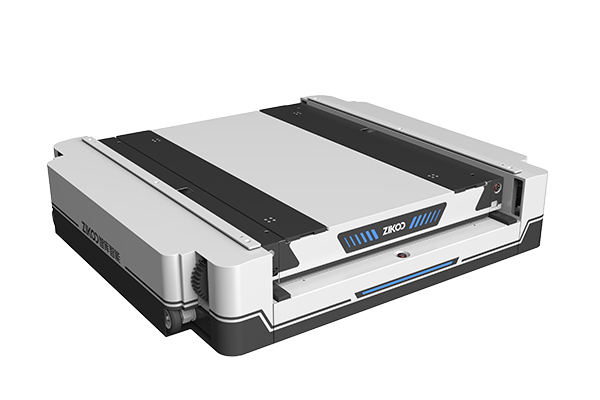
If the supplier makes software-related safety claims, ask for functional safety documentation and see whether the design includes defined safety functions rather than generic assertions. A credible manufacturer will explain which parts are mechanical, electrical, or software-based.
4. Pallet Dimensions and Racking Compatibility Need a Physical Audit
Pallet size mismatches are among the most expensive commissioning failures. Four-way shuttle systems work well with standard pallet footprints, but variations in pallet quality, board thickness, deflection, and center of gravity can affect travel stability. Ask for the supported pallet types and the tolerance for damaged or water-stained pallets.
If your operation uses 1200 × 800 mm, 1200 × 1000 mm, 1100 × 1100 mm, 1016 × 1219 mm, or 1400 mm pallets, confirm exactly which shuttle model is proposed for each footprint. Request racking compatibility data aligned with the applicable rack design standard or equivalent specification [2].
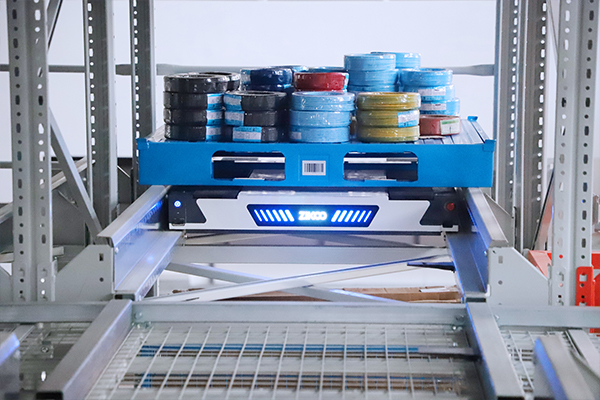
When a manufacturer has delivered across European, American, Japanese, and heavy-duty pallet formats, the audit can focus on documented module boundaries rather than unspoken custom work. <Standardization Empowers Global Delivery: Zikoo Robotics Six-Way Shuttle Expands Overseas> covers what standardized engineering evidence should look like in a supplier file.
5. Throughput Claims Must Survive Your SKU Mix, Not a Best-Case Demo
Peak shuttle speed is useful engineering data, but it does not equal warehouse throughput. A four-way shuttle may move at 1.6 m/s empty and 1.2 m/s loaded, while system performance also depends on lift capacity, order profile, lane depth, wave sequencing, and manual fallback. A supplier who quotes only travel speed is not answering the throughput question.
Ask for a simulation run with your worst hour, not a balanced demo dataset. Compare assumptions for pick transactions, replenishment, and outbound staging. If the supplier cannot explain queueing and lift contention, the bid is not ready for comparison. Performance data standards help normalize these assumptions [3].
6. Software Is the System: Audit WMS/WES/WCS/RCS Integration
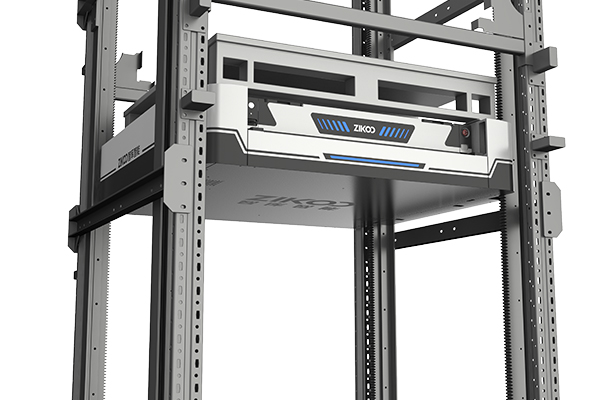
The mechanical equipment may be excellent, but a weak warehouse control layer creates daily operational friction. Ask who owns the source code, whether the software is configurable or custom built for each project, and how upgrades are managed. Confirm whether the supplier can provide the PTP Smart Warehouse Software architecture as a documented stack covering WMS, WES, WCS, and RCS functions.
The audit should include order wave logic, fault handling, lift scheduling, and manual overrides. A serious supplier will show how the control system routes around a failed shuttle or lift, not just what happens when every device is healthy. Automated vehicle safety requirements can help frame the expected behavior for pallet-handling functions [4].
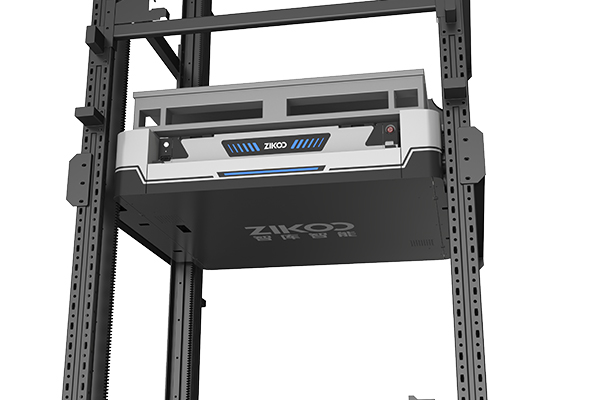
A robust control layer must do more than dispatch pallets; it must sequence orders, manage contention, and support a degraded operating mode. <PTP Intelligent Warehouse Software Empowers Enterprises for Smart Upgrades> covers the software checks that belong in a pallet-to-person system audit.
7. Batteries, Temperature and Charging Are Operational Risks
Battery performance is easily underestimated. Ask for battery chemistry, capacity, charge time, and expected cycle life. If the site operates at low temperature, request a cold-storage battery test report rather than a general specification. Some shuttle platforms operate in ambient conditions of −15 °C, while cold-chain variants use low-temperature lithium batteries with 6–8 hours of continuous operation and automatic charging ports.
Confirm how charging points are placed, whether hot-swap or onsite charging is proposed, and how the supplier prevents charging from reducing system throughput. For food, pharmaceutical, or cold-chain operations, ask for humidity-resistant coating and low-temperature component validation as part of the proposal.
8. Failure Modes and Contingency Paths
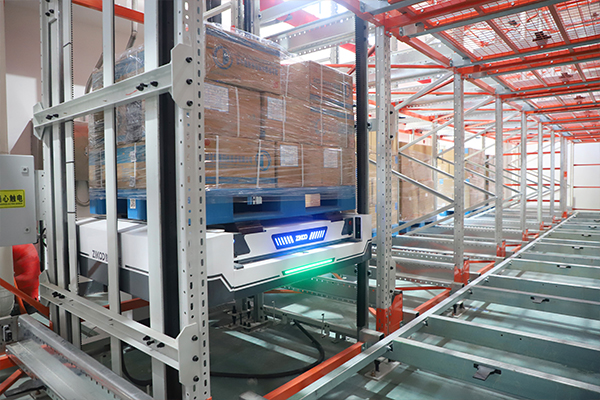
Every automated warehouse will experience a fault. The audit should clarify what happens when a shuttle stops, a lift fails, network communication drops, or power is interrupted. Ask whether a single failure stops an entire aisle or only one lane, and how long an operator needs to extract a stranded pallet.
Request the functional safety analysis for control-system failures [5]. The answer should include degraded operations, maintenance bypasses, and recovery procedures. If the supplier says failures are rare without describing an isolation strategy, push further. Reliable systems are engineered around fault containment, not the assumption of zero failure.
9. FAT and SAT: The Two Tests That Matter Most
Factory Acceptance Testing and Site Acceptance Testing are where claims become contract obligations. Ask for the FAT plan, test pallets, load conditions, speed measurements, positioning accuracy, and software scenarios. A meaningful FAT includes real pallets and real SKU behavior, not only an empty aisle run.
For SAT, define the acceptance window, the number of test days, and the performance parameters that must be demonstrated. Include ramp-up support and the period during which the supplier remains responsible for fine-tuning throughput. Write these details into the contract before the final payment milestone.
If you are preparing a shortlist now, send the supplier your top three pallet types, peak-hour wave profile, and target storage density. An engineering reply that asks clarifying questions is often a stronger signal than an immediate quotation.
10. Spare Parts, Remote Access and After-Sales Response
Spare parts availability affects lifetime cost more than the initial discount. Ask whether critical spares are stocked in your region, what the response time is for onsite support, and how remote diagnostics are provided. Clarify whether the supplier offers 24/7 remote support or business-hours support by default.
Also ask how faults are logged and how software patches are tested before deployment. A supplier with mature remote access should still define when onsite attendance is required and what happens after the warranty period. Avoid bids that bundle vague “full support” language without measurable response levels.
11. Data Ownership and Cybersecurity Controls
An automated warehouse generates order data, inventory data, equipment telemetry, and operator actions. Ask who owns that data and whether it may be transferred outside your country. Confirm that the WCS and WMS support local deployment, encrypted communication, role-based access, and audit logs.
Treat the warehouse control network as an industrial control system. Ask for network segmentation, backup and recovery procedures, and the security standards followed for operational technology [6]. A supplier that cannot explain its security boundary should not receive remote access to production equipment.
12. Contract Terms That Turn Promises Into Obligations
Finally, audit the contract rather than the presentation. The document should define throughput, availability, acceptance criteria, delivery dates, payment milestones, liquidated damages, intellectual property, spare parts, and warranty. Avoid definitions such as “high efficiency” or “fast response” without numeric criteria.
Ask which party owns custom interfaces and whether the supplier may use subcontractors. Confirm the performance bond or bank guarantee if project scale justifies it. A good contract makes the supplier accountable for exactly the claims made during the sales process—no less, no ambiguity.
Final Audit Support Before You Sign
Before signing, compile your audit file with the following:
- Confirmed legal entity and manufacturing scope.
- Three to five relevant project references with contact permission.
- Certificate numbers and product scope.
- Supported pallet types and racking interface.
- Throughput simulation based on your worst hour.
- WMS/WES/WCS/RCS ownership and fallback logic.
- Battery, temperature, and charging validation.
- FAT/SAT plan and acceptance criteria.
- Spare parts stocking and response SLA.
- Cybersecurity and data ownership terms.
If you would like an engineering review of a proposal or help structuring the technical audit for your warehouse, contact Zikoo Smart Technology Co., Ltd. at [email protected] or (+86)-19941778955. A precise audit file is the fastest way to compare suppliers on equal terms.
FAQ
How do I verify a China ASRS manufacturer without visiting the factory?
Request video audits, export documents, certificate numbers, and live project demonstrations. If travel is not possible, ask for a live tour of the assembly floor, software development area, and testing area. Also require at least one or two direct reference contacts who can share operational results.
Which matters more: shuttle speed or system throughput?
System throughput matters more because it includes lift capacity, lane depth, order sequencing, charging downtime, and fault recovery. Shuttle speed is only one input. Ask for throughput simulation under your peak-hour order profile rather than comparing quoted travel speeds.
How should I compare quotations from different China ASRS suppliers?
Create an equalized comparison table covering equipment scope, software licenses, installation, testing, training, spare parts, and warranty. Do not compare only the headline price. Ask each supplier to confirm pallet type, throughput assumptions, acceptance criteria, and after-sales response levels in writing.
Is a China ASRS manufacturer suitable for a small or mid-sized warehouse?
It can be, but the configuration matters more than the company’s country of origin. A compact four-way shuttle may fit a dense pallet store with limited height, while a full ASRS may be justified at higher volume. Request a layout study before making the final decision.
What acceptance tests should a contract include?
The contract should include factory acceptance tests with real pallets and load levels, site acceptance tests under production-like conditions, positioning accuracy checks, throughput demonstrations, and software fault scenarios. Define the test duration and the performance values required before payment.
What hidden risks should buyers look for in warehouse automation contracts?
Watch for vague availability definitions, missing spare parts pricing, undefined software license ownership, weak FAT/SAT criteria, and poor cybersecurity boundaries. The most expensive disputes usually involve what was not written into the contract rather than a mechanical failure.
References
- EN 528:2008, Rail dependent storage and retrieval equipment — Safety requirements, CEN, Brussels, Belgium.
- ANSI MH16.1-2012, Specification for the Design, Testing and Utilization of Industrial Steel Storage Racks, American National Standards Institute, Washington, DC, USA.
- FEM 9.851, Performance Data of Storage and Retrieval Machines, Federation Europeenne de la Manutention, Brussels, Belgium.
- ISO 3691-4:2020, Industrial trucks — Safety requirements and verification — Part 4: Driverless industrial trucks and their systems, International Organization for Standardization, Geneva, Switzerland.
- IEC 61508, Functional safety of electrical/electronic/programmable electronic safety-related systems, International Electrotechnical Commission, Geneva, Switzerland.
- IEC 62443, Security for industrial automation and control systems, International Electrotechnical Commission, Geneva, Switzerland.
If you’re interested, check out these related articles:
Smart Storage Revolution: Comprehensive Overview of Four-Way Shuttle Systems for Automatic 3D Warehouses
Standardization Empowers Global Delivery: Zikoo Robotics Six-Way Shuttle Expands Overseas