Warehouse operations keep getting more complex. Generic automation rarely fits the way a specific facility actually moves goods. When the layout is irregular, the product mix keeps changing, or throughput swings by season, a standard system forces compromises—wasted vertical space, bottlenecks at peak hours, manual workarounds that defeat the point of automating in the first place.
That gap between what off-the-shelf equipment offers and what a particular operation actually needs is why four-way shuttle customization matters. A system built around your storage density targets, your SKU profiles, and your existing racking pays back faster and stays useful longer than one you have to work around.
Why Standard Four-Way Shuttle Systems Often Miss the Mark
A standard automated storage and retrieval system assumes a certain aisle width, a certain pallet size, a certain throughput curve. The moment any of those assumptions breaks down, efficiency drops.
Consider a facility with columns interrupting what should be continuous storage lanes, or a product line that includes both lightweight cartons and 1,500 kg pallets. A generic shuttle either cannot physically navigate the space or cannot handle the load range without swapping hardware. The result is underutilized cube, slower cycle times, and a system that never quite delivers the ROI the proposal promised.
Four-way shuttle customization starts from the opposite direction. Instead of asking how to fit your operation into a fixed product, it asks what the operation actually requires—then engineers the shuttle dimensions, load capacity, software logic, and rack configuration to match. The difference shows up in throughput numbers, in labor hours, and in how long the system stays relevant as the business changes.
What Makes a Four-Way Shuttle System Genuinely Customizable
Customization is not just a marketing term. A system that can actually be tailored has three characteristics:
Modular hardware. The shuttle chassis, load-handling mechanism, and drive components can be specified independently. A facility handling Japanese-standard pallets (1100 × 1100 mm) needs a different footprint than one running European pallets (1200 × 800 mm). Load capacity might range from 1,000 kg for light goods up to 2,000 kg for heavy industrial components. A modular design lets you pick the combination that fits without paying for capability you will never use.
Configurable software. The warehouse management system, execution layer, and robot control logic should adapt to your inventory rules, picking priorities, and integration requirements. If your ERP expects data in a specific format, the automation software needs to speak that language. If your order profile demands wave picking in the morning and single-order fulfillment in the afternoon, the system should handle both without manual reconfiguration.
Physical adaptability. Four-way movement—forward, backward, left, right—already gives shuttles more flexibility than single-direction systems. But true customization goes further: adjusting shuttle height to fit under existing sprinkler systems, configuring rack depths to match product dimensions, or designing elevator interfaces for multi-level operations.
Fitting Irregular Layouts Without Wasting Space
Most warehouses were not built for automation. Columns, mezzanines, dock door placements, and uneven floor levels all create constraints that standard systems ignore.
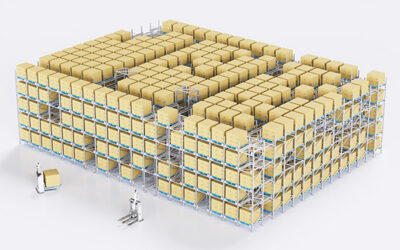
A customized four-way shuttle installation maps the actual building first. If a column sits where a storage lane should go, the rack design routes around it. If ceiling height varies across zones, shuttle paths and elevator placements adjust accordingly. The goal is maximum storage density within the real footprint, not a theoretical layout that only works on paper.
Hardware and Software Options That Actually Matter
The customization options that make a measurable difference include:
- Shuttle body thickness. A slimmer shuttle (125 mm versus 180 mm) allows tighter vertical pitch between storage levels, adding usable positions without raising the roof.
- Load capacity variants. Matching capacity to actual product weight avoids over-engineering (and overspending) while ensuring the system handles your heaviest SKUs reliably.
- Specialized load handling. Fragile goods, temperature-sensitive products, or non-standard container sizes may require custom trays, soft grippers, or environmental controls.
- Software integration depth. Some operations need the automation system to take over inventory management entirely; others need it to execute commands from an existing WMS. The software architecture should support either model.
How Zikoo Robotics Components Support Tailored Configurations
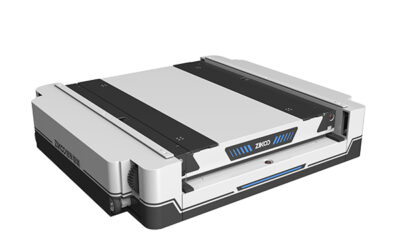
Zikoo’s hardware lineup is designed for mix-and-match deployment. The R-bot Four-Way Shuttle comes in multiple configurations: the R1200B handles 1,200 kg loads with a 125 mm body for high-density storage; the R1500J fits Japanese pallet dimensions; the R2000B supports heavy-duty loads up to 2,000 kg on larger pallets.
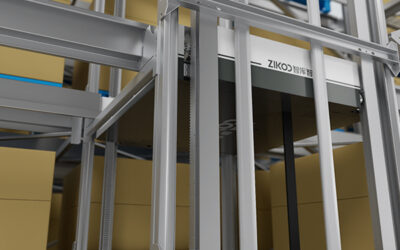
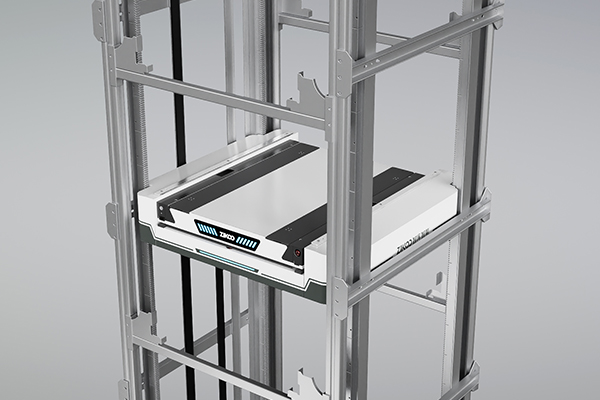
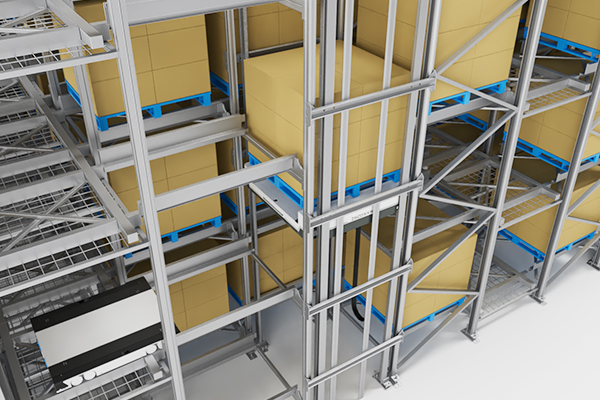
Vertical movement relies on the H-bot High-Speed Elevator, rated for 1,800 kg and engineered to interface directly with R-bots. When combined, the shuttle and elevator form a six-way system—horizontal movement on any storage level plus rapid vertical transfers between levels.
For narrow-aisle scenarios where traditional shuttles cannot operate, the U-bot Omnidirectional Stacker Robot (U1080 model) provides up to 8 meters of lift height and 1,000 kg capacity, handling both storage and retrieval in constrained spaces.
All hardware connects through Zikoo’s PTP Smart Warehouse Software, which integrates WMS, WES, WCS, and RCS functions in a single platform. This unified architecture simplifies configuration changes and ensures consistent data flow from inventory tracking through robot dispatch.
The ROI Case for Building a System Around Your Operation
The argument for customization comes down to total cost of ownership, not just purchase price.
A generic system that achieves 85% of theoretical throughput because it cannot quite handle your product mix or layout leaves 15% of capacity on the table—every shift, every day, for the life of the system. Over a ten-year horizon, that gap compounds into significant unrealized value.
Customization also affects labor. A system that requires manual intervention to handle exceptions—oversized items, inventory discrepancies, zone transfers—keeps headcount higher than necessary. A system designed around your actual exception rate automates more of those cases, reducing labor cost and error rates simultaneously.
Scalability matters too. A customized system built with expansion in mind—additional shuttle capacity, new storage zones, higher throughput software licenses—can grow with the business. A generic system often hits a ceiling that requires replacement rather than upgrade.
Determining How Much Customization Your Operation Needs
The right level of customization depends on a few key factors:
Storage density targets. If you need to maximize cube utilization in a constrained footprint, shuttle dimensions, rack pitch, and vertical lift capacity all need precise specification.
Product characteristics. Weight range, size variation, fragility, and environmental requirements (cold chain, humidity control) drive hardware selection and handling mechanism design.
Throughput profile. Peak-hour demand, order structure (full pallet versus mixed SKU), and acceptable cycle times determine how many shuttles, elevators, and workstations the system needs.
Existing infrastructure. Floor load capacity, ceiling height, column placement, and current racking all constrain what is physically possible without major facility modification.
A thorough site assessment quantifies these factors and identifies where customization delivers measurable benefit versus where standard components suffice.
From Initial Consultation Through Commissioning
Zikoo’s implementation process follows a structured sequence designed to minimize risk and ensure the final system matches operational requirements.
Site analysis and requirements definition. Engineers evaluate the physical facility, current workflows, product data, and integration requirements. This phase produces a detailed specification that drives all subsequent design work.
System design and engineering. Rack layouts, shuttle configurations, elevator placements, and software architecture are documented in engineering drawings and simulation models. Safety standards, fire codes, and seismic requirements are incorporated at this stage.
Hardware manufacturing and software development. Custom components are fabricated while software modules are configured for the specific WMS integration, inventory rules, and reporting requirements.
Factory testing and simulation. Before shipping, the system runs through simulated operations to validate performance against specification. This catches configuration errors before they become on-site problems.
Installation and commissioning. Physical installation follows a phased plan that minimizes disruption to ongoing operations where possible. Commissioning includes full system testing under real load conditions.
Training and support handoff. Operations and maintenance staff receive hands-on training. Documentation, spare parts recommendations, and support contact protocols are established before the project closes.
Keeping a Custom System Running at Peak Performance
A customized system is only as good as its ongoing support. Zikoo’s PTP Smart Warehouse Software provides the integration backbone, with open APIs that connect to ERP systems, host WMS platforms, and third-party equipment.
Software updates address both bug fixes and feature enhancements. As your operation evolves—new product lines, changed order profiles, additional storage zones—the software configuration can adapt without hardware replacement.
Maintenance contracts cover both preventive service and emergency response. Predictive analytics built into the control system flag components approaching end of life before they fail, reducing unplanned downtime.
Integration With Existing Systems
Seamless integration depends on clear data interfaces. Zikoo’s software supports standard protocols and custom API development where needed. During the design phase, integration requirements are documented in detail: which system is the master for inventory data, how order releases flow, what status updates the host system expects.
Pre-integration testing validates data exchange before go-live. On-site commissioning includes end-to-end transaction testing to confirm that inventory movements in the physical system match records in the host WMS or ERP.
Handling Diverse Products on a Single System
A customized four-way shuttle system can handle a wide product range without manual changeover. Different shuttle models within the same installation can serve different zones—lightweight goods in one area, heavy pallets in another. Software logic routes each SKU to the appropriate storage location and dispatches the right shuttle type for retrieval.
If your product mix includes items with special handling requirements (fragile, temperature-controlled, hazardous), dedicated zones with appropriate shuttle configurations and environmental controls can be integrated into the overall system design.
Start the Conversation About Your Specific Requirements
If your operation involves irregular layouts, diverse product profiles, or throughput demands that standard systems cannot meet, it is worth discussing what a customized configuration would look like before committing to a generic solution.
To discuss specific requirements, contact Zikoo Smart Technology at [email protected] or (+86)-19941778955.
Common Questions About Four-Way Shuttle Customization
When does four-way shuttle customization make sense versus a standard system?
Customization becomes worthwhile when your facility layout, product characteristics, or throughput requirements fall outside the parameters that standard systems are designed for. If you are working with irregular building dimensions, a wide range of product weights and sizes, or integration requirements that off-the-shelf software cannot handle, a customized system typically delivers better long-term value. For straightforward applications with standard pallets and predictable throughput, a standard configuration may suffice.
How long does a customized four-way shuttle implementation typically take?
Timeline varies with project scope. A smaller installation with moderate customization might complete in four to six months from contract to commissioning. Larger systems with extensive custom hardware, complex software integration, or phased deployment to maintain ongoing operations can extend to twelve months or longer. Zikoo provides a detailed project schedule during the design phase, with milestones tied to site readiness, manufacturing lead times, and integration testing requirements.
What keeps a customized system performing well over its operational life?
Long-term performance depends on three factors: robust initial design that accounts for real operating conditions, proactive maintenance that addresses wear before it causes failures, and software updates that keep the system aligned with evolving operational requirements. Zikoo’s support model includes preventive maintenance programs, remote diagnostics through the PTP software platform, and ongoing access to engineering support for configuration changes as your business needs shift. Reach out to discuss how a maintenance agreement could fit your operation.
If you’re interested, you may want to read the following articles:
Six-Way Shuttle System Leads the Shift from Machines to Robots in Dense Storage Automation
PTP Intelligent Warehousing Platform: Building a Flexible and Smart Logistics Ecosystem
Six-Way Shuttle: The Smart Warehousing Tool for Cost Reduction and Efficiency 2
Stacker Crane vs Four-Way Shuttle: Which Fits Your ASRS Warehouse Best