Four-way shuttle system results are more predictable when the discussion starts with pallet size, rack depth, and vertical transfer logic rather than a shuttle speed chart. The strongest real-world outcomes I have seen are not raw cycle times but measured changes in storage density, labor per pallet move, and order accuracy. This article sets out the project results buyers should expect, where proposals usually overstate, and how to verify a supplier’s claims using pallet data, layout simulation, and acceptance benchmarks.
Four-Way Shuttle Project Results Start With Pallet Footprint and Rack Layout
Space utilization is the project result I trust most because it comes from geometry rather than a cycle time promise. A four-way shuttle system removes most fixed forklift aisles and lets the rack run deeper into the building cube. The practical result shows in how many pallet positions fit under the same roof.
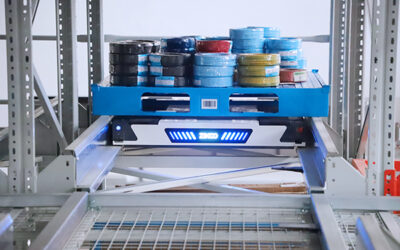
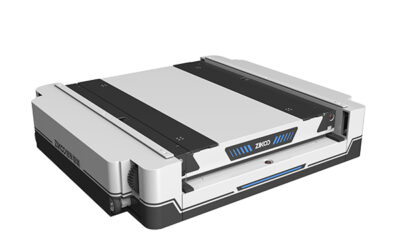
Pallet footprint decides whether those positions are real. A shuttle sized for a 1200 x 800 mm pallet cannot fill the lane if the site uses 1100 x 1100 mm or 1016 x 1219 mm pallets. R-bot four-way shuttle models are split exactly along these dimensions, with rated loads from 1200 kg to 2000 kg and a body height of 125 mm on most models. The 125 mm body matters because every additional beam level under a fixed ceiling height is a separate storage result.
| Model | Rated load | Body height | Empty travel speed | Operating temperature |
|---|---|---|---|---|
| Standard R1200B | 1200 kg | 125 mm | 1.6 m/s | Down to -15°C |
| Japanese R1500J | 1500 kg | 125 mm | 1.6 m/s | Down to -15°C |
| Heavy large pallet R2000B | 2000 kg | 150 mm | 1.35 m/s | Down to -15°C |
The table is useful for comparing systems across pallet types, not just suppliers. Most proposals show lane count and rack height. The better ones also show the pallet size assumption behind those numbers.
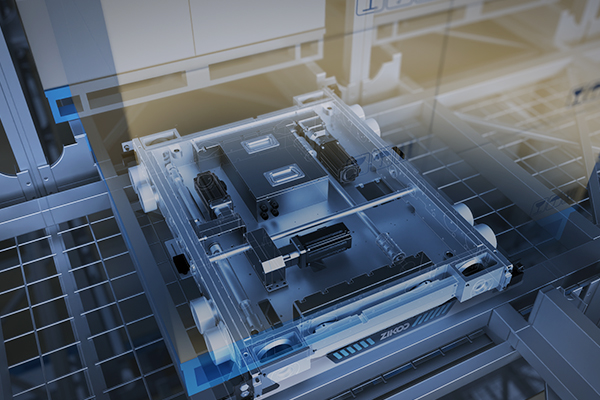
Pallet size also drives how much of the rack cube is actually usable. <Six-Way Shuttle Powers Dense Storage: Breaking Space Limitations> covers the space calculation when vertical lift equipment moves into the storage lane, which often reveals positions that a lane-by-lane review misses.
Throughput and Labor Results Depend on Vertical Transfer Design
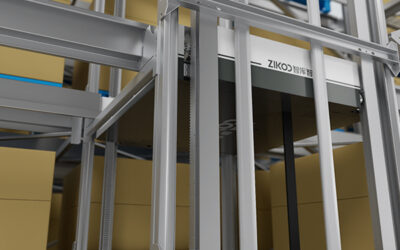
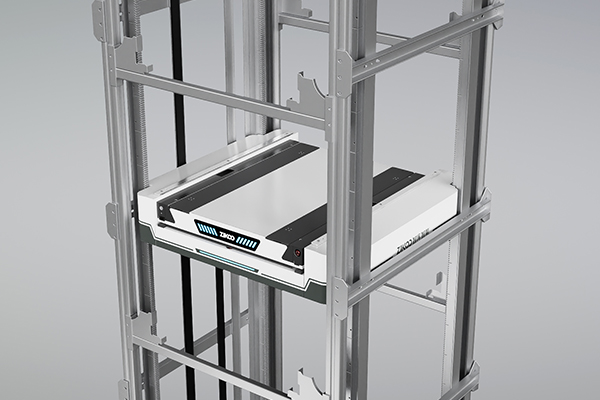
Throughput is where I see the widest gap between promised and measured results. The shuttle speed number tells only part of the story. Most R-bot models move empty at up to 1.6 m/s and loaded at 1.2 m/s, while the heavy large pallet model runs slower. If the vertical transfer cannot clear the lane at the same rhythm, pallets simply wait. H-bot vertical shuttles position loads within plus or minus 1 mm, which lets the system use tighter pockets and lose less time correcting pallet position.
During system design reviews, I have seen a shuttle with a fast horizontal cycle underperform at the dock because the WCS held loads until a full batch formed. The fix was not a faster motor. It was a dispatch rule that released two loads at a time. That change reduced dock wait and brought output back in line with the layout simulation.
Labor results follow the same rule. In projects where pallet moves are triggered from queues instead of operator phone calls, lift truck operators stop chasing storage positions and spend their time at receiving and shipping. The measured change is not just fewer drivers. It is a steadier dock because inbound pallets are put away before they block staging. This is why the software dispatch rule matters more than top speed in a warehouse that runs mixed inbound and outbound orders.
System-level targets from Zikoo’s combined U-bot and AMR picking solution show 80 or more pallets per hour inbound and outbound and 300 or more pieces per hour, but those numbers assume the software handles order release and path planning. A four-way shuttle project quoting a single moving speed without a dock-level throughput target is not giving you a project result.
If your program runs more than one pallet footprint, or the site has a cold storage zone, the shuttle model and battery configuration should be fixed before rack layout is signed. Send the pallet size and the lowest expected temperature to [email protected] and request a cycle-time check on the real lane configuration.
Because shuttle movements are just one queue inside the warehouse, task release logic changes the measured output. <Software-Driven Hardware: [Six-Way Shuttle](https://www.zikooint.com/solution/r-bot-h-bot-six-way-shuttle-dense-storage-system) Maximizes Warehouse Efficiency> covers how the shuttle, vertical transport, and software control layers determine what runs next and why that choice shows up in daily upload lines.
Four-Way Shuttle Project Results Fall Short When Integration Is Skipped
The most common underperformance I see is not a failed shuttle. It is a system that runs fast in isolation and slow against the dock because the rack, shuttle, lift, conveyor, and software were validated by different teams. When pallet length or case velocity is entered incorrectly into WCS rules, the software sends tasks to lanes that are already congested. The result is not a maintenance call. It is a daily queue that erodes the same labor and space gains the project was meant to create.
A second failure mode appears in temperature-controlled sites. A shuttle that runs well at 18°C can lose operating time when charging in a freezer unless the battery and charge port are designed for low temperature. The R-bot cold chain solution uses a dedicated low-temperature lithium battery and a charging port specified for low-temperature charging, with continuous operation of six to eight hours. That condition has to be confirmed during the design review, not after the first freezer shift.
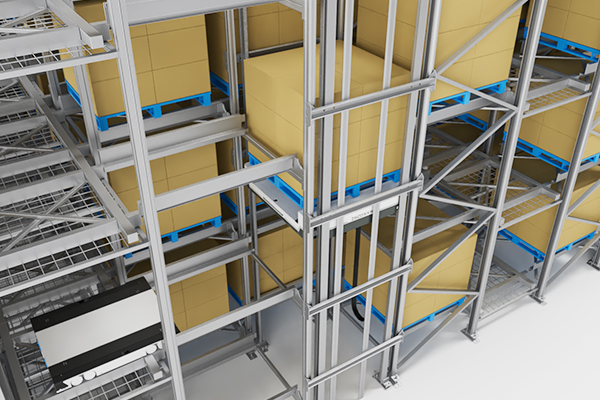
If the project is an existing warehouse upgrade rather than a new build, the result turns on how the automation is laid around existing columns and dock locations. <Six-Way Shuttle Drives Warehouse Upgrades: Building an Intelligent Automatic 3D Warehouse> covers what changes when an automatic 3D warehouse is inserted into a building that was not originally designed for it.
Verifiable Results Need a Formal Handover and Acceptance Plan
A project result only counts when it is written into acceptance. Buyers sometimes sign off on the basis of a two-hour demonstration, then find that the same system behaves differently at the end of third shift. The acceptance plan should run several days and include both the busiest inbound window and the most difficult SKU profile. Otherwise, the measured result is arbitrary.
I prefer tests that measure pallets delivered at the dock per hour, storage positions confirmed, and operator exceptions during continuity testing. The shuttle cycle in a test bay is not the same as system output. For battery-dependent equipment, we also record charge and discharge cycles across shifts. R-bot’s standard models run about eight hours on a full charge, and the heavy large pallet model runs about seven hours. The handover test should cover one full shift, not just one charge cycle in ideal conditions.
Many project results go wrong because the buyer accepts a general cycle-time promise instead of a layout-specific acceptance protocol. If you are at the stage of comparing pallet automation projects, ask the supplier to commit to dock-level throughput, storage positions, and exception counts. Send your monthly volume, SKU profile, and site constraints to [email protected] or call (+86)-19941778955 to get a handover plan with thresholds you can verify.
Common Questions About Four-Way Shuttle System Results
How much additional storage capacity can a four-way shuttle system deliver?
Capacity gains usually come from lane depth and ceiling use, not from the shuttle alone. The shuttle removes the need for a forklift aisle in every bay and permits deeper pallet lanes. The result depends on ceiling height, column spacing, and pallet geometry. A project that specifies the correct R-bot model for the existing pallet size can recover space that would otherwise remain as aisle or staging. In practice, we review the rack plan and calculate positions per square meter before quoting any density gain. Without that layout-specific calculation, any percentage is only an estimate.
Is throughput easier to verify than storage density?
It depends on what is being compared. Storage density is the more predictable result because it follows from rack depth, pallet size, and ceiling height. Throughput is harder to compare across suppliers because it changes with order mix, travel distance, vertical transfer speed, and software dispatch priority. A shuttle speed quoted in isolation does not predict what will arrive at the dock per hour. When we evaluate a layout, we prefer a simulation with the buyer’s actual SKU list and inbound/outbound windows rather than a published cycle time.
Can I trust a cycle time shown in a supplier video?
A demo cycle time is not a project result. It is measured in a controlled aisle with a known pallet, a clean floor, and no competing tasks. Real project results include multiple shuttles, mixed pallets, lifts, conveyors, and system exceptions. The same shuttle may show a faster cycle in a single lane and a slower one when the WCS queues it behind outbound orders. Always ask what the figure assumes: pallet size, lane depth, pick and drop height, and whether other machines were running. If the supplier cannot state those assumptions, treat the number as indicative only.
What should I request before accepting a four-way shuttle system project?
In projects we have reviewed, the strongest acceptance packages include a layout drawing, a simulation linked to actual order profiles, and a dock-level test plan. We also look for a bill of materials that states the shuttle models, battery capacity, vertical transfer devices, and software modules. The number of shuttles is less important than how they are connected to the lift and dispatch system. If you are screening shuttle suppliers, send your monthly inbound and outbound volumes to [email protected] and we will confirm which acceptance metrics are reasonable for your site.
If you’re interested, check out these related articles:
Six-Way Shuttle Powers Dense Storage: Breaking Space Limitations
Standardization Empowers Global Delivery: Zikoo Robotics Six-Way Shuttle Expands Overseas
Six-Way Shuttle: The Smart Warehousing Tool for Cost Reduction and Efficiency