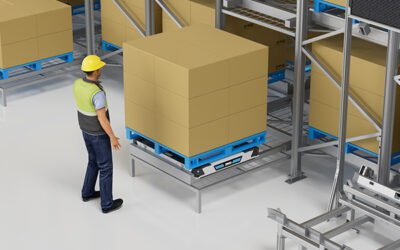
Fast-growing warehouses rarely fail because storage runs out on paper. They fail because the system chosen for today cannot absorb an uneven jump in pallet positions, SKUs, or order lines without a layout change. Four-way shuttle systems fit growth when the company is adding storage depth faster than it is adding point-to-point throughput, and when the control software is planned as part of the same investment. I have seen this distinction decide project outcomes in cold chain, e-commerce, manufacturing, and new energy warehouses. The shuttle itself is flexible. Growth fitness comes from rack depth, lift count, pallet profile, and WMS/WCS planning working together.
What Makes Four-Way Shuttle Systems Different?
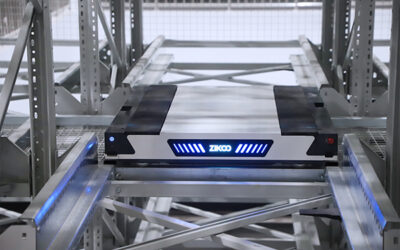
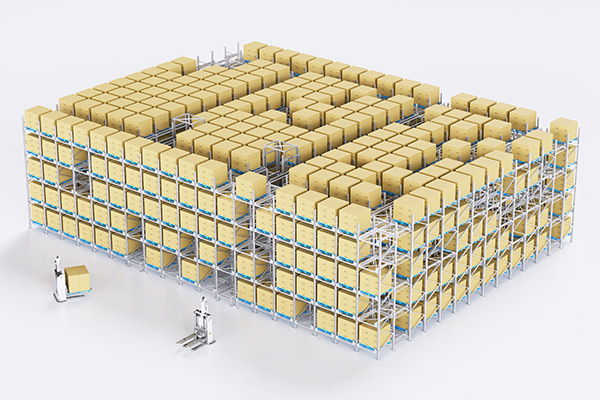
A four-way shuttle system changes where pallet movement happens. A standard R-bot travels inside the rack on rails instead of through fixed aisles, so the layout removes repeated forklift or stacker crane lanes and stores more pallets in the same building cube. The standard body is only 125 mm high, which reduces the vertical clearance each rack level requires. That body height is not a minor spec; it directly changes how many storage layers can fit under a given ceiling.
| Model | Rated load | Body dimensions | Pallet size | Loaded speed |
|---|---|---|---|---|
| R1200B | 1,200 kg | L1000 × W972 × H125 mm | 1200 × 800 to 1000 mm | 1.2 m/s |
| R1200A | 1,200 kg | L1192 × W840 × H125 mm | 1016 × 1219 mm | 1.2 m/s |
| R1500J | 1,500 kg | L1192 × W900 × H125 mm | 1100 × 1100 mm | 1.2 m/s |
| R1500B | 1,500 kg | L1192 × W972 × H125 mm | 1200 mm | 1.2 m/s |
| R2000B | 2,000 kg | L1250 × W1300 × H150 mm | 1400 mm | 1.0 m/s |
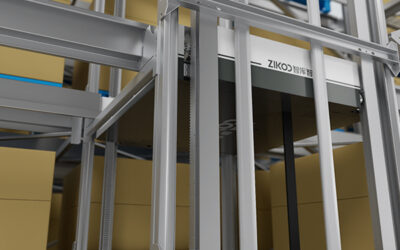
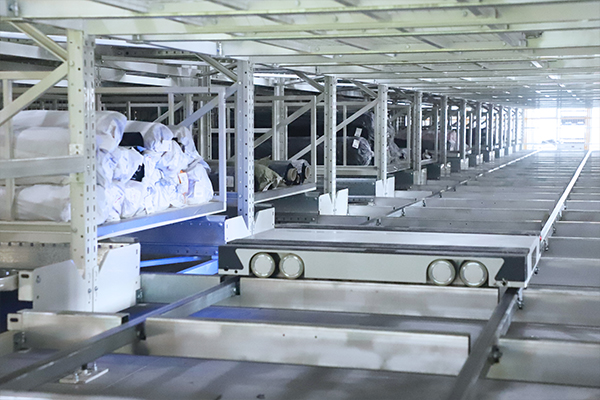
Because several shuttles can run on one level, the rack does not depend on one machine per aisle. That modularity matters for growth: adding a shuttle to an existing level is usually less disruptive than adding a new stacker crane. The constraint moves instead to the lifts that connect levels. In Zikoo projects, the H-bot vertical bidirectional shuttle holds an 1,800 kg rated load and ±1 mm positioning accuracy, which is why lift placement and lift scheduling usually decide the true ceiling.
When Four-Way Shuttle Systems Fit Fast-Growing Businesses
Fit does not mean the system can physically operate in a building. I look for three conditions before calling a four-way shuttle system a sound commitment for a growing operation.
One clear fit is storage-led growth. If the business is adding pallet positions faster than labor, a four-way shuttle system turns limited floor area into deeper rack capacity without adding aisles. The 125 mm body height on the standard R-bot makes more layers possible under the same ceiling.
Another fit is multi-shift operation. The R-bot lithium battery runs about eight hours on a full charge for most models, and the heavy-duty large pallet type runs about seven hours. A two-shift or three-shift warehouse needs a charging plan, not a belief in uninterrupted motion.
A third fit is a stable pallet profile. When weight and footprint stay within a known band, standard, American, Japanese, or heavy-duty models can be selected cleanly. When pallet dimensions change often, reconfiguration becomes a real cost.
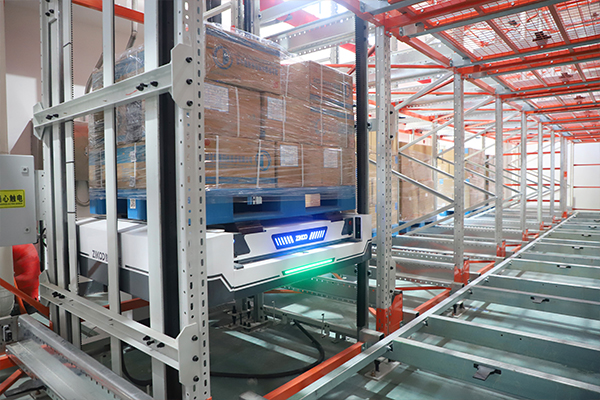
Cold storage is not an automatic fit, but it can be solved when the battery and coating are specified up front. The R-bot cold chain solution uses a low-temperature lithium battery for -25°C operation and a low-temperature charging port. Without that specification, a freezer environment shortens operating time and raises maintenance problems.
A shuttle platform changes more than rack depth. <Stacker Crane vs Four-Way Shuttle: Which Fits Your [ASRS Warehouse](https://www.zikooint.com/asrs-automated-storage-and-retrieval-system-solutions) Best> explains how rack depth, throughput, and building height decide whether a shuttle or a stacker crane is the better base for the same warehouse.
Which Growth Patterns Stress a Four-Way Shuttle System?
Growth that is mostly order-volume driven, not pallet-position driven, creates the most stress. A four-way shuttle system moves pallets quickly inside a rack level, but vertical transfer depends on lifts. If an e-commerce operation doubles order lines without adding many new pallet locations, the shuttle fleet may wait on the H-bot lift while the true bottleneck sits downstream at picking stations.
SKU growth is a second stress pattern. A large and growing SKU set does not usually break the shuttle hardware; it makes slotting, replenishment, and WCS logic work harder. If slotting remains manual after go-live, growth turns a clean automation project into a software rework that costs more than the robot count would suggest.
I have seen a food warehouse specify enough R-bots for the rack level but too few H-bot lift positions for the inbound ramp. The result was not a robot failure; it was a vertical transfer queue that capped throughput below the level the rack could physically store. The fix required adding lift positions and reworking pallet call logic in WCS, which is exactly the kind of problem that should be found before installation.
If your operation is adding SKU count faster than pallet count, confirm how the WCS assigns stock locations and how many lift positions each rack block can accept. Send your current pallet profile and a 24-month SKU projection to [email protected] and we will show where the constraint sits. This is not a quote request; it is a capacity check.
How to Plan a Four-Way Shuttle System That Scales
Scaling starts with the control layer, not the robot count. Zikoo’s PTP warehouse software separates WMS, WES, WCS, and RCS so the system can accept a new shuttle or lift without rewriting the entire warehouse logic. When we add robots after go-live, the RCS registers the machine and the WCS reschedules tasks. That is the mechanism that makes phased expansion work.
The second planning decision is rack depth and lift placement. Four-way shuttles make deeper lanes possible, but deeper lanes can reduce random access unless the WCS positions inventory by velocity. We keep fast movers near the front and use depth for slow-moving and reserve stock. Lift count, not shuttle count, usually limits how fast a dense rack can move pallets upward.
If the growth path points to taller buildings and higher vertical traffic, <Six-Way Shuttle System Leads the Shift from Machines to Robots in [Dense Storage](https://www.zikooint.com/solution/r-bot-h-bot-six-way-shuttle-dense-storage-system) Automation> explains how adding the H-bot to the R-bot layer creates a six-direction storage network instead of only adding more shuttle units.
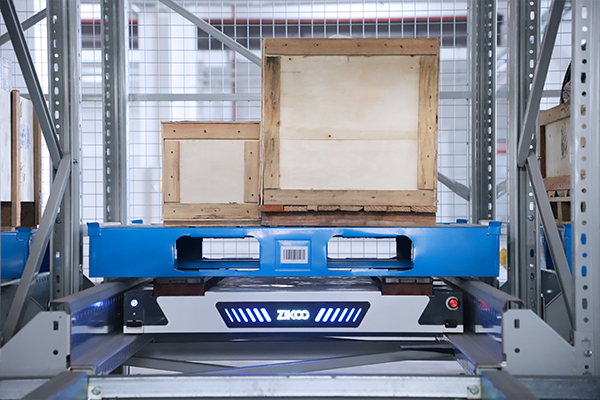
Facility compatibility is the third planning decision. A four-way shuttle system can work in existing warehouses when rail leveling and floor capacity are checked early. In new buildings, height is easier to use. In retrofits, the rack must be leveled to the tolerance the shuttle requires, and the lift shaft positions must be reserved from the beginning. Growth planning should leave space for additional lifts, not just additional shuttles.
What to Send Before You Decide on a Four-Way Shuttle System
Choosing a shuttle system for a fast-growing business is not a spec-sheet decision. The right configuration depends on pallet weights, rack height, SKU profile, inbound pattern, cold chain requirements, and the software you already run. We review these conditions during project definition so the system is staged for expansion instead of replaced when growth arrives. Send your target pallet dimensions, pallet moves per hour, temperature range, and a 24-month growth projection to [email protected] or call (+86)-19941778955. We will confirm which R-bot model and lift configuration fit without pushing capacity you do not need.
Common Questions About Four-Way Shuttle Systems
Are four-way shuttle systems a fit for a warehouse that may double within two years?
It depends on what doubles. If pallet count doubles while order lines stay roughly stable, the system can scale by adding shuttles and lift positions. If order lines double while pallet count stays flat, the bottleneck is picking, not storage, and the shuttle system alone will not solve the growth problem. In layout design, we keep lift positions and software tasks modular so future expansion stays feasible. Before installation, we confirm the 24-month growth shape rather than only the 24-month pallet forecast.
What is the biggest mistake fast-growing companies make when choosing a shuttle system?
The biggest mistake is buying the rack and robots first, then making the WCS and slotting logic a later project. Growth changes SKU velocity and replenishment patterns. If the software cannot move inventory to match those changes, the hardware runs below its rated speed. We treat PTP WMS, WES, WCS, and RCS as part of the same specification as the R-bot and H-bot. Without that, a warehouse can end up with enough pallet positions and not enough useful pallet flow.
Can a four-way shuttle system be expanded after installation?
Yes, by module. Shuttles can be added to existing rack levels, lifts can be added where the building layout permits, and software tasks can be reallocated. The limit is physical: rack depth, lift shaft positions, and floor capacity set the upper bound. We assess expansion points during initial design because adding lifts later costs more than reserving the position upfront. A phased system works when the control layer can assign tasks as conditions change.
What should a company look for in a long-term four-way shuttle partner?
The question is not only about the shuttle model. It is about whether the supplier can define the system around your operating envelope. We ask about pallet waste, returns, peak-day throughput, temperature range, and SKU growth before quoting. A partner should confirm battery runtime, lift positioning accuracy, and software integration points before contract signature. If your program involves cold storage, high pallet weights, or an unusual building height, send those parameters to [email protected] and we will confirm which configuration matches the operating profile.
If you’re interested, check out these related articles:
Six-Way Shuttle Drives Warehouse Upgrades: Building an Intelligent Automatic 3D Warehouse
Six-Way Shuttle: The Dual-Engine Solution for High-D
Reshaping Warehouse Value: Six-Way Shuttle Leads the Digital Transformation