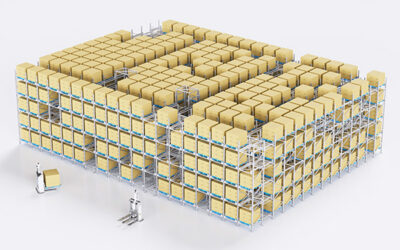
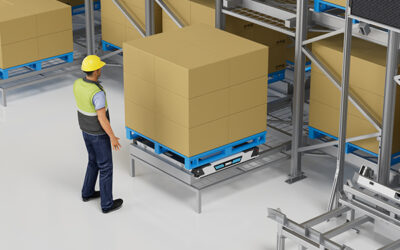
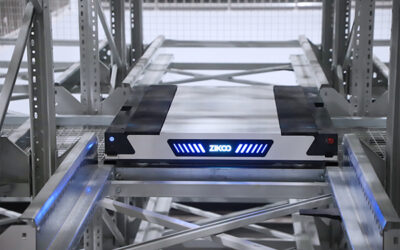
Choosing between a four-way shuttle and a 2-way pallet shuttle usually comes down to one question: does your warehouse need pallets to move freely across the rack grid, or can it accept lane-level movement with periodic transfers? The two systems look similar in a rack drawing, but their operating logic is different. Choosing the wrong one can create idle labor, low vehicle utilization, or expensive software retrofits later.
This comparison explains the movement difference, transfer requirements, cost-density trade-offs, and the audit criteria that matter before you request a quotation. It focuses on rail-guided pallet shuttle systems used inside dense racking rather than crane-based or free-roaming AGV storage.
The Core Difference Is Movement Freedom
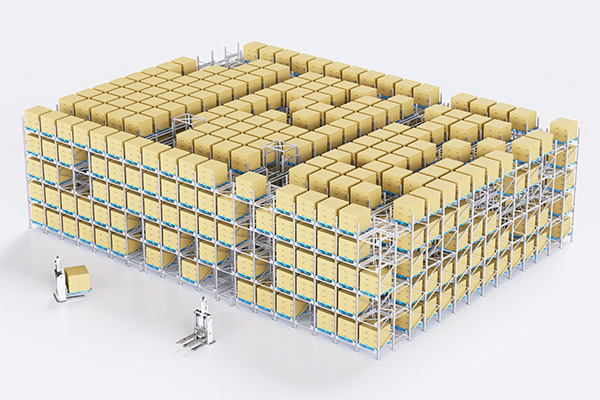
A 2-way pallet shuttle runs forward and backward inside a single rack lane. It picks a pallet at the lane face and travels deep into the rail to store or retrieve it. To move from lane one to lane two, the shuttle must leave the rack or be transferred. In most installations, a forklift, reach truck, or lane-transfer cart carries the shuttle and places it into the next lane. That creates what can be called the lane-lock constraint: storage depth is excellent, but cross-lane flexibility depends on manual or semi-automatic transfer cycles.
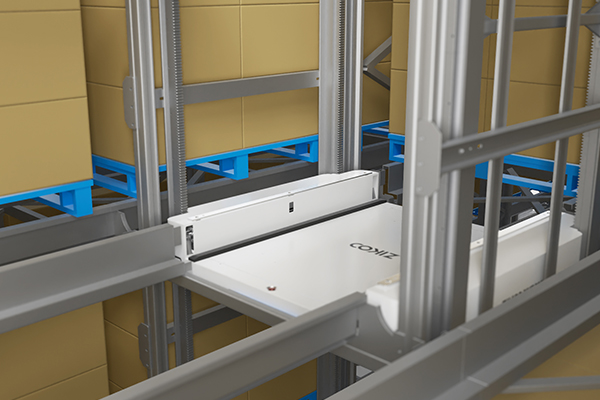
A four-way shuttle runs on rails that allow movement in four horizontal directions. It can switch aisles without being lifted out of the rack. In high-density rack blocks, four-way shuttles travel along cross-aisle rails and enter a storage lane only when a task is assigned. This cross-aisle autonomy is the main reason four-way systems handle more SKU variety and faster outbound flow in multi-aisle layouts.
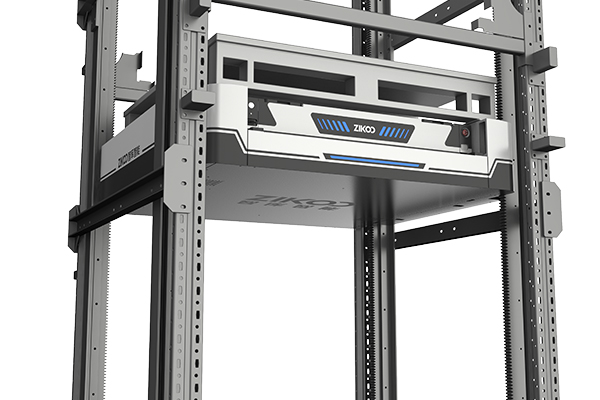
Four-way shuttles can also be paired with vertical lifts such as H-bot systems to move pallets vertically without crane aisles. In a six-way configuration, the combined network covers four horizontal directions and two vertical directions. For example, the R-bot four-way shuttle has a body thickness of 125 mm, supports rated loads up to 1.5 t, reaches 1.6 m/s empty and 1.2 m/s loaded, and runs for about 8 hours on a full charge. Those specifications matter, but only after the architecture decision is settled.
Cross-aisle autonomy changes both layout planning and fleet-scheduling logic, not just the shuttle mechanism itself. <Smart Warehousing Starts Here: Cost-Effective Four-Way Shuttle Systems> covers the configuration levers that make four-way pallet storage cost-effective.
Head-to-Head Comparison
| Factor | 2-Way Pallet Shuttle | Four-Way Shuttle |
|---|---|---|
| Movement range | Forward/reverse inside one lane | Four-direction travel across aisles and lanes |
| Lane change | Forklift, reach truck, or transfer cart | Autonomous cross-aisle movement |
| Vertical transport | External lift or ground handling | H-bot lift or comparable elevator |
| Deep-lane density | Strong for very deep, uniform lanes | Strong, but lane depth is optimized differently |
| SKU variety | Better for fewer, deeper SKUs | Better for many SKUs and flexible pick faces |
| Throughput profile | Batch and sequential cycles | Parallel, task-based fleet movement |
| Initial capital | Lower for simple pilot layouts | Higher at small scale; value grows with aisle count |
| Control layer | Basic shuttle call; often semi-automatic | WCS/WMS orchestration for routing and fleet balance |
| Best fit | FIFO, high density, low SKU complexity | High SKU, high throughput, dynamic peaks |
When Each Architecture Pays Off
Choose a 2-way pallet shuttle when your operation has a small number of uniform SKUs, very deep storage lanes, and workers who can support batch transfer cycles. The system is easier to install in a single-aisle pilot and works well when outbound demand follows a predictable sequence.
Choose a four-way shuttle when you need multi-aisle access, frequent SKU changes, concurrent pallet movements, or direct routing to multiple pick stations. Four-way systems also integrate more naturally with WMS/WCS-driven fleet orchestration because the shuttle can change task locations without waiting for a forklift.
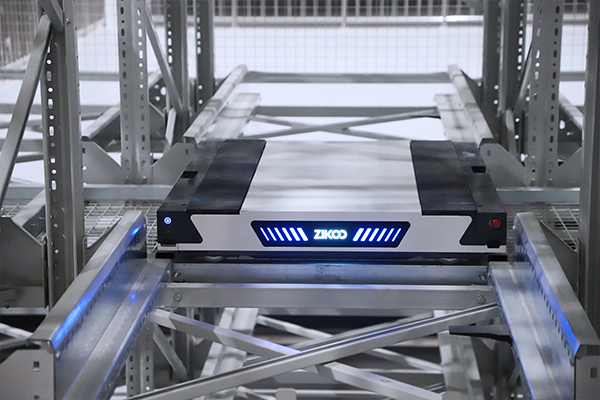
The shift from semi-automatic lane transfers to autonomous cross-aisle shuttles is as much a scheduling change as a hardware change. <Six-Way Shuttle System Leads the Shift from Machines to Robots in Dense Storage Automation> covers how dense storage automation moves from machine tending to fleet orchestration.
Cost, Density, and Throughput Trade-Offs
A 2-way pallet shuttle system is often cheaper in the first phase because it requires fewer cross-aisle rails and less sophisticated routing software. But every lane change adds a transfer cycle and potential wait time. As the number of active lanes grows, labor and transfer equipment can become the bottleneck.
Four-way systems usually require a larger upfront investment in cross-aisle rails, lifts, and real-time fleet control. In return, they gain shuttle utilization across aisles. One shuttle can serve multiple lanes, reducing the number of idle machines during shift changes or peak outbound windows.
For very deep lanes containing one SKU per lane, the 2-way shuttle remains difficult to beat on storage density. For mixed-SKU operations, the four-way shuttle reduces empty travel and allows the control system to route work to the nearest available vehicle. The final economic answer depends on pallet dimensions, rack depth, peak hourly outbound, and shift coverage.
Get an Engineering Assessment Before You Compare Quotes
The right architecture is not easy to read from a product sheet alone. It comes from your pallet type, rack depth, peak inbound and outbound lines, temperature range, and shift pattern. Send your layout drawing and SKU profile to [email protected]. Ask for a movement simulation and a phased layout that can accept either architecture without blocking future expansion.
This step prevents the most common error in shuttle selection: comparing machine prices before the required vehicle count, lane count, and transfer-equipment count have been calculated.
What to Audit Before Buying Any Pallet Shuttle System
Use a short audit list before comparing suppliers. A credible system should survive scrutiny in the following areas:
- Rail straightness and rack-interface tolerances for autonomous aisle switching.
- Rated load behavior at full pallet weight and maximum battery discharge.
- Cold or condensation performance for low-temperature operation, including battery chemistry and coated electronics.
- Safety compliance for rail-dependent storage and retrieval equipment [1].
- Supplier quality-management maturity and document control [2].
- Software architecture for WMS, WES, WCS, and fleet-level routing [3].
- Emergency recovery, manual override, blackout handling, and reference sites.
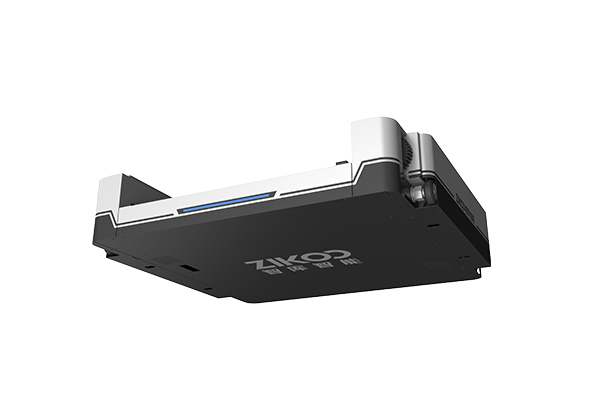
A shuttle system that cannot be governed by clear WCS rules will generate more labor than it removes. <Reshaping Warehouse Value: Six-Way Shuttle Leads the Digital Transformation> covers how shuttle-level digital orchestration creates value beyond rack density.
Move From Product Comparison to System Design
A four-way vs 2-way comparison should end with a layout simulation, not a price list. Send your warehouse length, width, clear height, pallet type, SKU count, and peak throughput. The engineering team can then map storage density, shuttle quantity, vertical-lift requirements, and phased return on investment.
Email [email protected] or call (+86)-19941778955 for a technical evaluation of your pallet storage and retrieval layout.
Frequently Asked Questions
What is the main difference between a four-way shuttle and a 2-way pallet shuttle?
A 2-way shuttle moves forward and backward within one rack lane and must be physically transferred to change lanes. A four-way shuttle can change direction in four horizontal directions and switch aisles autonomously.
Is a 2-way pallet shuttle always cheaper?
Not always. It is usually cheaper in a single-lane pilot, but transfer labor, extra lifting equipment, and lower shuttle utilization can reduce the gap as the system grows.
Can a 2-way shuttle be upgraded to a four-way system later?
Usually not without significant rework. The rack rails, cross-aisle structure, and control software are specified differently from the start. A phased design should be confirmed before installation.
Which system works better in cold storage?
Both can operate in cold environments, but a four-way shuttle can reduce manual transfers in low-temperature zones. Battery chemistry, heating points, and condensation protection must be reviewed for either system.
When is a four-way shuttle clearly the better choice?
When the warehouse has multiple aisles, many SKUs, changing outbound sequences, or peak throughput targets that require concurrent pallet movement without forklift lane changes.
What information do I need for an accurate comparison?
Provide the warehouse clear height, rack depth, pallet type and weight, SKU count, inbound and outbound lines per day, peak-hour throughput, temperature range, and shift schedule.
References
[1] European Committee for Standardization. EN 528:2008 — Rail dependent storage and retrieval equipment — Safety requirements. CEN, Brussels, 2008.
[2] International Organization for Standardization. ISO 9001:2015 — Quality management systems — Requirements. ISO, Geneva, 2015.
[3] International Organization for Standardization / International Electrotechnical Commission. ISO/IEC 25010:2011 — Systems and software engineering — System and software quality models. Geneva, 2011.
If you’re interested, check out these related articles:
Smart Cold Chain Era: Six-Way Shuttle System Redefines Storage Efficiency with Maximum Density
Reshaping Warehouse Value: Six-Way Shuttle Leads the Digital Transformation