High-density pallet storage is a volume problem before it is a racking problem. A warehouse gains usable space from deeper storage lanes, taller racking, narrower aisles, and vertical pallet movement, but every choice changes throughput, selectivity, fire risk, and daily handling. This article explains how to compare storage methods, calculate pallet positions against cubic capacity, and spot where dense storage creates new bottlenecks.
How Dense Pallet Storage Creates More Usable Warehouse Volume
Warehouse operators often measure density in pallets per square meter. That measure hides unused height. A building with a 10 m clear height and racking that reaches only 6 m leaves 40 percent of the available cube idle before any handling inefficiency appears. A cubic measure, pallet positions per cubic meter, forces the design to account for floor area, clear height, rack depth, aisles, work zones, and vertical transfer space.
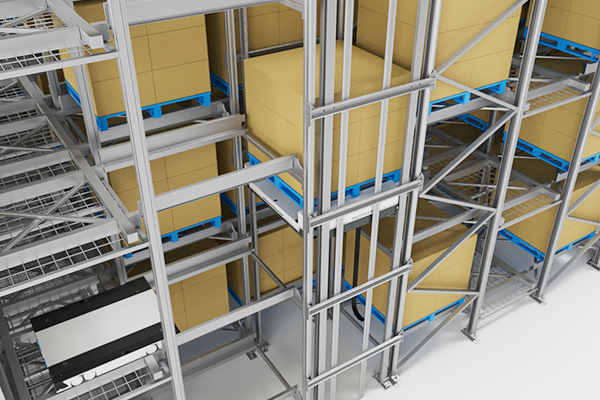
High-density storage reduces three losses at the same time: aisle space, empty rack face, and honeycomb from partly filled lanes. It does not simply squeeze more rack into a building. It has to preserve the ability to remove a pallet when an order calls for it.
Main Pallet Storage Methods Compared
Selectivity is the ability to retrieve one pallet without reshuffling others. Automated storage and retrieval systems, commonly called AS/RS, use cranes or shuttles instead of a forklift in the storage aisle. The methods below trade selectivity for density in different ways.
| Storage method | Typical access pattern | Density and selectivity trade-off |
|---|---|---|
| Block stacking | Direct forklift access | Low capital cost, limited safe height, and honeycomb loss |
| Drive-in rack | LIFO, forklift enters the lane | High cube per lane but weak selectivity |
| Push-back rack | LIFO for most designs | Dense front-face storage without a shuttle |
| Pallet flow rack | FIFO, gravity-fed | High density with good rotation but one SKU per lane |
| Pallet shuttle | Semi or fully automatic | Very deep lanes, fewer aisles, medium selectivity |
| Unit-load AS/RS crane | Fully automatic | Tall cube use with selective access and software control |
The right method depends on whether SKUs are stable, lot sizes support deep lanes, pallets are uniform, and the operation can tolerate the access pattern. A table alone cannot answer that question.
The Density Levers That Matter Most
The main levers are:
- Clear height and rack levels. More usable height increases positions but also requires fire protection, slab capacity, and vertical transport.
- Aisle width. Narrow aisles preserve cube but need guided vehicles, shuttles, or cranes instead of standard forklifts.
- Lane depth. Deeper lanes save aisles but increase retrieval time and reduce selectivity.
- Pallet standardization. Mixed pallet sizes leave unused space in racks and lanes.
- Vertical movement. Lifts or vertical shuttles can connect storage levels without using forklift ramps.
Density is therefore a system decision, not a racking specification. Changing the aisle width may force a different robot, a different rack tolerance, and a different software rule.
How to Calculate Pallet Positions Per Cubic Meter
Start with usable storage volume, not total plot area. Deduct receiving, despatch, staging, pick faces, charging zones, building services, and maintenance spaces before calculating storage cube.
Storage position density = practical pallet positions / usable storage volume.
Suppose a layout provides 4,000 practical pallet positions in a usable storage volume of 18,000 cubic meters. The density is about 0.22 positions per cubic meter. That number is useful only for comparing alternative layouts inside the same building because a higher cube figure can hide slower retrieval and longer travel.
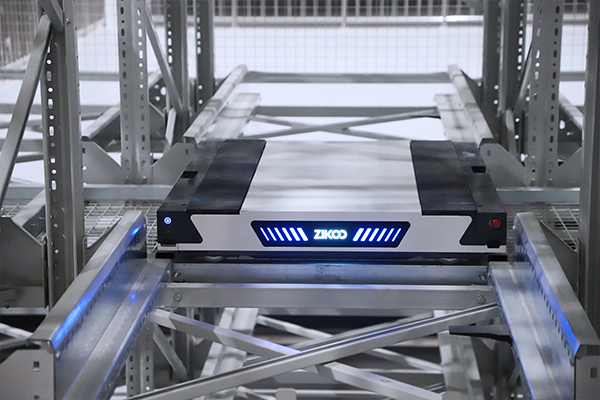
Validate the calculation by SKU. A deep lane holding 20 pallets of the same SKU may look efficient by volume but slow to operate if orders pull one pallet at a time. Use the order profile to decide whether depth is long-term storage or an active queue.
Four Way and Six Way Shuttle Architectures for Deep Lane Density
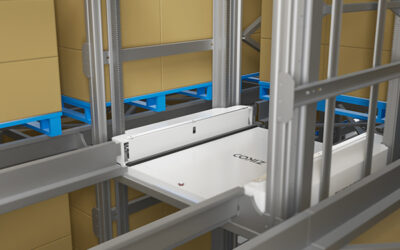
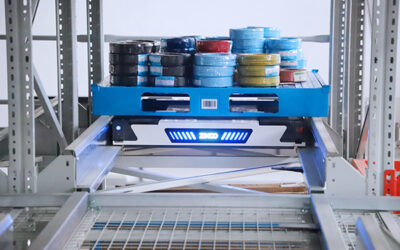
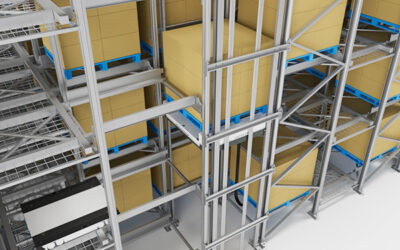
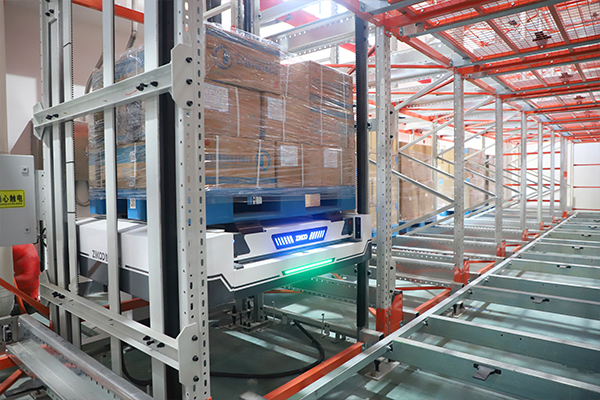
Shuttle systems fit many high-density pallet storage designs because a shuttle can enter the lane while the rack structure removes most access aisles. A four-way shuttle travels horizontally in four directions across the rack levels, switching between lanes and rows without a forklift at every face.
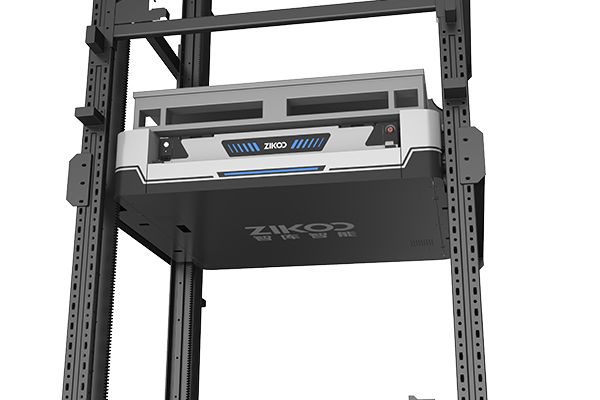
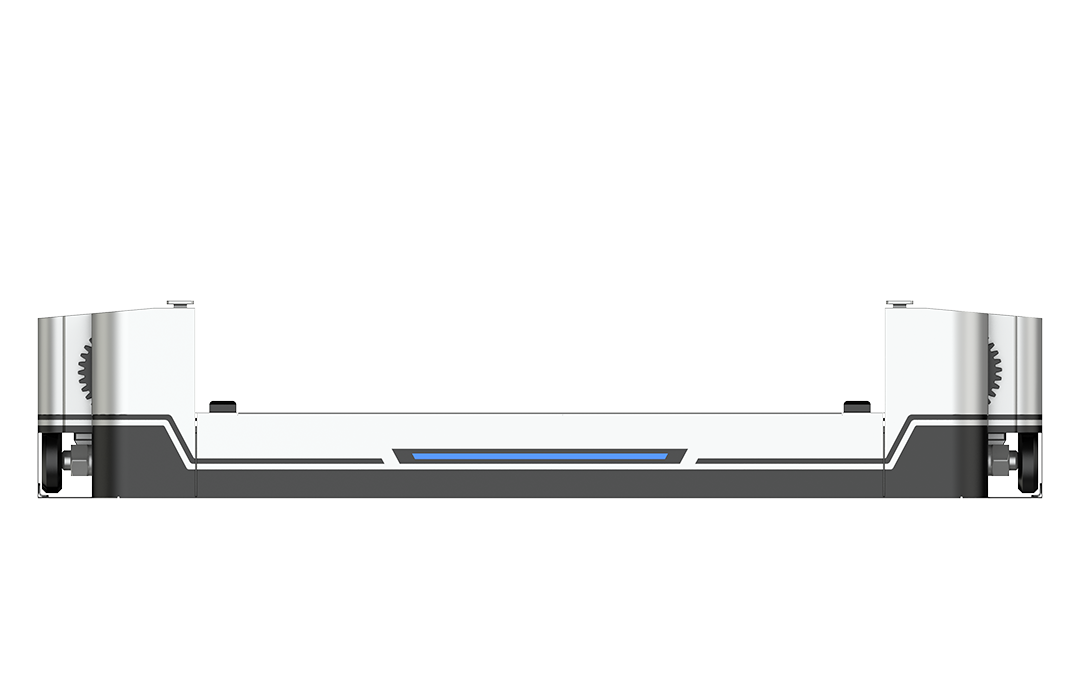
In Zikoo’s R-bot four-way shuttle, the body is only 125 mm thick, and the product range reaches 2,000 kg rated load on the heavy-duty large-pallet model. When the R-bot is paired with H-bot vertical bidirectional shuttle, the combined system forms a six-way shuttle architecture: horizontal movement in four directions plus vertical transfer between storage levels.
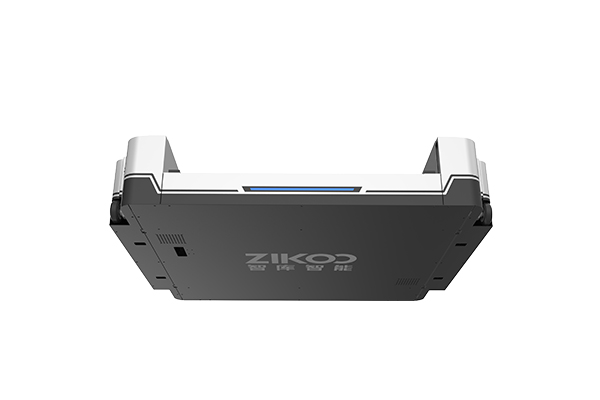
A dense shuttle lane still needs the right balance between depth and retrieval speed, or the rack becomes a bottleneck. <Smart Warehousing Starts Here: Cost-Effective Four-Way Shuttle Systems> covers how cost-effective four-way shuttle systems are configured for practical warehouse constraints.
Vertical transfer is just as important as lane depth in a multi-level design. When horizontal travel is combined with vertical pallet movement, the storage system begins to behave as one connected three-dimensional network. <Six-Way Shuttle Unlocks the Era of True 3D Intelligent Warehousing> covers how six-way shuttle architecture expands pallet flow across horizontal and vertical directions.
Hardware density also needs software coordination, otherwise a deep lane becomes a traffic problem. The control layer must manage lane depth, shuttle missions, vertical lifts, pick faces, and replenishment tasks under the same set of priorities. <PTP Intelligent Warehousing Platform: Building a Flexible and Smart Logistics Ecosystem> covers how software connects pallet movement, task orchestration, and warehouse visibility.
When High Density Storage Creates New Bottlenecks
Deep-lane systems are not a substitute for active pick faces. If a warehouse receives many one-pallet orders across many SKUs, a deep lane may require the system to move several pallets for a single pick, increasing robot time and shuttle mileage. High-density storage works best when inventory moves in large enough batches or when deep lanes are assigned to slower moving stock that stays in storage for days.
Buildings also constrain density. Floor load, clear height, column grid, fire walls, sprinkler design, dust, condensation, and temperature range change which system is feasible. In cold stores, rack and robot components must tolerate continuous low temperatures and moisture control measures.
What to Confirm Before Choosing a High Density Design
Before a density target becomes a design freeze, verify:
- Pallet dimensions and load class by position.
- Storage temperature and humidity, including charging and maintenance conditions.
- Number of SKUs and pallets per SKU, which determines lane depth.
- Peak inbound and outbound throughput rates.
- Order profile, including full-pallet, layer, case, FIFO, or first-expiry-first-out, FEFO, flow.
- Building clear height, floor flatness, slab load, column grid, and fire protection.
These inputs determine whether a high-density layout will use aisle-free shuttle lanes, a tall crane system, or a simpler deep-lane rack. The density number only becomes meaningful after the constraints are confirmed.
Move From Density Estimates To A Verified Pallet Storage Design
A cubic-meter target becomes a project requirement only after lane depth, shuttle count, vertical transfer points, software flow, and building constraints are verified together. Send Zikoo your clear height, pallet standard, maximum load, SKU profile, required throughput, temperature range, and whether the operation needs FIFO or FEFO. The team can model a dense pallet storage layout and identify which combination of four-way shuttle, vertical transfer, and software fits the site. Contact Zikoo Smart Technology Co., Ltd at info@zikoo-int.com or (+86)-19941778955.
FAQ
Does dense storage always lower warehouse operating cost?
Not automatically. It usually reduces floor area and may cut travel for stored pallets, but deeper lanes can increase handling steps, energy use, and shuttle travel when selectivity is high. The cost comparison must include building, rack, robots, software, maintenance, and the speed lost at peak periods.
Is a four-way shuttle suitable for a low throughput warehouse?
A four-way shuttle can still be justified when the main goal is storage density or future scalability, not only throughput. Deep lanes store slow movers well. If pallets move rarely and the warehouse has only a few SKUs, simpler drive-in or push-back rack may cost less. Shuttle selection should follow the order profile rather than a density target alone.
Can an existing warehouse be upgraded to high-density pallet storage?
Yes, if clear height, floor flatness, load capacity, column grid, and fire systems can support the change. A retrofit may require modifying rack positions, adding vertical lifts, or reinforcing the slab. A staged area-by-area retrofit can reduce disruption, but the building survey must come before hardware selection.
What should be checked in a high-density storage quote?
Confirm whether the quote includes rack and structural work, shuttle or crane equipment, vertical transfers, controls and software, installation, commissioning, spares, training, and response coverage. Ask for the assumptions behind the pallet-position count, peak throughput test, lane depth, operating temperature, and acceptance criteria.
If you’re interested, check out these related articles:
Six-Way Shuttle: Pioneering the Future of Smart Warehousing
Stacker Crane vs Four-Way Shuttle: Which Fits Your ASRS Warehouse Best
Six-Way Shuttle: The Smart Warehousing Tool for Cost Reduction and Efficiency 2
Looking for Reliable Four-Way Shuttle Manufacturers? Choose Zikoo Robotics