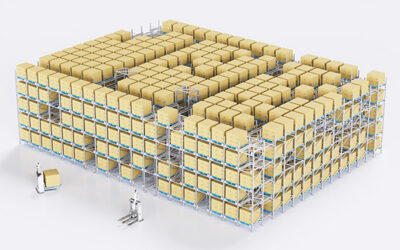
AS/RS systems optimize inventory management only when storage hardware, slotting logic, and warehouse software form one control loop. In projects I have worked on across manufacturing and third-party logistics, the largest accuracy gains came not from faster pallet movement but from forcing every putaway, move, and pick through a single executable transaction. That removes the gap between what the system thinks is in a location and what is physically there. This article explains where that gain appears, where it fails, and what buyers should verify before committing to automated storage.
What Actually Breaks Inventory Accuracy in a Manual Warehouse
Most stock variance starts before the count is wrong. In a manual warehouse, pallets move through more than one execution path. A forklift operator can put a pallet into the first open location, a picker can take a layer and return the rest, and a supervisor can move bulk stock without updating the WMS. Each path is rational at the time. Collectively they create two inventories: the one in the software and the one on the floor.
When the next order needs that pallet, the operator searches. If the pallet cannot be found, the process shifts into an exception cycle. Stock is marked missing, new safety stock is ordered, and the cycle count team spends hours reconciling a variance that began with one missed transaction. In several programs, the largest source of variance was not theft or damage. It was unrecorded movement between bulk, pick face, and staging areas.
| Dimension | Manual warehouse | AS/RS controlled warehouse |
| Location capture | Operator scan or manual entry | System-directed task with location confirmation |
| Transaction path | Multiple: forklift, hand stack, bulk transfer | One: WMS task to shuttle or crane |
| Variance visibility | Delayed until cycle count | Real-time location status |
| Exception response | Operator search and manual adjustment | WMS flags mismatch and blocks next move |
| Storage shape | Fixed aisles and open floor | Dense rack with dynamic slotting |
That single-transaction difference is the main reason an automated storage system tightens inventory accuracy even before storage density improves.
How AS/RS Systems Turn Inventory Data Into Executed Moves
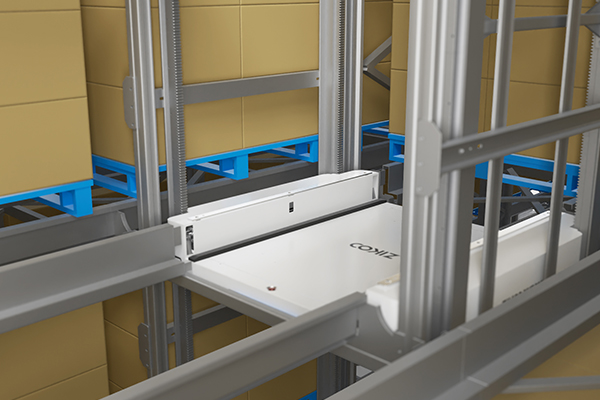
The change is not that the warehouse has robots. It is that every pallet move becomes a system task with a defined start location, destination, and confirmation. A WMS decides what should move based on order priority, slotting rules, and inventory policy. A WCS or RCS converts that decision into machine commands. The shuttle or crane executes the move and reports back.
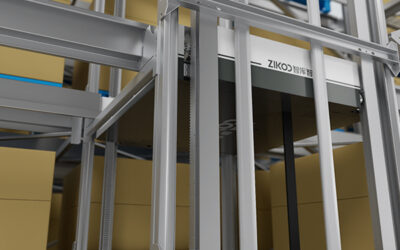
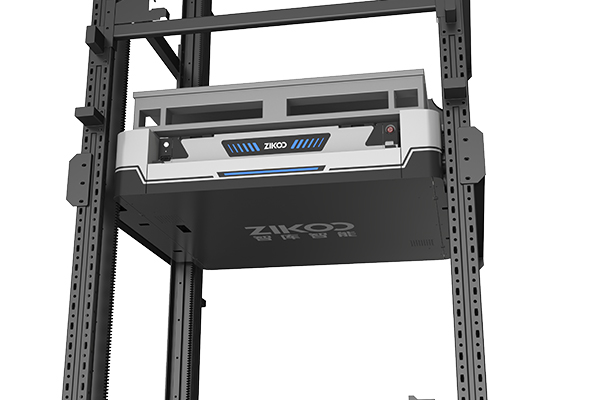
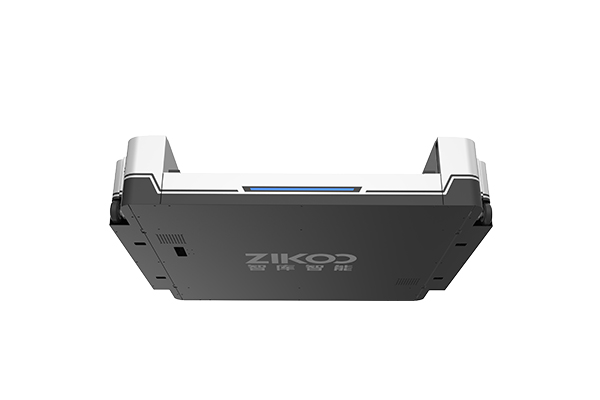
In a four-way shuttle system, the R-bot travels across the rack face and away from the lift, while the H-bot vertical shuttle handles level changes. Both operate under the same location map as the software. The H-bot positioning accuracy of ±1 mm means the system knows which pallet cell was serviced, not just which aisle. That level of confirmation leaves little room for the manual ambiguity that creates stock variance.
Zikoo’s PTP Smart Warehouse Software handles WMS, WES, WCS, and RCS layers in the same system, which cuts the handoff gaps that appear when separate vendors stitch interfaces together. Inventory optimization then becomes a slotting problem, not a searching problem. Fast moving SKUs can be placed near the outbound point. Slow and long tail stock can sit in deep lanes without consuming accessible floor space. When order patterns shift, the WMS can re-slot overnight without requiring a physical project.
AS/RS inventory gains depend on the software layer, not only the storage machine. <Software-Driven Hardware: [Six-Way Shuttle](https://www.zikooint.com/solution/r-bot-h-bot-six-way-shuttle-dense-storage-system) Maximizes Warehouse Efficiency> covers why WMS/WCS handshakes determine whether dense storage hardware reaches its designed throughput.
Where the Largest Inventory Gains Show Up
Dense storage pays off fastest in operations where the cost of a stockout or a cycle count error is high. Cold chain is one example. Every unrecorded movement in a freezer costs more than the labor. It opens the door, pulls warm air in, and shortens the temperature recovery time. The R-bot four-way shuttle runs in temperatures down to -15°C, and the cold chain version uses a -25°C dedicated lithium battery. That lets storage and retrieval happen without staff spending long periods in the chamber, while the system keeps location and batch data current.
High-SKU distribution and manufacturing raw material stores are another. When the warehouse holds thousands of SKUs with different velocities, manual slotting falls behind. An AS/RS system can move the fastest pallets to the forward zone and keep slow inventory deep. The software records every shift, so replenishment is driven by actual location status rather than a printed list that may already be outdated.
Pharmaceutical and batch tracked operations gain when the AS/RS carries lot and expiry data at the task level. The same move that retrieves a pallet can be blocked if the WMS finds a quality hold, wrong lot, or early expiry. That turns inventory management from a counting exercise into a control process.
Dense storage layouts shift the inventory slotting calculation. <PTP [Intelligent Warehousing](https://www.zikooint.com/asrs-automated-storage-and-retrieval-system-solutions) Platform: Building a Flexible and Smart Logistics Ecosystem> covers how WMS, WES, WCS, and RCS work together in a single platform to keep pallet moves and inventory status aligned.
What Fails When AS/RS Inventory Discipline Is Thin
The automation does not correct bad master data. If pallet dimensions, weights, or SKU rules are wrong at go-live, the system executes the wrong move at high speed. A pallet that does not match the declared size can be rejected at the lift, or worse, accepted into a cell where it blocks the shuttle. The inventory record may show a completed transaction, but the physical pallet sits shimmed or misplaced. That is a specific failure mode we test for during system design: the WMS must receive a location confirmation from the WCS only after the shuttle has set the pallet down and cleared the cell.
Another weak point is exception handling. If the system encounters an unexpected pallet or a blocked lane, and the recovery procedure is not defined, operators will invent one. Usually that means a manual override outside the software. From that moment, the same gap between physical and logical inventory returns.
Slotting rules also need an owner. A dense storage system can re-slot automatically, but if the rule set never changes with seasonality, the system will simply automate a suboptimal inventory shape. The hardware works. The inventory management still stays average.
Dense storage systems are designed around throughput and space, but they also change how much inventory can be held close to dispatch. <Six-Way Shuttle: The Smart Warehousing Tool for Cost Reduction and Efficiency> covers the cost side of six-way shuttle handling and why density alone does not settle the ROI case.
If your SKU base includes mixed pallet sizes, batch controlled stock, or a high share of slow movers, confirm the pallet dimension validation and location confirmation rules before you finalize the system scope. Send your pallet profiles, SKU count, and current picking method to [email protected] or call (+86)-19941778955, and we will check which shuttle model and WCS logic fit your operation without forcing a retrofit.
What Should You Confirm Before Finalizing Your AS/RS Investment
Most warehouse teams feel the pain of stock variance long before they can quantify it. They know that inventory counts drift, pickers search, and planners carry extra safety stock. The decision to automate often stalls because the required number is not a single machine price but the cost of the integrated system around it.
The practical next step is a layout and data review. Share your current site drawings, pallet sizes, SKU count by velocity, and the inventory variance you are carrying. From there, Zikoo can scope the R-bot and H-bot combination, the required rack structure, and the PTP software layer against your actual order profile. That review gives you a defined storage capacity, expected throughput, and the data controls you need to bring the two inventories back into sync.
Send the details to [email protected] or call (+86)-19941778955. The first output is a capacity check, not a contract.

What Buyers Ask Before Automating Inventory Control
Why does AS/RS inventory accuracy still fail after the system goes live?
Most failures are not hardware faults. They come from master data gaps, undefined exception handling, or WMS and WCS confirmation logic that does not close the loop. When a pallet dimension is wrong, the shuttle may reject it at the lift, but the inventory record can still show completion if the software does not wait for the clear signal. The fix is not more robot maintenance. It is go-live testing against real pallet profiles and a written recovery process for every blocked lane, error code, and manual override.
Do we need a clean WMS before adopting AS/RS?
No, but you need a WMS that can be made transaction-led. A common assumption is that inventory data must be perfect before automation starts. That is not realistic. What matters is that the WMS can assign a location to every pallet, send that task to the WCS, and receive confirmation back. The AS/RS can become the mechanism that forces cleaner data, because it refuses to execute moves that do not have a valid destination. The cleanup happens during configuration and testing, not before any investment can begin.
Can AS/RS handle batch tracked and expiry controlled inventory?
It depends on how the WMS maps batch attributes to the move. If lot number, expiry date, and quality status are attached to the pallet record, the system can block non-conforming stock at retrieval. If batch data exists only on paper or in a separate spreadsheet, the AS/RS will move the right pallet but cannot enforce a decision from incomplete data. The practical step is to confirm that the WMS fields used for batch control are part of the task interface before the shuttle is configured.
What is the fastest way to know whether our warehouse would benefit?
Start by measuring the gap, not the speed. Pull two numbers from the last quarter: the percentage of picks that needed a manual location search and the hours spent on cycle count corrections. Then compare your current pallet dimensions and SKU velocity against the rack and shuttle combinations available. If the search and reconciliation time is concentrated in a few high-volume SKUs or in cold storage, the benefit is usually visible quickly. Share your warehouse dimensions, SKU count, and current picking flow at [email protected], and we will run that check with you.
If you’re interested, check out these related articles:
Looking for Reliable Four-Way Shuttle Manufacturers? Choose Zikoo Robotics
Six-Way Shuttle: The Smart Warehousing Tool for Cost Reduction and Efficiency
Six-Way Shuttle System Leads the Shift from Machines to Robots in Dense Storage Automation