Choosing a warehouse automation system integrator is a decision about accountability, not about which robot looks best in the brochure. The integrator you select will own the space between your racking, your conveyors, your vehicles, your software and your building, and that space is where most projects succeed or fail. Before you compare prices per pallet position, settle three questions: who carries single-point responsibility for throughput at handover, who has the authority and the skill to correct a fault that crosses two suppliers’ equipment, and how performance will be measured once the system is running. The rest of the selection process follows from those answers.
What a warehouse automation system integrator is responsible for
A warehouse automation system integrator designs the material flow, selects or supplies the equipment, builds or configures the control and software layers, and hands over a system that meets an agreed performance level. The equipment is only part of that job. The larger part is deciding how pallets move between receiving, storage, picking and dispatch, then making every supplier on that path work to the same drawings, the same data model and the same acceptance criteria.
Suppliers in this market describe themselves in similar language. In practice you will meet four types:
- Equipment manufacturers build shuttles, stacker cranes, conveyors or robots, and may or may not take system responsibility.
- System integrators design the solution and carry responsibility for interfaces, whether or not they manufacture the hardware.
- Traders and resellers source equipment and may subcontract the engineering.
- Engineering consultants specify and supervise, but supply no equipment.
One company can appear in more than one category. The useful question is not the label but the responsibility written into the contract: who is accountable for throughput at handover, who is authorised to change a supplier’s software when two systems disagree, and who carries the cost of downtime while that disagreement is unresolved. If you buy storage equipment, a lift and a control system from three suppliers and coordinate them yourself, you have taken the integrator role without the engineering capacity that normally comes with it.
Define your operating problem before you talk to any integrator
Integrators price what they are asked to price. A request built around a target pallet count produces a layout. A request built around an operating profile produces a system. Assemble the inputs below first, and expect the design to change as each one is clarified.
| Input to prepare | Why it changes the design | Common error |
|---|---|---|
| Throughput by hour and by day, with a stated peak factor | Sizes vehicles, lifts, conveyors and stations; a system sized on the daily average queues at peaks | Quoting a daily pallet count with no hourly profile |
| Pallet formats, weights and condition standard | Drives vehicle dimensions, fork entry, beam spacing and handling reliability | Assuming every pallet in the yard meets one tolerance |
| SKU count, velocity mix and order structure | Decides between dense storage, selective racking and goods-to-person picking | Designing around the fastest movers only |
| Temperature and environmental zones | Sets component ratings, battery and charging design, condensation control | Treating a cold store as a normal warehouse with a lower thermostat |
| Building geometry and structure | Clear height, floor flatness, point loads, column grid and fire compartments constrain every layout | Fixing the layout before the structural survey |
| Host systems and process rules | WMS or ERP integration, master data ownership, label and order release rules | Leaving the software boundary to the end of the project |
The architecture follows from those inputs. Deep-lane shuttle storage, crane-based automated storage, narrow-aisle stacker robots and goods-to-person picking solve different problems, and the difference shows up in selectivity, in the cost of reaching the last pallet in a lane, and in how the system behaves when one vehicle is out of service. Density and selectivity trade against each other, so a layout that maximises storage positions can leave a retrieval peak with no slack.
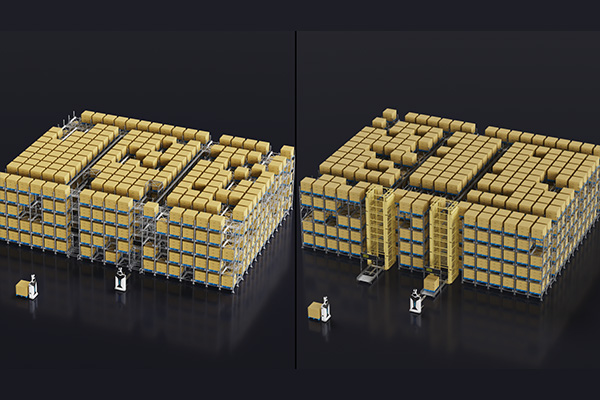
Storage architecture is usually decided before a single vehicle model is chosen, and the comparison is rarely as simple as density against speed. <Stacker Crane vs Four-Way Shuttle: Which Fits Your ASRS Warehouse Best> covers how crane-based and shuttle-based layouts differ in selectivity, redundancy and building requirements.
Two numbers decide more of the design than any other: the peak hour and the growth assumption. Size for a peak you can define, state the allowance for seasonal spikes, and write down what the system must do at 120 percent of that figure. Growth deserves the same treatment. Adding an aisle or extra vehicles later is far easier when the rack layout, power distribution and control network were planned for it; retrofitting them into a fully packed building is where budgets break.
How to test whether an integrator can actually engineer the system
Capability claims are cheap. Ask for the document behind each claim, and read the assumptions rather than the conclusion. Six checks separate a system builder from a reseller with a catalogue.
| Capability | Evidence to request | Weak signal |
|---|---|---|
| System design | Layout, throughput calculation and simulation model with written assumptions | A layout drawing with no throughput basis |
| Software ownership | Which WMS, WES, WCS and RCS layers they own, and sites running the current version | “We integrate with any WMS” |
| Delivery in your conditions | Two projects with your pallet type, temperature zone and volume band | Logos with no operating conditions attached |
| Service footprint | Named technicians, distance to site, response and restore commitments | A 24/7 hotline with no local presence |
| Spare parts | Recommended spares list at handover and stockholding of critical items | Consumables only |
| Safety and compliance | Safety concept for the destination market, risk assessment, declaration scope | “Standard design, compliant everywhere” |
A throughput calculation is only as good as its stated assumptions. Ask for the input mix, the number of vehicles and lifts assumed, the availability allowance, the replenishment rules and the picking rate per station. If the calculation cannot show which assumption drives the result, the number tells you very little. The same applies to a simulation: it should reproduce a known day from your own operation before anyone uses it to justify a design.
Delivery consistency is worth testing directly. Ask how much of the project is standardised across sites and what is engineered from scratch each time, then compare that answer with what recent customers experienced. A supplier that can describe a repeatable delivery process has usually built one.
Repeatable delivery is a capability, not a slogan, and it shows up in how much of a project is engineered once and reused. <Standardization Empowers Global Delivery: Zikoo Robotics Six-Way Shuttle Expands Overseas> covers how standardised modules and delivery processes are applied across export projects.
Where integration risk hides in the interfaces
Most disputes on automation projects are not about whether a machine works. They are about which system was supposed to do something at a boundary, and who was responsible when it did not. Map the boundaries before you sign, name an owner for each, and attach the map to the contract.
| Interface | Typical failure | Owner to name in the contract |
|---|---|---|
| Pallet to vehicle and rack | Mis-picks, jams and damaged loads | Integrator, against a written pallet condition standard you sign |
| Conveyor to rack or station | Height, gap and sensor faults at transfer points | Integrator, with one supplier responsible for the whole transfer chain |
| WCS to WMS or ERP | Duplicate orders, inventory mismatch, missions that stall | A named owner for each message and its error handling |
| Safety and fire systems | Conflicting stop zones, detection that fights the automation | Integrator, coordinating with your fire protection designer |
| Power and network | Voltage quality, wireless coverage, latency and dropouts | Integrator specifies the requirement; you provide and verify it |
| Civil and structure | Floor tolerance, anchor loads, column clashes | Integrator states the requirement; your builder delivers it |
Mechanical boundaries fail slowly and visibly: a pallet that sits outside tolerance causes repeated mis-picks long before anyone calls it a design fault, which is why the pallet condition standard belongs in the contract rather than in a commissioning conversation. Structural and transfer-point tolerances should be stated as numbers with a measuring method, not as an expectation that the builder will work it out on site.
Software boundaries fail faster and less visibly. Order release, inventory reconciliation and mission assignment cross at least two systems, and each message needs an owner, an error path and a recovery rule. Ask what happens when the host system is unavailable for an hour, when a mission is rejected twice, and when the same order arrives twice after a network interruption. The answers describe the real maturity of the integration.
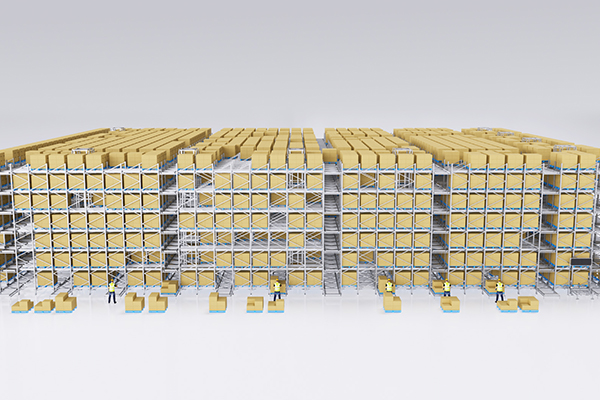
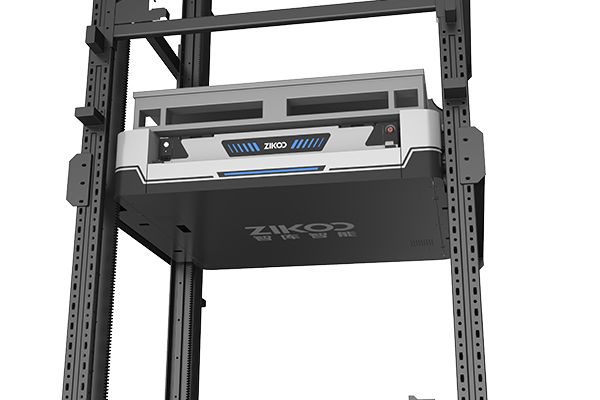
A practical way to see the difference between an equipment seller and a system supplier is to request the interface document between the vehicle and the control layer. Zikoo Smart Technology, for example, publishes its R-bot four-way shuttle with a 125 mm body and a 1.5 t rated load alongside its H-bot vertical shuttle with a positioning accuracy of ±1 mm and its PTP software stack covering WMS, WES, WCS and RCS. The specification list is not the useful part. What matters is whether one engineering group owns the handover between vehicle, lift and order release logic. Where two suppliers own that handover, someone must be named in advance to arbitrate.
How to verify references without being misled
Every integrator has references. The question is whether any of them resemble your project in the conditions that drive risk: pallet type and condition, temperature zone, order profile, building constraints and the software stack that will run your operation.
Ask for projects that match your conditions
Request two or three projects within your pallet format, temperature band and volume range, and ask what the specified performance was and how it was measured. A project in a different climate, a different pallet standard or a different order profile proves that the integrator can deliver something, not that it can deliver your system. Where no close match exists, ask which element is new to them and how they plan to close that gap before the contract is signed.
Read the acceptance record, not the video
A factory acceptance test, a site acceptance test and a sustained performance test answer different questions. The first confirms that equipment works before shipment, the second that the installed system performs its functions, and the third that throughput and availability hold across a realistic operating period. Ask to see the recorded results of all three on a previous project, including a test that failed and what changed afterwards. A video of a shuttle moving proves that a shuttle moves.
Talk to the maintenance team
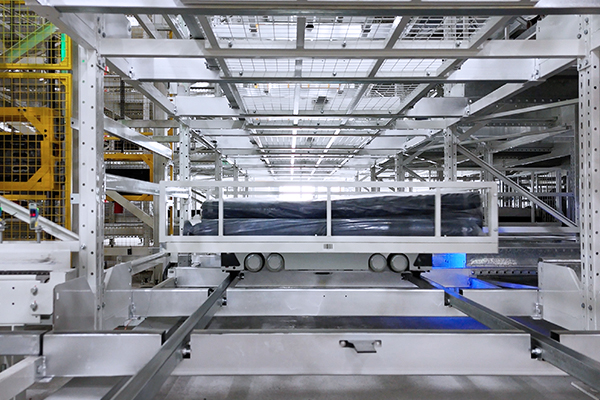
Sponsors remember the commissioning celebrations. Maintenance teams remember the first winter, the spare part that arrived late and the fault that took three visits to close. Ask permission to speak with a maintenance lead directly, and ask what fails most often, how quickly spares arrive, what the response times were in practice, and what they would change about the layout. Those answers tell you more about your next five years than any reference logo.
Commercial terms that decide whether the project holds together
Price matters, but the terms around performance, scope and change determine whether the price you agreed is the price you pay for a working system.
Define throughput before you discuss price
Throughput needs a mix, a window and a measurement method. Pallets per hour at a stated inbound and outbound profile, sustained over a stated period, with stated staffing and replenishment rules, is a specification. “High throughput” is a wish. Availability needs the same treatment: a formula, a definition of downtime, a list of excluded events and a measurement period. Agree who logs the data and who can inspect it.
Tie payments to verifiable events
Payment milestones work best when each one marks something you can check: design freeze, factory acceptance, delivery, site acceptance, sustained performance and documentation handover. Warranty should start at sustained performance rather than at delivery, otherwise the first months of debugging are consumed by the warranty period. Software licensing, update rights and support obligations deserve their own clause, because a system that cannot be patched or extended becomes a liability long before the hardware wears out. Spares, training and as-built documentation belong in the same schedule as the equipment.
Plan the phased path for a live building
In an operating warehouse, phasing limits how much of the flow is exposed at once and gives your team time to learn the software on a smaller volume. It costs more in engineering and commissioning, and it only works if the final layout is designed from the beginning. A phase that has to be squeezed into an unplanned corner later removes most of the benefit.
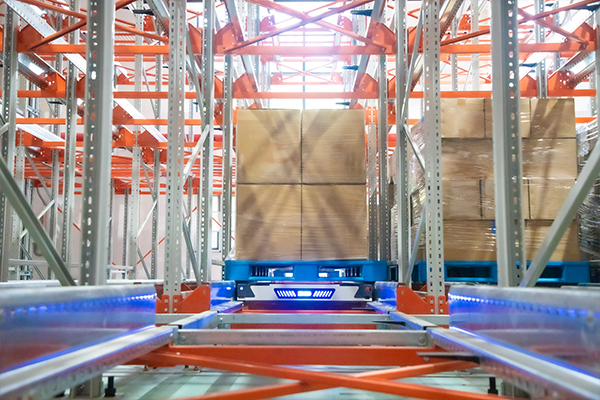
Upgrading a live facility is mostly a sequencing problem, because storage, power and controls have to be built around an operation that keeps running. <Six-Way Shuttle Drives Warehouse Upgrades: Building an Intelligent Automatic 3D Warehouse> covers how three-dimensional storage layouts are planned when an existing building sets the limits.
How to write an RFQ that produces comparable bids
The fastest way to make bids comparable is to remove adjectives. Replace every qualitative promise with a quantity, a method and a boundary.
Reject this line: “Supply a pallet automated storage system for 5,000 positions with high throughput, full integration and local service at the lowest total price.”
Replace it with: “Supply a pallet handling system for 5,000 positions storing the pallet formats in Annex A, moving [X] pallets in and [Y] pallets out per hour at the mix in Annex B, measured over a 30-day sustained test after site acceptance, with availability reported using the formula in Annex C; include a scope boundary schedule, an interface specification per system, a recommended spares list and named service resources within [Z] km of the site.”
| Buyer phrase | What it usually hides | Verifiable request |
|---|---|---|
| “High throughput” | No mix and no window | Pallets per hour in and out at a stated mix over a stated test window |
| “Turnkey” | Undefined scope edges | A scope schedule listing what is supplied and what is provided by others |
| “High reliability” | No availability definition | An availability figure, formula, exclusions and measurement period |
| “Cold store ready” | Unstated component qualification | Temperature ratings, battery and charging design, condensation control for the stated zone |
| “Easy integration” | No interface owner | An interface specification with message ownership and error handling |
| “Local support” | Undefined response commitment | Service location, technician count, response and restore targets with escalation |
When the bids arrive, normalize them before you compare. Build one line per function, mark each line as supplied or by others, and convert every performance claim into the mix, window and method it assumes. Compare total cost inside the same boundary, including civil works, power, network, spares and the first years of software support. A bid that sits far below the others is usually answering a smaller scope, so ask which line it left out instead of treating the difference as efficiency.
What to send before a layout is drawn
Send the inputs that actually change the design: pallet formats and your pallet condition standard, SKU count and velocity profile, order structure, temperature zones, inbound and outbound volumes by hour with the peak factor, building clear height, floor tolerance and column grid, the existing WMS or ERP and who owns master data, the target go-live, and the acceptance method you intend to use. With those, a layout can be checked against real constraints instead of a catalogue, and every performance figure can be tied to a measurement you can verify. A throughput number without its mix, window and measurement method is not a specification. Contact Zikoo Smart Technology Co., Ltd at info@zikoo-int.com or (+86)-19941778955.
FAQ
Should I choose an equipment manufacturer that also integrates, or a separate integrator?
Either can work, and the label decides very little. A manufacturer that also takes system responsibility can simplify fault resolution, because one engineering group owns the vehicle, the controls and the software handover. A separate integrator may give you more freedom to choose the best equipment for each function. Ask both to describe a project where two suppliers’ systems were commissioned together and explain who resolved the interface faults. If a manufacturer cannot describe that process, its integration scope is probably a drawing and a meeting rather than an engineering function.
How many bids should I compare, and how do I normalize them?
Three technically credible bids usually show the spread; more than four rarely adds information and consumes weeks of your team’s time. Normalize before comparing. Build one line item per function, mark each as supplied or by others, and convert every performance claim into the mix, window and measurement method it assumes. Then compare total cost inside the same boundary, including civil works, power, network, spares and early software support. A bid far below the others is usually answering a smaller scope, so ask which line it excluded.
What must an acceptance test cover before final payment?
Site acceptance should confirm the installed system against the specification: every function, every interface, every safety function and the as-built documentation. Performance acceptance should be separate, with a stated mix, duration and measurement method, and it should run long enough to include a realistic peak. Availability needs its own formula and a list of excluded events. Tying final payment to sustained performance rather than to installation keeps the incentive aligned through the weeks when faults appear. Ask how the integrator recorded results on a previous project, including a test that failed.
How do I judge after-sales support before signing?
Ask for the service organization, not the service promise: how many technicians cover your region, where the nearest spare parts are held, what the response and restore targets are, and how escalation works at night and at weekends. Then check the contract language that turns those answers into obligations. Response time and restore time are different commitments, and a system can be running again long before the underlying fault is corrected. Speak to a customer who used the support line during a breakdown and ask how long the system was actually down.
Is a phased rollout safer than a single go-live?
Phasing is usually safer in a live building, because it limits how much of the operation is exposed at once and lets your team learn the software on a smaller flow. It costs more in engineering and commissioning time, and it requires the final layout to be designed from the start. A single go-live suits a new building with no live operation to protect, provided training, data migration and stock preparation are finished before the switch.
If you’re interested, check out these related articles:
Six-Way Shuttle: The Dual-Engine Solution for High-D
Looking for Reliable Four-Way Shuttle Manufacturers? Choose Zikoo Robotics