Warehouse automation lowers operating cost when it removes manual travel, increases storage density, and catches errors before they reach shipment. In pallet-to-person projects, the clearest savings do not come from replacing people with robots. They come from fitting more inventory into the same footprint and moving fewer operators across long aisles for the same daily throughput. The right system depends on throughput, SKU profile, and building constraints. Without that validation, a well-engineered shuttle system can add fixed cost instead of removing it. This article explains where the savings actually show up and how to size them before a purchase decision.
Where does warehouse automation actually cut operating costs?
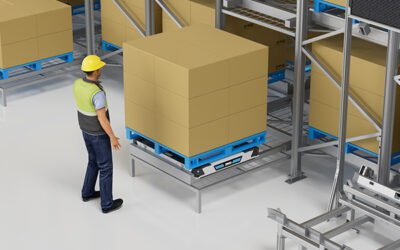
Most recurring cost in a manual pallet warehouse sits in travel, error correction, and underused building cube. Warehouse automation changes all three, but not at the same rate and not in every operation. In the pallet-to-person projects I have reviewed, the largest predictable saving is labor hours spent walking or driving a forklift to a storage position. The storage and retrieval equipment brings the pallet to a fixed workstation, so the same operator handles more pallets per shift without moving across the warehouse.
| Cost or efficiency factor | Manual pallet warehouse | Pallet-to-person automation | Primary saving mechanism |
|---|---|---|---|
| Labor | High travel hours and forklift dependency | Fewer aisle workers; workstation tasks consolidated | Pallet travel is removed from the pick cycle |
| Space | Wide aisles and lower rack heights | Narrow aisles and deeper storage lanes | Dense rack uses vertical height and lane depth |
| Accuracy | Manual or mobile terminal confirmation | WMS/WCS task confirmation and barcode checks | Errors are caught before the pallet leaves the station |
| Damage | Forklift handling and manual putaway | Shuttle and lift transfer repeatably | Fewer handoffs and less impact per pallet |
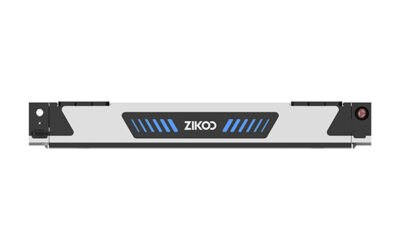
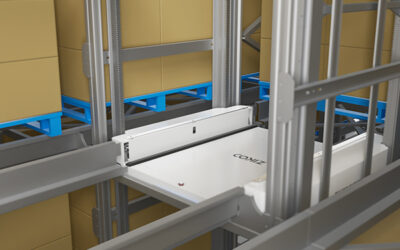
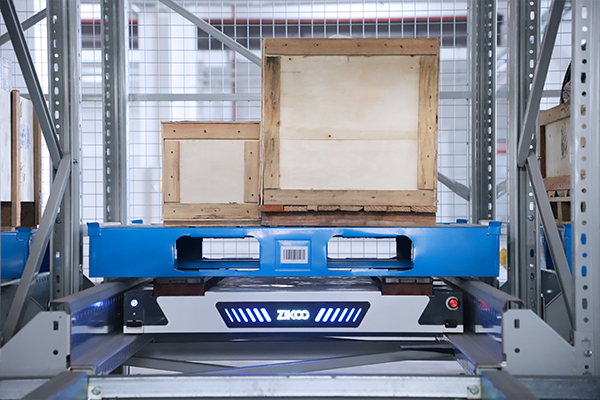
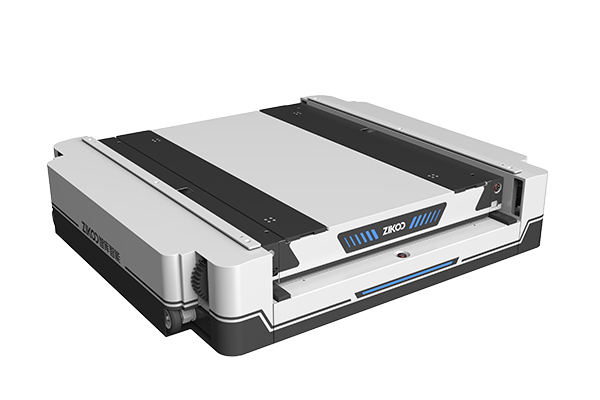
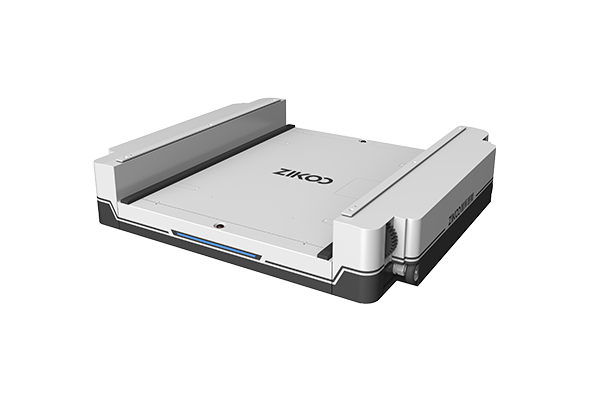
Labor is not the only line that falls. A dense layout reduces aisle width and uses the building cube more completely. The R-bot four-way shuttle is 125 mm thick and can work in lanes that manual forklift trucks cannot enter. The U-bot omnidirectional stacker requires a minimum aisle width of only 2100 mm. Those differences convert aisle area into storage positions, which delays or avoids the capital cost of a new building or outside warehouse.
Capital cost is only one part of the savings calculation. <Smart Warehousing Starts Here: Cost-Effective [Four-Way Shuttle System](https://www.zikooint.com/6-way-pallet-shuttle)s> covers how standard pallet dimensions and simpler shuttle configurations reduce upfront equipment spend before software and labor are considered.
Why does storage density change the efficiency equation?
Pallet automation improves efficiency through two connected mechanisms: faster retrieval and higher storage density. The density effect is easy to underestimate. A building that fits more pallets in the same area may require fewer aisles, which shortens the average travel path and can reduce the number of shuttle or stacker units needed to hit the same retrieval rate. Density and speed are not independent variables. Density changes the distance a pallet travels before it reaches the picking station.
A four-way shuttle handles horizontal movement within a rack level. Add an H-bot vertical bidirectional shuttle and the system transfers pallets between levels directly, forming six-direction movement. The H-bot has positioning accuracy of ±1 mm. The R-bot standard models run at 1.6 m/s empty and 1.2 m/s loaded. Those specifications matter because retrieval time is a function of travel speed and the distance from the pallet location to the workstation. A denser layout reduces the distance. The motor and lift speeds reduce the time.
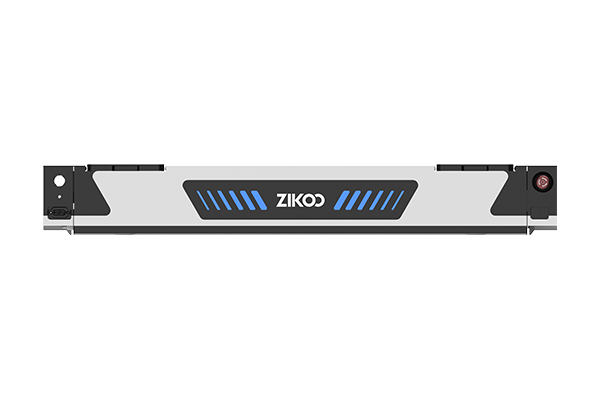
A four-way shuttle becomes more productive when vertical transfer is part of the same system. <Six-Way Shuttle System Leads the Shift from Machines to Robots in [Dense Storage](https://www.zikooint.com/solution/r-bot-h-bot-six-way-shuttle-dense-storage-system) Automation> explains how six-direction movement reduces idle travel and increases throughput per aisle.
What should buyers verify before calculating warehouse automation ROI?
Warehouse automation ROI calculations live or die on the input data. Before accepting a return-on-investment figure, I ask for three numbers from a client: daily pallet movements, SKU count and order lines, and the clear height under building obstructions. A warehouse moving 40 pallets a day and one moving 400 pallets a day can both benefit from pallet-to-person storage, but the payback mechanism is different. At lower movement, the saving is mostly space and damage reduction. At higher movement, labor and throughput dominate.
Software is where many evaluations go wrong. The robots are visible, but the WMS, WES, WCS, and RCS stack decides which pallet moves next, which shuttle takes which path, and whether the system stays balanced during peak order waves. A slow or poorly configured control layer can cap throughput below the hardware specification. The PTP Smart Warehouse Software covers warehouse management, warehouse execution, warehouse control, and robot control in one data flow, which reduces the handoff points that create latency.
If you are comparing automation routes and your building has a clear height below 8 meters, unusual pallet sizes, or a mixed cold storage zone, it is worth confirming the aisle width and shuttle model before fixing the rack layout. Send the layout and daily pallet count to [email protected] and I can check which configuration fits.
When does warehouse automation create cost risk?
Warehouse automation creates cost risk when the storage density or throughput capacity is larger than the order profile requires. Automation shifts cost from variable labor to fixed equipment and software. A system sized for peak throughput but used at low utilization becomes more expensive than a manual layout because the fixed cost continues whether the pallets move or not. In a low-turnover warehouse with stable pallet quantities, a deep-lane shuttle system may pay back through space savings. In a high-SKU e-commerce operation with frequent partial-pallet picking, goods-to-person workstations and software that resequences tasks during the day may be needed. Those two situations do not produce the same savings curve.
Building constraints create a second risk class. Some facilities look suitable on paper but have low beams, weak slabs, or column grids that cut effective rack depth. Before committing, confirm the maximum lift height and the minimum aisle width for the proposed equipment. The U-bot lifts to 8000 mm and requires a 2100 mm aisle in standard configurations. If the site cannot meet those dimensions, the design must change before the quotation is fixed. I have seen layouts where pallet overhang and floor levelness were not validated before installation. The problem appeared at lane entry, not in the robot, and it required a rack adjustment after the first test run.
What is the next step for a warehouse automation project?
Most buyers are not looking for a robot catalog. They need a storage concept that fits the building, the pallet size, the temperature range, and the order profile without overbuying capacity. At Zikoo, that work starts with dimensional data rather than a product list. If your team spends more time traveling to pallets than processing them, warehouse automation is worth evaluating at layout level. If not, a lighter automation scope may be the better financial decision.
Send your dimensioned floor plan, daily pallet movement, and temperature conditions to [email protected]. Our engineers use that data to confirm whether an R-bot four-way shuttle, a U-bot stacker, or a six-way configuration fits your aisle widths and clear height before quoting. You can also call (+86)-19941778955.
What do procurement teams ask about warehouse automation?
Does warehouse automation always reduce labor cost?
Not always. The labor reduction is largest when operators spend most of the shift walking or driving to storage positions instead of working at a fixed station. In a low-throughput warehouse with one forklift operator and stable inventory, automation may save little labor because the same person already covers the work. The better question is whether the system removes enough travel hours to offset fixed equipment, software, and maintenance costs. High daily pallet movement and long aisles usually produce faster labor savings.
How long does it take to recover the investment?
It depends on the saving mechanism. When the main saving is space avoidance, payback may be measured against the cost of a new building or an outside warehouse lease. When the main saving is labor, payback depends on shift coverage and pallet volume. A three-shift site with high movement recovers the investment faster than a single-shift operation with the same equipment because the fixed cost spreads across more pallets. A realistic first step is a payback range based on conservative, expected, and peak throughput rather than one point estimate.
Can an automated system be installed in an existing warehouse?
Many buyers assume a new high-bay building is required. That assumption is wrong for many retrofit sites. Existing warehouses often work well when rack depth and aisle width can be adjusted and the slab can carry the rail loads. The R-bot four-way shuttle is thin enough at 125 mm to fit dense rack configurations without major building changes, and the U-bot omnidirectional stacker is designed for aisles from 2100 mm. The main constraints are clear height, column grid, and floor levelness, not the outer building shell.
What software is needed beyond the robots?
The biggest software mistake I see in retrofit projects is treating the control layer as a secondary line item. The robots depend on a warehouse management system to receive orders, a warehouse execution or control system to schedule tasks, and a robot control system to command each shuttle and stacker. Without those layers, hardware idles between tasks and throughput drops below specification. Procurement teams should compare software scope in each quotation, not only the robot count, because missing WCS or weak RCS integration is expensive to correct after installation. If your quotation does not itemize WMS, WES, WCS, and RCS scope, send the software section to [email protected] and we can check whether the required modules are covered.
If you’re interested, check out these related articles:
Software-Driven Hardware: Six-Way Shuttle Maximizes Warehouse Efficiency
Six-Way Shuttle Drives Warehouse Upgrades: Building an Intelligent Automatic 3D Warehouse