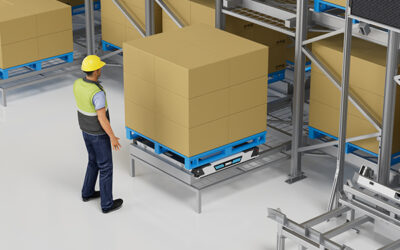
Smart warehouse strategies for manufacturing plants begin with a different question from most distribution center projects. The plant does not need the highest storage density in the abstract. It needs the right material at the right line-side station, in the right sequence, at the moment the production schedule calls for it. Raw materials, packaging, work in progress, finished goods, and maintenance spares each have a different demand signal and a different cost of failure. A strategy that treats them as one pallet population usually creates a dense warehouse that is hard to operate. The useful approach is to segment the flows, place controlled buffers between production and storage, then select automation and software for each segment. Automation should follow the flow, not the other way around.
Start With Production Flow, Not Racking
A manufacturing warehouse is a service function inside the plant. Its demand is released by the production schedule, bill of materials, changeovers, and line consumption, not by a customer order profile. That difference changes the peak. A distribution center may see a daily outbound wave; a plant may see a shift-start surge, a changeover spike, and a quiet period while a long batch runs. If the warehouse is designed only for average annual throughput, the line-side aisle becomes the bottleneck at shift change. The first planning step is therefore to map when each material is consumed, who calls it, and what happens when it arrives late.
| Decision area | Distribution center pattern | Manufacturing plant pattern | What it means for design |
|---|---|---|---|
| Demand release | Customer orders | Production schedule and bill of materials | Size buffers by schedule, not sales forecast |
| Peak | Daily outbound wave | Shift start, changeover, line call-off | Check peak hour, not annual tonnage |
| Inventory | Finished goods by SKU | Raw material, packaging, work in progress, finished goods, spares | Separate segments and service targets |
| Cost of a miss | Late shipment | Line stop or schedule break | Prioritize availability over cube |
| Replenishment | Minimum and maximum by SKU | Kanban, sequence, kit, or batch call-off | Software must support call-off logic |
| Automation risk | Inflexible picking | Inflexible line-side delivery | Pilot the interface before scaling |
The cost of a missing pallet is not uniform. A missing packaging pallet can stop a packing line within minutes. A missing spare part may stop maintenance work but not the main line. A missing raw material for a batch scheduled next week is a planning issue, not an emergency. Smart warehouse strategy assigns service levels by flow, then designs storage and movement around the highest consequence, not the largest tonnage.
Segment Material Flows Before Choosing Equipment
Segmentation should use the handling unit, replenishment trigger, and consequence of failure. A useful starting set is bulk raw material and packaging, line-side and work in progress, finished goods, maintenance spares, and returns or empty pallets. Each segment can share a building, but it should not share an operating rule by default. Bulk raw material often suits dense pallet storage and full-pallet replenishment. Line-side supply often needs smaller, more frequent deliveries and a short response time. Finished goods may need high-density storage plus quick loading access. Spares need controlled access and traceability, not necessarily high throughput. Empty pallets and returns need a defined loop or they will consume premium storage space.
| Flow segment | Primary risk | Automation question |
|---|---|---|
| Bulk raw material and packaging | Large lot inventory and slow putaway | Can dense storage release full pallets without blocking the next receipt? |
| Line-side and work in progress | Stockout at shift start or changeover | What response time does the line actually need? |
| Finished goods | Loading delay and product damage | Can retrieval sequence match dispatch without double handling? |
| Maintenance spares | Lost part and uncontrolled access | Is traceability more important than speed? |
| Returns and empty pallets | Hidden space consumption | Where is the loop closed and who owns it? |
A common mistake is to buy one vehicle type and force every flow through it. A forklift fleet can do that because the operator absorbs the variation. An automated system cannot absorb it without a software rule, a buffer, or a dedicated interface. The design should state which flows are direct, which are buffered, and which are excluded from automation in the first phase.
Dense pallet storage is most useful when the flow has full pallets, stable SKU identities, and a known replenishment rule. If every pallet must be opened for line-side picking, dense storage only moves the labor problem deeper into the building. The decision is not whether dense storage is good, but whether the segment can accept full-pallet handling and a longer access path in exchange for fewer aisles.
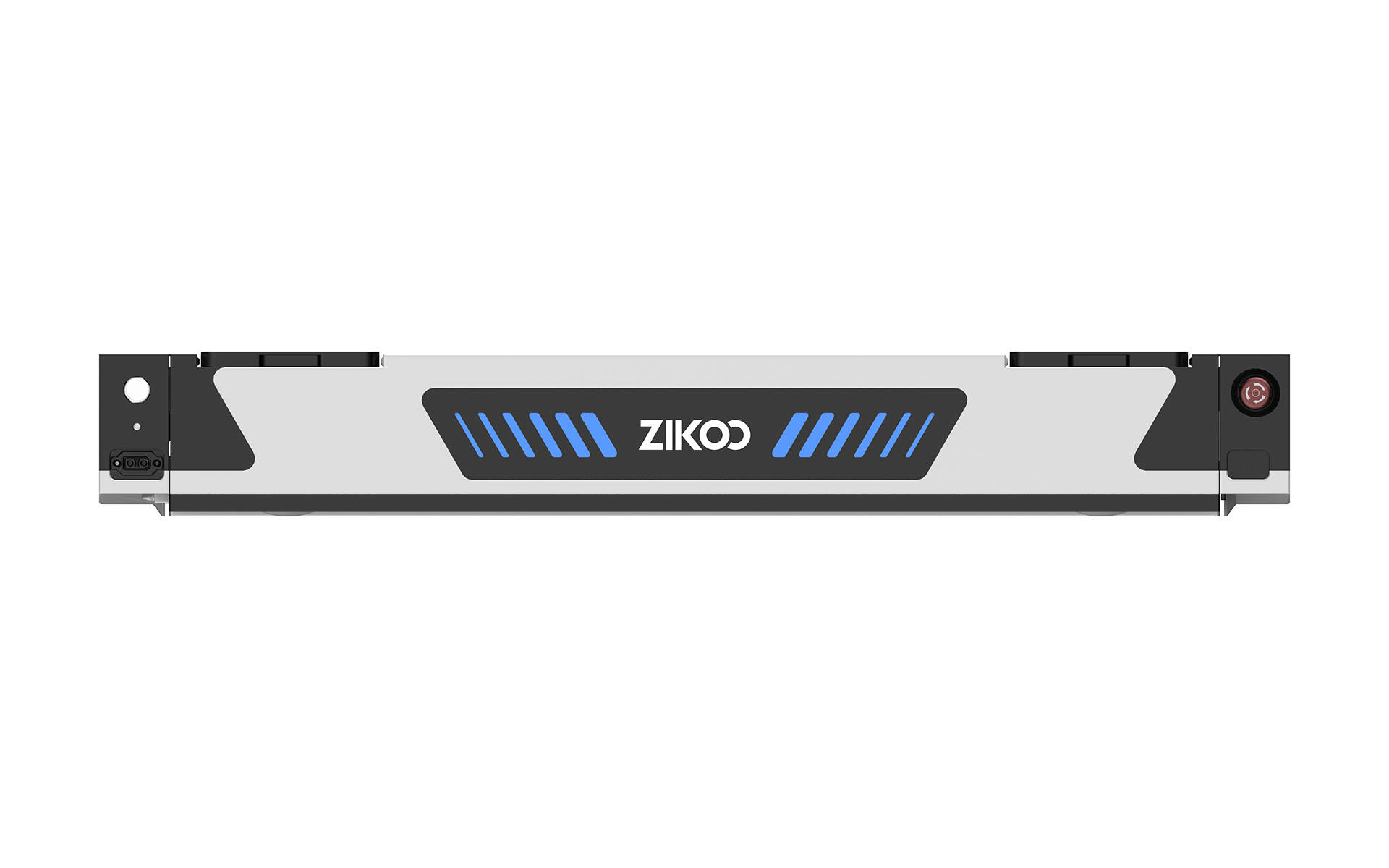
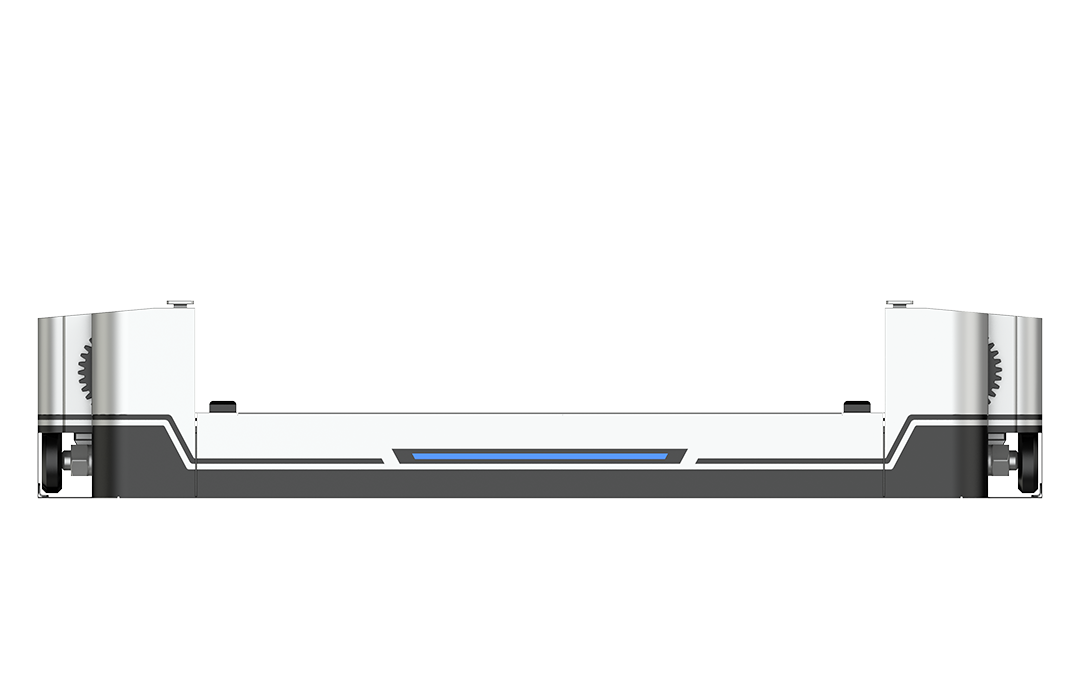
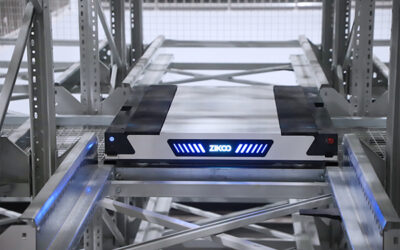
Dense storage choices also depend on how shuttle paths and rack interfaces are coordinated. <Smart Storage Revolution: Comprehensive Overview of Four-Way Shuttle Systems for Automatic 3D Warehouses> covers four-way shuttle systems for automatic 3D warehouses.
Match Storage and Movement Technology to the Production Rhythm
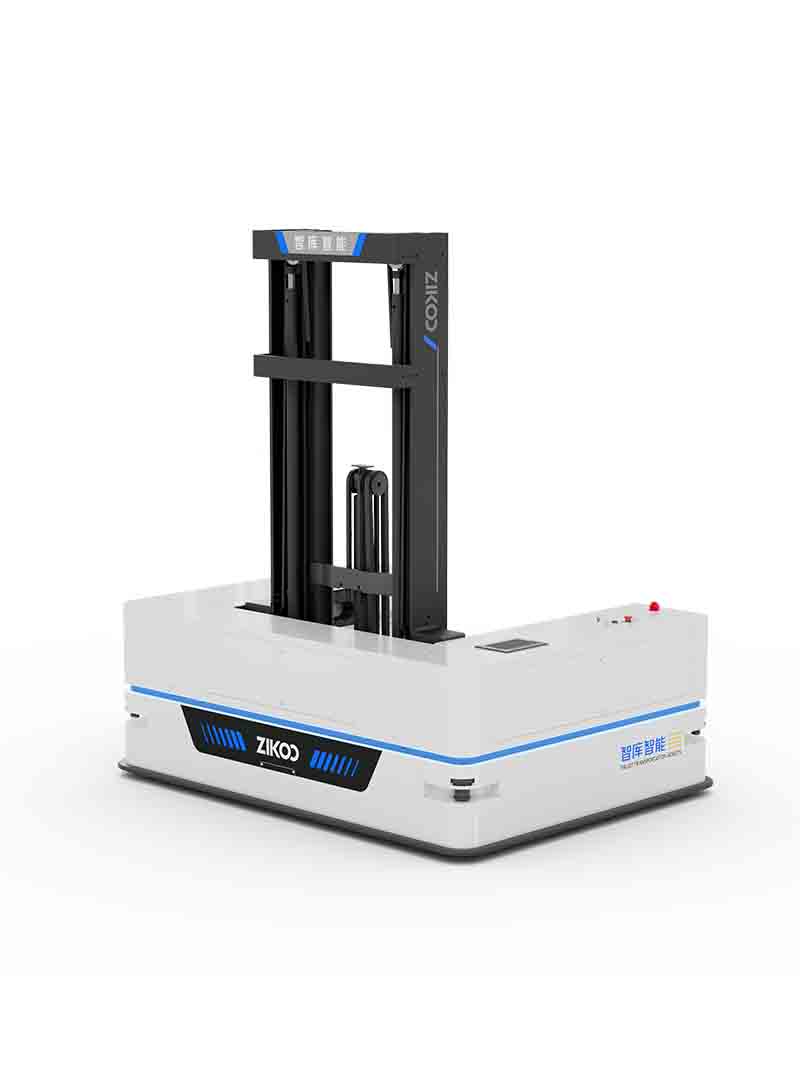
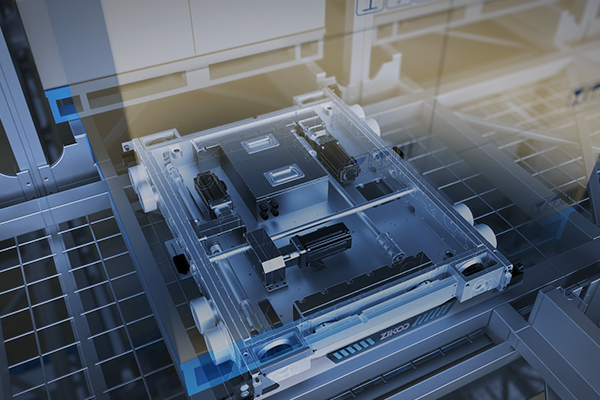
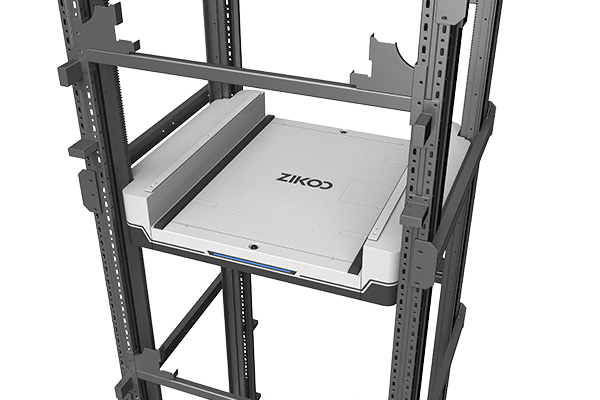
No equipment class is universally better. The useful comparison is between the flow requirement and the constraint each technology imposes. A stacker crane ASRS can provide high density and high lift, but crane throughput is concentrated in an aisle and the layout is less tolerant of later change. A four-way shuttle system moves pallets in a dense rack grid and can serve multiple aisles with shared lifts, but it depends on good rack interfaces and a WCS that can sequence missions. A narrow-aisle stacker robot can deliver pallets close to the line-side pick face without the fixed crane aisle structure, at the cost of traffic management and battery planning. An AMR or AGV fleet is flexible on routes but usually carries less per trip and needs charging, queuing, and pedestrian separation. A vertical transfer unit such as a lift shuttle makes sense when vertical movement between levels is a recurring bottleneck, not simply because the building is tall.
| Technology | Best fit in a plant | Main constraint | Check before selection |
|---|---|---|---|
| Stacker crane ASRS | Stable full-pallet inventory, high lift, few SKUs | Crane throughput concentrated in an aisle, fixed layout | Aisle redundancy and maintenance access |
| Four-way shuttle | Dense pallet storage, mixed SKU, shared lift access | Rack interface quality, WCS sequencing | Rescue plan and empty pallet flow |
| Narrow-aisle stacker robot | Line-side replenishment in existing buildings | Traffic and battery management | Floor condition and aisle continuity |
| Vertical transfer plus shuttle | Multi-level storage with a vertical bottleneck | Handoff reliability and structural cost | Whether vertical travel is truly the constraint |
| AMR or AGV | Variable routes, small loads, low-volume areas | Charging and traffic conflict | Pedestrian separation and fallback |
Where dense storage earns its place
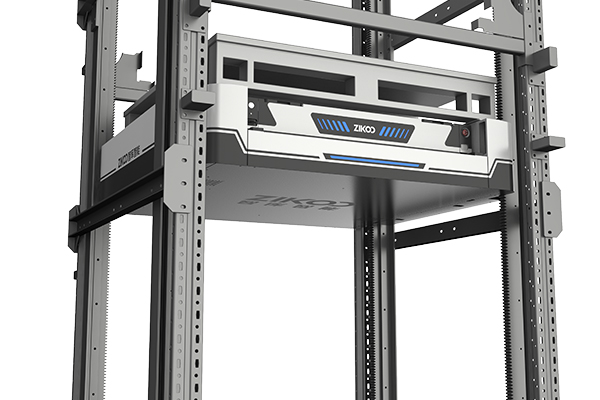
A six-way shuttle concept combines a four-way shuttle with a vertical transfer unit. It can create a three-dimensional movement network, but the benefit depends on the building. If the plant has a tall, dense rack structure and frequent moves between levels, the vertical link can remove a recurring handoff. If the moves are mostly on one level, the same unit adds a transfer point and a new failure mode. The right question is not how many directions the equipment can move, but how many handoffs the product can avoid.
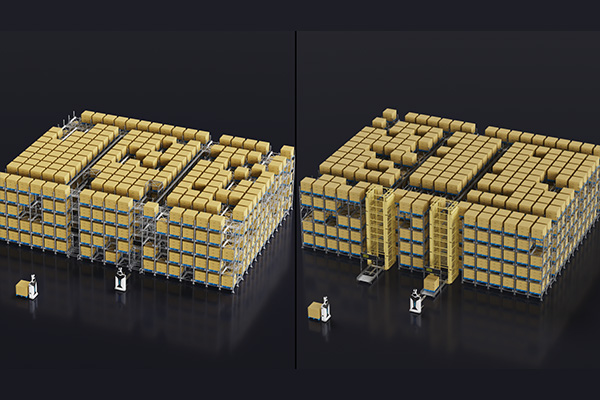
A six-way layout also changes how storage, lifting, and retrieval are sequenced. <Six-Way Shuttle Unlocks the Era of True 3D Intelligent Warehousing> covers six-way shuttle systems for three-dimensional intelligent warehousing.
Vertical transfer equipment is often evaluated on speed alone. A more useful check is handoff reliability. Every transfer adds a positioning cycle, a communication step, and a potential recovery scenario. If the WCS cannot see the transfer unit state, the shuttle will wait or arrive early. Ask for the handoff sequence, the fault recovery path, and the manual override procedure before comparing travel speed.

Where line-side delivery changes the choice
A narrow-aisle stacker robot earns its place when the plant needs direct pallet delivery to a pick face or a line-side buffer in an existing building. It reduces the need for a central high-bay structure, but it puts more demand on aisle discipline, floor condition, and traffic rules. An AMR or AGV may be better for small, variable loads and routes that change by product family. The choice should follow the handling unit and the call-off frequency. If a line needs six pallets per shift, a flexible route may be enough. If it needs full pallets at a high rate, a fixed high-throughput path is usually easier to control.
Pallet handling should also be checked at the interface, not only in the rack. Damaged pallets, overhang, shrink wrap, and load stability affect every automated system. A four-way shuttle needs a clear pallet profile and a consistent rack opening. A narrow-aisle stacker needs a floor and aisle free of debris and a pick face that the fork or platform can enter. A crane needs a stable load and a defined home position. These are not installation details to settle later; they decide whether the chosen technology can run at the planned rate.
Size Buffers and Capacity From Production Constraints
Capacity planning for a plant warehouse should start with the production calendar, not a generic storage density target. The first input is peak pallet inventory by flow segment, expressed in the units the line actually consumes. The second is the replenishment interval that the line can tolerate. The third is the changeover pattern, because a product change can double or halve the demand for a component within one shift. The fourth is the empty pallet and returns loop, which consumes positions that are easy to omit from a high-level layout.
| Planning input | Why it changes the design | Evidence to collect |
|---|---|---|
| Peak inventory by segment | Sets storage positions and buffer size | Twelve months of receipts, issues, and shift peaks |
| Replenishment response time | Sets vehicle count and software rules | Line call-off frequency and acceptable wait |
| Changeover plan | Explains short-term peaks | Product sequence and setup times |
| Pallet quality and size | Sets rack opening and handling tolerance | Sample pallets, damage rate, overhang |
| Empty and return flow | Prevents aisle blockage | Daily empty pallet volume and loop ownership |
A first-pass position check can be written as: Required storage positions = peak pallet count by segment + dedicated empty pallet positions + quarantine or hold positions + buffer positions. The buffer is not a substitute for a stable replenishment rule. It is the allowance for schedule variation and recovery. If the buffer becomes the main operating mode, the problem is flow planning, not insufficient storage.
Throughput should be checked at the hour and shift level. Annual pallet moves can hide a shift-start peak that the system cannot serve. Build a simple table of moves per hour for a typical day and for a changeover day. Then compare it with the demonstrated rate of the selected equipment, including empty travel, lift waiting, battery charging, and operator confirmation. A vendor headline speed is not a system rate. The system rate is the number of useful pallet moves the plant can complete after every interface and handoff is included.
Connect Warehouse Software to MES and ERP
A manufacturing warehouse strategy fails at the software boundary more often than at the rack. The enterprise resource planning system holds the production order and material master. The manufacturing execution system releases the schedule and consumes components. The warehouse management system owns location and inventory truth. The warehouse execution system sequences work. The warehouse control system drives equipment, and a robot control system manages fleet traffic where mobile robots are used. If these layers do not share the same material identity, the line will receive the right quantity of the wrong item, or the right item at the wrong time.
| Software layer | Primary job in a plant warehouse | Interface to check |
|---|---|---|
| ERP | Production orders, material master, costing | Material identity and unit of measure |
| MES | Schedule release, consumption, traceability | Call-off timing and backflush rules |
| WMS | Location inventory and replenishment | Batch, serial, hold, and FIFO rules |
| WES and WCS | Work sequencing and equipment control | Fault recovery and manual override |
| RCS | Mobile robot traffic and charging | Zone control and pedestrian rules |
The interface decisions that matter
The most important interface is not a data field but a decision right. Who can change a replenishment priority? Can the line foreman call a pallet directly, or must the change pass through a planner? If the MES releases a production order but the WMS only sees a sales order, line-side replenishment will lag. If the WMS holds inventory in a quality status that the MES cannot see, the line will call for material that is not releasable. The design should document these states and the escalation path for each exception.
The software layer also determines how inventory, equipment, and production schedules stay aligned. <PTP Intelligent Warehouse Software Empowers Enterprises for Smart Upgrades> covers PTP smart warehouse software for warehouse upgrades.
Routing and recovery rules
Routing and mission sequencing are part of the same decision. A dense shuttle system can have more than one path to a location, but the fastest path is not always the best one when a lift is shared or an aisle is blocked. The software needs a rule for congestion, priority, and recovery, not just a shortest-path calculation.
Retrofit in Phases Without Stopping the Line
Most manufacturing plants cannot empty the building for a year. A retrofit strategy has to protect production while the new system is built around it. The first constraint is physical: floor flatness, ceiling height, column grid, rack clearances, fire protection, egress, power, and network routes. The second is operational: where the stock will go during cutover, which product families move first, and what the manual fallback is if the automated system stops. The third is contractual: who owns interface testing, who trains the operators, and what evidence is required before the line depends on the new flow.
| Phase | Exit evidence | Production risk to control |
|---|---|---|
| Flow baseline | Measured pallet moves by hour and segment | Hidden peak or missing flow |
| Pilot zone | Stable operation through a full shift pattern | Pilot isolated from real line pressure |
| Interface test | Successful call-off, hold, and recovery cases | Software exception stops the line |
| Cutover by family | Parallel run and manual fallback proven | Loss of old route before new route is stable |
| Stabilization | KPI review and defect closeout | Early scale-up before defects are closed |
The safest sequence is usually not the fastest one. Start with a flow that has stable demand and a clear handling unit, prove the software exceptions, then add the next product family. Keep a manual path for the highest-consequence material until the automated path has demonstrated recovery from a power loss, a blocked aisle, a damaged pallet, and a communication failure. A go-live date tied to a product launch or peak season adds risk that the project does not need.
Measure the Strategy With Production-Facing Metrics
A manufacturing warehouse should be judged by how it serves production, not by how impressive the equipment looks. Storage density matters, but it is a secondary measure. The primary measures are line-side availability, inventory accuracy, response time, and recovery time. If the line waits, the warehouse has failed even when every pallet is stored in a dense rack. If the inventory record is wrong, every downstream plan becomes a guess. If recovery takes hours, the automation has transferred risk to the plant rather than removed it.
| Metric | What it tells you | Review cadence |
|---|---|---|
| Line-side availability | Whether the line receives material when called | Every shift |
| Inventory record accuracy | Whether location and quantity data can be trusted | Weekly cycle count |
| Call-off response time | Delay between line request and delivery | Daily and at changeover |
| System recovery time | How fast the flow returns after a fault | After every event |
| Pallet moves per labor hour | Whether automation reduced handling work | Monthly |
| Energy per pallet move | Operating cost and improvement target | Monthly where metered |
Leading indicators are more useful than a monthly cost report. Track blocked aisles, empty pallet shortages, manual overrides, and repeated faults. These signals show whether the strategy is stable before they appear in a cost variance. A simple weekly review with production, maintenance, and warehouse staff can catch a flow problem while it is still a scheduling issue rather than a line stop.
Turn Your Production Flows Into a Warehouse Brief
A useful automation discussion starts with your production data, not a catalog. Send the product families and routings, the bill of materials structure, pallet sizes and load profiles, peak inventory by flow segment, shift pattern and changeover windows, existing layout constraints, and the ERP and MES interfaces you need to preserve. That information lets Zikoo Smart Technology Co., Ltd review the flow with you and identify where dense storage, narrow-aisle delivery, vertical transfer, or software orchestration would help, and where a simpler manual buffer may be the better first step. Email [email protected] or call (+86)-19941778955 to arrange the review.
FAQ
Is a four-way shuttle always the right choice for a manufacturing plant?
No. It fits dense full-pallet storage with stable handling and a known replenishment rule. If the plant needs frequent small-piece picking, mixed pallet heights, or a very short line-side response, a narrow-aisle stacker or a manual buffer may be better. Check rack interface quality, empty pallet flow, and WCS sequencing before comparing price.
How much automation should a plant add in the first phase?
Start with one flow segment and one product family that has stable demand. Automate the interface that causes the most delay, not the largest number of pallets. Keep a manual fallback and prove fault recovery before scaling. A small pilot that includes software exceptions is more useful than a full building designed around an untested assumption.
Can an existing plant retrofit an automated warehouse without stopping production?
It can be phased, but not risk-free. Build the new system in a separated zone, cut over by product family or shift, and keep the old route available until the new route has passed a full production cycle. Floor, fire protection, egress, and column grid constraints must be checked before layout approval.
What data should a plant gather before asking for a warehouse automation design?
Gather twelve months of pallet receipts and issues by hour, peak inventory by flow segment, pallet sizes and damage examples, shift pattern, changeover plan, line-side response time, empty pallet volume, and the ERP, MES, and WMS interfaces. Also record the manual workarounds used today. Those workarounds often reveal the real constraint better than the average throughput figure.
If you’re interested, check out these related articles:
PTP Intelligent Warehouse Software Empowers Enterprises for Smart Upgrades
Six-Way Shuttle Unlocks the Era of True 3D Intelligent Warehousing