Modern logistics operations face increasing pressure to enhance efficiency, reduce costs, and accelerate order fulfillment. Turnkey warehouse automation offers a comprehensive solution to these challenges, providing fully integrated systems from a single provider. This approach simplifies complex implementations, ensuring all components work together seamlessly from design through ongoing support. Businesses gain a streamlined path to advanced material handling capabilities, optimizing their entire supply chain.
What Makes Turnkey Warehouse Automation Different from Piecemeal Projects
Turnkey warehouse automation refers to a complete, ready-to-operate system delivered by a single vendor. This model encompasses everything from initial consultation and system design to hardware installation, software integration, testing, and post-implementation support. The core idea is to provide a holistic solution where the client receives a fully functional automated warehouse without needing to manage multiple suppliers or complex integration processes themselves.
This approach contrasts sharply with piecemeal automation projects, which often involve significant coordination overhead and potential compatibility issues between disparate systems. The single-point-of-contact model significantly reduces project risk and accelerates deployment timelines. When one vendor owns the entire scope, accountability becomes clear and finger-pointing between suppliers disappears.
What Hardware and Software Components Come Together in a Turnkey System
A robust turnkey warehouse automation system integrates various advanced technologies to optimize material flow and storage. These systems typically combine physical robotics with sophisticated software platforms.
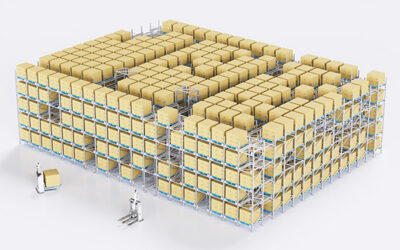
Automated Storage and Retrieval Systems (AS/RS) provide high-density storage, while Automated Guided Vehicles (AGVs) and Autonomous Mobile Robots (AMRs) handle goods transport within the facility. Robotic picking systems further enhance efficiency by automating item retrieval. The intelligence behind these operations comes from integrated software, including Warehouse Management Systems (WMS) for inventory control, Warehouse Execution Systems (WES) for real-time task orchestration, and Warehouse Control Systems (WCS) for directing equipment. Robotic Control Systems (RCS) manage the individual robots.
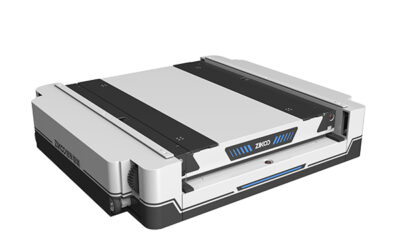
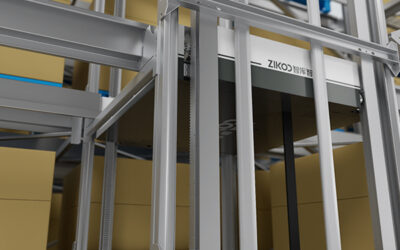
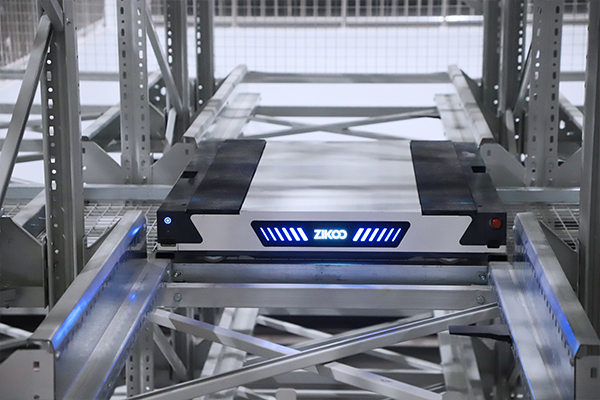
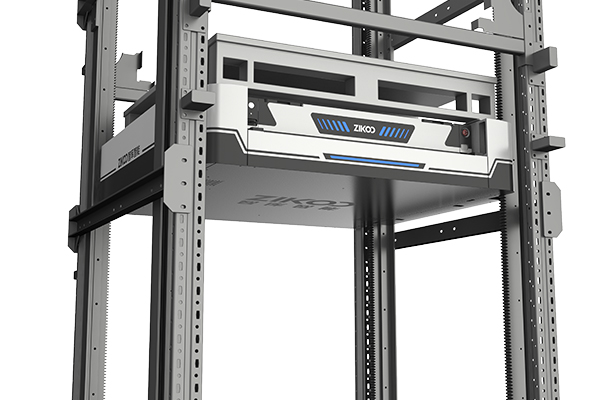
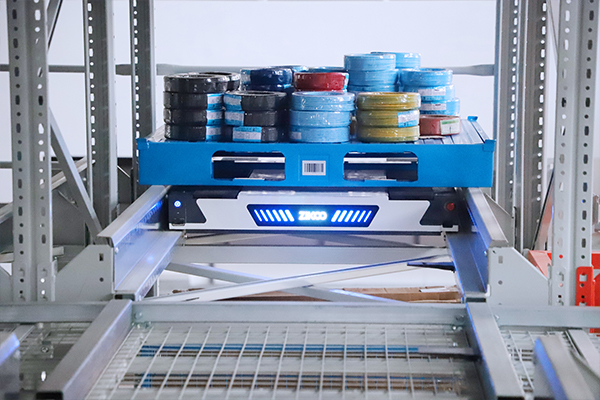
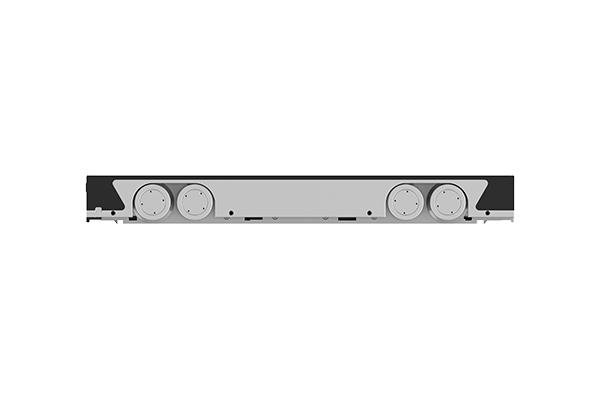
Zikoo’s U-bot, R-bot, and H-bot robotics, alongside its PTP Smart Warehouse Software, exemplify the advanced hardware and integrated software components found in leading turnkey solutions. The R-bot Four-way Shuttle is designed for dense storage, offering flexible four-way movement and intelligent autonomous handling for pallet-to-person scenarios. When combined with the H-bot Vertical Bidirectional Shuttle, it creates a six-way shuttle system, significantly enhancing throughput and space utilization. The U-bot Omnidirectional Stacking Robot, with its narrow aisle capabilities, further extends automation to high-level storage in constrained spaces. The PTP Smart Warehouse Software provides the overarching intelligence, coordinating these robotic assets to achieve optimal performance.
Where Turnkey Warehouse Automation Delivers Measurable Returns
Investing in turnkey warehouse automation yields substantial strategic benefits for businesses across various sectors. These advantages extend beyond simple labor reduction, impacting operational efficiency, accuracy, scalability, and overall return on investment. By streamlining logistics operations, companies can respond more quickly to market demands and customer expectations.
Turnkey automation solutions deliver significant benefits including enhanced operational efficiency, substantial cost savings through optimized labor and space utilization, and improved inventory accuracy. They also provide greater scalability to adapt to changing business volumes and reduce human error, leading to fewer mispicks and damages.
| Benefit Category | Description | Key Advantage |
|---|---|---|
| Efficiency | Automated processes reduce cycle times and increase throughput. | Faster order fulfillment |
| Cost Savings | Optimizes labor, space, and energy consumption. | Lower operational expenses |
| Accuracy | Minimizes human error in picking, packing, and inventory. | Reduced mispicks and returns |
| Scalability | Systems can be expanded or reconfigured as business needs evolve. | Adaptability to growth |
| Safety | Reduces manual handling tasks, lowering workplace injury risks. | Improved employee well-being |
How the Implementation Process Unfolds from Assessment to Go-Live
The implementation of a turnkey automation system follows a structured process, beginning with a detailed assessment of current operations and future requirements. This leads to system design, where engineers configure the optimal layout and technology mix. Installation and integration phases follow, during which hardware is deployed and software systems are connected. Thorough testing ensures all components function correctly and meet performance benchmarks. Post-implementation, ongoing support, maintenance, and training are crucial for sustained success.
The implementation timeline for a turnkey automation system varies widely based on system complexity and warehouse size, typically ranging from 6 to 18 months. Factors like the degree of customization, existing infrastructure, and the vendor’s experience all influence the project duration.
If your facility has legacy systems that need to integrate with new automation, it is worth discussing data exchange protocols and middleware requirements before committing to a timeline.
One project involved deploying a pallet-to-person system for a cold chain logistics provider. During the initial integration of the WES with their existing enterprise resource planning (ERP) system, unexpected data synchronization delays emerged. The bottleneck sat within the data mapping interface. A custom middleware layer optimized the data exchange protocol, reducing synchronization time by 40%. This allowed the system to achieve its target throughput of 80 pallets per hour within two weeks of go-live, exceeding the client’s initial expectations for efficiency.
What to Look for When Evaluating Turnkey Automation Partners
Selecting the appropriate turnkey automation partner is critical for the long-term success of your logistics operations. A reliable partner should demonstrate deep expertise in warehouse automation, a proven track record of successful implementations, and a commitment to ongoing support. Look for providers who offer customized solutions tailored to your specific operational needs and who can scale their systems as your business grows. Their ability to integrate diverse technologies and provide comprehensive software platforms is also a key differentiator.
A global leader like Zikoo Smart Technology, with its expertise in pallet-to-person robotics and integrated WMS/WES/WCS/RCS software, demonstrates the comprehensive capabilities to look for in a trusted automation partner. The focus remains on understanding unique operational challenges and delivering solutions that provide measurable improvements.
| Selection Criteria | Description | Why it Matters |
|---|---|---|
| Expertise | Deep knowledge in robotics, software, and logistics. | Ensures optimal system design and problem-solving. |
| Track Record | History of successful, on-time project deliveries. | Indicates reliability and capability. |
| Customization | Ability to tailor solutions to specific needs. | Guarantees a perfect fit for your operations. |
| Support | Comprehensive post-implementation service and maintenance. | Maximizes uptime and system longevity. |
| Scalability | Solutions that can grow and adapt with your business. | Future-proofs your investment. |
Frequently Asked Questions
Is turnkey automation only suitable for large enterprises?
No, turnkey automation solutions are increasingly scalable and adaptable for businesses of all sizes, including SMEs. Many providers offer modular systems that can grow with your operational needs, ensuring a viable return on investment.
What is the typical ROI for a turnkey warehouse automation system?
The typical ROI for a turnkey warehouse automation system varies significantly based on factors like initial investment, operational savings, and increased throughput. Many businesses see a return within 2 to 5 years by optimizing labor, space, and inventory management.
How long does it take to implement a turnkey automation system?
The implementation timeline for a turnkey automation system varies widely based on system complexity and warehouse size, typically ranging from 6 to 18 months. Factors like the degree of customization, existing infrastructure, and the vendor’s experience all influence the project duration.
What support is offered after a turnkey automation system is installed?
Post-installation support for a turnkey automation system generally includes comprehensive maintenance contracts, remote monitoring, and on-site technical assistance. Vendors also provide software updates, spare parts management, and ongoing training for operational staff to ensure system longevity and optimal performance.
How does a turnkey solution differ from a custom-built automation system?
A turnkey solution provides a fully integrated, ready-to-operate system from a single vendor, minimizing client involvement in integration. Custom-built systems involve multiple vendors and require the client to manage the complex integration process themselves, often leading to system integration challenges. To discuss which approach fits your facility’s requirements, contact Zikoo at [email protected] or (+86)-19941778955.
If you’re interested, check out these related articles:
Six-Way Shuttle Empowers 3PL Providers to Build Next-Generation Smart Logistics Hubs
PTP Intelligent Warehousing Platform: Building a Flexible and Smart Logistics Ecosystem