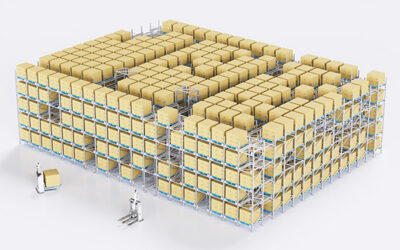
Modern warehouses face increasing pressure to optimize operations, reduce costs, and meet escalating customer demands. Traditional manual methods often struggle to keep pace, leading to bottlenecks and inefficiencies. Automated Storage and Retrieval Systems (ASRS) offer a powerful solution, transforming warehouse logistics through advanced automation. We will explore the fundamental aspects of ASRS, its benefits, and how it can revolutionize your warehouse operations.
The Challenges Facing Modern Warehouses Today
Warehouses today navigate a complex landscape of operational hurdles. These challenges directly impact profitability and customer satisfaction. Addressing them requires strategic investment in advanced technologies.
1. Rising operational costs and labor shortages
Labor costs continue to climb, while finding and retaining skilled warehouse personnel becomes increasingly difficult. Manual processes are inherently labor-intensive and prone to human error. This combination forces businesses to seek solutions that reduce reliance on manual labor.
2. Increasing demand for faster order fulfillment
E-commerce growth and evolving customer expectations drive the need for rapid order processing and delivery. Traditional warehouses often struggle to achieve the speed and accuracy required for same-day or next-day shipping. This pressure necessitates faster, more efficient picking and packing operations.
3. Optimizing limited warehouse space
Real estate costs are high, making efficient use of existing warehouse space critical. Many warehouses operate at or near capacity, limiting growth potential and increasing operational complexity. Maximizing storage density without expanding the physical footprint is a key objective.
4. Ensuring inventory accuracy and damage reduction
Manual inventory management frequently results in inaccuracies, leading to misplaced items, stockouts, and costly write-offs. Human handling also increases the risk of product damage. Improved accuracy and reduced damage directly impact profitability and customer trust.
What is an Automated Storage and Retrieval System (ASRS)
An Automated Storage and Retrieval System (ASRS) represents a sophisticated solution for managing inventory within a warehouse. It significantly enhances efficiency and accuracy.
1. Defining ASRS and its core purpose
An ASRS is a computer-controlled system that automatically places and retrieves items from designated storage locations. Its core purpose is to optimize storage density, improve throughput, and reduce labor requirements by automating material handling tasks. These systems minimize human intervention in storage and retrieval processes.
2. Key components of an ASRS
ASRS systems comprise several integrated components. These include storage racks, which provide the structure for holding inventory. Automated cranes or shuttles move items within the racks. Conveyors or automated guided vehicles (AGVs) transport goods to and from workstations. A sophisticated computer control system (WMS/WES/WCS) manages all operations, tracking inventory and directing equipment.
3. How ASRS systems enhance warehouse operations
ASRS systems enhance operations by automating repetitive tasks, reducing travel time, and improving inventory organization. They enable high-density storage, utilizing vertical space effectively. This automation leads to faster processing times, fewer errors, and a more streamlined workflow.
If you’re interested, check 《The Future Of Automated Warehousing From Asrs Warehouse To Fully Intelligent Storage》.
Exploring Different Types of ASRS Systems
ASRS technology encompasses various configurations, each designed for specific storage and retrieval requirements. Understanding these types helps in selecting the most suitable system for a particular application.
1. Unit-load ASRS for large item handling
Unit-load ASRS systems handle large, heavy items stored on pallets or in containers. These systems typically use high-speed cranes to move loads into and out of tall racking structures. They are ideal for operations requiring storage of bulk goods or large quantities of a single product.
2. Mini-load ASRS for smaller items and cases
Mini-load ASRS systems are designed for smaller items, cartons, or totes. They use smaller cranes or shuttles to retrieve and store individual cases or trays. These systems are common in operations with high volumes of small parts or e-commerce fulfillment centers.
3. Shuttle-based ASRS for high-density storage and retrieval
Shuttle-based ASRS utilizes robotic shuttles that move independently within storage lanes. These systems offer exceptional flexibility and scalability, allowing for very high storage density and throughput. Shuttles can operate on multiple levels, providing dynamic storage and retrieval.
4. Carousel and vertical lift modules (VLMs) for compact storage
Carousel systems consist of a series of bins or shelves that rotate horizontally or vertically to bring items to an operator. Vertical Lift Modules (VLMs) store items on trays within an enclosed unit, presenting the requested tray to an access opening. Both are excellent for maximizing space in compact environments and improving pick accuracy.
The Transformative Benefits of Implementing ASRS in Warehouses
Implementing ASRS solutions offers significant advantages that transform warehouse operations. These benefits contribute to enhanced competitiveness and long-term sustainability.
1. Maximizing storage density and space utilization
ASRS systems significantly increase storage density by utilizing vertical space more effectively than traditional methods. High-rise racking and compact designs minimize aisle space, allowing warehouses to store more inventory within the same footprint. This optimization reduces the need for expensive facility expansion.
2. Significantly improving operational efficiency and throughput
Automation streamlines storage and retrieval processes, eliminating manual travel and search times. ASRS robots operate continuously at high speeds, leading to substantial improvements in throughput and order fulfillment rates. This efficiency directly translates to faster customer service.
3. Enhancing accuracy and reducing human error
Computer-controlled systems precisely track every item, minimizing mispicks, misplaced inventory, and stockouts. Automated handling reduces the risk of human error and product damage. This enhanced accuracy improves inventory management and reduces operational costs.
4. Improving worker safety and ergonomics
ASRS removes workers from hazardous tasks such as lifting heavy items or operating forklifts in high-traffic areas. Goods-to-person delivery systems bring items directly to ergonomic workstations, reducing physical strain and the risk of injuries. This creates a safer working environment.
5. Achieving scalability and flexibility for future growth
Modular ASRS designs allow businesses to expand their systems as operational needs grow. The inherent flexibility of these systems accommodates changes in inventory profiles and order volumes. This adaptability supports future business growth without major disruptions.
We explore the strategic advantages of ASRS solutions in 《Maximizing Space Velocity In Modern Warehouses》.
Zikoo’s Innovative ASRS Solutions for Pallet-to-Person Automation
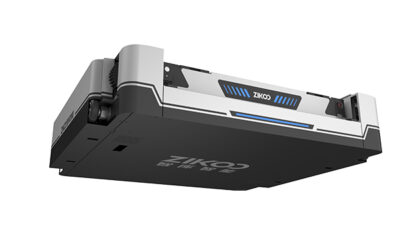
Zikoo Smart Technology Co., Ltd. specializes in advanced pallet-to-person automation, offering innovative ASRS solutions designed to meet the demands of modern warehousing. Our robot lineup and integrated software provide comprehensive control.
1. Zikoo R-bot Four-way Shuttle for dense storage
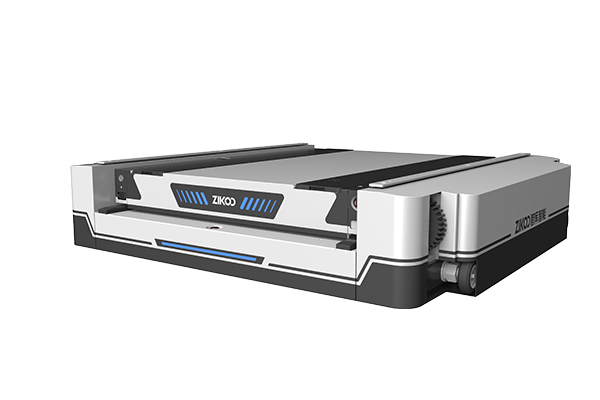
The Zikoo R-bot Four-way Shuttle is an intelligent warehouse robot optimized for dense storage. It offers flexible four-way movement and autonomous handling. With a slim body (125 mm) and up to 1.5 tons load capacity, it integrates with other equipment for six-way functionality. This system is ideal for e-commerce, cold chain, and manufacturing storage applications.
For more details on the R-bot, see 《The New Trend In Automated Warehousing Why Four Way Shuttle Systems Stand Out》.
| Model | Weight (kg) | Rated Load (kg) | Body Dimensions (L×W×H mm) | Pallet Sizes Supported (mm) | Empty Speed (m/s) | Loaded Speed (m/s) | Continuous Operation (hours) |
|---|---|---|---|---|---|---|---|
| R1200B | 270 | 1200 | 1000 × 972 × 125 | 1200 × 800–1000 | 1.6 | 1.2 | 8 |
| R1200A | 265 | 1200 | 1192 × 840 × 125 | 1016 × 1219 | 1.6 | 1.2 | 8 |
| R1500J | 270 | 1500 | 1192 × 900 × 125 | 1100 × 1100 | 1.6 | 1.2 | 8 |
| R1500B | 275 | 1500 | 1192 × 972 × 125 | 1200 | 1.6 | 1.2 | 8 |
| R2000B | 400 | 2000 | 1250 × 1300 × 150 | 1400 | 1.35 | 1.0 | 7 |
2. Zikoo H-bot Vertical Bidirectional Shuttle for multi-level transport
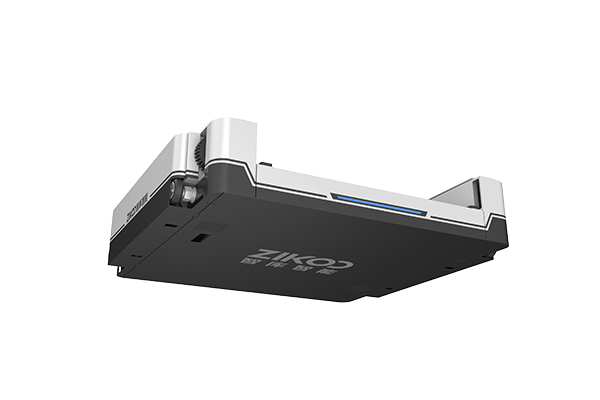
The Zikoo H-bot Vertical Bidirectional Shuttle functions as a vertical transportation hub within intelligent warehousing systems. It occupies minimal space, fitting into a single storage location. The H-bot collaborates with the R-bot Four-way Shuttle to establish a three-dimensional warehousing network, significantly boosting system efficiency. This integration is crucial for high-rack stereoscopic warehouses and urban logistics centers.
3. Zikoo U-bot Omnidirectional Stacking Robot for narrow aisle efficiency
The Zikoo U-bot Omnidirectional Stacking Robot is designed for narrow aisle storage, requiring a minimum aisle width of only 2100 mm. Its U-shaped body and 1370 mm turning radius ensure exceptional maneuverability. The U-bot offers a lifting height of 0–8 meters and a rated load capacity of 1000 kg. It can integrate with AMRs and robotic arms for versatile operations in e-commerce, pharmaceutical, and manufacturing sectors.
4. Integrated PTP Smart Warehouse Software (WMS/WES/WCS/RCS)
Zikoo’s PTP Smart Warehouse Software suite provides comprehensive control over the entire ASRS operation. This integrated platform includes Warehouse Management System (WMS), Warehouse Execution System (WES), Warehouse Control System (WCS), and Robot Control System (RCS). It ensures seamless coordination, real-time inventory tracking, and optimized task execution across all automated equipment.
Transform Your Warehouse with Zikoo Robotics
Are you ready to elevate your warehouse operations to new levels of efficiency, accuracy, and scalability? Zikoo Smart Technology Co., Ltd. offers cutting-edge ASRS solutions tailored to your specific needs. Our expert team provides comprehensive support from consultation and design to implementation and maintenance. Contact us today to discuss how our innovative pallet-to-person robotics can revolutionize your logistics. Reach out via email at [email protected] or call us at +86-13800000000.
FAQs
1. What is the primary advantage of an ASRS over traditional warehousing?
The primary advantage lies in significantly higher storage density and operational efficiency. ASRS maximizes vertical space, reduces manual labor, and accelerates throughput. It also minimizes human error and improves inventory accuracy, leading to substantial cost savings and faster order fulfillment.
2. How do ASRS systems integrate with existing warehouse management systems?
ASRS systems typically integrate seamlessly with existing Warehouse Management Systems (WMS) through specialized software interfaces. A Warehouse Control System (WCS) acts as an intermediary, translating commands from the WMS into instructions for the ASRS equipment. This ensures a unified and automated workflow.
3. What factors should be considered when choosing an ASRS for a warehouse?
Key factors include the type and size of items stored, required throughput, available floor space and ceiling height, budget, and future scalability needs. The operating environment, such as temperature requirements, also plays a crucial role in system selection.
4. Can ASRS systems operate in specialized environments like cold storage?
Yes, many ASRS solutions are designed to operate efficiently in specialized environments, including cold storage and freezer facilities. These systems often feature specialized components, lubricants, and battery technologies to withstand extreme temperatures and maintain performance. Our R-bot, for example, has a cold chain custom solution.
5. What is the typical ROI for implementing an ASRS?
The Return on Investment (ROI) for ASRS implementation varies depending on factors like system size, operational scale, and labor cost savings. However, businesses often see ROI within 1 to 3 years due to reduced labor costs, increased storage capacity, improved accuracy, and enhanced throughput.