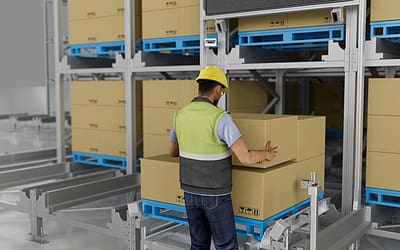
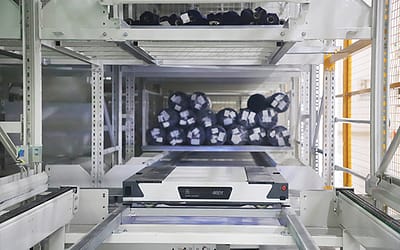
Modern warehouses are being squeezed from all sides—higher throughput targets, tighter labor markets, and every square meter under scrutiny. I’ve watched even well-run operations hit a ceiling with purely manual methods: errors creep in, aisles clog, and expansion starts to look inevitable. Automated Storage and Retrieval Systems (ASRS) have consistently turned that tide in my projects, marrying dense storage with fast, accurate moves. Below, I break down the essentials—what ASRS is, the key system types, and the concrete advantages—so you can see where automation fits and how it can lift your efficiency without blowing up your footprint.
Why Modern Warehouses Need Automated Storage and Retrieval Systems
Modern warehouses operate within a dynamic and competitive global supply chain. This environment demands constant evolution and adaptation to new challenges. Businesses must continuously seek innovative solutions to maintain efficiency and profitability.
1. Addressing the Challenges of Traditional Warehousing
Traditional warehousing models, reliant on manual processes and conventional racking, often encounter significant limitations. These limitations include high labor costs, which escalate due to increasing wages and labor shortages. Manual operations also lead to higher error rates in picking and inventory management, impacting customer satisfaction and incurring additional expenses. Furthermore, conventional warehouses typically suffer from suboptimal space utilization, particularly vertical space, leading to unnecessary expansion costs or constrained growth. The slow throughput of manual systems struggles to meet the rapid fulfillment demands of e-commerce and just-in-time logistics.
2. The Imperative for Enhanced Efficiency and Space Utilization
The modern market requires warehouses to be more agile, efficient, and adaptable than ever before. Businesses must maximize every square foot of their facilities to accommodate growing inventory volumes without expanding their physical footprint. Enhanced efficiency means faster order fulfillment, reduced operational costs, and improved inventory accuracy. These factors directly contribute to competitive advantage and customer loyalty. ASRS technology provides a strategic solution to these imperatives.
What Automated Storage and Retrieval Systems Are and How They Function
Automated Storage and Retrieval Systems (ASRS) represent a cornerstone of modern warehouse automation. They integrate various technologies to streamline storage and retrieval processes.
1. Defining ASRS and Its Core Components
ASRS are computer-controlled systems that automatically place and retrieve loads from designated storage locations. These systems typically consist of several core components. Racking structures provide the framework for high-density storage, often reaching significant heights. Automated storage and retrieval machines, such as cranes or shuttles, move horizontally and vertically within these structures. Conveyors and transfer stations facilitate the movement of goods into and out of the ASRS. Finally, a sophisticated control system, often comprising Warehouse Management Systems (WMS), Warehouse Execution Systems (WES), and Warehouse Control Systems (WCS), orchestrates all operations. The PTP Smart Warehouse Software (WMS/WES/WCS/RCS) is an excellent example of such an integrated control system.
2. Explaining the Operational Principles of ASRS Technology
ASRS technology operates on principles designed to optimize storage, retrieval, and overall material flow. When goods arrive for storage, the system identifies them and assigns a specific location based on predefined criteria like size, weight, and access frequency. Automated machines then transport the goods to their assigned slots. For retrieval, the system receives an order, identifies the item’s location, and dispatches a machine to retrieve it. The retrieved item travels via conveyors to a picking or dispatch station. This entire process minimizes human intervention, ensuring speed, accuracy, and safety.
Exploring Diverse Types of ASRS Systems and Their Applications
ASRS technology encompasses a variety of systems, each designed for specific operational needs and storage characteristics. Understanding these differences helps in selecting the most suitable solution.
1. Pallet Shuttles and Their Role in Dense Storage (Featuring Zikoo R-bot Four-way Shuttle)
Pallet shuttle systems excel in high-density storage applications, particularly for goods stored on pallets. These systems use autonomous shuttles that travel within racking lanes to deposit and retrieve pallets. This design eliminates the need for forklifts to enter the racking, significantly increasing storage density and reducing damage.
Zikoo’s R-bot Four-way Shuttle is a prime example of this technology. It is an intelligent warehouse robot optimized for pallet-to-person dense storage. The R-bot features a slim body (only 125 mm thick) and a robust load capacity of up to 1.5 tons. Its flexible four-way movement allows it to navigate complex storage layouts efficiently. The R-bot also supports multi-shuttle collaborative operation, enhancing throughput. When integrated with the H-bot vertical bidirectional shuttle, it forms a six-way shuttle system, further expanding its capabilities for various palletized goods storage and picking scenarios.
R-bot Four-way Shuttle Specifications
| Model Option | Weight (kg) | Rated Load (kg) | Body Dimensions (L×W×H mm) | Pallet Sizes (mm) | Empty Speed (m/s) | Loaded Speed (m/s) | Continuous Operation (hours) |
|---|---|---|---|---|---|---|---|
| Standard (R1200B) | 270 | 1200 | 1000 × 972 × 125 | 1200 × 800–1000 | 1.6 | 1.2 | 8 |
| American (R1200A) | 265 | 1200 | 1192 × 840 × 125 | 1016 × 1219 | 1.6 | 1.2 | 8 |
| Japanese (R1500J) | 270 | 1500 | 1192 × 900 × 125 | 1100 × 1100 | 1.6 | 1.2 | 8 |
| Heavy-duty (R1500B) | 275 | 1500 | 1192 × 972 × 125 | 1200 | 1.6 | 1.2 | 8 |
| Heavy-duty Large Pallet (R2000B) | 400 | 2000 | 1250 × 1300 × 150 | 1400 | 1.35 | 1.0 | 7 |
- Application Scenarios: Dense storage in e-commerce warehouses, cold chain food storage, pharmaceutical constant temperature warehouses, and high-density storage in manufacturing.
- Special Features: Cold Chain Custom Solution (operates at -25℃ with dedicated lithium battery, low-temperature charging, PCBA coating for humidity protection); New Energy Custom Solution (non-metallic vehicle design, stainless steel frames, all-rubber buffer wheels).
If you are interested in optimizing your storage density, you might want to read 《Breakthrough in Dense Storage: Four-Way Shuttles Double Your Space Efficiency》.
2. Vertical Lift Modules and Their Space-Saving Capabilities (Featuring Zikoo H-bot Vertical Bidirectional Shuttle)
Vertical Lift Modules (VLMs) are compact ASRS solutions that utilize vertical space to store items in trays or carriers. An extractor mechanism automatically retrieves and presents the desired tray to an operator at an ergonomic height. VLMs are ideal for storing small parts, tools, or high-value items, maximizing floor space in facilities with high ceilings.
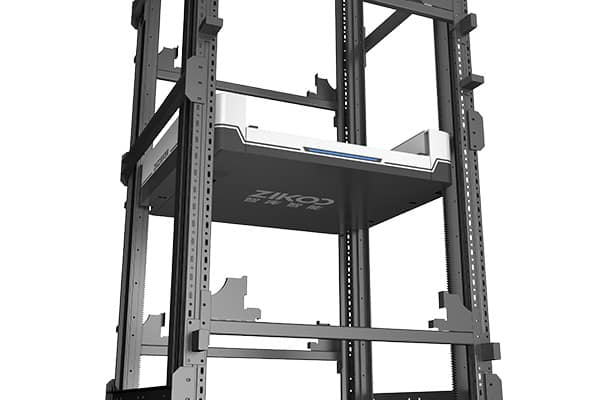
Zikoo’s H-bot Vertical Bidirectional Shuttle functions as a “vertical transportation hub” in intelligent warehousing. It is designed for pallet-to-person dense storage and storage-picking scenarios. The H-bot occupies only a single storage location, making it highly space-efficient. It collaborates seamlessly with the R-bot Four-way Shuttle to create a three-dimensional warehousing network, enabling movement in six spatial directions and significantly enhancing operational efficiency.
H-bot Vertical Bidirectional Shuttle Specifications
| Model Option | Body Weight (kg) | Body Dimensions (L×W×H mm) | Rated Load (kg) | Pallet Sizes (mm) | Empty Speed (m/s) | Loaded Speed (m/s) | Positioning Accuracy |
|---|---|---|---|---|---|---|---|
| Standard (H1800B) | 345 | 1300 × 1464 × 288 | 1800 | 1200 × 800–1200 | 1 | 0.5 | ±1 mm |
| American (H1800A) | 325 | 1300 × 1332 × 288 | 1800 | 1016 × 1219 | 1 | 0.5 | ±1 mm |
| Japanese (H1800J) | 335 | 1300 × 1392 × 288 | 1800 | 1100 × 1100 | 1 | 0.5 | ±1 mm |
| Heavy-duty Large Pallet (Custom) | Customized | Customized | Customized | Customized | Customized | Customized | ±1 mm |
- Operating Temperatures: All models operate from -25℃ to 45℃.
- Application Scenarios: Vertical cargo transfer in high-rack stereoscopic warehouses, urban warehousing centers, existing warehouse renovation projects, and dense storage requiring improved space utilization.
- Solutions: Forms a spatial six-way shuttle network with R-bot Four-way Shuttles, constructing three-dimensional transportation channels for dense storage.
3. Omnidirectional Stacking Robots for Narrow Aisle Optimization (Featuring Zikoo U-bot Omnidirectional Stacking Robot)
Omnidirectional stacking robots are designed to operate in narrow aisles, maximizing storage capacity in facilities where space is at a premium. Their omnidirectional movement capabilities allow them to maneuver efficiently in confined areas, reducing aisle width requirements compared to traditional forklifts.
Zikoo’s U-bot Omnidirectional Stacking Robot is specifically engineered for pallet-to-person narrow aisle storage scenarios, requiring a minimum aisle width of only 2100 mm. Its unique U-shaped body design and a minimum turning radius of 1370 mm provide exceptional maneuverability. The U-bot offers a lifting height of 0–8 meters and a rated load capacity of 1000 kg. It can also operate collaboratively with other automated equipment like AMRs and robotic arms.
U-bot Omnidirectional Stacking Robot Specifications
| Model Option | Dimensions (mm) | Rated Load (kg) | Self-weight (kg) | Lifting Height (mm) | Min. Aisle Width (mm) | Driving Positioning Accuracy | Battery Configuration | Continuous Operation (hours) |
|---|---|---|---|---|---|---|---|---|
| U1045 | 2198 × 1784 × 2100 | 1000 | 3000 | 4500 | 2100 | ±10 mm | 48 V / 210 Ah LiFePO4 | 6–8 |
| U1060 | 2198 × 1820 × 2685 | 1000 | 3300 | 6000 | 2140 | ±10 mm | 48 V / 210 Ah LiFePO4 | 6–8 |
| U1080 | 2198 × 1820 × 3465 | 1000 | 3500 | 8000 | 2140 | ±10 mm | 48 V / 210 Ah LiFePO4 | 6–8 |
- Application Scenarios: Narrow aisle high-density storage in e-commerce warehouses, constant temperature storage and picking in pharmaceutical industries, raw material and finished product storage in manufacturing, and intelligent transformation projects for existing warehouses.
- Solutions: Dual laser SLAM hybrid navigation for safe operation in narrow aisles; 3D depth camera for precise pallet positioning with automatic deviation compensation; rack-and-pinion forward mast structure for improved operational efficiency.
4. Integrated Robotic Picking Systems for Hybrid Operations (Featuring Zikoo U-bot + AMR Narrow Aisle Picking System)
Integrated robotic picking systems combine different robotic technologies to handle complex hybrid operations. These systems are particularly useful in environments requiring both bulk handling (palletization) and individual item picking (split-case picking).
Zikoo’s U-bot + AMR Narrow Aisle Picking System offers an efficient collaborative solution for hybrid scenarios. It utilizes an innovative “upper storage and lower buffering” or “upper storage and lower picking” architecture. The U-bot handles goods access in high-level storage areas, while AMRs manage goods handling and picking in low-level areas. This vertical functional complementarity enhances scenario adaptability, allowing full-category outbound picking for large, medium, and small items through multi-functional workstations.
U-bot + AMR Narrow Aisle Picking System Performance Indicators
| Metric | Value |
|---|---|
| Picking Efficiency | ≥300 pieces per hour |
| Inbound/Outbound Efficiency | ≥80 pallets per hour |
| Storage Density Improvement | Over 30% |
| Positioning Accuracy | ±10 mm |
| Minimum Aisle Width | 2100 mm |
| Supported SKU Quantity | Up to 10,000 |
- Application Scenarios: Multi-SKU split-case picking in e-commerce warehouses, raw material and finished product storage in manufacturing, suspended storage and sorting in the apparel industry, and multi-variety, small-batch storage in the pharmaceutical industry.
- Solutions: Efficient management of up to 10,000 SKUs; collaborative operation between U-bot and AMR with dynamic path planning; multi-functional workstations for diverse picking needs.

Key Benefits of Implementing ASRS in Contemporary Logistics
Implementing ASRS offers numerous strategic advantages that significantly impact a warehouse’s operational efficiency and bottom line. These benefits extend beyond simple automation.
1. Maximizing Storage Density and Warehouse Footprint
ASRS dramatically increases storage density by utilizing vertical space more effectively and reducing the need for wide aisles. This optimization allows companies to store more inventory within the same footprint, delaying or eliminating the need for costly facility expansions. By minimizing wasted space, businesses can achieve higher storage capacity per square meter. This is particularly crucial in urban areas where real estate costs are high.
2. Significantly Improving Throughput and Operational Speed
ASRS automates the movement of goods, leading to faster and more consistent throughput. Robotic systems operate continuously, without breaks, and at higher speeds than manual labor. This acceleration in material flow translates into quicker order fulfillment times, which is essential for meeting customer expectations in fast-paced markets like e-commerce. The ability to process more orders in less time directly boosts productivity.
If you want to learn more about improving throughput, consider reading 《Maximizing Space Velocity in Modern Warehouses》.
3. Enhancing Inventory Accuracy and Reducing Labor Costs
Automated systems track inventory with high precision, significantly reducing human error in counting, picking, and put-away processes. This accuracy leads to fewer misplaced items, reduced stockouts, and improved inventory visibility. ASRS also lowers labor costs by automating repetitive and physically demanding tasks, allowing human workers to focus on more complex, value-added activities. It also addresses challenges posed by labor shortages.
4. Ensuring Worker Safety and Ergonomic Improvements
ASRS removes workers from hazardous environments, such as operating heavy machinery or working at dangerous heights. This reduces the risk of accidents and injuries, creating a safer work environment. Furthermore, automated retrieval systems present items to workers at ergonomic heights, minimizing bending, lifting, and reaching. This reduces physical strain and improves overall worker well-being, leading to higher job satisfaction and lower rates of work-related health issues.

How to Select the Right ASRS System for Your Warehouse Needs
Choosing the appropriate ASRS requires careful consideration of current operations, future growth, and technological compatibility. A strategic approach ensures a successful implementation.
1. Assessing Current Warehouse Operations and Future Growth Projections
Begin by conducting a thorough analysis of your existing warehouse processes. Identify bottlenecks, peak demand periods, and areas with high error rates. Evaluate your current storage capacity, throughput requirements, and labor utilization. Simultaneously, project your business growth, including anticipated inventory volumes, SKU diversity, and order fulfillment rates over the next 5-10 years. This comprehensive assessment will define the scope and scale of your ASRS investment.
2. Evaluating Different ASRS Technologies Based on Specific Requirements
Different ASRS technologies offer distinct advantages. For high-density pallet storage, Four-Way Pallet Shuttle systems like Zikoo’s R-bot are highly effective. For optimizing vertical space with smaller items, Vertical Lift Modules (VLMs) or Zikoo’s H-bot are suitable. If your warehouse has narrow aisles, consider Omnidirectional Stacker Robot solutions such as Zikoo’s U-bot. Hybrid systems combining U-bot and AMR are ideal for operations requiring both palletization and split-case picking. Match the technology to your specific operational needs and product characteristics.
3. Considering Integration with Existing Warehouse Management Systems
Seamless integration with your existing Warehouse Management System (WMS), Warehouse Execution System (WES), and other IT infrastructure is critical for the success of any ASRS implementation. The ASRS control system must communicate effectively with your WMS to ensure accurate inventory tracking, order processing, and efficient material flow. Zikoo’s PTP Smart Warehouse Software (WMS/WES/WCS/RCS) provides a robust platform for such integration, ensuring all automated components work in harmony. Proper integration minimizes disruption and maximizes the benefits of automation.

Accelerate Your Warehouse Transformation with Zikoo Smart Technology
Are you ready to revolutionize your warehouse operations with cutting-edge ASRS solutions? Zikoo Smart Technology Co., Ltd. offers a comprehensive suite of pallet-to-person robotics and intelligent software to meet your unique needs. Our experts will help you design, implement, and optimize an ASRS that maximizes your storage density, boosts throughput, and reduces operational costs. Contact us today to discuss your project and discover how our R-bot Four-way Shuttle, H-bot Vertical Bidirectional Shuttle, U-bot Omnidirectional Stacking Robot, and integrated U-bot + AMR systems can transform your logistics.
Email: [email protected]
Phone: (+86)-19941778955
About the Author
John Smith, Senior Engineer at Zikoo Smart Technology Co., Ltd., helps warehouses and fulfillment centers maximize efficiency, reduce costs, and scale operations through ASRS, 4-Way Shuttle systems, and intelligent robotic picking solutions. With extensive experience in warehouse automation, John specializes in designing and implementing advanced robotic systems that deliver tangible operational improvements and a strong return on investment.
FAQs
1. What are the primary advantages of an ASRS system over traditional warehousing methods?
ASRS systems offer significant advantages over traditional methods, including vastly improved storage density, higher throughput rates, and enhanced inventory accuracy. They also reduce labor costs by automating manual tasks and significantly improve worker safety by minimizing human interaction with heavy machinery and high storage areas.
2. How do ASRS systems contribute to improved inventory management?
ASRS systems utilize advanced software to track every item’s location and movement with precision. This real-time data ensures accurate inventory counts, reduces errors, and minimizes lost or misplaced items. Better inventory visibility supports optimized stock levels, reduces carrying costs, and improves order fulfillment reliability.
3. Can ASRS systems be integrated with existing warehouse infrastructure?
Yes, most ASRS systems are designed for integration with existing warehouse infrastructure, including Warehouse Management Systems (WMS) and other material handling equipment. Modern ASRS solutions, like Zikoo’s, often come with comprehensive software suites (WES, WCS, RCS) that facilitate seamless communication and data exchange, ensuring a smooth transition and optimized operations.
4. What are the typical ROI considerations for implementing an ASRS system?
ROI for ASRS typically stems from reduced labor costs, increased storage capacity without new construction, improved accuracy leading to fewer errors, and faster order fulfillment. While initial investment can be substantial, the long-term operational savings, increased efficiency, and competitive advantages often result in a favorable return within a few years.
5. How does Zikoo Smart Technology support the implementation of ASRS solutions?
Zikoo Smart Technology provides end-to-end support for ASRS implementation, from initial consultation and system design to installation, integration, and ongoing maintenance. We offer a range of advanced robotic solutions, including our R-bot Four-way Shuttle, H-bot Vertical Bidirectional Shuttle, and U-bot Omnidirectional Stacking Robot, all managed by our PTP Smart Warehouse Software, ensuring tailored and efficient solutions for diverse warehouse needs.