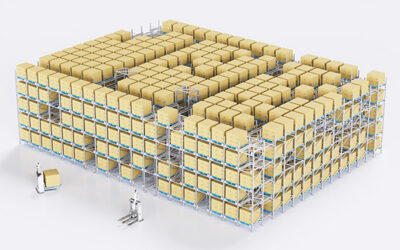
On the floor of a busy warehouse, you can feel the squeeze: orders stack up, accuracy expectations climb, and the old walk-and-pick routine starts to show its seams. I’ve watched teams do heroic work, only to be held back by fatigue, mis-picks, and the simple limits of human speed. That’s why AI and vision-based systems have become so compelling—they bring precision, consistency, and intelligent orchestration to the entire flow, from identifying items to routing pallets and optimizing space. What follows is how these technologies address the core bottlenecks of manual picking and how pallet-to-person robotics—like Zikoo’s R-bot, H-bot, and U-bot—translate that intelligence into measurable throughput, accuracy, and density gains.
Understanding the Challenges of Traditional Warehouse Picking
Modern warehouses face daily friction largely rooted in manual workflows. These constraints erode margins, slow operations, and frustrate customers. Solving them calls for technology that can scale with demand and stay reliable during peaks.
1. The High Cost of Manual Labor and Human Error
Labor is one of the largest line items: wages, benefits, training—then the hidden costs from mis-picks, damaged items, and incorrect shipments. Each mistake triggers returns handling, re-shipping, and, worst of all, customer disappointment. Repetition leads to fatigue and injuries, which show up as workers’ compensation claims and lost productivity. It’s a costly loop that’s tough to escape with manual effort alone.
2. Limitations in Speed and Throughput for Growing Demands
E-commerce expectations and just-in-time strategies compress fulfillment windows. Even with smart routing, people can only move so fast, and that ceiling turns into a throughput bottleneck—especially during seasonal spikes. If the system can’t surge when the market does, competitiveness and market share suffer.
3. Inefficient Space Utilization and Inventory Management
Manual operations require wider aisles and simpler layouts, sacrificing storage density. Paper- or human-driven inventory tracking invites inaccuracies—misplaced SKUs, stockouts, or excess stock. Cash gets trapped in carrying costs, and reconciliation becomes a chore. Better space use and rock-solid inventory accuracy are now table stakes for profitability.
If you’re interested, check 《Maximizing Space Velocity in Modern Warehouses》.
How AI and Vision-Based Picking Revolutionize Warehouse Operations
AI and vision-based picking change the operating model. By layering intelligence on top of automation, they directly tackle accuracy, speed, and flexibility—so warehouses run faster and more predictably at lower cost.
1. Enhancing Accuracy and Reducing Picking Errors with Computer Vision
High-resolution cameras and advanced algorithms don’t get tired or distracted. They distinguish lookalike products, read barcodes cleanly, confirm quantities, and verify the right item at the right time. Fewer mis-picks mean fewer returns, lower remediation costs, and happier customers.
2. Boosting Throughput and Speed Through Intelligent Automation
AI-powered robots run around the clock and plan efficient paths through complex layouts. They execute multiple orders in parallel without slowing down, lifting overall throughput and shrinking order cycle times. That kind of elasticity is invaluable when volumes spike.
3. Optimizing Warehouse Layouts and Storage Density
With vision and robotics, you can safely narrow aisles, reach higher racks, and pack more inventory into the same footprint. AI uses pick frequency and handling data to place fast movers up front. The result: higher capacity, shorter travel, and better storage economics.
If you’re interested, check 《The Future of Automated Warehousing: From ASRS Warehouse to Fully Intelligent Storage》.
Key Technologies Driving AI and Vision-Based Picking Systems
Winning implementations combine several disciplines. When computer vision, robotics, and software orchestration work as one, the result is a tightly coordinated, high-performance system.
1. Advanced Computer Vision and Machine Learning Algorithms
Core capabilities come from cameras plus machine learning models that:
1. Identify products by shape, color, and labels.
2. Pinpoint location and orientation for reliable gripping.
3. Verify integrity and quantity before picking.
4. Adapt to packaging and lighting variations.
The more they run, the better they get—continually learning and improving accuracy and robustness.
2. Robotic Systems for Automated Material Handling
Articulated arms, mobile robots, and shuttles provide the muscle. With grippers or suction end-effectors, they handle diverse sizes and materials at consistent speeds, even in harsh environments like cold storage. Vision and AI tell them what to do; the robots do it precisely and repeatably.
If you’re interested, check 《How Zikoo Robotics Defines Global Product Power for Pallet Storage Robots》.
3. Seamless Integration with Warehouse Management Systems (WMS)
None of this works in a silo. Tight integration with the WMS keeps orders, inventory, and locations in sync. Tasks flow from the WMS, robots execute, and the system updates records in real time. That feedback loop sustains clean data, efficient paths, and end-to-end visibility. The PTP Smart Warehouse Software (WMS/WES/WCS/RCS) exemplifies this comprehensive approach.
Implementing AI and Vision-Based Picking with Zikoo Smart Technology
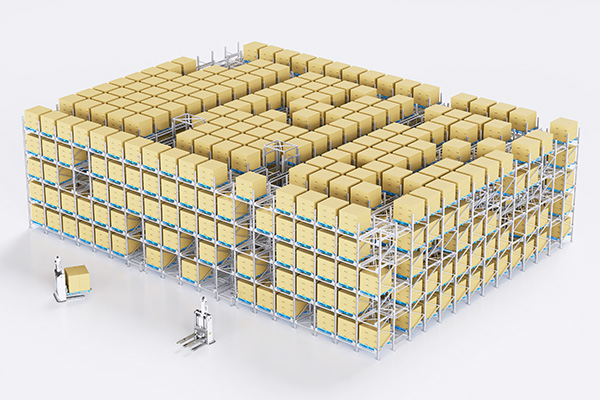
Zikoo Smart Technology focuses on pallet-to-person robotics for dense storage and fast, accurate handling. The goal is simple: bring pallets to people, not people to pallets—then let AI and vision do the heavy lifting.
1. Zikoo’s Pallet-to-Person Robotics for Dense Storage
By delivering required pallets directly to the station, we cut travel time and effort while elevating pick rates. It’s easier on teams and makes vertical space work harder, enabling high-density layouts without sacrificing access.
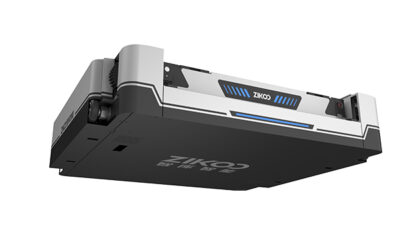
2. The R-bot Four-way Shuttle for Flexible Pallet Movement
The Four-Way Pallet Shuttle is an intelligent warehouse robot optimized for pallet-to-person dense storage scenarios. It features a slim body (125 mm thickness) and a load capacity of up to 1.5 tons. The R-bot offers flexible four-way movement, intelligent autonomous handling, and multi-shuttle collaborative operation. It adapts to various palletized goods storage and picking needs across industries.
| Model Options | Weight (kg) | Rated Load (kg) | Body Dimensions (L×W×H mm) | Pallet Sizes (mm) | Empty Speed (m/s) | Loaded Speed (m/s) |
|---|---|---|---|---|---|---|
| Standard (R1200B) | 270 | 1200 | 1000 × 972 × 125 | 1200 × 800–1000 | 1.6 | 1.2 |
| American (R1200A) | 265 | 1200 | 1192 × 840 × 125 | 1016 × 1219 | 1.6 | 1.2 |
| Japanese (R1500J) | 270 | 1500 | 1192 × 900 × 125 | 1100 × 1100 | 1.6 | 1.2 |
| Heavy-duty (R1500B) | 275 | 1500 | 1192 × 972 × 125 | 1200 | 1.6 | 1.2 |
| Heavy-duty Large Pallet (R2000B) | 400 | 2000 | 1250 × 1300 × 150 | 1400 | 1.35 | 1.0 |
3. The H-bot Vertical Bidirectional Shuttle for High-Rack Efficiency
The Vertical Two-Way Shuttle acts as a vertical transportation hub in intelligent warehousing. It is designed for pallet-to-person dense storage and picking scenarios, occupying only a single storage location. The H-bot collaborates with the R-bot to create a three-dimensional warehousing network, significantly enhancing overall operational efficiency. Its precision positioning ensures smooth vertical movement of pallets.
| Model Options | Body Weight (kg) | Body Dimensions (L×W×H mm) | Rated Load (kg) | Pallet Support (mm) | Temperature Range (°C) | Positioning Accuracy (mm) | Empty Speed (m/s) | Loaded Speed (m/s) |
|---|---|---|---|---|---|---|---|---|
| Standard (H1800B) | 345 | 1300 × 1464 × 288 | 1800 | 1200 × 800–1200 | -25 to 45 | ±1 | 1 | 0.5 |
| American (H1800A) | 325 | 1300 × 1332 × 288 | 1800 | 1016 × 1219 | -25 to 45 | ±1 | 1 | 0.5 |
| Japanese (H1800J) | 335 | 1300 × 1392 × 288 | 1800 | 1100 × 1100 | -25 to 45 | ±1 | 1 | 0.5 |
| Heavy-duty Large Pallet (Custom) | Customized | Customized | Customized | Customized | -25 to 45 | ±1 | Customized | Customized |
4. The U-bot Omnidirectional Stacking Robot for Narrow Aisle Optimization
The Omnidirectional Stacker Robot is an intelligent warehouse robot designed for narrow aisle storage, requiring a minimum aisle width of only 2100 mm. Its U-shaped body and small turning radius provide exceptional maneuverability in tight spaces. The U-bot offers a lifting height of 0–8 meters and a rated load capacity of 1000 kg, making it ideal for high-density storage in e-commerce and pharmaceutical warehouses.
| Model Options | Dimensions (mm) | Rated Load (kg) | Self-weight (kg) | Lifting Height (mm) | Min. Aisle Width (mm) | Driving Positioning Accuracy (mm) | Battery Configuration | Continuous Operation (hours) |
|---|---|---|---|---|---|---|---|---|
| U1045 | 2198 × 1784 × 2100 | 1000 | 3000 | 4500 | 2100 | ±10 | 48 V / 210 Ah LiFePO4 | 6–8 |
| U1060 | 2198 × 1820 × 2685 | 1000 | 3300 | 6000 | 2140 | ±10 | 48 V / 210 Ah LiFePO4 | 6–8 |
| U1080 | 2198 × 1820 × 3465 | 1000 | 3500 | 8000 | 2140 | ±10 | 48 V / 210 Ah LiFePO4 | 6–8 |
5. Collaborative Solutions with U-bot + AMR for Hybrid Picking Scenarios
The U-bot + AMR Narrow Aisle Picking System provides an efficient collaborative solution for hybrid scenarios. It combines “To B palletization” with “To C split-case picking.” The U-bot handles goods access in high-level storage, while AMRs manage handling and picking in low-level areas. This vertical functional complementarity enhances adaptability for full-category outbound picking, supporting up to 10,000 SKUs. The system achieves picking efficiency of ≥300 pieces per hour and inbound/outbound efficiency of ≥80 pallets per hour.
The Tangible Benefits of Adopting AI Vision Picking Solutions
Adopting AI and vision-based picking delivers benefits that show up on the P&L and the floor alike—leaner costs, greater resilience, and safer, more satisfying work.
1. Significant Reduction in Operational Costs and Labor Dependence
Automation eases reliance on manual labor and trims wages, benefits, and hiring overhead. Fewer errors mean fewer returns and reconciliations. The net effect is lower operating cost and stronger margins—without sacrificing service levels.
2. Improved Inventory Accuracy and Real-time Visibility
Every movement is tracked in real time, wiping out manual counting errors. With trustworthy inventory and live status, managers can replenish confidently, avoid stockouts and overstock, and keep working capital tighter.
3. Enhanced Scalability and Adaptability to Market Changes
When demand jumps, automated systems scale by adding tasks or robots—not headcount—thanks to modular designs and flexible software. That agility helps teams respond quickly to market shifts and maintain continuity.
You can learn more by reading 《Flexible Smart Warehousing: Tackling Multi-SKU Challenges in the Fast Fashion Era》.
4. Increased Safety and Ergonomics for Warehouse Personnel
Robots take on the repetitive, heavy, and awkward lifts. Fewer strains and fewer incidents create a safer, more ergonomic workplace, freeing people to focus on exception handling and higher-value problem solving.
Transform Your Warehouse with Zikoo Smart Technology
Ready to revolutionize your warehouse operations with state-of-the-art AI and vision-based picking solutions? Zikoo Smart Technology offers advanced pallet-to-person robotics, including the R-bot, H-bot, and U-bot, along with our powerful PTP Smart Warehouse Software. We provide tailored solutions to meet your unique needs, enhancing efficiency, accuracy, and scalability. Contact us today to discuss how we can optimize your logistics.
Email: [email protected]
Phone: (+86)-19941778955
About the Author
John Smith, Senior Engineer, helps warehouses and fulfillment centers maximize efficiency, reduce costs, and scale operations through ASRS, 4-Way Shuttle systems, and intelligent robotic picking solutions.
FAQs
1. What is vision-based picking in a warehouse?
Vision-based picking utilizes cameras and computer vision algorithms to identify, locate, and verify items for automated retrieval. Robots equipped with these systems can accurately pick products from storage locations, significantly reducing manual errors and improving operational speed. This technology is crucial for precision and efficiency in modern logistics.
2. How does AI improve picking accuracy?
AI enhances picking accuracy by enabling systems to recognize diverse product characteristics, such as shape, size, and barcodes. Machine learning algorithms allow robots to adapt to varying conditions and continuously refine their identification and gripping capabilities. This intelligence minimizes mis-picks and ensures high fidelity in order fulfillment.
3. What are the typical ROI timelines for implementing AI vision picking systems?
ROI timelines for AI vision picking systems vary depending on factors like warehouse size, order volume, and initial investment. Many businesses report seeing significant returns within 1-3 years due to reduced labor costs, decreased error rates, and increased throughput. A detailed cost-benefit analysis can provide a more precise projection.
4. Can AI vision picking systems integrate with existing warehouse infrastructure?
Yes, most AI vision picking systems are designed for seamless integration with existing warehouse management systems (WMS), warehouse execution systems (WES), and other automation equipment. This ensures a smooth transition and allows businesses to leverage their current infrastructure while upgrading picking capabilities. The PTP Smart Warehouse Software facilitates this integration.
5. What industries benefit most from AI and vision-based picking?
Industries with high SKU counts, variable product sizes, or stringent accuracy requirements benefit most. This includes e-commerce, retail, pharmaceuticals, food and beverage, and manufacturing. Any sector facing labor shortages or needing to scale quickly can also achieve substantial advantages from these advanced picking solutions.