Warehouse automation annual savings can reduce operational costs by 20% to 40%, but the exact figure depends on how you configure the system and which cost levers you pull. I’ve spent over a decade engineering pallet-to-person robotics for warehouses across power, cold chain, and manufacturing sectors. The consistent pattern I observe is this: the most meaningful savings come not from a single technology, but from combining dense storage, intelligent software, and hardware matched to the specific pallet flow. This article breaks down the real components of those savings, giving you numbers you can use when building your investment case.
The Real Components of Warehouse Automation Savings
Annual savings from automated storage and retrieval systems don’t come from a single line item. They accumulate across five operational dimensions, and the totals often surprise operators who are only thinking about headcount reduction. Labor is the most visible lever, but energy, space utilization, maintenance, and inventory accuracy each contribute measurable reductions to total cost of ownership. In our project work, we typically see the following ranges emerge once a system has been running for six months and the software tuning stabilizes:
| Savings Component | Typical Annual Reduction |
|---|---|
| Direct labor | 30–60% |
| Energy consumption | 15–30% |
| Floor space per pallet | 20–50% less area |
| Maintenance cost vs. forklift fleet | 10–20% lower |
| Inventory damage and loss | Up to 90% reduction |
These ranges overlap because some improvements multiply each other. Dense storage in a four-way shuttle system reduces the cubic footage requiring climate control, so energy savings often exceed the 15% estimate in cold chain operations. Labor savings depend heavily on how many manual touches you eliminate end-to-end, not just inside the rack. The numbers above assume you are replacing a conventional reach-truck or counterbalance forklift operation with a pallet-to-person robotic system that includes a WMS and WCS for task orchestration.
Labor Cost Reductions from Pallet-to-Person Systems
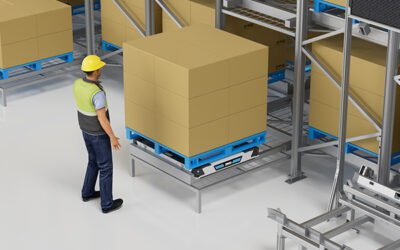
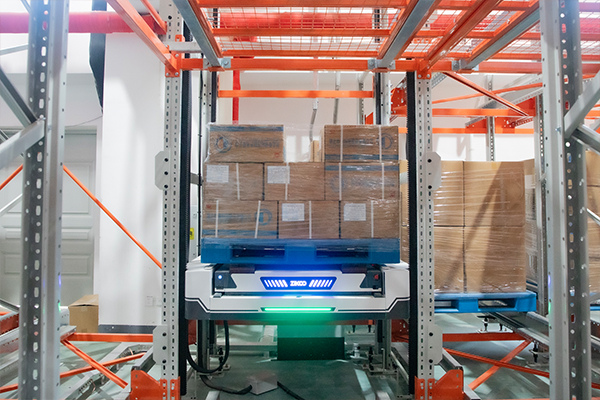
The biggest shift in labor cost comes from removing travel time. In a manual warehouse, a forklift operator might spend 60% of their shift driving between locations. A pallet-to-person system built around four-way shuttles and vertical lifts eliminates that travel entirely. The robot brings the pallet to a picking station, and a single operator can handle the output of what previously required three to five drivers, because downtime between tasks drops to seconds.
I’ve seen a 5,000-pallet distribution center go from ten operators per shift to two people managing the picking stations, with the shuttle fleet handling retrieval and replenishment on a continuous task queue managed by the WCS. The payroll difference alone often covers the lease payment on the robotics, but the real gain is in throughput consistency—the system doesn’t slow down in the eighth hour. For multi-shift operations, the labor savings compound because the automation runs the same speed on night shifts, where manual productivity tends to drop 15–20% due to fatigue and reduced supervision.
Labor savings also appear in reduced hiring and training costs, which are often omitted from ROI calculations. In markets with high warehouse worker turnover, the annual cost of recruiting and onboarding can exceed the maintenance budget of a shuttle system. Pallet automation essentially converts a variable labor cost into a fixed, predictable expense.
Four-Way Shuttle Savings vs. Forklift Operations
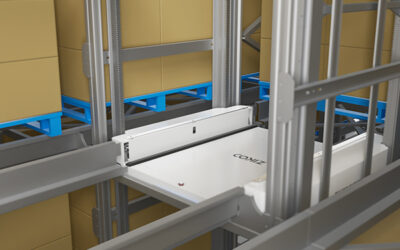
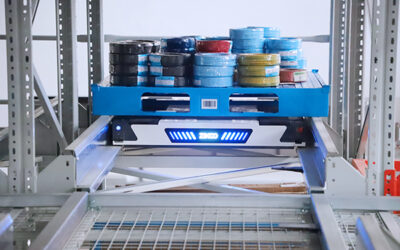
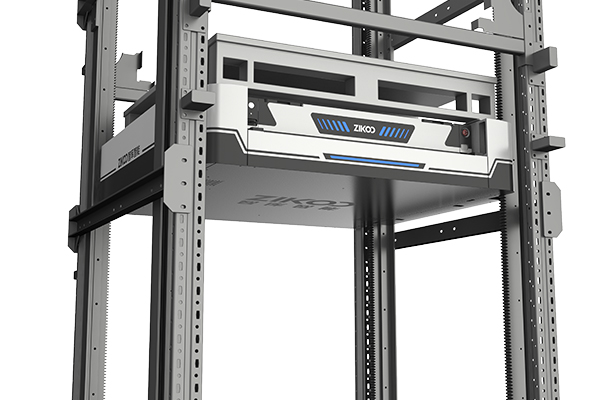
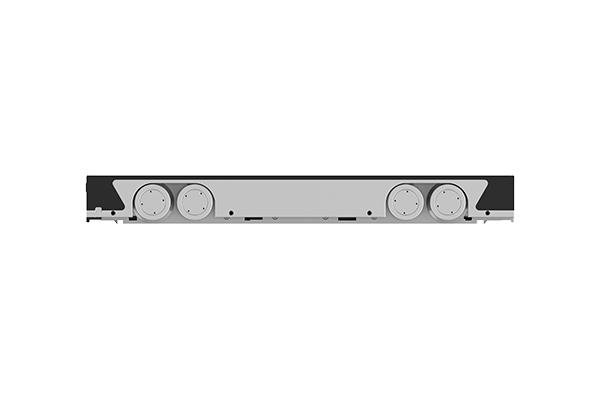
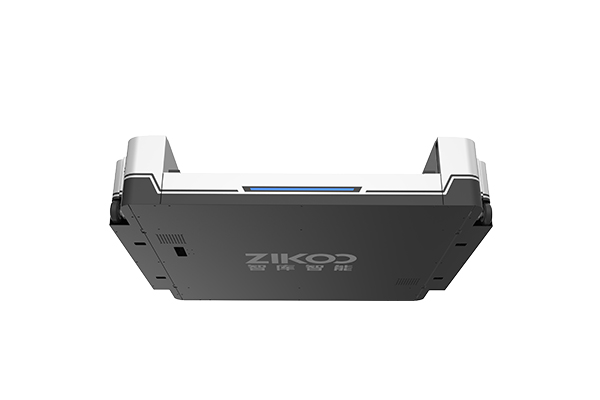
Comparing a four-way shuttle system to a forklift-based operation is really a comparison of infrastructure efficiency per pallet move. A forklift requires aisles 3.0 to 3.5 meters wide and consumes fuel or battery energy proportional to its weight plus the load’s weight. The R-bot four-way shuttle, by contrast, operates in aisles under 2 meters and carries only the payload—its slim 125 mm profile and 1,200 kg rated load move goods with a fraction of the energy cost. Add the H-bot vertical bidirectional shuttle for multi-level transfer, and the combined system uses roughly 30% of the energy per pallet cycle compared to a traditional forklift fleet, based on the motor ratings and duty cycles we’ve measured in installed systems.
Here’s how the operational cost profiles stack up for a mid-size facility handling 200 pallet moves per day:
| Cost Factor | Forklift Fleet (3 units) | Four-Way Shuttle System |
|---|---|---|
| Annual energy / fuel | $18,000 | $5,200 |
| Aisle space required | 3.5 m | 1.9 m |
| Operators per shift | 3 | 1 |
| Maintenance (parts + service) | $12,000 | $6,500 |
| Product damage per year | 2-5% of inventory | <0.5% |
The energy numbers tighten further in cold storage. A forklift running at -25°C uses heated cabs and special batteries, while our cold chain shuttle configuration uses a low-temperature lithium battery that sustains 6–8 hours of continuous operation with a dedicated charging port. The reduction in cooled volume from narrow aisles and high-density racking often cuts the refrigeration load by enough to offset the shuttle system’s power draw entirely.
If your storage environment involves mixed SKU counts above 2,000 and throughput requirements that fluctuate seasonally, the cost gap between shuttles and forklifts can shift. It’s worth confirming the energy and labor assumptions against your actual order profile before finalizing a system specification. Reach out at [email protected] with a few days of order data and we’ll benchmark the expected savings.
Payback Period and ROI Expectations for Automated Storage
The payback period for a pallet automation project typically falls between 2 and 4 years, with the faster paybacks occurring in high-wage regions and in facilities running three shifts. A simple model illustrates the arithmetic. Assume a 6,000-pallet warehouse installing a four-way shuttle and vertical lift system at a capital cost of $700,000. Annual labor savings from reducing operators from 8 to 2 across all shifts might total $180,000. Energy savings, maintenance reductions, and damage avoidance add another $45,000. Against a total annual savings of $225,000, the simple payback sits at just over three years. After that, the savings continue to compound because the hardware is designed for a 15- to 20-year service life with only periodic battery replacements and lift chain inspections.
These numbers are sensitive to two variables that often get overlooked. The first is software integration depth. A WMS that dynamically slots inventory based on velocity can double the effective throughput of the shuttle fleet by reducing retrieval distances. We’ve observed that warehouses running our PTP Smart Warehouse Software (WMS/WES/WCS/RCS) see inventory holding costs drop by 10–15% because the system reduces both safety stock and stockout incidents through real-time cycle counting and demand-pull logic. The second variable is energy cost volatility. In regions where electricity prices swing 30% year-over-year, the energy savings from dense, automated storage become a hedge against rising utility costs, which improves the risk-adjusted ROI beyond the simple payback calculation.
When Warehouse Automation Savings Fall Short
Not every warehouse converts automation investment into annual savings at the rates outlined above. The most common pitfall I’ve encountered is deploying a shuttle system into a building with a ceiling height under 8 meters, where you lose the vertical storage density that makes the math work. A four-way shuttle thrives when you can stack pallets in multiple tiers; in a single-level or low-bay layout, you’re essentially paying for robotic precision without using its height capability.
Another frequent erosion point is poor maintenance discipline. A shuttle fleet that misses quarterly battery diagnostics can see its uptime drop from 99% to 92%, which directly reduces the labor savings because operators sit idle waiting for carts to cycle back. I recall a project where a facility logged a 15% throughput drop over two months simply because nobody had calibrated the vertical lifts’ positioning after the initial commissioning. The issue was fixable with a day of service, but the accumulated labor inefficiency had already made a dent in that year’s projected savings. A maintenance contract that includes remote monitoring and periodic calibration visits effectively eliminates this risk.
Beyond physical constraints, the largest variable is the quality of the upfront operational analysis. If the design team does not model the actual order profile—line items per order, seasonal peaks, SKU velocity spread—the system might be sized for an average day that doesn’t exist. I always recommend running a simulation with at least three months of historical order data before locking specifications. That step alone prevents most cases of underperformance, but it’s the one operators most often rush.
Building a Realistic Savings Model for Your Operation
Every warehouse profile generates a different combination of savings, and the numbers in this article are meant as planning ranges, not guarantees. A facility with 8,000 pallets, 12-meter ceilings, and heavy seasonal swings will see a different ROI than a 3,000-pallet constant-flow operation. The common thread is that when you match the storage density, shuttle fleet size, and software intelligence to the actual throughput requirement, the ongoing cost advantage over manual operations becomes measurable within the first full year.
To get a projection grounded in your floor plan, pallet dimensions, and throughput targets, send that data to [email protected] or call (+86)-19941778955. We’ll model the expected annual savings using your actual operating parameters—no generic benchmarks, no padded estimates. The output is a line-by-line breakdown you can present to your finance team.
Common Questions About Automated Storage Savings
How accurate are the savings estimates quoted by automation vendors?
The accuracy depends almost entirely on the quality of the data the vendor receives. When a warehouse provides detailed order histories, shift schedules, and utility bills, the projected savings usually land within 10–15% of actual results after the system stabilizes. Discrepancies larger than that almost always trace back to assumptions about labor rates or throughput that changed between the proposal and commissioning.
What’s the minimum warehouse size for a four-way shuttle system to be cost-effective?
It depends on ceiling height and pallet count, not just square footage. If you can achieve at least four pallet tiers in the rack and have more than 2,000 pallet positions, a shuttle system can reach payback within four years. Single-level storage or facilities under 8 meters clear height rarely generate enough density advantage to justify the upfront equipment cost.
Do maintenance costs increase over the life of a robotic system?
In our experience, maintenance costs stay predictable when the service schedule is followed. Battery packs are the main consumable and need replacement roughly every five to seven years depending on cycle frequency. Shuttle drive motors and lift mechanisms show very linear wear curves if lubrication and alignment checks happen on time. Sudden cost spikes almost always indicate deferred maintenance, not inherent reliability issues.
Can I retrofit an existing warehouse for pallet shuttles without tearing down the racking?
Most existing rack structures can accommodate shuttle rails with minimal modification, provided the column spacing is consistent and the floor flatness meets a ±5 mm per 2-meter tolerance. The bigger constraint is usually mezzanine clearance and column grid alignment. We’ve completed retrofits in active operations by working bay by bay during off-shift hours, keeping the facility operational throughout the installation.
How do energy costs compare between automated and manual cold storage?
In -25°C environments, a four-way shuttle system reduces the refrigerated volume per pallet by 30–50% through narrow aisles and high-density racking, which directly lowers compressor runtime. The shuttles themselves draw under 2 kW during operation and produce negligible heat load compared to a diesel or battery forklift operating inside the freezer. For many cold storage operators, the energy line item alone covers the shuttle system’s financing cost. If you are evaluating automation for a temperature-controlled facility, share your setpoint range and daily pallet flow with our team—we’ll map the energy savings against your specific product profile and rack configuration.
If you’re interested, check out these related articles:
Six-Way Shuttle Empowers 3PL Providers to Build Next-Generation Smart Logistics Hubs
Six-Way Shuttle: The Smart Warehousing Tool for Cost Reduction and Efficiency 2
Looking for Reliable Four-Way Shuttle Manufacturers? Choose Zikoo Robotics