Warehouse operations have shifted dramatically over the past decade. The pressure from e-commerce growth and tangled global supply chains has pushed many facilities past what manual processes can handle. What worked five years ago now creates bottlenecks that cost real money and lost customers. The move toward automation isn’t optional anymore for operations that want to stay competitive.
Why Warehouse Efficiency Matters More Than Ever
E-commerce volumes keep climbing while customer expectations for delivery speed tighten. Warehouses caught in the middle face a difficult equation: labor costs rise, available space stays fixed, and orders need to ship faster. These pressures expose weaknesses in traditional picking and storage methods that once seemed adequate.
The math is straightforward. Manual operations hit a ceiling. Workers can only walk so fast, carry so much, and maintain accuracy for so many hours. When order volumes spike during peak seasons, manual systems buckle. Companies that haven’t invested in logistics optimization find themselves scrambling to hire temporary workers, paying overtime, and still missing delivery windows.
Industry data backs this up. Facilities relying on manual processes struggle to scale without proportional increases in labor costs. Automated operations, by contrast, can flex capacity without the same workforce expansion. This difference becomes a competitive gap that widens over time.
Pallet-to-Person Robotics Change the Picking Equation
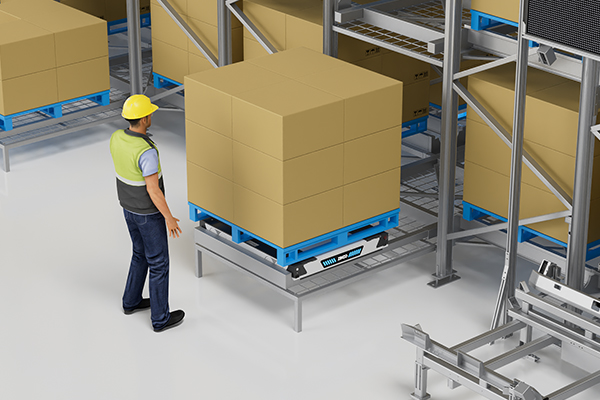
Pallet-to-person systems flip traditional warehouse logic. Instead of workers walking to inventory, inventory comes to workers. This single change eliminates most of the travel time that eats into productivity during manual picking operations.
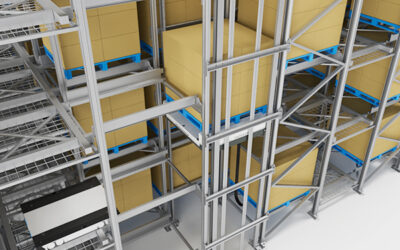
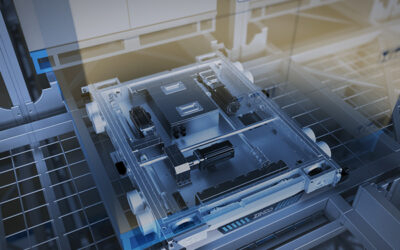
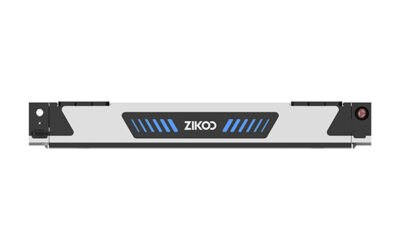
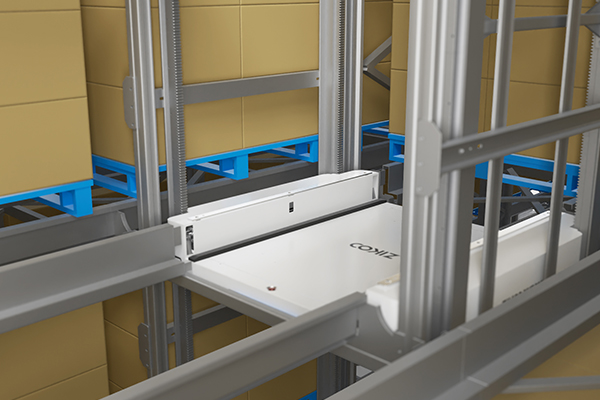
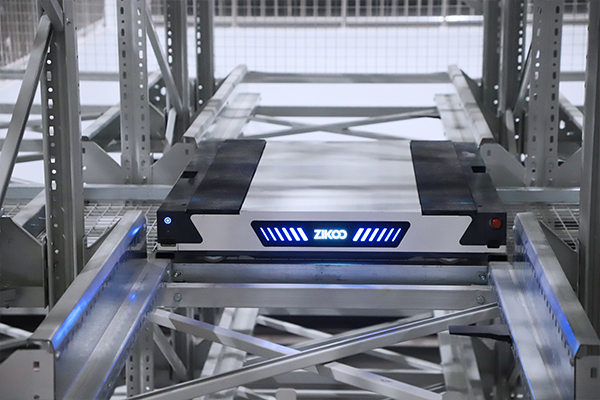
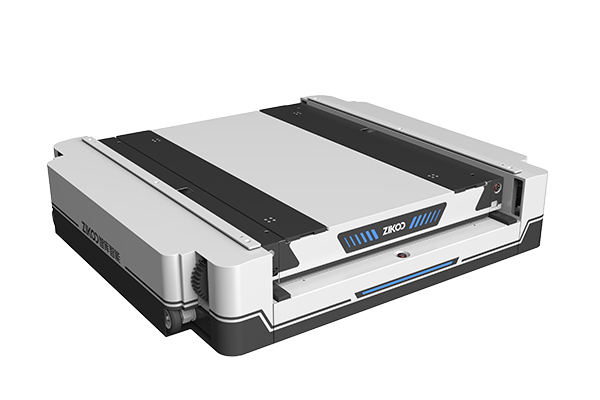
Zikoo’s approach uses specialized robots working together. The U-bot Omnidirectional Stacker Robot handles narrow aisles as tight as 2100mm, using dual laser SLAM navigation combined with 3D depth cameras for precise pallet positioning. The R-bot Four-Way Shuttle moves through dense storage configurations, handling loads up to 2000 kg. H-bot High-Speed Elevators connect different storage levels, creating vertical movement paths that maximize cubic space utilization.
The performance numbers tell the story. Pallet-to-person implementations typically cut operator travel time by around 70%. Picking accuracy climbs above 99%. These aren’t theoretical projections but measured results from operating facilities.
!high rise automated storage system 20251205 100550
 ### How Pallet-to-Person Robotics Boost Picking Speed and Accuracy
The efficiency gains come from removing wasted motion. In a manual warehouse, pickers might walk 10 to 15 miles during a shift. Most of that walking produces no value. It’s just transit time between picks.
Pallet-to-person robotics eliminate this travel. Workers stay at ergonomic workstations while robots bring pallets to them. The U-bot’s omnidirectional movement allows it to navigate tight spaces that would slow down conventional forklifts. Its 3D depth camera ensures pallets arrive positioned correctly for immediate picking.
Safety improves alongside productivity. Fewer workers moving through aisles means fewer collision risks. Automated systems follow predictable paths and stop when sensors detect obstacles. This predictability reduces accidents and the associated costs.
| Feature | R-bot Four-Way Shuttle | U-bot Omnidirectional Stacker Robot | H-bot Vertical Bidirectional Shuttle |
|---|---|---|---|
| Movement | Four-way, flexible | Omnidirectional, narrow aisle (min 2100mm) | Vertical, bidirectional |
| Load Capacity | Up to 2000 kg | 1000 kg | 1800 kg |
| Height | Dense storage (horizontal) | Up to 8 meters | High-rack stereoscopic (vertical) |
| Key Application | Dense storage, cold chain, manufacturing | Narrow aisle high-density, pharmaceutical, existing warehouses | Vertical transfer, urban centers, space utilization |
| Integration | With H-bot for Six-way shuttle system functionality | Collaborative with AMRs, robotic arms | With R-bot for six-way shuttle network |
For more insights into optimizing your warehouse with advanced shuttle systems, explore our article on 《Six-Way Shuttle: The Smart Warehousing Tool for Cost Reduction and Efficiency》.
Smart Software Ties Everything Together
Robots without intelligent coordination create chaos. Smart warehouse software acts as the brain that orchestrates movement, tracks inventory, and optimizes task assignments across the entire operation.
Zikoo’s PTP Smart Warehouse Software combines WMS, WES, WCS, and RCS functions into an integrated platform. Real-time inventory tracking means the system always knows where every pallet sits. Predictive analytics anticipate demand patterns and position inventory accordingly. The software assigns tasks to robots based on current positions, battery levels, and workload distribution.
This coordination matters because warehouse efficiency depends on avoiding bottlenecks. A single robot waiting for an elevator or blocking an aisle can cascade into delays across the system. Smart software prevents these situations by planning movements in advance and rerouting when conflicts arise.
!smart warehouse full view 3d 20251205 100607
 ### Connecting New Automation to Existing Systems
Most warehouses already run WMS or ERP platforms that manage orders, inventory records, and shipping coordination. Ripping out these systems to install automation creates unnecessary risk and expense.
Zikoo’s software connects to existing infrastructure through API integration. This approach allows phased implementation. A facility might start by automating one storage zone while keeping manual operations running elsewhere. The software handles both, presenting a unified view to upstream systems.
This flexibility matters for practical reasons. Complete warehouse shutdowns for automation installation aren’t realistic for most operations. Phased rollouts let facilities maintain service levels while transitioning to automated processes. The modular architecture supports this gradual approach without requiring custom development for each integration.
For a deeper understanding of how our software empowers smart upgrades, read our article on 《PTP Intelligent Warehouse Software Empowers Enterprises for Smart Upgrades》.
Planning for Automation Success
Technology alone doesn’t guarantee results. Implementation planning determines whether automation investments pay off or become expensive disappointments.
Start with honest assessment of current operations. Where do orders slow down? Which processes consume the most labor hours? What errors cost the most to correct? These questions identify where automation delivers the biggest returns.
Vendor selection requires looking beyond equipment specifications. Implementation experience matters. A vendor who has deployed similar systems in comparable facilities brings practical knowledge that prevents common mistakes. Ask for references and talk to operations managers at those sites about their experience.
Infrastructure preparation often surprises first-time automation buyers. Floors may need leveling. Electrical capacity may need upgrading. Network coverage must reach every corner of the facility. These requirements add cost and time if discovered late in the project.
Staff training deserves more attention than it typically receives. Workers who understand how automated systems function can identify problems early and work more effectively alongside robots. Resistance to change decreases when people feel competent with new technology rather than threatened by it.
!industrial components 3d warehouse 20251205 100115
 ### Critical Steps Before Signing Contracts
Detailed needs assessment comes first. Document current throughput, error rates, labor hours, and space utilization. These baseline measurements let you calculate realistic ROI projections and measure actual results after implementation.
Vendor evaluation should include site visits to operating installations. Seeing systems run under real conditions reveals details that demonstrations and spec sheets miss. Pay attention to maintenance requirements, spare parts availability, and support response times.
Infrastructure planning requires professional assessment. Bring in engineers who can evaluate floor conditions, power availability, and structural capacity for high-rack installations. Discovering problems after equipment arrives creates expensive delays.
Post-implementation support matters more than many buyers realize. Automation systems need ongoing optimization as operations evolve. Software updates, robot maintenance, and performance tuning should be part of the vendor relationship, not afterthoughts.
Discover how our six-way shuttle system drives warehouse upgrades in 《Six-Way Shuttle Drives Warehouse Upgrades: Building an Intelligent Automatic 3D Warehouse》.
Calculating Returns and Building for Growth
Warehouse automation investments typically pay back within two to three years. The primary savings come from reduced labor costs and increased throughput from existing space. Secondary benefits include lower error rates, reduced product damage, and improved worker safety.
Labor savings accumulate quickly. A pallet-to-person system that replaces ten manual pickers with two operators at workstations generates immediate payroll reduction. As labor costs continue rising, these savings grow larger each year.
Throughput improvements multiply the value of existing real estate. A facility that doubles its order capacity without expanding its footprint avoids the capital cost and ongoing expense of additional warehouse space. In markets where industrial real estate commands premium prices, this space efficiency becomes a significant financial advantage.
Scalability protects against future uncertainty. Automated systems can increase capacity by adding robots and extending operating hours. This flexibility lets operations respond to demand growth without the lead time required to hire and train workers or lease additional space.
!six way shuttle dynamic movement 20251205 100426
 ## Take the Next Step Toward Better Operations
Zikoo Smart Technology Co., Ltd. builds pallet-to-person robotics and PTP Smart Warehouse Software designed for real warehouse efficiency gains. Our systems work in facilities ranging from pharmaceutical distribution to cold chain logistics to manufacturing supply chains.
Contact us for a consultation that starts with understanding your specific operational challenges. We’ll discuss how automation might address your bottlenecks and what implementation would look like for your facility.
Email: [email protected] | Phone: (+86)-19941778955
FAQs
What Results Can Warehouse Efficiency Solutions Actually Deliver?
The measurable benefits include labor cost reduction, faster order fulfillment, higher inventory accuracy, and improved safety records. Zikoo’s pallet-to-person systems cut travel time by roughly 70% and push picking accuracy above 99%. These improvements compound over time as operations scale without proportional workforce expansion. The specific results depend on current baseline performance and implementation scope.
How Much Throughput Improvement Should I Expect from Pallet-to-Person Robotics?
Throughput gains vary based on current operations, but the mechanism is consistent. Eliminating worker travel time means more picks per hour. The U-bot and R-bot systems bring goods to stationary workstations, allowing continuous picking without walking between locations. Facilities typically see throughput increases of 40% to 60% from the same workforce. Our pallet shuttle system configurations can be scaled to match specific volume requirements.
Will Zikoo’s Software Work with Our Current WMS?
Zikoo’s PTP Smart Warehouse Software connects to existing WMS and ERP platforms through standard APIs. We’ve integrated with most major systems and can work with custom platforms as well. The integration approach allows phased implementation, so you can automate portions of your operation while maintaining existing processes elsewhere. This compatibility reduces implementation risk and protects your existing technology investments.