Outbound speed in a pallet warehouse does not come from faster machines alone. It comes from eliminating the pauses. A pallet automation system with four-way shuttles, vertical lifts, and scheduling software working together can double the number of orders shipped per shift compared with a disconnected setup of individual automations. This article explains exactly where those pauses happen in a busy distribution center and what it takes to remove them, drawing on real system design work with Zikoo Smart Technology’s R‑bot four-way shuttles, H‑bot high-speed elevators, and PTP Smart Warehouse Software.
What Really Limits Outbound Throughput in an Automated Pallet Warehouse
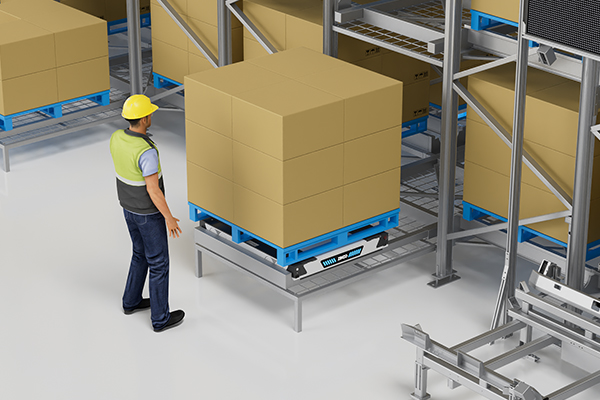
Most conversations about outbound efficiency start with picking speed, but in a pallet-to-person system the true bottleneck often sits between storage and shipping. Consider a typical flow: a pallet is retrieved from a deep lane, moved to a lift, elevated, transferred to a pick station, depalletized, sorted, consolidated at a staging lane, scanned, and loaded onto a truck. Each handover between subsystems is a point where time vanishes. A four-way shuttle moving at 1.2 m/s loaded is fast, but if the vertical lift servicing that level is still handling another pallet, the shuttle idles. If the pick station is congested, the pallet waits on a buffer conveyor. These micro‑delays compound, and the result is a dock that runs 15‑20% below the nominal capacity of the hardware.
The root cause is a mismatch between storage density and flow velocity. Dense pallet racking cuts travel time to the aisle but lengthens retrieval time per pallet because shuttles must traverse multiple deep positions. High‑density designs with R‑bot shuttles at 125 mm body height can pack more pallets per cubic meter, but the retrieval sequence governs how fast those pallets exit the system. In one project with a deep‑lane configuration, simply reordering the shuttle dispatch sequence to prioritize outbound pallets over inbound replenishment improved peak‑hour throughput by 18% without any hardware change. The key was the software.
Managing a high‑density storage environment without sacrificing outbound speed is a common struggle. <Six‑Way Shuttle: The Dual‑Engine Solution for High‑Density and High‑Throughput> dissects how the synchronous operation of six‑way shuttles doubles throughput per aisle, making the speed‑density trade‑off irrelevant.
How Multi‑Shuttle Coordination Removes Retrieval Latency
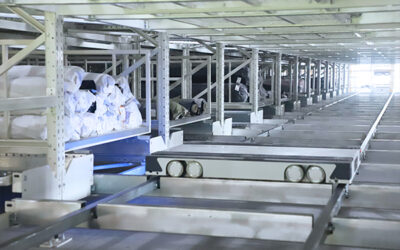
A single shuttle handling pallets in one aisle is a simple machine. A fleet of R‑bot shuttles distributed across multiple levels, sharing a limited set of H‑bot lifts, is a network. The outbound performance of that network depends on how tasks are allocated moment by moment. If all shuttles independently request a lift at the same time, queueing theory guarantees a bottleneck. The lift becomes a single point of congestion, and even a 1.5 m/s horizontal shuttle speed counts for little.
Zikoo’s PTP Smart Warehouse Software solves this with task interleaving and predictive lift positioning. Rather than processing pallet requests first‑come‑first‑served, the WCS module prioritizes outbound tasks that are on the critical path to a scheduled truck departure, then batches non‑urgent moves during gaps. The RCS module continuously recalculates shuttle routes and instructs lifts to preposition at the levels most likely to receive a pallet in the next 30 seconds. This cuts lift waiting time by roughly 40% compared with reactive lift dispatching, as observed during system commissioning in high‑SKU pharmaceutical warehouses.
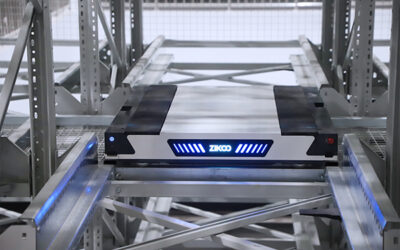
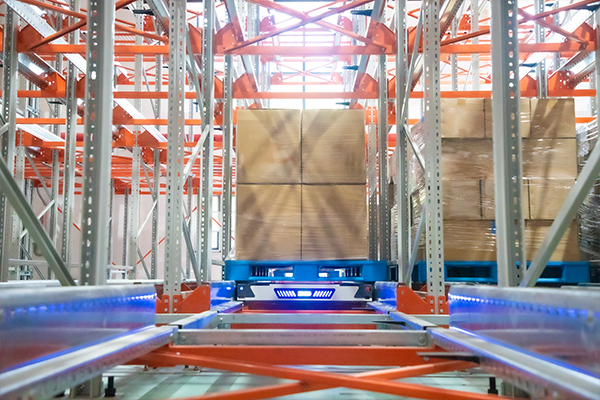
The hardware side of this equation matters too. R‑bot shuttles carry 1,200–2,000 kg across pallet sizes from 800 mm to 1,400 mm, but the distinguishing feature for outbound speed is their ability to change direction without rotating. A four‑way mechanism means the shuttle can exit a deep lane and head straight to the lift without the extra seconds required for a turn. Multiply that by 200–300 pallet moves per hour, and the saved seconds translate into an extra 8‑10 pallets processed per shift per shuttle.
Why Vertical Transport Is the True Outbound Accelerator
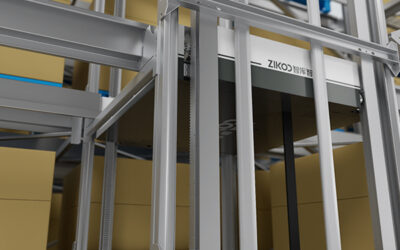
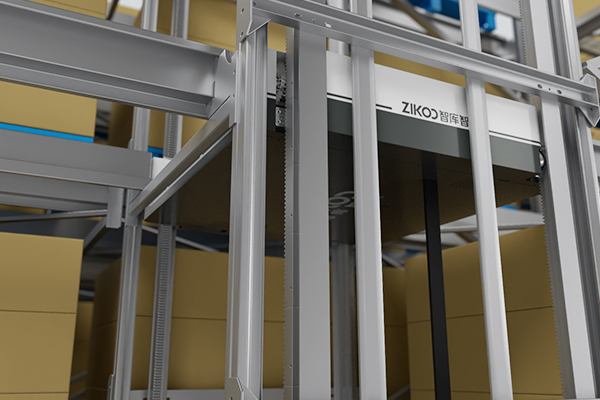
The fastest horizontal shuttle in the world cannot deliver pallets to a dock‑level staging area without a vertical transfer. H‑bot vertical bidirectional shuttles act as the spine of the outbound flow. Their design can be missed during system planning because they occupy only a single storage location, but their throughput ceiling dictates the maximum pallets per hour the entire aisle can ship.
Each H‑bot reaches a positioning accuracy of ±1 mm, which looks like a quality metric but matters for speed: accurate positioning means no secondary fine‑movement phase before load transfer. An empty H‑bot moves at 1 m/s, carries an 1,800 kg pallet at 0.5 m/s, and accelerates at 1 m/s² empty and 0.3 m/s² loaded. Those figures are not the headline‑worthy specs. The real impact on outbound efficiency is that the H‑bot can serve up to six shuttle levels in a single system, creating six independent horizontal transport channels that all feed into one vertical pipeline. Instead of one shuttle per level, a six‑way configuration allows multiple shuttles per level to work without cross‑traffic, while the H‑bot sequences their pallets to the outbound conveyor.
For cold‑chain environments operating at -25°C, the H‑bot maintains full speed specs, and the R‑bot runs 6‑8 hours on a low‑temperature lithium battery. These are not marginal improvements; they represent the difference between a single‑shift throughput target and a 24/7 operation that relies on automation to avoid sending people into frozen aisles. During peak seasons, the ability to run continuous cycles without slowdowns directly determines whether a facility meets its carrier cutoff times.
Software Scheduling: Sequencing Orders for Continuous Flow
A warehouse management system (WMS) knows inventory, but it is the warehouse execution system (WES) and warehouse control system (WCS) that translate outbound wave plans into machine‑level tasks. In a pallet automation system, the sequencing module must juggle three conflicting goals: minimize shuttle travel distance, avoid lift contention, and meet order‑line time windows. Conventional wave‑based processing, where all tasks for a shipping window are released at once, often causes a surge of pallet requests that overwhelms the lift network and then a lull while the system recovers.
Zikoo’s PTP platform replaces static waves with continuous order flow. As soon as a pallet is retrieved, the next task is injected into the system based on real‑time shuttle and lift status, not a fixed schedule. This dynamic pacing keeps lift utilization above 85% during peak hours without causing the queue length to exceed two pallets. The result is not only higher throughput but predictable throughput. Logistics directors can commit to a carrier pickup window with confidence that the pallets will be at the staging lane when the truck arrives, because the software has already reserved the required machine time in advance.
If your operation runs mixed‑SKU pallets where an outbound order spans multiple aisles, the scheduling logic becomes more complex. The PTP system merges pallets from different shuttles into a consolidation buffer, then sequences them so that the heaviest or most temperature‑sensitive items are loaded last. This layer of intelligence is what stops an efficient machine fleet from producing a chaotic staging area that requires manual re‑sorting. In 3PL facilities managing 10,000+ SKUs, this consolidation step alone can reduce trailer loading time by up to 25 minutes per truck.
When 3PL providers deploy six‑way shuttle systems, the software integration challenges multiply. <Six‑Way Shuttle Empowers 3PL Providers to Build Next‑Generation Smart Logistics Hubs> walks through how Zikoo’s software handles multi‑tenant operations, where outbound priorities shift by client contract.
Measuring Outbound Efficiency Gains and Holding the Gains
The business case for pallet automation rests on numbers, and outbound efficiency is best measured in three dimensions: speed, accuracy, and labour cost.
| Metric | Before Automation | After Integrated Pallet Automation |
|---|---|---|
| Pallets per hour outbound | 45–60 (manual forklift) | 80–120 (R‑bot + H‑bot) |
| Order accuracy | 97–98% (pick errors) | 99.5%+ (scan‑verified) |
| Labour hours per 100 pallets | 12–14 h | 2–3 h (supervisory only) |
These figures come from system design calculations rather than a single case study because every site layout affects performance. What is consistent across projects is that the outbound gain is not linear with the number of shuttles added. A second shuttle per level typically adds 30‑40% throughput, not 100%, because lift bandwidth becomes the new limit. That is why a six‑way shuttle system designs outbound capacity as a lift‑constrained resource from day one.
Maintaining the gains requires monitoring lift utilization, shuttle idle time, and queue length at critical handoff points. Most performance degradation in automated systems is gradual: a dirty positioning sensor adds 0.3 seconds per transfer, a network latency spike delays task assignment by 200 milliseconds. Over 10,000 moves per month, those milliseconds accumulate into hours of lost capacity. PTP’s analytics module flags these drifts before they hit the dock schedule. Regular checks on shuttle casters, lift guide rails, and battery health are not just maintenance tasks; they are throughput protection measures.
If your facility is currently running a manual or semi‑automated outbound operation and you are modeling the payback of a shuttle system, the single most important variable to lock down is the target throughput per shift under specific order profile conditions. Send your annual throughput data and typical order‑line mix to [email protected] or call (+86)-19941778955, and our engineering team will run a throughput simulation calibrated to your warehouse footprint, showing exactly how many pallets per hour a coordinated shuttle and lift system can deliver.
What Makes Pallet Automation Outbound Projects Succeed
Why does my outbound throughput not match the shuttle’s rated speed?
The rated speed of 1.2 m/s loaded assumes a single shuttle on a clear path. In a multi‑shuttle system, coordination overhead, lift waiting time, and pick‑station flow control reduce the effective throughput. Typically, a well‑tuned system achieves 70‑80% of the nominal hardware maximum. The gap is not waste; it is the price of coordinating a network. The way to narrow it is to invest in software scheduling granularity and to test the system with your actual order profile, not a uniform batch.
Can I improve outbound efficiency without replacing my manual racking?
Partial automation is possible if your racking supports pallet shuttle operation. For instance, retrofitting existing pallet racking with R‑bot channels can increase retrieval speed without a full AS/RS rebuild. However, outbound efficiency will be limited by the lift infrastructure. If your facility has no vertical transport other than forklifts, adding an H‑bot elevator at each aisle end is the single highest-ROI step to boost dock throughput. Evaluate whether the racking structure can accommodate a lift shaft before planning.
How do I know if I need a six‑way shuttle system over a four‑way?
A four‑way shuttle system with separate lifts per aisle handles moderate throughput well. A six‑way configuration, where R‑bot shuttles and H‑bot lifts form a unified three‑dimensional network, becomes necessary when the outbound target exceeds roughly 90 pallets per hour per aisle or when the building footprint restricts the number of aisles. In those cases, the six‑way setup unlocks capacity that a four‑way cannot without adding extra lifts that consume valuable floor space. If your growth plan includes a potential throughput doubling in three years, investing in the six‑way architecture now avoids a costlier re‑engineering later.
What is the most overlooked factor in outbound automation success?
The handshake between the automation supplier’s software and the customer’s host WMS or ERP. Many projects hit their mechanical performance targets but miss shipment windows because the host system’s order release logic does not correctly hand off tasks in the sequence the automation needs. We require a joint system integration test that runs your actual order data through the full software stack for a minimum of one week before go‑live. This uncovers mismatches in task priority, inventory allocation windows, and exception handling that would otherwise surface only after cutover.
Is the maintenance burden heavier than forklift fleet upkeep?
Shuttle and lift maintenance is different, not heavier. Because the machines run on predictable duty cycles and their health is monitored in real time, you move from reactive repair to planned component replacement. Wear parts like shuttle drive wheels and lift guide shoes have known service lives and are swapped during scheduled shutdowns. The trade‑off is that you need an electrical and software-savvy technician on site or on‑call, rather than a diesel mechanic. Zikoo provides remote diagnostics and a spare‑parts consignment stock to keep mean‑time‑to‑repair under four hours. For operations where every hour of dock stagnation costs thousands in detention charges, your maintenance team’s most valuable skill becomes the ability to read system logs, not turn wrenches. Share your uptime requirements with [email protected], and we will outline a service‑level agreement that matches your operational risk profile.
If you’re interested, check out these related articles:
Multi-Scenario Smart Adaptation: Zikoo’s Six-Way Shuttle Powers the Digital Transformation of Warehousing
Six-Way Shuttle Unlocks the Era of True 3D Intelligent Warehousing
PTP Intelligent Warehousing Platform: Building a Flexible and Smart Logistics Ecosystem