Modern warehouses run on tight margins and tighter timelines. Order volumes keep climbing, product mixes grow more complex, and the old way of doing things—people walking aisles, picking by hand, managing inventory on spreadsheets—just doesn’t scale anymore. Automated warehouse solutions, particularly intralogistics automation, have become less of a nice-to-have and more of a survival strategy. Labor shortages aren’t going away. Neither are rising operational costs. A well-designed warehouse shuttle system addresses both while pushing warehouse efficiency into territory that manual operations simply can’t reach.
Why Warehouse Shuttle Systems Have Become a Strategic Priority
Customer expectations have shifted permanently. Same-day delivery went from luxury to baseline. Order accuracy that was once “good enough” now triggers returns and bad reviews when it slips. Manual material handling systems struggle under this pressure. They’re slow by design, limited by human fatigue, and vulnerable to the kind of errors that compound across thousands of daily picks. The math stops working at a certain scale.
Warehouse shuttle systems change that equation. They don’t get tired. They don’t misread labels. They move inventory with mechanical precision, hour after hour, without the variability that comes with human operators. For businesses watching their labor costs climb while their throughput plateaus, these systems offer a way forward. The warehouse efficiency gains aren’t incremental—they’re structural. Supply chain automation built on this foundation operates differently than one patched together with manual workarounds.
How a Warehouse Shuttle System Transforms Inventory Flow
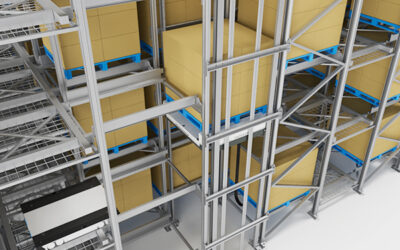
The real change happens in how inventory actually moves. Traditional setups force people to travel to products. A warehouse shuttle system flips that model, bringing products to people. The difference in throughput is substantial.
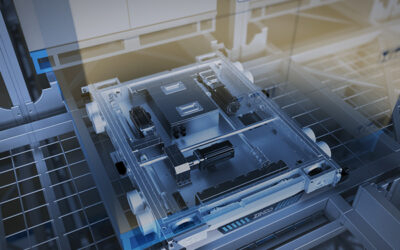
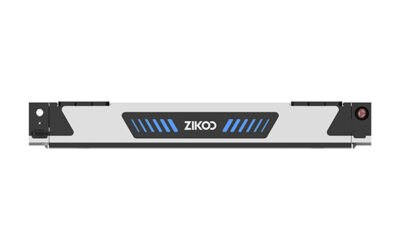
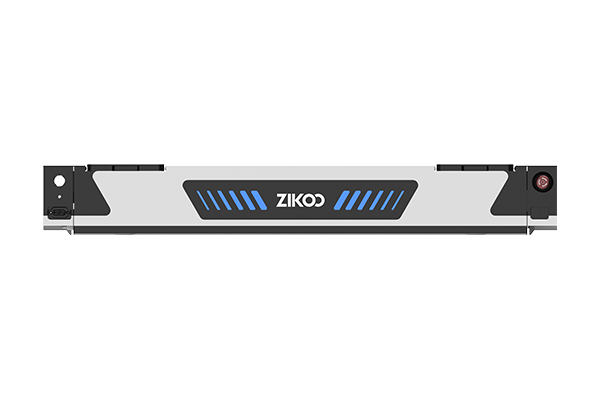
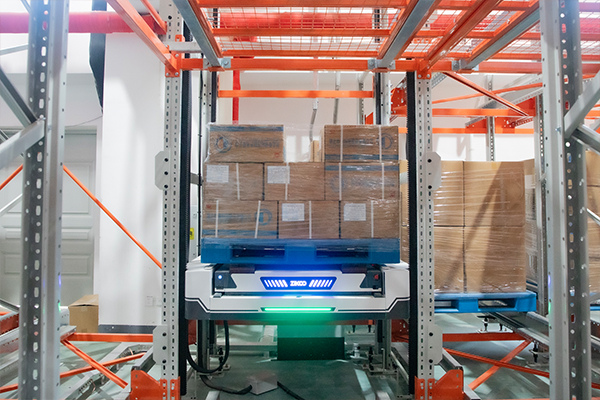
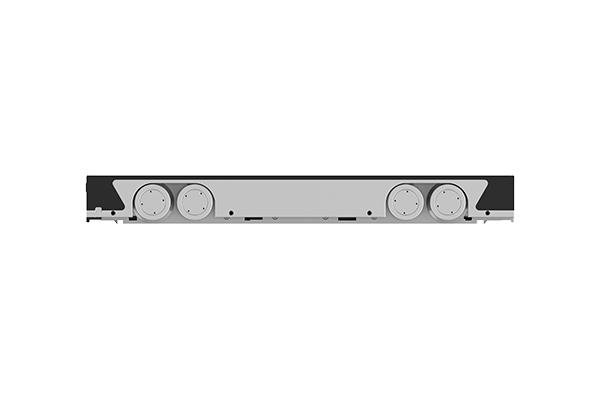
Zikoo’s R-bot Four-way Shuttle illustrates what’s possible with current technology. At just 125 mm thick, it navigates dense storage configurations that would be impossible for conventional equipment. The 1.5-ton load capacity handles heavy pallets without compromising speed. Four-way movement means the shuttle doesn’t need to turn around in tight spaces—it simply changes direction. When paired with the H-bot Vertical Bidirectional Shuttle, the system gains vertical mobility, creating what amounts to six-way movement through the storage matrix.
Storage density increases because the aisles can shrink. Retrieval speeds improve because the path optimization happens automatically. Inventory accuracy climbs because the system tracks every pallet position in real time. These aren’t separate benefits—they compound. Better accuracy means fewer cycle counts. Faster retrieval means more orders shipped per shift. Higher density means the same building holds more product. AS/RS technology and robotics in warehousing have matured to the point where these outcomes are predictable, not aspirational.
What Automated Pallet Storage Actually Delivers
The benefits of automated pallet storage show up in specific, measurable ways. Warehouse space optimization becomes possible because the system doesn’t need wide aisles for forklifts or room for people to maneuver. High-density storage configurations can double or triple the inventory capacity of the same footprint. For operations facing pressure to expand, this often means staying in the current facility longer—or avoiding a new build entirely.
Labor cost reduction follows naturally. The repetitive work of moving pallets, locating inventory, and transporting goods to staging areas shifts to machines. The people who remain focus on tasks that actually require human judgment: quality checks, exception handling, complex problem-solving. The throughput gains translate directly to faster order fulfillment, which customers notice even if they don’t understand the mechanics behind it.
Connecting Warehouse Shuttle Systems to Your Software Stack
Hardware alone doesn’t create an automated warehouse. The intelligence lives in the software layer, and integration determines whether the whole system works smoothly or fights itself.
Zikoo’s PTP Smart Warehouse Software handles the orchestration layer—WMS, WES, WCS, and RCS working together as a unified control system. Think of it as the nervous system coordinating all the mechanical components. Every shuttle movement, every inventory update, every order assignment flows through this software. Real-time inventory tracking becomes possible because the system knows exactly where every pallet sits at every moment. Data-driven logistics decisions replace guesswork because the information actually exists and stays current.
Making Warehouse Shuttle Systems Work with Existing Systems
Most warehouses don’t start from scratch. They have existing WMS platforms, established workflows, and data structures that took years to build. A warehouse shuttle system has to fit into that reality, not replace it entirely.
The integration happens through API connections and standardized data exchange protocols. Zikoo’s PTP Smart Warehouse Software provides the translation layer between legacy systems and new automation. The existing WMS keeps doing what it does well—order management, inventory records, reporting—while the warehouse shuttle system handles the physical execution. System interoperability means both sides see the same data, make decisions based on the same information, and operate as a unified whole rather than competing systems.
The transition doesn’t have to be disruptive. Phased implementations let operations continue while automation comes online in sections. The warehouse software compatibility question gets answered during planning, not discovered during go-live.
If you’re interested, check 《PTP Intelligent Warehouse Software Empowers Enterprises for Smart Upgrades》.
The Financial Reality of Warehouse Shuttle System Investment
Automation requires capital. The question isn’t whether it costs money—it does—but whether the returns justify the investment. A serious cost-benefit analysis looks at both sides of the equation.
The savings come from multiple directions. Labor expenses drop when machines handle repetitive movement. Space utilization improves when storage density increases. Error rates fall when automated systems replace manual picking, which reduces returns, rework, and customer complaints. These aren’t theoretical benefits—they show up in operating statements.
Revenue generation enters the picture through capacity and speed. A warehouse that can process more orders per day can accept more business. Faster fulfillment improves customer retention and enables service levels that competitors can’t match. The productivity gains compound over time as the operation learns to fully utilize the system’s capabilities.
What ROI Looks Like in Practice
The typical payback period for a warehouse shuttle system falls between one and three years, though the specifics depend heavily on the starting point. A labor-intensive operation with high turnover and significant overtime costs will see faster returns than one already running lean. Warehouse size matters because larger facilities have more opportunity for automation to scale.
The calculation involves comparing the initial investment against ongoing operational cost savings. Labor reduction is usually the largest factor, but space savings, error reduction, and throughput improvements all contribute. AS/RS financial benefits accumulate year after year, while the initial investment is a one-time event. The math tends to favor automation more strongly as labor costs continue rising and the technology becomes more reliable.
A personalized assessment makes sense because every operation has different cost structures, growth trajectories, and constraints. Generic ROI figures provide a starting point, not a conclusion.
Building Warehouse Operations That Adapt to What Comes Next
The logistics environment keeps changing. Customer expectations evolve. Product mixes shift. Seasonal peaks grow more extreme. Any automation investment has to account for this uncertainty.
Warehouse shuttle systems offer scalable automation by design. Adding capacity means deploying more shuttles, not rebuilding the infrastructure. The software layer handles coordination regardless of fleet size. This adaptability matters because predicting exact future requirements is impossible—the best you can do is build flexibility into the system.
Zikoo’s robot lineup reflects this philosophy. The U-bot Omnidirectional Stacking Robot handles different use cases than the R-bot Four-way Shuttle or the H-bot Vertical Bidirectional Shuttle. A comprehensive automation strategy might deploy all three, each optimized for specific tasks within the same facility. The future of warehouse automation isn’t a single solution—it’s an ecosystem of specialized tools working together.
How Modern Warehouse Shuttle Robots Handle Safety
Safety isn’t optional in automated environments. Modern warehouse shuttle robots incorporate multiple layers of protection that work together to prevent incidents.
The sensing systems include LiDAR and ultrasonic sensors that continuously map the environment. The robot knows where obstacles are, where people are, and how the space around it is changing in real time. Collision avoidance technology uses this information for dynamic path planning—the shuttle adjusts its route automatically when something unexpected appears. Emergency braking systems provide a final failsafe when software-based avoidance isn’t sufficient.
Operational safety standards govern how the systems are programmed and monitored. The automated system security framework includes access controls, audit trails, and continuous monitoring that catches anomalies before they become problems. These measures protect both personnel and inventory, making the automated environment safer than many manual operations where forklifts and pedestrians share space.
Frequently Asked Questions
How long does it take to implement a warehouse shuttle system?
Most implementations take between 6 and 18 months from contract to go-live. The timeline depends on several factors: warehouse size, how much customization the operation requires, and the complexity of integrating with existing infrastructure. Larger facilities with more complex requirements naturally take longer. The planning phase matters enormously—thorough upfront work prevents delays during installation. A well-managed automation project duration stays predictable because the potential problems get identified and addressed early.
Can warehouse shuttle systems handle different pallet sizes?
Yes, and this flexibility is built into the design. Zikoo’s R-bot Four-way Shuttle, for example, offers model options supporting common pallet dimensions: 1200 × 800–1000 mm, 1016 × 1219 mm, and 1100 × 1100 mm. Operations with non-standard pallets can often get customization options that accommodate their specific load requirements. The system adapts to the inventory, not the other way around.
What kind of maintenance do automated shuttle systems require?
Preventive maintenance keeps these systems running reliably. The typical robot maintenance schedule includes regular inspections, software updates, battery checks, and component replacements based on wear patterns. Zikoo provides support services that include remote diagnostics—many issues can be identified and resolved without a site visit. When on-site technical assistance is needed, it’s available. The goal is minimizing downtime, which means catching problems before they cause failures rather than reacting after something breaks.
Optimize Your Warehouse with Zikoo Robotics
Ready to transform your warehouse operations with cutting-edge automation? Contact Zikoo Smart Technology Co., Ltd. today to discuss how our pallet-to-person robotics and PTP Smart Warehouse Software can enhance your efficiency and reduce costs. Reach out to us at [email protected] or call us at (+86)-19941778955.