Warehouse space is one of those things you don’t think about until you’re out of it. Then suddenly every decision—where to put incoming pallets, how to route pickers, whether to lease another building—becomes a space problem. The pressure to squeeze more capacity from existing facilities has shifted from a nice-to-have to a survival issue for many operations. What follows covers the practical approaches that actually move the needle on warehouse space optimization, from layout fundamentals to automation systems that change what’s physically possible in a given footprint.
Layout Decisions That Determine Everything Else
The floor plan you commit to shapes every operation that follows. Get it wrong, and you’re fighting the building itself for years. Get it right, and efficiency compounds.
Travel distance is the silent killer. Every extra meter a picker walks is time burned and labor cost accumulated. The best layouts cluster high-velocity SKUs near packing stations and push slow-movers to the periphery. Sounds obvious, but I’ve walked through facilities where fast-moving items sat at the far end because “that’s where they’ve always been.”
Aisle width deserves more attention than it typically gets. Wide aisles feel comfortable and accommodate standard forklifts, but they’re eating floor space that could hold product. The trade-off between accessibility and density is real, and the right answer depends on your equipment and throughput requirements.
Cross-docking works when the math works. If goods can move directly from receiving to shipping without intermediate storage, you’ve eliminated a storage requirement entirely. But it demands tight coordination between inbound and outbound schedules. When those schedules slip, cross-docking becomes chaos.
Lean warehousing principles—eliminating wasted motion, reducing buffer inventory, standardizing processes—sound like buzzwords until you see a facility that actually applies them. The difference is visible within minutes of walking the floor.
Storage Capacity Strategies That Actually Deliver
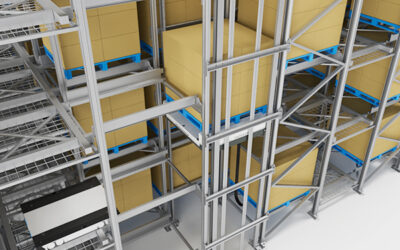
Vertical space is the most underused asset in most warehouses. Standard pallet racking might reach 4 or 5 meters. High-bay systems push to 8, 10, even 12 meters. The cubic footage you gain can be dramatic, though it requires equipment capable of operating at those heights.
Narrow aisle configurations trade forklift flexibility for density. Instead of 3.5-meter aisles, you’re working with 2.1 meters or less. That recovered floor space adds up fast across a large facility. The catch: you need specialized equipment—turret trucks or automated stackers—that can operate in tight quarters.
Dynamic slotting treats storage locations as fluid rather than fixed. Instead of assigning a permanent home to each SKU, the system places inventory based on current demand patterns, physical characteristics, and available space. A product selling heavily this week gets prime real estate. When demand drops, it migrates to less accessible locations. This approach requires software sophistication but delivers measurable density improvements.
Automation Changes the Physical Constraints
Manual operations impose certain spatial requirements. Forklifts need room to turn. Pickers need aisles wide enough to work safely. These constraints are so familiar that they feel like laws of physics. They’re not.
Automated systems rewrite the rules. Robots don’t need the same clearances humans do. They can operate in darkness, in narrow channels, at heights that would be unsafe for manual work. This isn’t about replacing people for the sake of it—it’s about accessing storage configurations that manual operations simply can’t reach.
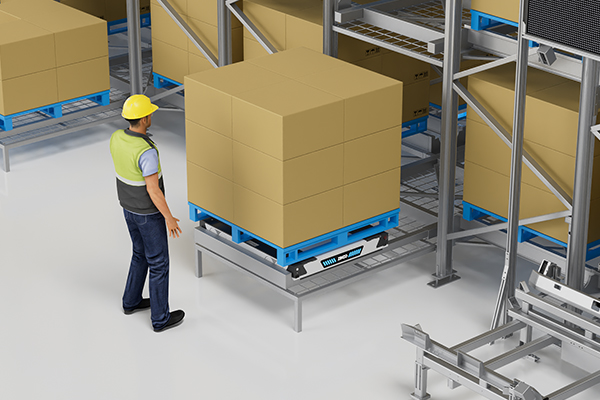
Pallet-to-person robotics flip the traditional model. Instead of workers traveling to inventory, inventory travels to workers. The implications for layout are significant: you can pack storage much more densely when you’re not designing around human foot traffic.
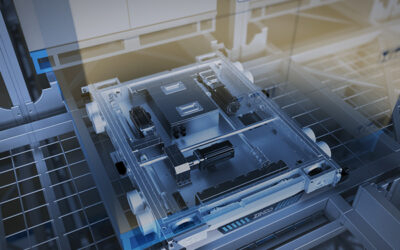
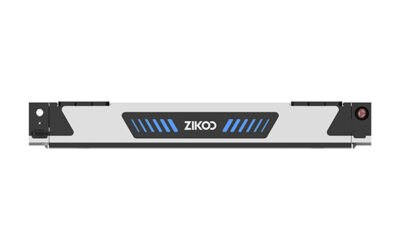
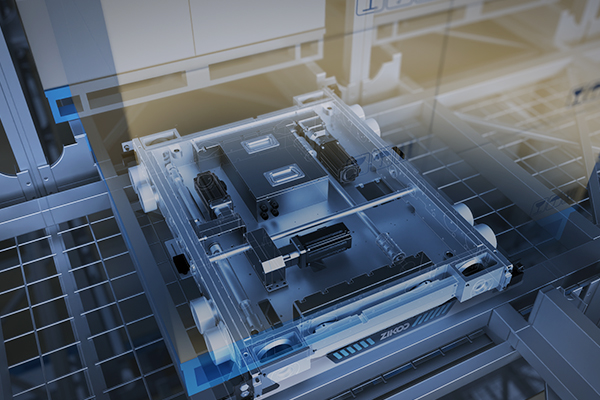
Zikoo’s approach to this involves three complementary systems. The U-bot Omnidirectional Stacker Robot handles vertical storage in aisles as narrow as 2100 mm, reaching heights up to 8 meters. The R-bot Four-Way Shuttle moves pallets horizontally through dense rack structures. The H-bot High-Speed Elevator connects vertical levels, completing the three-dimensional movement capability. Together, they enable storage densities that conventional operations can’t match.
What Automation Actually Does for Space
The space gains from automation come from several sources. Narrower aisles are the most obvious—when your equipment can operate in 2.1-meter channels instead of 3.5-meter aisles, you’ve recovered roughly 40% of your aisle footprint for storage.
Vertical reach matters equally. Manual operations with standard forklifts typically max out around 6 meters. Automated stackers push well beyond that, accessing cubic footage that would otherwise sit empty above your existing racks.
Reduced staging areas are a less obvious benefit. Manual operations need buffer zones—space for pallets waiting to be put away, orders waiting to be picked, goods waiting for quality checks. Automated systems with tight process control shrink these buffers considerably.
The pallet-to-person model eliminates travel aisles entirely in the storage zone. Goods live in dense, automated structures. Workers stay at fixed stations. The space that would have been picker walkways becomes storage capacity.
For operations exploring integrated approaches, a Six-way shuttle system represents one path toward this kind of density improvement.
Software Runs the Show
Hardware gets the attention, but software determines whether automation delivers on its promise. A warehouse full of robots without intelligent orchestration is just expensive chaos.
The software stack in modern automated warehouses includes several layers. Warehouse Management Systems (WMS) handle inventory tracking, order management, and high-level process control. Warehouse Execution Systems (WES) optimize task sequencing and resource allocation in real time. Warehouse Control Systems (WCS) translate high-level instructions into specific equipment commands. Robot Control Systems (RCS) manage the movements of individual automated units.
These systems need to talk to each other seamlessly. A breakdown in communication between layers creates bottlenecks, misrouted inventory, and wasted capacity.
Zikoo’s PTP Smart Warehouse Software integrates these functions into a unified platform. Real-time inventory visibility means the system always knows what’s where. Dynamic slotting algorithms continuously optimize storage locations based on current conditions. Task orchestration ensures robots aren’t tripping over each other or leaving equipment idle while orders pile up.
The space optimization benefits of good software are indirect but substantial. Accurate inventory tracking eliminates the need for safety stock buffers. Optimized slotting keeps fast-movers accessible without wasting prime locations on slow items. Efficient task sequencing means you can handle more throughput with the same physical footprint.
Making the Numbers Work
Automation requires capital. The question isn’t whether it costs money—it does—but whether the returns justify the investment. This calculation varies by operation, but the framework is consistent.
Labor cost reduction is typically the largest factor. Automated systems can reduce labor requirements by 50-70% for certain functions. In markets with high labor costs or tight labor availability, this alone can drive the business case.
Space utilization improvements translate directly to avoided real estate costs. If automation lets you handle the same volume in 70% of the floor space, you’ve either avoided a facility expansion or freed capacity for growth. Both have concrete financial value.
Throughput increases mean more revenue potential from existing assets. An automated system that doubles your picking rate effectively doubles your facility’s earning capacity.
Accuracy improvements reduce shrinkage, returns, and customer service costs. Manual picking error rates of 1-3% drop to fractions of a percent with automated systems. Over high volumes, those errors add up.
| Factor | Manual Operations | Automated Operations |
|---|---|---|
| Labor Requirements | High, variable quality | Reduced 50-70%, consistent |
| Storage Density | Limited by aisle width, height | Maximized vertical, narrow aisles |
| Throughput Consistency | Varies with staffing, fatigue | Predictable, sustained |
| Picking Accuracy | 97-99% typical | 99.5%+ achievable |
| Long-term Operating Costs | Steady or rising | Declining per unit |
Realistic Payback Expectations
Payback periods for warehouse automation typically fall in the 1-3 year range, though this varies significantly based on labor costs, facility costs, and operational complexity in your market.
The strongest cases involve high labor costs, expensive real estate, and operations already straining against capacity limits. In these situations, automation solves multiple problems simultaneously, and the combined savings accelerate payback.
Weaker cases involve low labor costs, cheap space, and operations with significant excess capacity. Automation still offers benefits, but the financial urgency is lower.
Honest ROI analysis requires accounting for implementation costs, integration complexity, and the learning curve as operations adapt to new systems. The numbers work for many operations, but not every operation, and not at every scale.
For deeper exploration of how software drives these outcomes, the article 《PTP Intelligent Warehouse Software Empowers Enterprises for Smart Upgrades》 covers the technical details.
Building for What Comes Next
The warehouse you design today needs to handle conditions you can’t fully predict. Demand patterns shift. Product mixes change. Growth happens faster or slower than forecasts suggest. Rigid systems become constraints; flexible systems become assets.
Modularity matters. Systems that can expand incrementally—adding robots, racks, or software capacity as needed—avoid the all-or-nothing decisions that make scaling painful. You’re not committing to a final state; you’re building a platform that can evolve.
Zikoo’s robotic systems are designed with this flexibility in mind. U-bot, R-bot, and H-bot units can be added to existing installations as throughput requirements grow. Software scales similarly, adding capacity and functionality without replacing the underlying platform.
The goal isn’t to predict the future perfectly. It’s to avoid locking yourself into assumptions that might not hold. A warehouse that can adapt costs more upfront than a warehouse optimized for exactly today’s conditions. But the warehouse optimized for today becomes a liability when today’s conditions change.
What This Means for Your Operation
Warehouse space optimization isn’t a single decision. It’s a series of choices about layout, equipment, software, and process that compound over time. The facilities that perform best aren’t necessarily the ones with the most advanced technology—they’re the ones where all the pieces work together coherently.
Zikoo’s approach combines pallet-to-person robotics with integrated software to address both the physical and informational dimensions of warehouse space optimization. The U-bot, R-bot, and H-bot systems handle the mechanical challenges of dense storage and efficient retrieval. The PTP Smart Warehouse Software provides the intelligence layer that makes the hardware effective.
The opportunity is real, but so is the complexity. Getting this right requires understanding your specific operation—its volumes, its constraints, its growth trajectory—and matching solutions to actual needs rather than theoretical ideals.
Common Questions About Warehouse Space Optimization
How do pallet-to-person robotics change storage density?
The fundamental shift is eliminating picker travel aisles within the storage zone. In conventional operations, aisles wide enough for workers and equipment consume 40-50% of floor space. Pallet-to-person systems like Zikoo’s U-bot, R-bot, and H-bot combination move goods through narrow channels to fixed workstations, converting that aisle space to storage. The U-bot operates in aisles as tight as 2100 mm while reaching 8-meter heights—dimensions that would be impractical for manual operations. This approach to automated storage and retrieval system design prioritizes density without sacrificing throughput.
What role does software play in space efficiency?
Software determines how effectively physical capacity gets used. Real-time inventory visibility eliminates the safety stock buffers that consume space as insurance against uncertainty. Dynamic slotting algorithms continuously reposition inventory based on current demand, keeping fast-movers accessible and slow-movers out of prime locations. Task orchestration prevents equipment conflicts and idle time that would otherwise require excess capacity as a cushion. Zikoo’s PTP Smart Warehouse Software integrates WMS, WES, WCS, and RCS functions to provide this optimization layer. The result is more throughput from the same footprint—a core element of Intelligent Warehousing strategy.
Can these systems scale as operations grow?
Modularity is built into the design. Additional U-bot, R-bot, or H-bot units integrate into existing installations without requiring system replacement. Software capacity expands similarly, adding processing power and functionality as operational complexity increases. This approach avoids the painful choice between overbuilding for uncertain future needs and underbuilding only to face expensive retrofits later. The practical effect is that warehouse space optimization investments made today remain relevant as business conditions evolve.
Contact us today for a personalized consultation and a comprehensive assessment of your warehouse optimization needs. Email: [email protected] | Phone: (+86)-19941778955