I still remember standing on a mezzanine, watching forklifts edge through wide aisles while perfectly good cubic meters sat idle. Multi-level buildings promise capacity, yet old habits chew up space and time. What changed my day-to-day was four-way shuttle tech. It gives me the flexibility to reach any pallet on a level, the density to shrink aisles, and the control to keep flow steady. Below, I walk through the pain points, how the shuttles work, the gains in density and throughput, the six-way combo with vertical shuttles and software, and where this setup pays off, from e-commerce to cold chain.
Understanding the Challenges of Traditional Multi-Level Warehousing
Multi-level warehouses unlock vertical volume, but classic setups rarely wring out the full advantage. From what I see on projects, manual workflows and conventional equipment impose hard limits on speed and consistency, which drags on throughput when demand spikes.
1. How space limitations and manual processes hinder efficiency
Forklifts and manual pallet jacks need generous aisles and constant operator attention. That footprint eats into storage positions, trading inventory for drive paths. Add in human error, higher labor overhead, and slower picks, and the cumulative hit shows up in cycle times and overall efficiency.
2. Why traditional material handling struggles with high-density storage
Standard forklifts have a tough time with deep lanes and multiple levels without awkward repositioning. The result is underused locations that are technically there but practically hard to reach. These tools were never built for the deep, dynamic layouts that modern logistics demands.
3. What are the common bottlenecks in multi-level warehouse operations
Slow put-away and retrieval, aisle congestion, and poor inventory rotation show up again and again. Dependence on a single vertical lift or elevator can become the weak link. When it goes down, so does the line, and throughput along with it.
Exploring the Core Mechanics of 4-Way Shuttle Systems
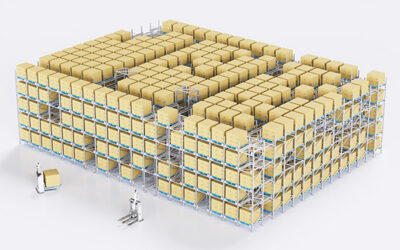
Four-way shuttles change the geometry of storage by turning the rack itself into the roadway. These autonomous units work inside the structure, keeping travel short and access broad. Watching them at scale, you start to rethink what “dense” can look like.
1. How autonomous movement optimizes pallet storage and retrieval
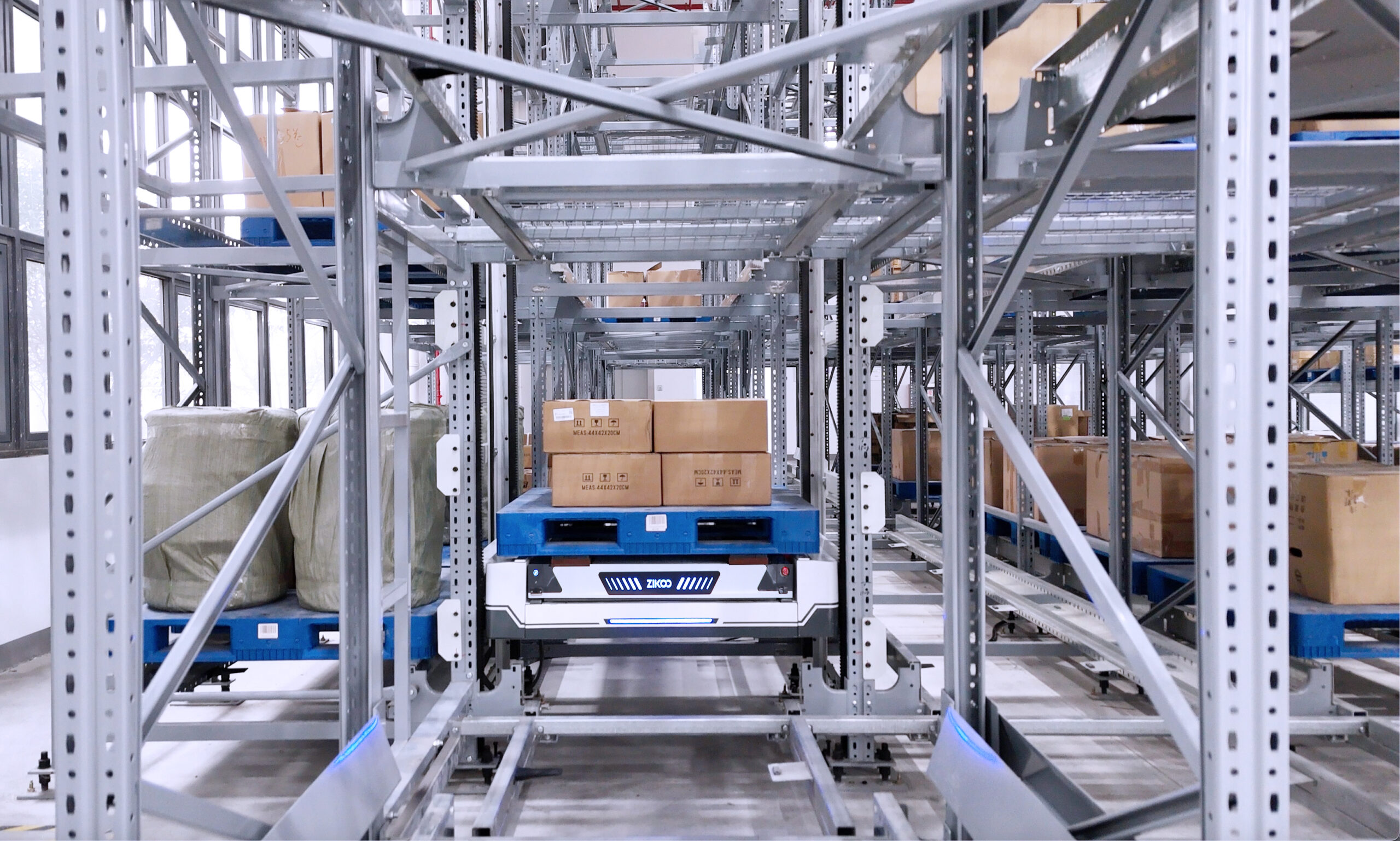
Four-Way Pallet Shuttle robots move independently along both X and Y axes within a racking system. With access to any pallet position on their assigned level, forklifts no longer need to enter the rack. Travel times drop, placement and retrieval get smarter, and inventory is steered to the right slot at the right moment by the system’s logic.
2. What are the key components of a modern 4-way shuttle system
You have the shuttles, the rack built with the right guides and clearances, and the control layer tying it together. The shuttles carry navigation and collision-avoidance sensors, high-torque drives for quick moves, and a durable lift for pallet handling. The racking provides the pathways and structure that make those movements reliable and repeatable.
3. How intelligent control systems direct shuttle operations
A control system, integrated with a WMS or WES, dispatches tasks across the fleet. Orders flow in, the software assigns work, and routes are optimized to trim deadheading and lift throughput. It also schedules charging, watches component health, and keeps the fleet coordinated as you scale up the number of robots.
Unpacking the Benefits of 4-Way Shuttles for Warehouse Density and Throughput
Put into practice, four-way shuttles deliver the big wins that matter: more storage in the same footprint and faster, steadier movement of goods. That combination is exactly what tight service levels and rising volumes demand.
1. How 4-way movement maximizes storage capacity in multi-level racks
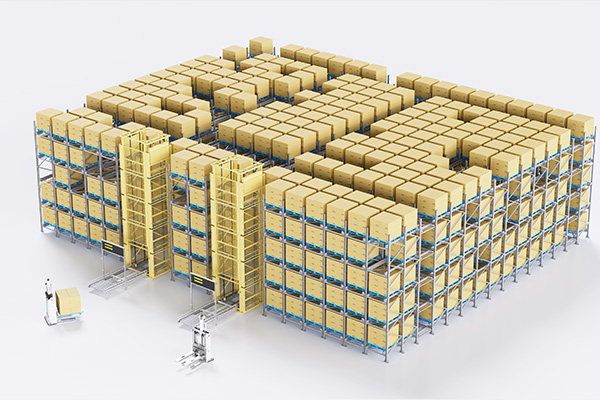
Movement in all four horizontal directions enables deep, high-density patterns without carving out wide access aisles. You pack pallets multiple deep over multiple levels and still reach them cleanly. The same footprint now holds far more positions, vertically and horizontally utilized.
2. Why automated shuttles significantly boost operational efficiency
Robots do not pause for breaks. Coordinated pathfinding and multi-shuttle collaboration prune idle time and reduce traffic. Labor reliance drops, errors fall, and performance stays steady even when volume surges.
3. What are the advantages of flexible and scalable storage solutions
Four-way systems are modular by nature. Add shuttles when demand rises, or reshape the rack layout as your SKU mix shifts. You scale capability without tearing down infrastructure, which keeps the investment relevant as the business evolves.
Integrating 4-Way Shuttles with Other Advanced Warehouse Technologies
The best results show up when shuttles plug into the broader automation stack. That is where control software, vertical movers, and analytics turn a strong subsystem into a cohesive operation.
1. How Zikoo’s R-bot Four-way Shuttle enhances dense storage capabilities
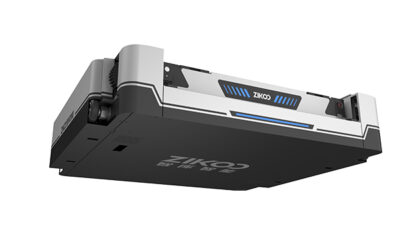
Zikoo’s R-bot Four-way Shuttle is specifically engineered for high-density pallet-to-person storage scenarios. Its slim design (125 mm thickness) and robust load capacity (up to 1.5 tons) enable efficient operation within compact racking structures. The R-bot’s flexible four-way movement and intelligent autonomous handling optimize space utilization and streamline operations. It supports various pallet sizes, including standard, American, and Japanese types.
| Model | Weight (kg) | Rated Load (kg) | Dimensions (L×W×H mm) | Pallet Sizes Supported (mm) | Empty Speed (m/s) | Loaded Speed (m/s) |
|---|---|---|---|---|---|---|
| R1200B (Standard) | 270 | 1200 | 1000 × 972 × 125 | 1200 × 800–1000 | 1.6 | 1.2 |
| R1200A (American) | 265 | 1200 | 1192 × 840 × 125 | 1016 × 1219 | 1.6 | 1.2 |
| R1500J (Japanese) | 270 | 1500 | 1192 × 900 × 125 | 1100 × 1100 | 1.6 | 1.2 |
| R1500B (Heavy-duty) | 275 | 1500 | 1192 × 972 × 125 | 1200 | 1.6 | 1.2 |
| R2000B (Heavy-duty Large Pallet) | 400 | 2000 | 1250 × 1300 × 150 | 1400 | 1.35 | 1.0 |
Battery: Lithium, 51.2V/40Ah or 51.2V/30Ah. Continuous operation: 7-8 hours. Operating temperature: as low as -15℃.
2. How the H-bot Vertical Bidirectional Shuttle creates a six-way system
The H-bot Vertical Two-Way Shuttle acts as a vertical transportation hub, transferring pallets between different levels of the racking system with minimal dwell time. When combined with the R-bot Four-way Shuttle, it forms a spatial six-way shuttle network. This integrated system enables movement across all six spatial directions (X, Y, and Z axes), creating a truly three-dimensional storage and retrieval network. This dramatically increases throughput and flexibility.
If you’re interested, check 《Six-Way Shuttle System: Multi-Scenario Solutions Redefining Pallet Storage and Picking》.
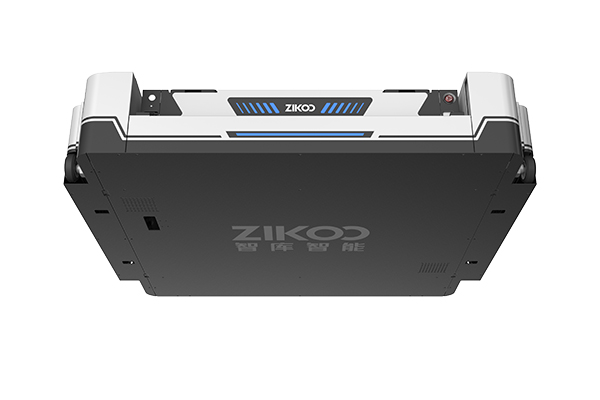
| Model | Body Weight (kg) | Dimensions (L×W×H mm) | Rated Load (kg) | Pallet Sizes Supported (mm) | Empty Speed (m/s) | Loaded Speed (m/s) | Acceleration Empty (m/s²) | Acceleration Loaded (m/s²) |
|---|---|---|---|---|---|---|---|---|
| H1800B (Standard) | 345 | 1300 × 1464 × 288 | 1800 | 1200 × 800–1200 | 1 | 0.5 | 1 | 0.3 |
| H1800A (American) | 325 | 1300 × 1332 × 288 | 1800 | 1016 × 1219 | 1 | 0.5 | 1 | 0.3 |
| H1800J (Japanese) | 335 | 1300 × 1392 × 288 | 1800 | 1100 × 1100 | 1 | 0.5 | 1 | 0.3 |
| Heavy-duty Large Pallet | Custom | Custom | Custom | Custom | Custom | Custom | Custom | Custom |
Operating Temperature: -25℃ to 45℃. Positioning Accuracy: ±1 mm.
3. What are the synergies between shuttles and warehouse management software
WMS, WES, WCS, and RCS provide the decision layer that makes placement smarter and movement tighter. They sequence orders, assign work to the right shuttle, and tune routes for speed. With real-time visibility, analytics, and predictive maintenance, the automated stack runs with fewer surprises. The PTP Smart Warehouse Software acts as the brain of the operation.
If you’re interested, check 《PTP Intelligent Warehousing Platform: Building a Flexible and Smart Logistics Ecosystem》.
Real-World Applications of 4-Way Shuttle Systems Across Industries
The framework is flexible, so it slots into many environments. High volume, dense storage, tight SLAs, harsh conditions, I have seen four-way fleets handle all of it when designed correctly.
1. How e-commerce warehouses achieve rapid order fulfillment
E-commerce lives on speed and accuracy. Four-way shuttles pull from dense storage quickly and feed picking stations at pace. High throughput and SKU diversity are manageable, which helps teams keep delivery promises as volume grows.
If you’re interested, check 《E-commerce Warehousing Revolution: Fast, Flexible and Smart》.
2. Why cold chain and special environments benefit from shuttle technology
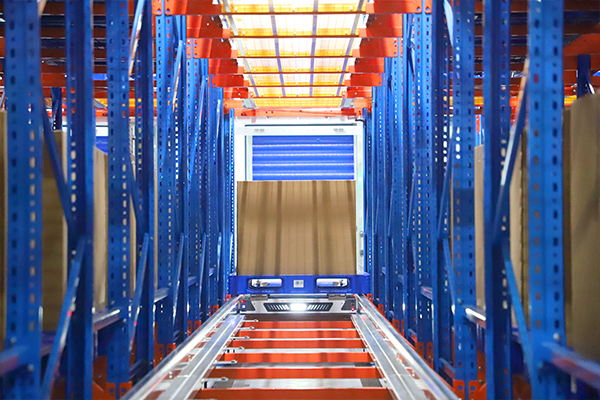
Cold rooms and other specialized zones call for rugged automation. Zikoo’s R-bot Four-way Shuttle includes models built for low temperatures down to -15℃, with custom options to -25℃. Keeping people out of harsh conditions protects teams and product integrity, which is a big deal in pharma, food, and other temperature-sensitive lines.
If you’re interested, check 《Cold Chain Warehousing Revolution: Four-Way Shuttles 25℃ Extreme Challenge》.
3. How manufacturing optimizes raw material and finished goods storage
Production needs the right material at the right moment. Four-way shuttles give you dense storage for components, WIP, and finished goods, and pull it just when required. Lead times shrink, the storage footprint tightens, and JIT workflows run cleaner.
Enhance Your Warehouse Operations with Zikoo Robotics
If you want more storage without expanding walls and faster moves without adding chaos, Zikoo Robotics’ four-way shuttle systems are built for that balance of density and flow. We tailor deployments to industry specifics and site constraints, then dial in throughput as demand evolves. Let’s map your layout and run the numbers together.
Email: [email protected]
Phone: (+86)-19941778955
FAQs
1. What makes a 4-way shuttle system different from a traditional pallet shuttle?
A 4-way shuttle travels along both the length and width of the racking aisle, so it can reach any pallet position on a level. Traditional pallet shuttles move along a single axis and rely on forklifts or conveyors for cross-aisle moves. That extra mobility lifts both access and storage density.
2. Can 4-way shuttle systems be integrated into existing warehouse structures?
Yes. The systems are modular and can be fitted into existing buildings with the right racking changes. A thorough survey of the current structure is needed to confirm clearances, loads, and integration points before rollout.
3. How do 4-way shuttles handle different pallet sizes and weights?
Zikoo’s R-bot Four-way Shuttle comes in variants for standard, American, and Japanese pallets, with load capacities up to 2000 kg. Custom builds cover special cases. That range keeps the solution viable across diverse product mixes.
4. What are the maintenance requirements for a 4-way shuttle system?
Plan on routine inspections, software updates, and battery care. Modern fleets include self-diagnostics, and the control software supports predictive maintenance to cut downtime and keep availability high.
5. How do 4-way shuttles contribute to overall warehouse automation and ROI?
They reduce manual touches, raise storage density, and increase throughput. Those shifts lower labor, space, and energy costs, improve accuracy, and typically shorten the ROI timeline.